Andrich David E, Melbouci Lilya, Ou Ya, Leduc-Gaudet Jean-Philippe, Chabot François, Lalonde François, Lira Fábio Santos, Gaylinn Bruce D, Gouspillou Gilles, Danialou Gawiyou, Comtois Alain-Steve, St-Pierre David H
Département des Sciences de l'Activité Physique, Université du Québec à Montréal (UQAM), 141 President-Kennedy Ave., Montréal, QC, Canada H2X 1Y4.
Groupe de Recherche en Activité Physique Adaptée (GRAPA), UQAM, 141 President-Kennedy Ave., Montréal, QC, Canada H2X 1Y4.
J Nutr Metab. 2018 Apr 1;2018:1498150. doi: 10.1155/2018/1498150. eCollection 2018.
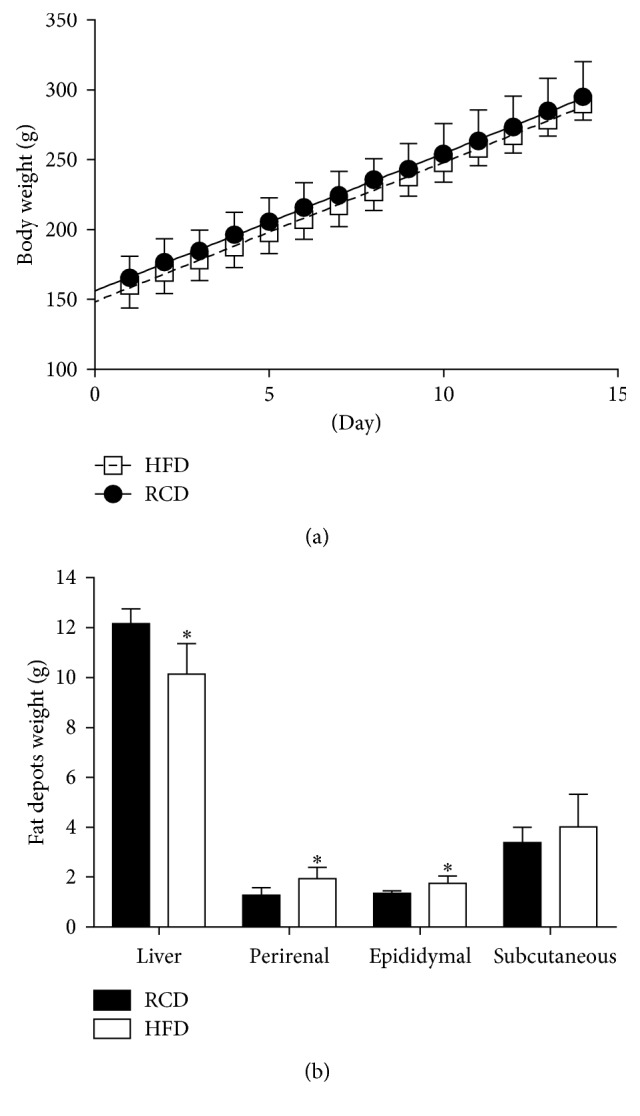
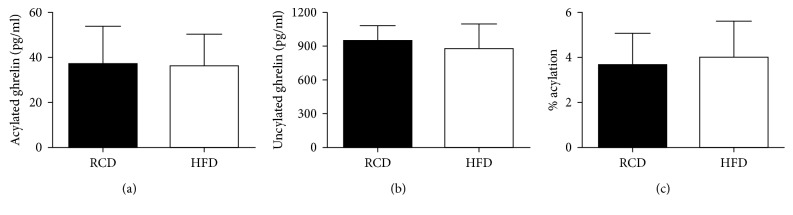
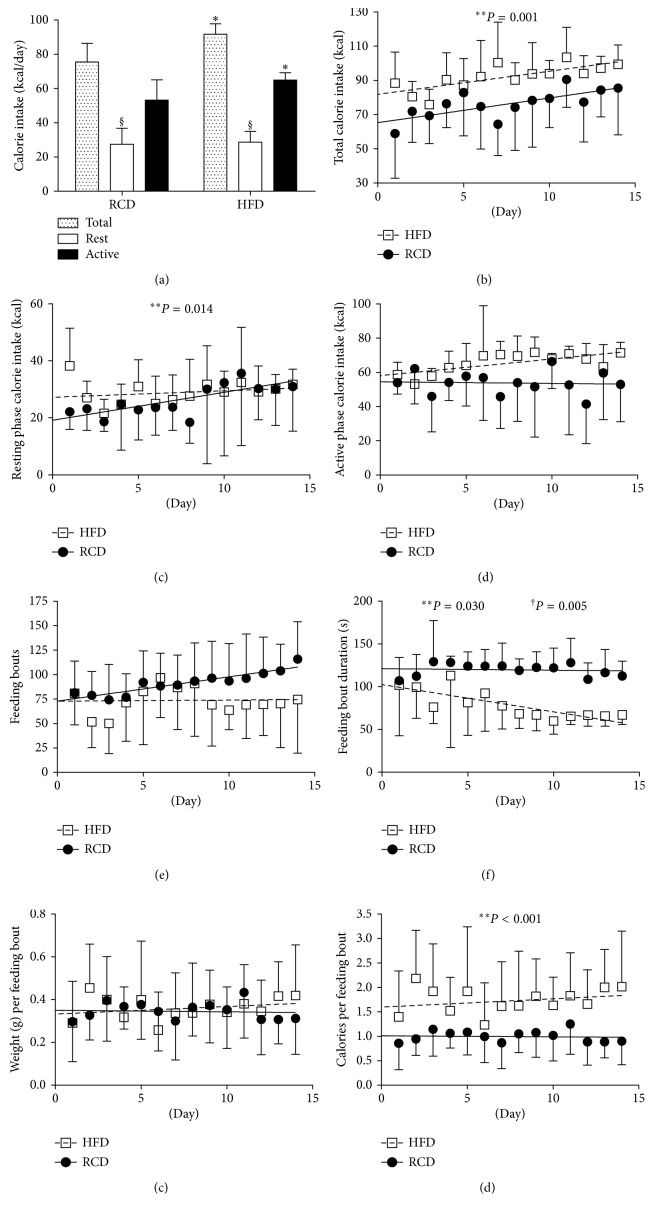
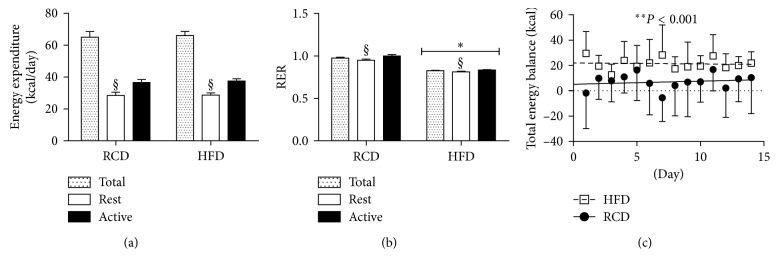
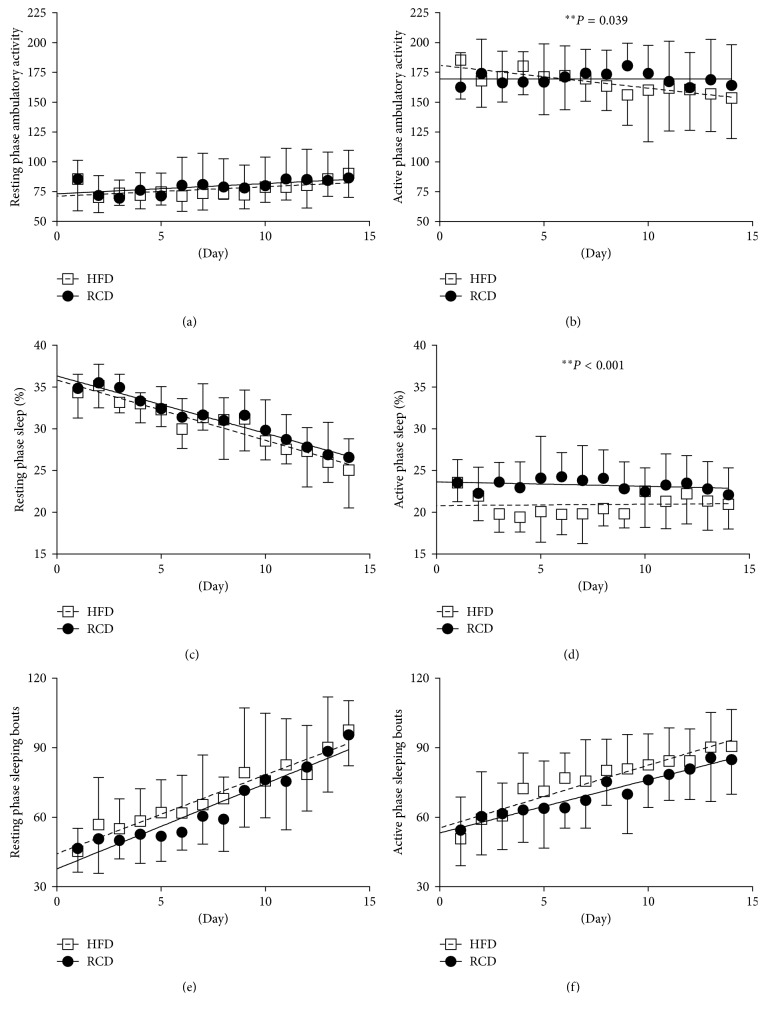
Information regarding the early effects of obesogenic diets on feeding patterns and behaviors is limited. To improve knowledge regarding the etiology of obesity, young male Wistar rats were submitted to high-fat (HFD) or regular chow diets (RCDs) for 14 days. Various metabolic parameters were continuously measured using metabolic chambers. Total weight gain was similar between groups, but heavier visceral fat depots and reduced weight of livers were found in HFD rats. Total calorie intake was increased while individual feeding bouts were shorter and of higher calorie intake in response to HFD. Ambulatory activity and sleep duration were decreased in HFD rats during passive and active phase, respectively. Acylated and unacylated ghrelin levels were unaltered by the increased calorie intake and the early changes in body composition. This indicates that at this early stage, the orexigenic signal did not adapt to the high-calorie content of HFD. We hereby demonstrate that, although total weight gain is not affected, a short-term obesogenic diet alters body composition, feeding patterns, satiation, ambulatory activity profiles, and behaviours in a young rat model. Moreover, this effect precedes changes in weight gain, obesity, and ensuing metabolic disorders.
关于致肥饮食对进食模式和行为的早期影响的信息有限。为了增进对肥胖病因的了解,将年轻雄性Wistar大鼠分别给予高脂饮食(HFD)或常规饲料饮食(RCD)14天。使用代谢室连续测量各种代谢参数。两组之间的总体重增加相似,但在HFD大鼠中发现内脏脂肪库更重,肝脏重量减轻。HFD导致总热量摄入增加,同时单次进食时间缩短且热量摄入更高。在被动期和主动期,HFD大鼠的活动量和睡眠时间分别减少。酰化和未酰化胃饥饿素水平并未因热量摄入增加和身体成分的早期变化而改变。这表明在这个早期阶段,促食欲信号并未适应HFD的高热量含量。我们在此证明,尽管总体重增加不受影响,但短期致肥饮食会改变年轻大鼠模型的身体成分、进食模式、饱腹感、活动量分布和行为。此外,这种影响先于体重增加、肥胖及随之而来的代谢紊乱的变化。