Xia Xiaoxue, Chen Jiang, Xia Jiayun, Wang Bin, Liu Hua, Yang Ling, Wang Ying, Ling Zongxin
1 Department of Infectious Diseases, Changxing People's Hospital, Huzhou, Zhejiang, China.
2 Collaborative Innovation Center for Diagnosis and Treatment of Infectious Diseases, State Key Laboratory for Diagnosis and Treatment of Infectious Diseases, the First Affiliated Hospital, School of Medicine, Zhejiang University, Hangzhou, Zhejiang, China.
J Int Med Res. 2018 Sep;46(9):3596-3604. doi: 10.1177/0300060518776064. Epub 2018 May 28.
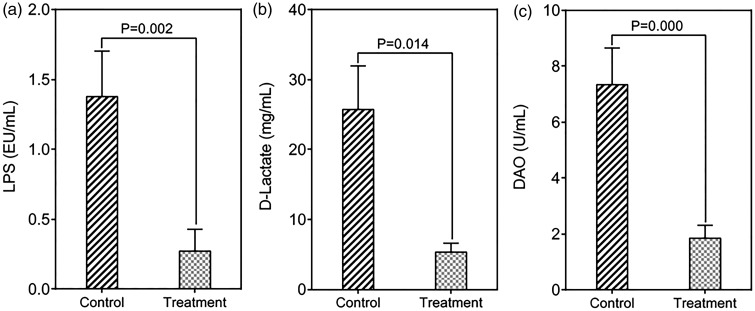
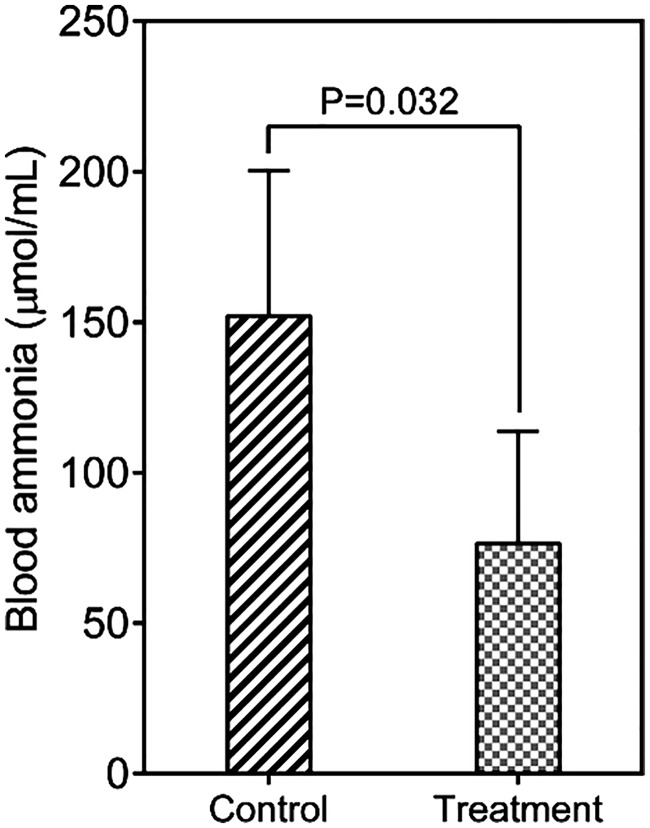
Objective This study was performed to investigate the role of probiotics ( Clostridium butyricum combined with Bifidobacterium infantis) in the treatment of minimal hepatic encephalopathy (MHE) in patients with hepatitis B virus (HBV)-induced liver cirrhosis. Methods Sixty-seven consecutive patients with HBV-induced cirrhosis without overt hepatic encephalopathy were screened using the number connection test and digit symbol test. The patients were randomized to receive probiotics (n = 30) or no probiotics (n = 37) for 3 months. At the end of the trial, changes in cognition, intestinal microbiota, venous ammonia, and intestinal mucosal barriers were analyzed using recommended systems biology techniques. Results The patients' cognition was significantly improved after probiotic treatment. The predominant bacteria ( Clostridium cluster I and Bifidobacterium) were significantly enriched in the probiotics-treated group, while Enterococcus and Enterobacteriaceae were significantly decreased. Probiotic treatment was also associated with an obvious reduction in venous ammonia. Additionally, the parameters of the intestinal mucosal barrier were obviously improved after probiotic treatment, which might have contributed to the improved cognition and the decreased ammonia levels. Conclusion Treatment with probiotics containing C. butyricum and B. infantis represents a new adjuvant therapy for the management of MHE in patients with HBV-induced cirrhosis.
目的 本研究旨在探讨益生菌(丁酸梭菌联合婴儿双歧杆菌)在乙型肝炎病毒(HBV)所致肝硬化患者的轻微肝性脑病(MHE)治疗中的作用。方法 采用数字连接试验和数字符号试验对67例连续的无明显肝性脑病的HBV所致肝硬化患者进行筛查。将患者随机分为接受益生菌治疗组(n = 30)和未接受益生菌治疗组(n = 37),治疗3个月。在试验结束时,使用推荐的系统生物学技术分析认知、肠道微生物群、静脉血氨和肠黏膜屏障的变化。结果 益生菌治疗后患者的认知功能显著改善。益生菌治疗组中主要细菌(梭菌属I群和双歧杆菌)显著富集,而肠球菌和肠杆菌科显著减少。益生菌治疗还与静脉血氨明显降低有关。此外,益生菌治疗后肠黏膜屏障参数明显改善,这可能有助于认知功能的改善和血氨水平的降低。结论 含丁酸梭菌和婴儿双歧杆菌的益生菌治疗是HBV所致肝硬化患者MHE治疗中的一种新的辅助治疗方法。