Department of Anthropology, Stony Brook University, New York, United States.
Center for the Advanced Study of Human Paleobiology, Stony Brook University, New York, United States.
Elife. 2018 May 29;7:e35696. doi: 10.7554/eLife.35696.
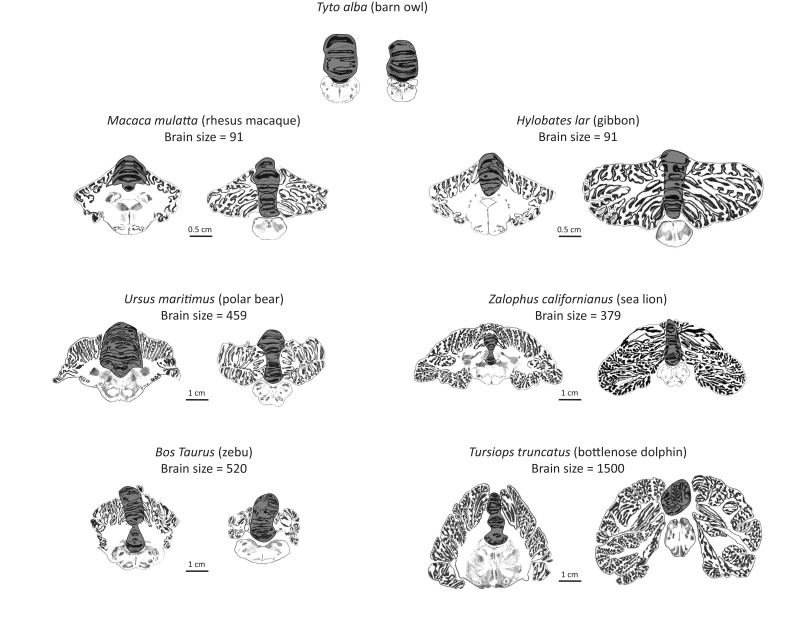
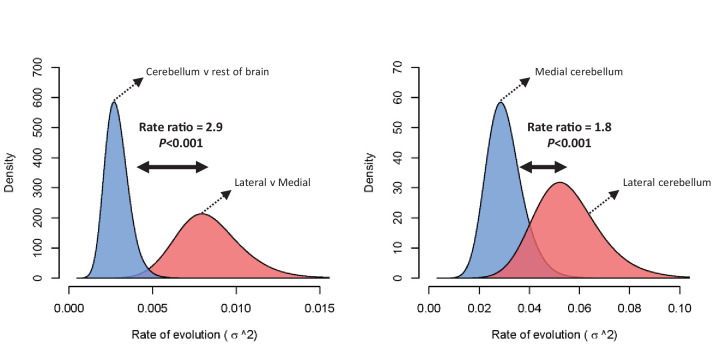
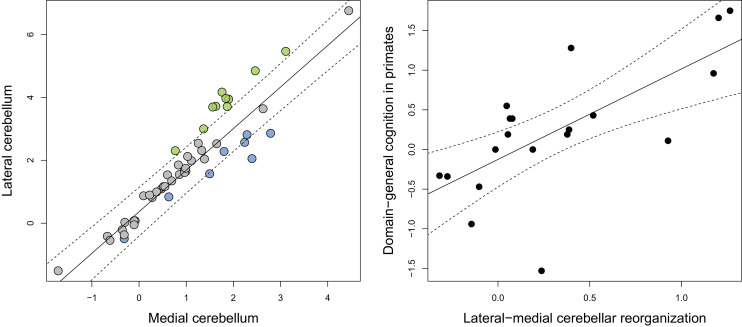
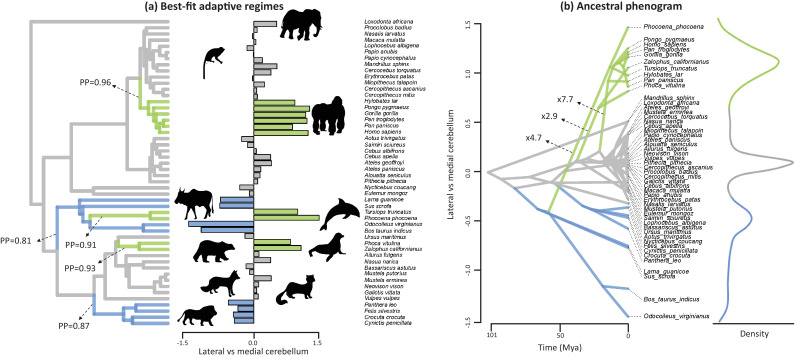
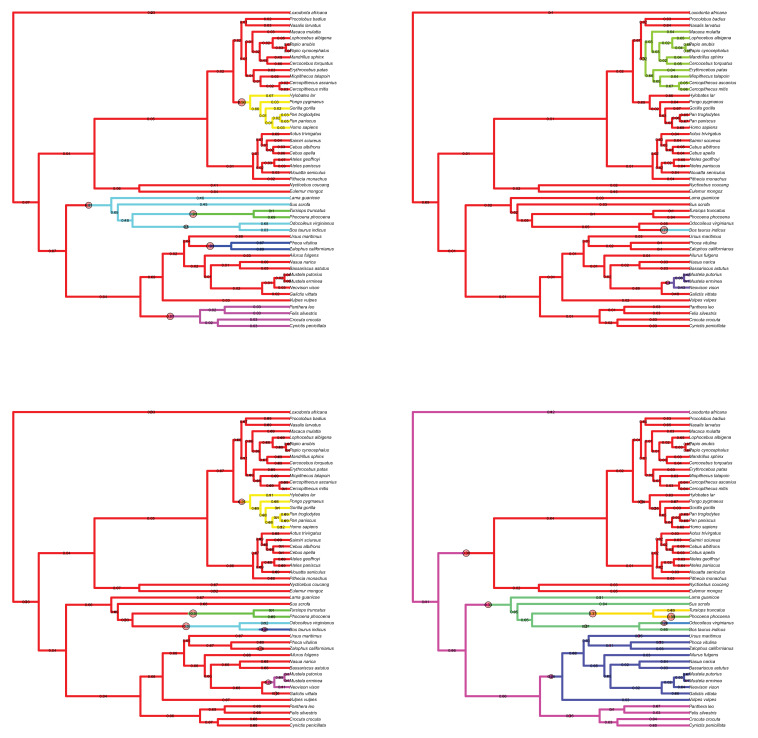
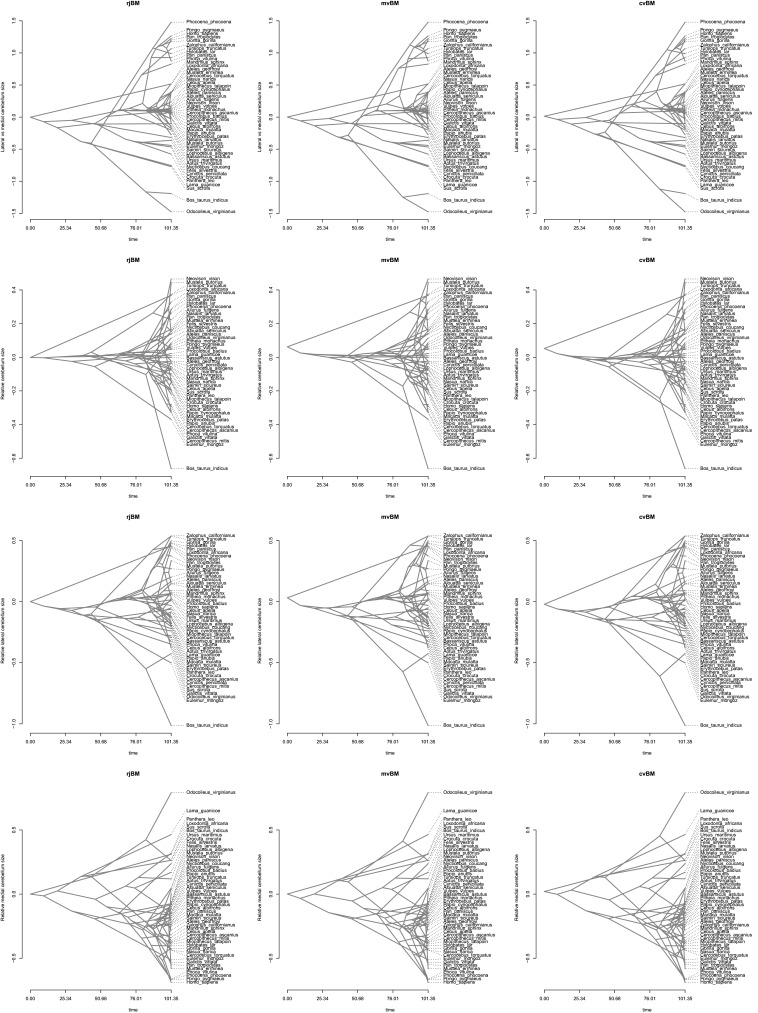
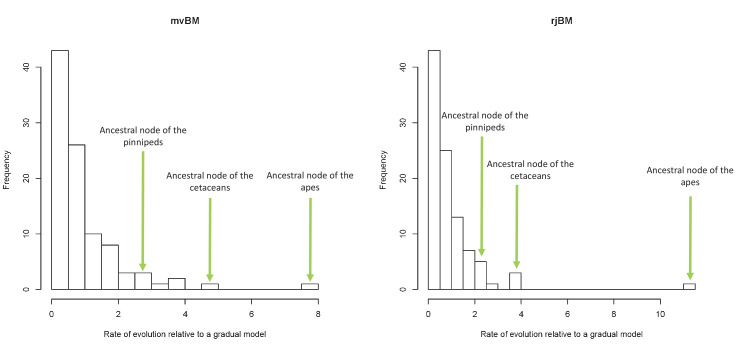
Given that complex behavior evolved multiple times independently in different lineages, a crucial question is whether these independent evolutionary events coincided with modifications to common neural systems. To test this question in mammals, we investigate the lateral cerebellum, a neurobiological system that is novel to mammals, and is associated with higher cognitive functions. We map the evolutionary diversification of the mammalian cerebellum and find that relative volumetric changes of the lateral cerebellar hemispheres (independent of cerebellar size) are correlated with measures of domain-general cognition in primates, and are characterized by a combination of parallel and convergent shifts towards similar levels of expansion in distantly related mammalian lineages. Results suggest that multiple independent evolutionary occurrences of increased behavioral complexity in mammals may at least partly be explained by selection on a common neural system, the cerebellum, which may have been subject to multiple independent neurodevelopmental remodeling events during mammalian evolution.
鉴于复杂行为在不同谱系中多次独立进化,一个关键问题是这些独立的进化事件是否与常见神经系统的改变同时发生。为了在哺乳动物中检验这个问题,我们研究了外侧小脑,这是一种在哺乳动物中特有的神经生物学系统,与更高的认知功能有关。我们绘制了哺乳动物小脑的进化多样化图谱,发现外侧小脑半球的相对体积变化(与小脑大小无关)与灵长类动物的一般认知领域的测量值相关,其特征是朝着相似的扩张水平表现出平行和趋同的变化,而这些变化发生在远缘的哺乳动物谱系中。研究结果表明,哺乳动物中多次独立发生的行为复杂性增加可能至少部分可以用对共同的神经系统——小脑的选择来解释,在哺乳动物进化过程中,小脑可能经历了多次独立的神经发育重塑事件。