Department of Obstetrics, Gynecology and Reproductive Biology, College of Human Medicine, Michigan State University, Grand Rapids, MI, 49503, USA.
Department of Biochemistry and Molecular Biology, Yonsei University College of Medicine, Seoul, 03722, South Korea.
BMC Cancer. 2018 May 29;18(1):605. doi: 10.1186/s12885-018-4502-7.
Aberrant hyperactivation of epithelial proliferation, AKT signaling, and association with unopposed estrogen (E2) exposure is the most common endometrial cancer dysfunction. In the normal uterus, progesterone (P4) inhibits proliferation by coordinating stromal-epithelial cross-talk, which we previously showed is mediated by the function of Mitogen-inducible gene 6 (Mig-6). Despite their attractive characteristics, non-surgical conservative therapies based on progesterone alone have not been universally successful. One barrier to this success has been the lack of understanding of the P4 effect on endometrial cells.
To further understand the role of Mig-6 and P4 in controlling uterine proliferation, we developed a Sprr2f-cre driven mouse model where Mig-6 is specifically ablated only in the epithelial cells of the uterus (Sprr2f Mig-6 ). We examined P4 effect and regulation of AKT signaling in the endometrium of mutant mice.
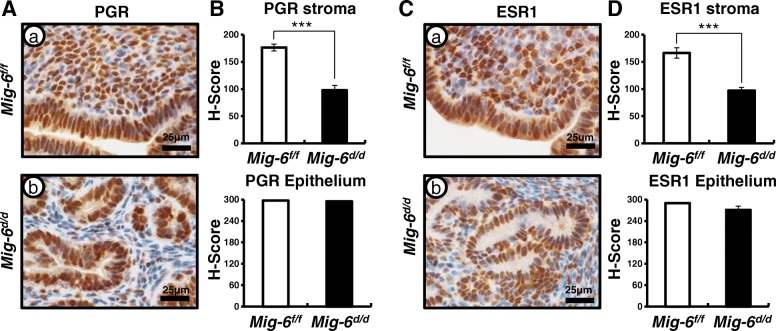
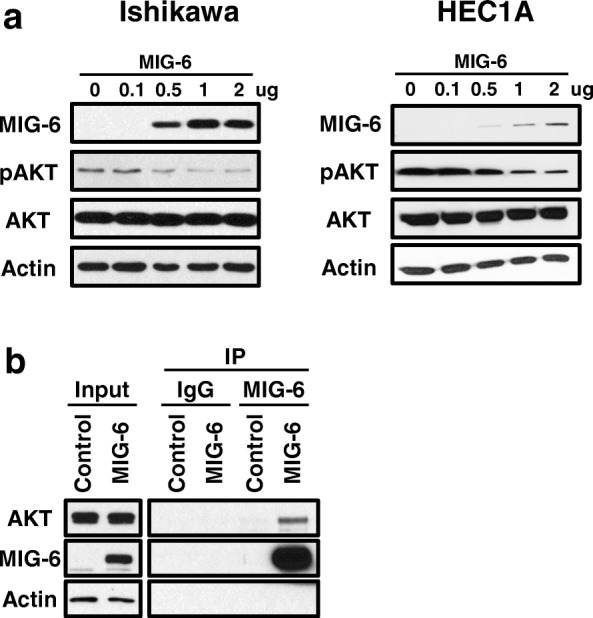
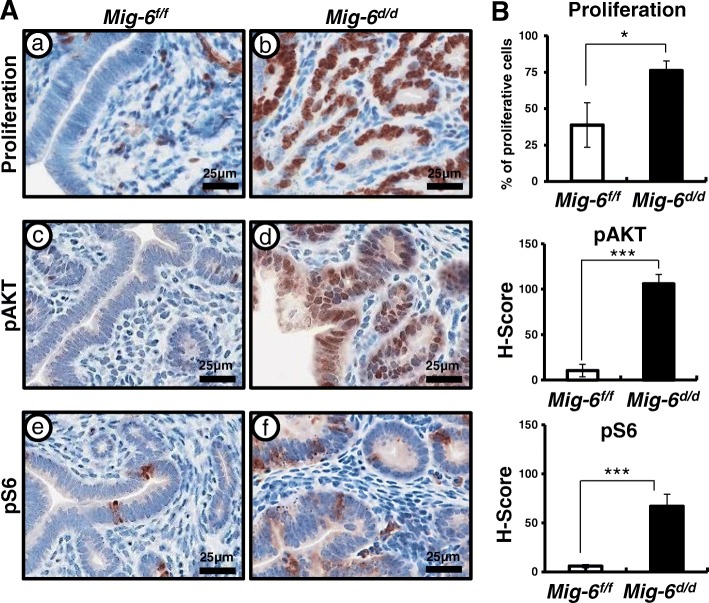
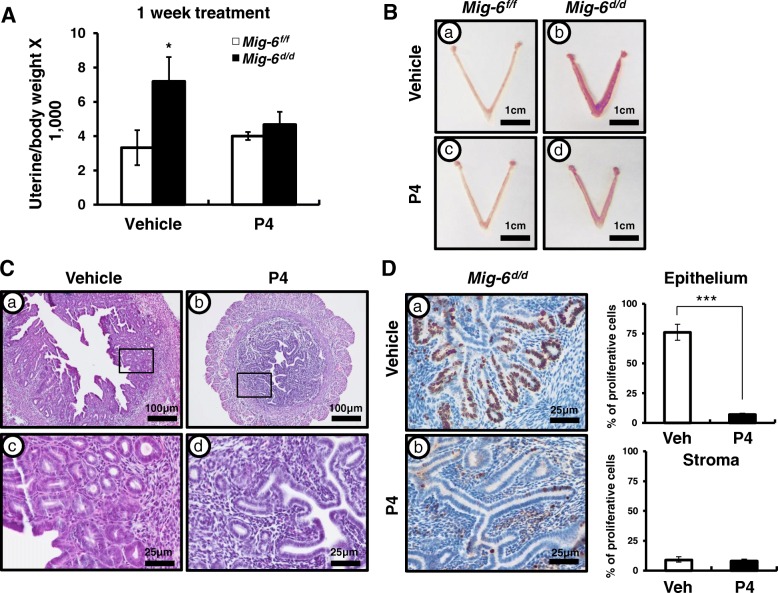
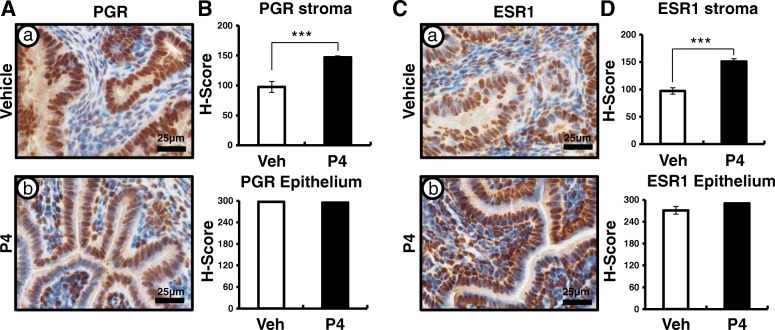
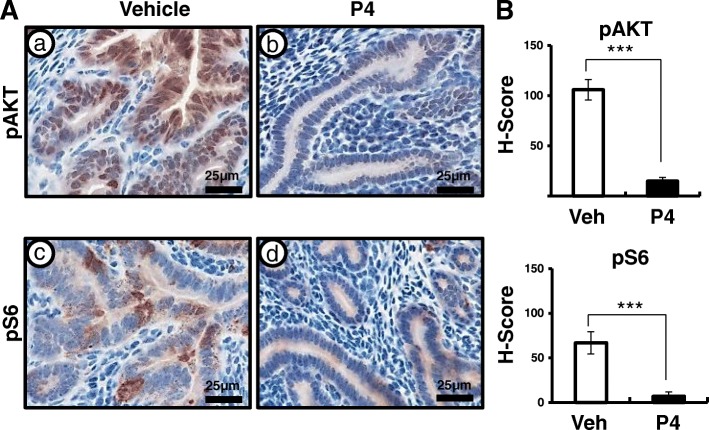
Sprr2f Mig-6 mice developed endometrial hyperplasia. P4 treatment abated the development of endometrial hyperplasia and restored morphological and histological characteristics of the uterus. P4 treatment reduced cell proliferation which was accompanied by decreased AKT signaling and the restoration of stromal PGR and ESR1 expression. Furthermore, our in vitro studies revealed an inhibitory effect of MIG-6 on AKT phosphorylation as well as MIG-6 and AKT protein interactions.
These data suggest that endometrial epithelial cell proliferation is regulated by P4 mediated Mig-6 inhibition of AKT phosphorylation, uncovering new mechanisms of P4 action. This information may help guide more effective non-surgical interventions in the future.
上皮细胞增殖、AKT 信号异常激活以及与雌激素(E2)暴露不受抑制有关,这是子宫内膜癌最常见的功能障碍。在正常子宫中,孕激素(P4)通过协调基质-上皮细胞的相互作用来抑制增殖,我们之前的研究表明,这一过程是由有丝分裂原诱导基因 6(Mig-6)的功能介导的。尽管孕激素为基础的非手术保守疗法具有吸引力,但它们并未在全球范围内取得成功。这一疗法的一个障碍是缺乏对 P4 对子宫内膜细胞影响的理解。
为了进一步了解 Mig-6 和 P4 在控制子宫增殖中的作用,我们开发了一种 Sprr2f-cre 驱动的小鼠模型,其中 Mig-6 仅在子宫的上皮细胞中特异性缺失(Sprr2f Mig-6 )。我们检查了 P4 对突变小鼠子宫内膜中 AKT 信号的作用和调节。
Sprr2f Mig-6 小鼠发生子宫内膜增生。P4 治疗可减轻子宫内膜增生的发生,并恢复子宫的形态和组织学特征。P4 治疗降低了细胞增殖,伴随着 AKT 信号的降低以及基质 PGR 和 ESR1 表达的恢复。此外,我们的体外研究揭示了 Mig-6 对 AKT 磷酸化的抑制作用以及 Mig-6 和 AKT 蛋白相互作用。
这些数据表明,子宫内膜上皮细胞增殖受 P4 介导的 Mig-6 抑制 AKT 磷酸化调节,揭示了 P4 作用的新机制。这些信息可能有助于指导未来更有效的非手术干预措施。