The Phyllis F. Cantor Center, Dana-Farber Cancer Institute, 450 Brookline Avenue, Boston, MA, 02115, USA.
Department of Psychosocial Oncology and Palliative Care, Dana-Farber Cancer Institute, 450 Brookline Avenue, Boston, MA, 02115, USA.
BMC Med Inform Decis Mak. 2018 May 29;18(1):31. doi: 10.1186/s12911-018-0608-8.
It is essential that cancer patients understand anticipated symptoms, how to self-manage these symptoms, and when to call their clinicians. However, patients are often ill-prepared to manage symptoms at home. Clinical decision support (CDS) is a potentially innovative way to provide information to patients where and when they need it. The purpose of this project was to design and evaluate a simulated model of an algorithm-based CDS program for self-management of cancer symptoms.
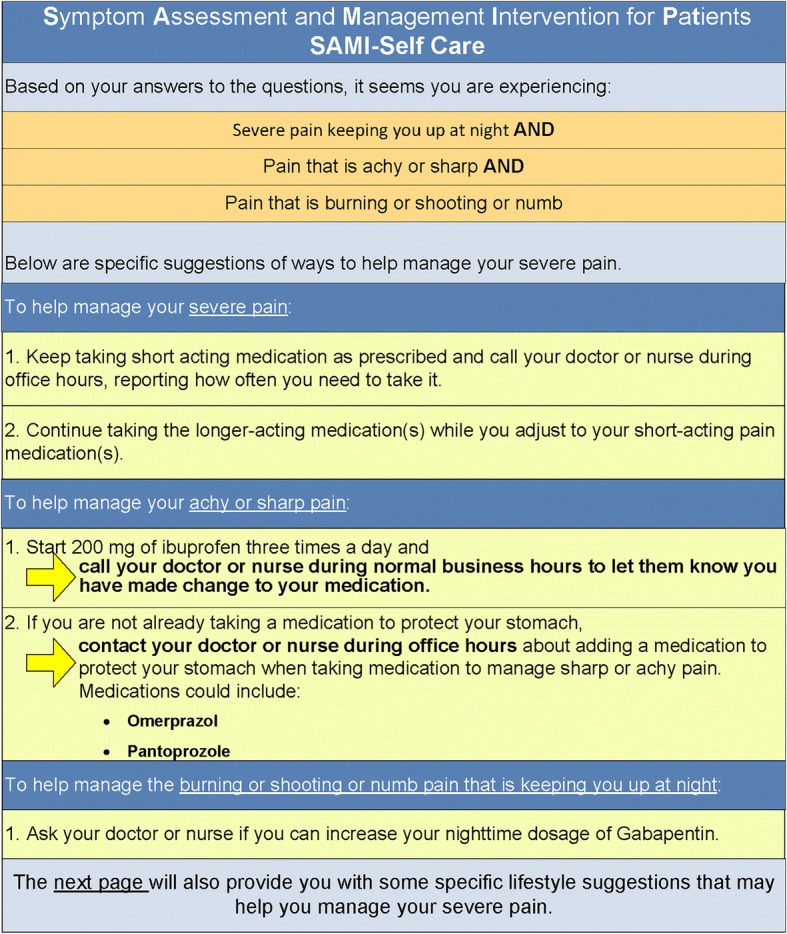
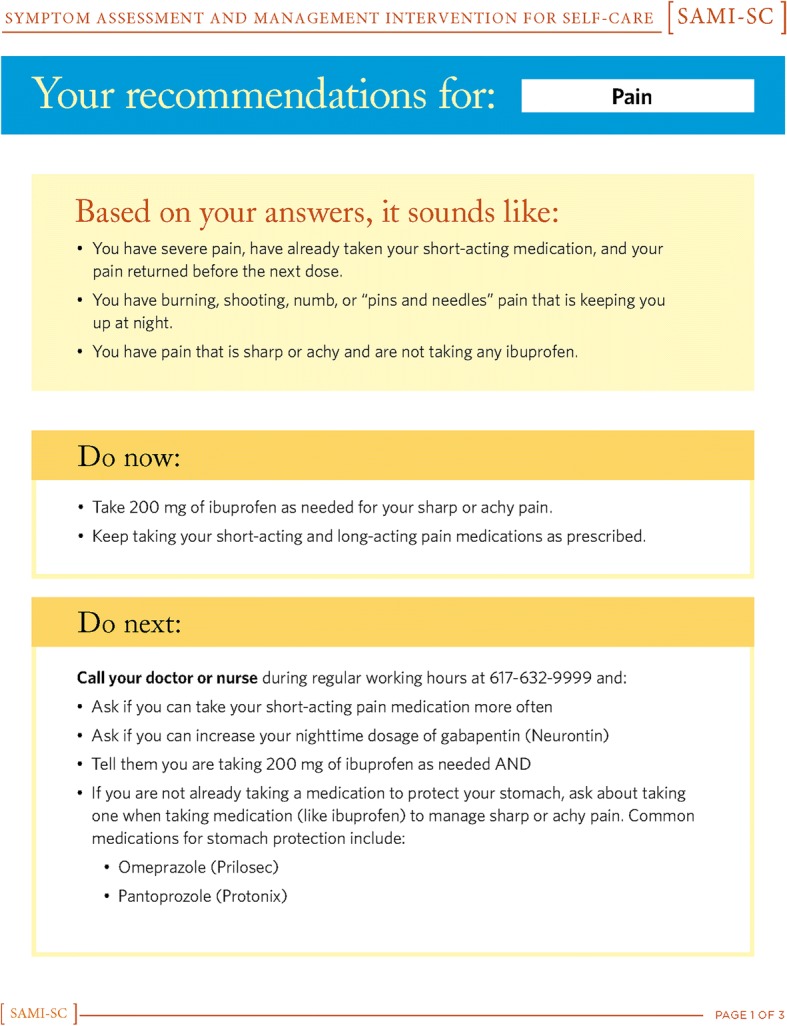
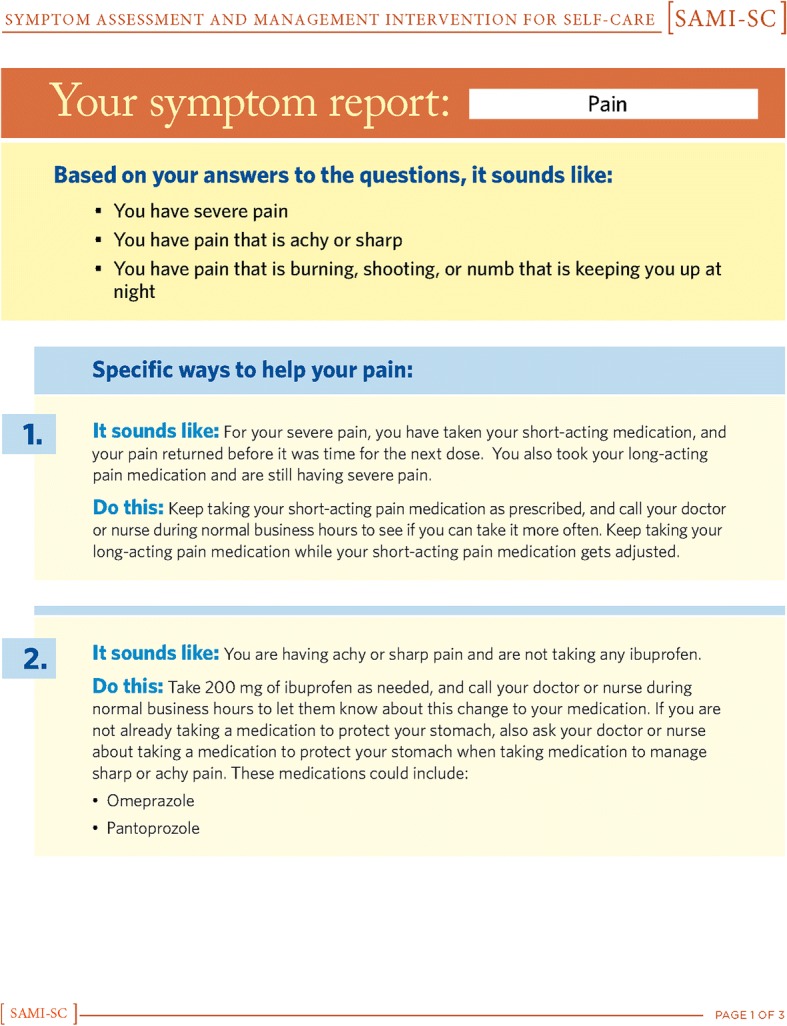
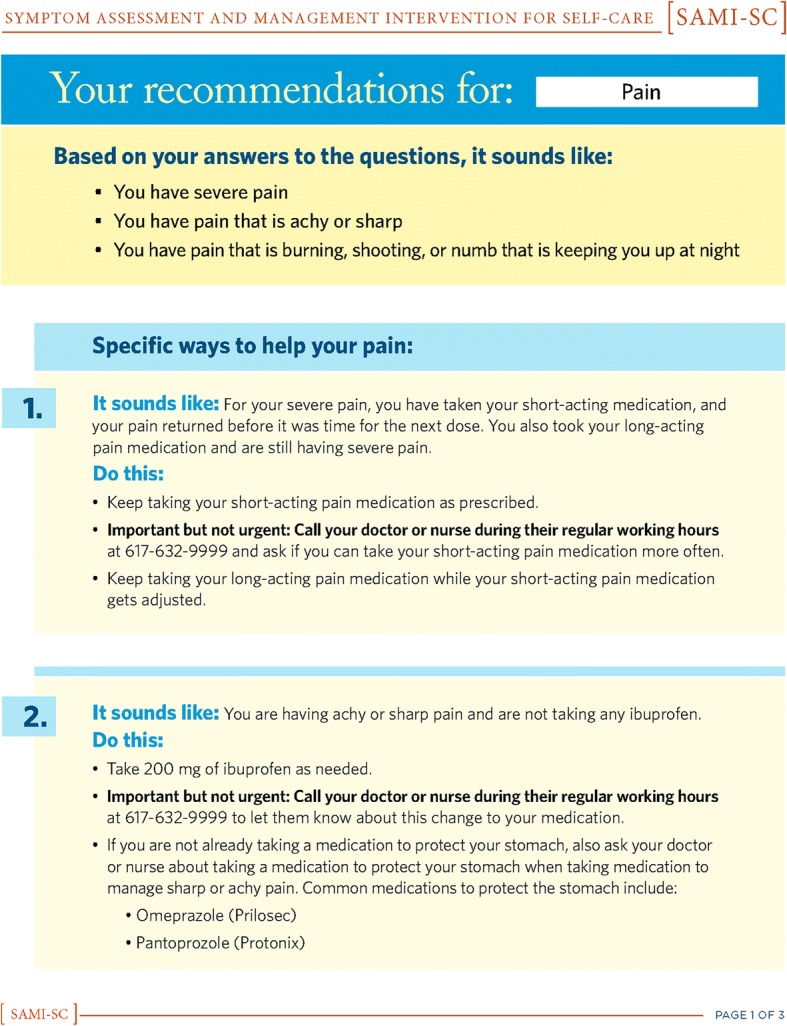
This study consisted of three phases; development of computable algorithms for self-management of cancer symptoms using a modified ADAPTE process, evaluation of a simulated model of the CDS program, and identification of design objectives and lessons learned from the evaluation of patient-centered CDS. In phase 1, algorithms for pain, constipation and nausea/vomiting were developed by an expert panel. In phase 2, we conducted usability testing of a simulated symptom assessment and management intervention for self-care (SAMI-Self-Care) CDS program involving focus groups, interviews and surveys with cancer patients, their caregivers and clinicians. The Acceptability E-scale measured acceptability of the program. In phase 3, we developed design objectives and identified barriers to uptake of patient-centered CDS based on the data gathered from stakeholders.
In phase 1, algorithms were reviewed and approved through a consensus meeting and majority vote. In phase 2, 24 patients & caregivers and 13 clinicians participated in the formative evaluation. Iterative changes were made in a simulated SAMI-Self-Care CDS program. Acceptability scores were high among patients, caregivers and clinicians. In phase 3, we formulated CDS design objectives, which included: 1) ensure patient safety, 2) communicate clinical concepts effectively, 3) promote communication with clinicians, 4) support patient activation, and 5) facilitate navigation and use. We identified patient barriers and clinician concerns to using CDS for symptom self-management, which were consistent with the chronic care model, a theoretical framework used to enhance patient-clinician communication and patient self-management.
Patient safety and tool navigation were critical features of CDS for patient self-management. Insights gleaned from this study may be used to inform the development of CDS resources for symptom self-management in patients with other chronic conditions.
癌症患者了解预期症状、如何自我管理这些症状以及何时联系临床医生至关重要。然而,患者通常在家中准备不足,无法管理症状。临床决策支持(CDS)是一种向患者提供所需信息的潜在创新方法。本项目的目的是设计和评估基于算法的癌症症状自我管理 CDS 程序的模拟模型。
本研究包括三个阶段:使用修改后的 ADAPTE 过程为癌症症状自我管理开发可计算算法、评估 CDS 程序的模拟模型以及从以患者为中心的 CDS 评估中确定设计目标和经验教训。在第 1 阶段,专家小组为疼痛、便秘和恶心/呕吐开发了算法。在第 2 阶段,我们对涉及癌症患者、他们的护理人员和临床医生的焦点小组、访谈和调查的自我护理模拟症状评估和管理干预(SAMI-Self-Care)CDS 程序进行了可用性测试。可接受性 E 量表衡量了该程序的可接受性。在第 3 阶段,我们根据利益相关者收集的数据制定了设计目标并确定了以患者为中心的 CDS 采用的障碍。
在第 1 阶段,通过共识会议和多数票对算法进行了审查和批准。在第 2 阶段,24 名患者及其护理人员和 13 名临床医生参与了形成性评估。对模拟的 SAMI-Self-Care CDS 程序进行了迭代更改。患者、护理人员和临床医生的可接受性评分均较高。在第 3 阶段,我们制定了 CDS 设计目标,包括:1)确保患者安全,2)有效地传达临床概念,3)促进与临床医生的沟通,4)促进患者激活,以及 5)促进导航和使用。我们确定了患者在使用 CDS 进行症状自我管理方面的障碍和临床医生的担忧,这与慢性护理模型一致,慢性护理模型是用于增强患者-临床医生沟通和患者自我管理的理论框架。
患者安全和工具导航是患者自我管理 CDS 的关键特征。从这项研究中获得的见解可用于为其他慢性病患者的症状自我管理开发 CDS 资源提供信息。