Center for Shared Decision Making and Collaborative Care Research, Oslo University Hospital, Oslo, Norway.
JMIR Mhealth Uhealth. 2014 Aug 13;2(3):e33. doi: 10.2196/mhealth.3359.
Mobile phones and tablets currently represent a significant presence in people's everyday lives. They enable access to different information and services independent of current place and time. Such widespread connectivity offers significant potential in different app areas including health care.
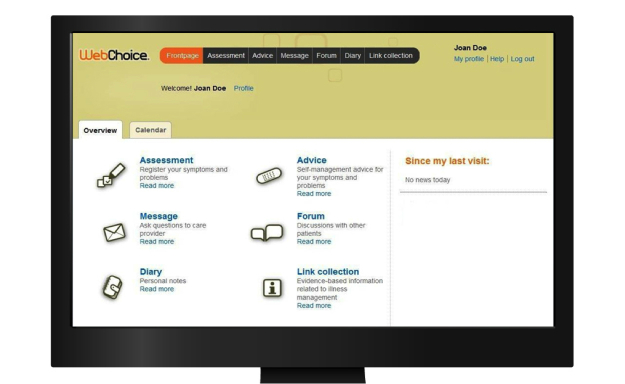
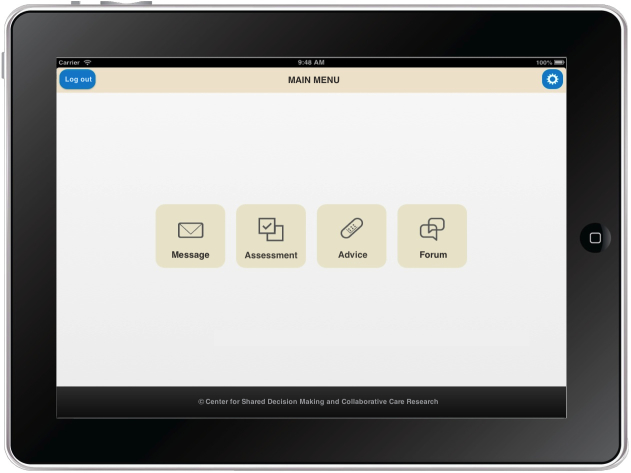
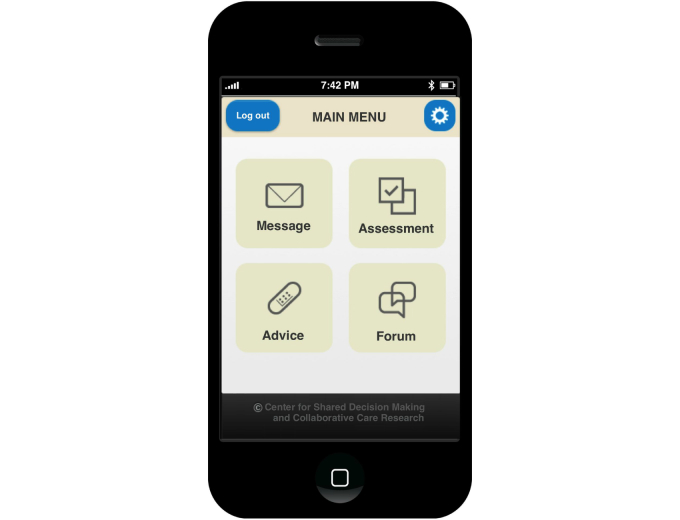
Our goal was to evaluate the usability of the Connect Mobile app. The mobile app enables mobile access to the Connect system, an online system that supports cancer patients in managing health-related issues. Along with symptom management, the system promotes better patient-provider communication, collaboration, and shared decision making. The Connect Mobile app enables access to the Connect system over both mobile phones and tablets.
The study consisted of usability tests of a high fidelity prototype with 7 cancer patients where the objectives were to identify existing design and functionality issues and to provide patients with a real look-and-feel of the mobile system. In addition, we conducted semistructured interviews to obtain participants' feedback about app usefulness, identify the need for new system features and design requirements, and measure the acceptance of the mobile app and its features within everyday health management.
The study revealed a total of 27 design issues (13 for mobile apps and 14 for tablet apps), which were mapped to source events (ie, errors, requests for help, participants' concurrent feedback, and moderator observation). We also applied usability heuristics to identify violations of usability principles. The majority of violations were related to enabling ease of input, screen readability, and glanceability (15 issues), as well as supporting an appropriate match between systems and the real world (7 issues) and consistent mapping of system functions and interactions (4 issues). Feedback from participants also showed the cancer patients' requirements for support systems and how these needs are influenced by different context-related factors, such as type of access terminal (eg, desktop computer, tablet, mobile phone) and phases of illness. Based on the observed results, we proposed design and functionality recommendations that can be used for the development of mobile apps for cancer patients to support their health management process.
Understanding and addressing users' requirements is one of the main prerequisites for developing useful and effective technology-based health interventions. The results of this study outline different user requirements related to the design of the mobile patient support app for cancer patients. The results will be used in the iterative development of the Connect Mobile app and can also inform other developers and researchers in development, integration, and evaluation of mobile health apps and services that support cancer patients in managing their health-related issues.
手机和平板电脑目前在人们的日常生活中占据着重要地位。它们使人们能够随时随地获取各种信息和服务。这种广泛的连接性在不同的应用领域都具有巨大的潜力,包括医疗保健。
我们的目标是评估 Connect Mobile 应用程序的可用性。该移动应用程序允许通过移动设备访问 Connect 系统,这是一个支持癌症患者管理健康相关问题的在线系统。除了症状管理,该系统还促进了更好的医患沟通、协作和共同决策。Connect Mobile 应用程序允许通过手机和平板电脑访问 Connect 系统。
该研究包括对具有 7 名癌症患者的高保真原型进行可用性测试,目的是确定现有的设计和功能问题,并让患者实际体验移动系统的外观和感觉。此外,我们还进行了半结构化访谈,以获取参与者对应用程序有用性的反馈,确定新系统功能和设计要求的需求,并衡量移动应用程序及其功能在日常健康管理中的接受程度。
该研究共发现 27 个设计问题(移动应用程序 13 个,平板电脑应用程序 14 个),这些问题被映射到源事件(即错误、求助请求、参与者的并发反馈和主持人观察)。我们还应用了可用性启发式来识别违反可用性原则的情况。大多数违规行为与简化输入、屏幕可读性和易读性(15 个问题)以及支持系统与现实世界之间的适当匹配(7 个问题)和系统功能和交互的一致映射(4 个问题)有关。参与者的反馈还显示了癌症患者对支持系统的需求,以及这些需求如何受到不同上下文相关因素的影响,例如访问终端的类型(例如,台式计算机、平板电脑、移动电话)和疾病阶段。基于观察到的结果,我们提出了可用于开发支持癌症患者健康管理流程的移动应用程序的设计和功能建议。
了解和满足用户的需求是开发有用和有效的基于技术的健康干预措施的主要前提之一。本研究的结果概述了与癌症患者移动患者支持应用程序设计相关的不同用户需求。研究结果将用于 Connect Mobile 应用程序的迭代开发,并为其他开发人员和研究人员在开发、集成和评估支持癌症患者管理其健康相关问题的移动健康应用程序和服务方面提供信息。