• 文献检索
  • 文档翻译
  • 深度研究
  • 学术资讯
  • Suppr Zotero 插件Zotero 插件
  • 邀请有礼
  • 套餐&价格
  • 历史记录
应用&插件
Suppr Zotero 插件Zotero 插件浏览器插件Mac 客户端Windows 客户端微信小程序
定价
高级版会员购买积分包购买API积分包
服务
文献检索文档翻译深度研究API 文档MCP 服务
关于我们
关于 Suppr公司介绍联系我们用户协议隐私条款
关注我们

Suppr 超能文献

核心技术专利:CN118964589B侵权必究
粤ICP备2023148730 号-1Suppr @ 2026

文献检索

告别复杂PubMed语法,用中文像聊天一样搜索,搜遍4000万医学文献。AI智能推荐,让科研检索更轻松。

立即免费搜索

文件翻译

保留排版,准确专业,支持PDF/Word/PPT等文件格式,支持 12+语言互译。

免费翻译文档

深度研究

AI帮你快速写综述,25分钟生成高质量综述,智能提取关键信息,辅助科研写作。

立即免费体验

一种针对慢性肾脏病成人患者的基于网络的自我管理支持原型(我的肾脏我的健康):协同设计与可用性测试

A Web-Based Self-Management Support Prototype for Adults With Chronic Kidney Disease (My Kidneys My Health): Co-Design and Usability Testing.

作者信息

Donald Maoliosa, Beanlands Heather, Straus Sharon E, Smekal Michelle, Gil Sarah, Elliott Meghan J, Herrington Gwen, Harwood Lori, Waldvogel Blair, Delgado Maria, Sparkes Dwight, Tong Allison, Grill Allan, Novak Marta, James Matthew Thomas, Brimble K Scott, Samuel Susan, Tu Karen, Farragher Janine, Hemmelgarn Brenda R

机构信息

Department of Community Health Sciences, University of Calgary, Calgary, AB, Canada.

Daphne Cockwell School of Nursing, Ryerson University, Toronto, ON, Canada.

出版信息

JMIR Form Res. 2021 Feb 9;5(2):e22220. doi: 10.2196/22220.

DOI:10.2196/22220
PMID:33560245
原文链接:https://pmc.ncbi.nlm.nih.gov/articles/PMC7902181/
Abstract

BACKGROUND

Supporting patients to self-manage their chronic kidney disease (CKD) has been identified as a research priority by patients with CKD and those who care for them. Self-management has been shown to slow CKD progression and improve the quality of life of individuals living with the disease. Previous work has identified a need for a person-centered, theory-informed, web-based tool for CKD self-management that can be individualized to a patient's unique situation, priorities, and preferences. We addressed this gap using an integrated knowledge translation method and patient engagement principles.

OBJECTIVE

The aim of this study is to conduct systematic co-design and usability testing of a web-based self-management prototype for adults with CKD (nondialysis and nontransplant) and their caregivers to enhance self-management support.

METHODS

A multistep, iterative system development cycle was used to co-design and test the My Kidneys My Health prototype. The 3-step process included creating website features and content using 2 sequential focus groups with patients with CKD and caregivers, heuristic testing using the 10 heuristic principles by Nielsen, and usability testing through in-person 60-minute interviews with patients with CKD and their caregivers. Patients with CKD, caregivers, clinicians, researchers, software developers, graphic designers, and policy makers were involved in all steps of this study.

RESULTS

In step 1, 18 participants (14 patients and 4 caregivers) attended one of the 2 sequential focus groups. The participants provided specific suggestions for simplifying navigation as well as suggestions to incorporate video, text, audio, interactive components, and visuals to convey information. A total of 5 reviewers completed the heuristic analysis (step 2), identifying items mainly related to navigation and functionality. Furthermore, 5 participants completed usability testing (step 3) and provided feedback on video production, navigation, features and functionality, and branding. Participants reported visiting the website repeatedly for the following features: personalized food tool, my health care provider question list, symptom guidance based on CKD severity, and medication advice. Usability was high, with a mean system usability score of 90 out of 100.

CONCLUSIONS

The My Kidneys My Health prototype is a systematically developed, multifaceted, web-based CKD self-management support tool guided by the theory and preferences of patients with CKD and their caregivers. The website is user friendly and provides features that improve user experience by tailoring the content and resources to their needs. A feasibility study will provide insights into the acceptability of and engagement with the prototype and identify preliminary patient-reported outcomes (eg, self-efficacy) as well as potential factors related to implementation. This work is relevant given the shift to virtual care during the current pandemic times and provides patients with support when in-person care is restricted.

摘要

背景

支持患者自我管理慢性肾脏病(CKD)已被CKD患者及其护理人员确定为研究重点。自我管理已被证明可以减缓CKD的进展,并改善患有该疾病个体的生活质量。先前的工作已经确定需要一种以患者为中心、基于理论、基于网络的CKD自我管理工具,该工具可以根据患者的独特情况、优先事项和偏好进行个性化定制。我们使用综合知识转化方法和患者参与原则解决了这一差距。

目的

本研究的目的是对基于网络的CKD成人(非透析和非移植)及其护理人员自我管理原型进行系统的协同设计和可用性测试,以加强自我管理支持。

方法

采用多步骤、迭代的系统开发周期对“我的肾脏我的健康”原型进行协同设计和测试。这个三步过程包括通过与CKD患者和护理人员进行2次连续的焦点小组讨论来创建网站功能和内容,使用尼尔森的10条启发式原则进行启发式测试,以及通过与CKD患者及其护理人员进行60分钟的面对面访谈进行可用性测试。CKD患者、护理人员、临床医生、研究人员、软件开发人员、平面设计师和政策制定者参与了本研究的所有步骤。

结果

在第1步中,18名参与者(14名患者和4名护理人员)参加了2次连续焦点小组讨论中的一次。参与者提供了简化导航的具体建议,以及纳入视频、文本、音频、互动组件和视觉效果以传达信息的建议。共有5名评审员完成了启发式分析(第2步),确定了主要与导航和功能相关的项目。此外,5名参与者完成了可用性测试(第3步),并就视频制作、导航、功能和品牌提供了反馈。参与者报告称,他们因以下功能而多次访问该网站:个性化饮食工具、我的医疗服务提供者问题列表、基于CKD严重程度的症状指导以及用药建议。可用性很高,系统可用性平均得分为90分(满分100分)。

结论

“我的肾脏我的健康”原型是一个系统开发的、多方面的、基于网络的CKD自我管理支持工具,由CKD患者及其护理人员的理论和偏好指导。该网站用户友好,通过根据用户需求定制内容和资源来提供改善用户体验的功能。一项可行性研究将深入了解该原型的可接受性和参与度,并确定初步的患者报告结果(如自我效能感)以及与实施相关的潜在因素。鉴于当前疫情期间向虚拟护理的转变,这项工作具有相关性,并在面对面护理受到限制时为患者提供支持。
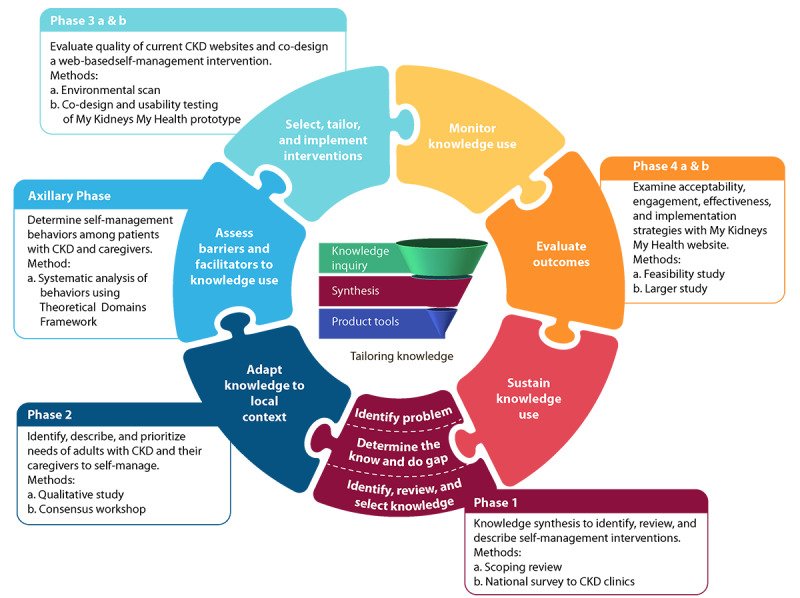
https://cdn.ncbi.nlm.nih.gov/pmc/blobs/1610/7902181/57b160ee5bdb/formative_v5i2e22220_fig4.jpg
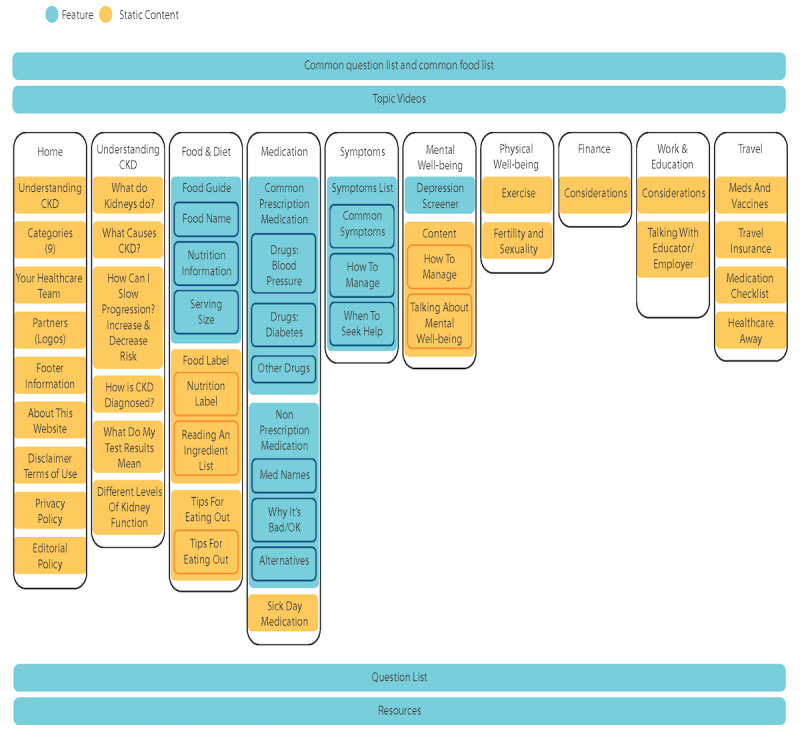
https://cdn.ncbi.nlm.nih.gov/pmc/blobs/1610/7902181/54df8571ae37/formative_v5i2e22220_fig1.jpg
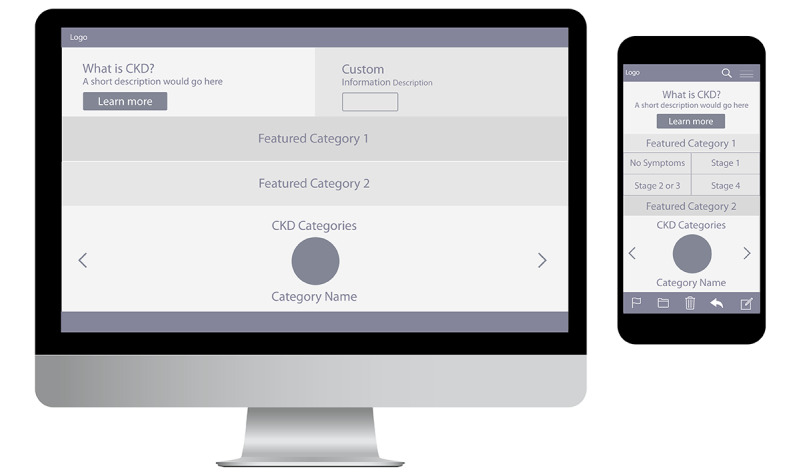
https://cdn.ncbi.nlm.nih.gov/pmc/blobs/1610/7902181/ea29cd0e6cd4/formative_v5i2e22220_fig2.jpg
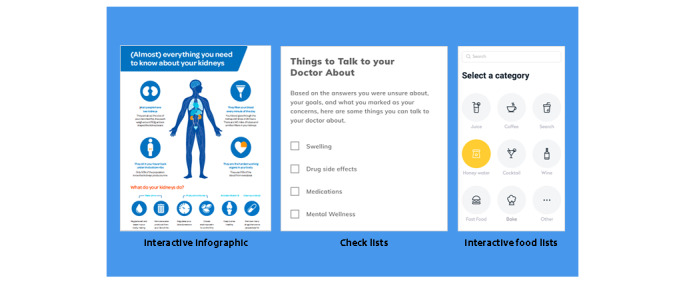
https://cdn.ncbi.nlm.nih.gov/pmc/blobs/1610/7902181/3dca624545a1/formative_v5i2e22220_fig3.jpg
https://cdn.ncbi.nlm.nih.gov/pmc/blobs/1610/7902181/57b160ee5bdb/formative_v5i2e22220_fig4.jpg
https://cdn.ncbi.nlm.nih.gov/pmc/blobs/1610/7902181/54df8571ae37/formative_v5i2e22220_fig1.jpg
https://cdn.ncbi.nlm.nih.gov/pmc/blobs/1610/7902181/ea29cd0e6cd4/formative_v5i2e22220_fig2.jpg
https://cdn.ncbi.nlm.nih.gov/pmc/blobs/1610/7902181/3dca624545a1/formative_v5i2e22220_fig3.jpg
https://cdn.ncbi.nlm.nih.gov/pmc/blobs/1610/7902181/57b160ee5bdb/formative_v5i2e22220_fig4.jpg

相似文献

1
A Web-Based Self-Management Support Prototype for Adults With Chronic Kidney Disease (My Kidneys My Health): Co-Design and Usability Testing.一种针对慢性肾脏病成人患者的基于网络的自我管理支持原型(我的肾脏我的健康):协同设计与可用性测试
JMIR Form Res. 2021 Feb 9;5(2):e22220. doi: 10.2196/22220.
2
An eHealth self-management intervention for adults with chronic kidney disease, My Kidneys My Health: a mixed-methods study.电子健康自我管理干预措施用于慢性肾脏病成人患者:My Kidneys My Health 混合方法研究
CMAJ Open. 2022 Aug 16;10(3):E746-E754. doi: 10.9778/cmajo.20210332. Print 2022 Jul-Sep.
3
A Web-Based Cancer Self-Management Program (I-Can Manage) Targeting Treatment Toxicities and Health Behaviors: Human-Centered Co-design Approach and Cognitive Think-Aloud Usability Testing.一种针对治疗毒性和健康行为的基于网络的癌症自我管理项目(“我能管理”):以人为本的协同设计方法与认知出声可用性测试
JMIR Cancer. 2023 Jul 21;9:e44914. doi: 10.2196/44914.
4
The Codevelopment of "My Kidneys & Me": A Digital Self-management Program for People With Chronic Kidney Disease.《我的肾脏与我》共同开发:一款针对慢性肾脏病患者的数字自我管理计划。
J Med Internet Res. 2022 Nov 14;24(11):e39657. doi: 10.2196/39657.
5
Development and Usability Testing of a Web-Based Workplace Disability Disclosure Decision Aid Tool for Autistic Youth and Young Adults: Qualitative Co-design Study.面向自闭症青少年和青年的基于网络的工作场所残疾披露决策辅助工具的开发与可用性测试:定性协同设计研究
JMIR Form Res. 2023 Apr 27;7:e44354. doi: 10.2196/44354.
6
Adapting a Telephone-Based, Dyadic Self-management Program to Be Delivered Over the Web: Methodology and Usability Testing.将基于电话的二元自我管理计划改编为通过网络提供:方法与可用性测试。
JMIR Form Res. 2023 Jun 16;7:e43903. doi: 10.2196/43903.
7
A Mobile App to Support Self-management of Chronic Kidney Disease: Development Study.一款支持慢性肾脏病自我管理的移动应用程序:开发研究
JMIR Hum Factors. 2021 Dec 15;8(4):e29197. doi: 10.2196/29197.
8
An Audio Personal Health Library of Clinic Visit Recordings for Patients and Their Caregivers (HealthPAL): User-Centered Design Approach.患者及其照护者的临床就诊记录音频个人健康知识库 (HealthPAL):以用户为中心的设计方法。
J Med Internet Res. 2021 Oct 22;23(10):e25512. doi: 10.2196/25512.
9
Usability testing of an online self-management program for adolescents with juvenile idiopathic arthritis.针对青少年特发性关节炎患者的在线自我管理项目的可用性测试。
J Med Internet Res. 2010 Jul 29;12(3):e30. doi: 10.2196/jmir.1349.
10
Co-Production of a Flexibly Delivered Relapse Prevention Tool to Support the Self-Management of Long-Term Mental Health Conditions: Co-Design and User Testing Study.共同制作一个灵活交付的复发预防工具,以支持长期心理健康状况的自我管理:共同设计与用户测试研究。
JMIR Form Res. 2024 Feb 23;8:e49110. doi: 10.2196/49110.

引用本文的文献

1
Implementation and Evaluation of a Patient-Focused eHealth Intervention, My Kidneys My Health, in Primary Care and General Nephrology Clinics: Multimethods Study.以患者为中心的电子健康干预措施“我的肾脏我的健康”在初级保健和普通肾脏病诊所的实施与评估:多方法研究
J Med Internet Res. 2025 Aug 29;27:e71832. doi: 10.2196/71832.
2
Use, Usability, and Experience Testing of a Digital Health Intervention to Support Chronic Kidney Disease Self-Management: Mixed Methods Study.一项支持慢性肾脏病自我管理的数字健康干预措施的使用、可用性及体验测试:混合方法研究
J Med Internet Res. 2025 Jun 19;27:e75845. doi: 10.2196/75845.
3
eHealth Solutions for Symptom Assessment and Monitoring in Adults With Chronic Kidney Disease: A Systematic Review.

本文引用的文献

1
Preferences for a self-management e-health tool for patients with chronic kidney disease: results of a patient-oriented consensus workshop.慢性肾病患者对自我管理电子健康工具的偏好:以患者为导向的共识研讨会结果
CMAJ Open. 2019 Dec 10;7(4):E713-E720. doi: 10.9778/cmajo.20190081. Print 2019 Oct-Dec.
2
Electronic Health Self-Management Interventions for Patients With Chronic Kidney Disease: Systematic Review of Quantitative and Qualitative Evidence.慢性肾脏病患者的电子健康自我管理干预措施:定量和定性证据的系统评价
J Med Internet Res. 2019 Nov 5;21(11):e12384. doi: 10.2196/12384.
3
Content and Quality of Websites for Patients With Chronic Kidney Disease: An Environmental Scan.
慢性肾脏病成人患者症状评估与监测的电子健康解决方案:一项系统综述
J Clin Nurs. 2025 Sep;34(9):3560-3591. doi: 10.1111/jocn.17827. Epub 2025 May 14.
4
The Problems We Can-SOLVE: How Can-SOLVE CKD Network Implementation and Knowledge Mobilization Projects Are Reshaping Kidney Care in Canada.我们能够解决的问题:加拿大“如何解决”慢性肾脏病网络实施与知识推广项目如何重塑肾脏护理。
Can J Kidney Health Dis. 2025 Apr 9;12:20543581251333206. doi: 10.1177/20543581251333206. eCollection 2025.
5
Examining Challenges to Co-Design Digital Health Interventions With End Users: Systematic Review.审视与终端用户共同设计数字健康干预措施所面临的挑战:系统综述
J Med Internet Res. 2025 Mar 14;27:e50178. doi: 10.2196/50178.
6
Consumer Engagement in the Design of Educational Nutrition Information for Older Adults and Their Caregivers: A Scoping Review.老年人及其照顾者教育性营养信息设计中的消费者参与:一项范围综述
Adv Nutr. 2025 Apr;16(4):100401. doi: 10.1016/j.advnut.2025.100401. Epub 2025 Mar 6.
7
Design and development of an eHealth intervention to support self-management in people with musculoskeletal disorders: 'eHealth: it's TIME'.电子健康干预措施的设计与开发,以支持肌肉骨骼疾病患者的自我管理:“电子健康:是时候了”。
Clin Rehabil. 2024 Dec;38(12):1677-1690. doi: 10.1177/02692155241289097. Epub 2024 Oct 14.
8
Evaluating the Usability of an mHealth App for Empowering Cancer Survivors With Disabilities: Heuristic Evaluation and Usability Testing.评估一款赋能残疾癌症幸存者的移动健康应用程序的可用性:启发式评估和可用性测试。
JMIR Hum Factors. 2024 Apr 2;11:e51522. doi: 10.2196/51522.
9
Exploring Patient Needs and Preferences in CKD Education: A Cross-Sectional Survey Study.探讨慢性肾脏病教育中患者的需求和偏好:一项横断面调查研究。
Kidney360. 2024 Mar 1;5(3):344-351. doi: 10.34067/KID.0000000000000369. Epub 2024 Jan 25.
10
Access to chronic kidney disease (CKD) care: Its barriers and facilitators in a community development block in Purba Bardhaman, West Bengal: A qualitative study.慢性肾脏病(CKD)护理的可及性:西孟加拉邦布尔布纳巴德汉姆一个社区发展区的障碍与促进因素:一项定性研究
J Family Med Prim Care. 2023 Aug;12(8):1636-1643. doi: 10.4103/jfmpc.jfmpc_1824_22. Epub 2023 Aug 29.
慢性肾病患者网站的内容与质量:一项环境扫描
Can J Kidney Health Dis. 2019 Jul 30;6:2054358119863091. doi: 10.1177/2054358119863091. eCollection 2019.
4
Understanding Adults With Chronic Kidney Disease and Their Caregivers' Self-Management Experiences: A Qualitative Study Using the Theoretical Domains Framework.了解成年慢性肾脏病患者及其照顾者的自我管理经历:一项运用理论领域框架的定性研究
Can J Kidney Health Dis. 2019 May 22;6:2054358119848126. doi: 10.1177/2054358119848126. eCollection 2019.
5
Identifying Needs for Self-management Interventions for Adults With CKD and Their Caregivers: A Qualitative Study.识别慢性肾脏病患者及其照顾者自我管理干预需求的定性研究。
Am J Kidney Dis. 2019 Oct;74(4):474-482. doi: 10.1053/j.ajkd.2019.02.006. Epub 2019 Apr 2.
6
Patient and Public Engagement in Integrated Knowledge Translation Research: Are we there yet?患者及公众参与整合知识转化研究:我们做到了吗?
Res Involv Engagem. 2019 Feb 12;5:8. doi: 10.1186/s40900-019-0139-1. eCollection 2019.
7
Development and preliminary results on the feasibility of a renal diet specific question prompt sheet for use in nephrology clinics.开发并初步验证了一种用于肾病诊所的肾脏饮食专用问题提示表的可行性。
BMC Nephrol. 2019 Feb 12;20(1):48. doi: 10.1186/s12882-019-1231-3.
8
Global, regional, and national incidence, prevalence, and years lived with disability for 354 diseases and injuries for 195 countries and territories, 1990-2017: a systematic analysis for the Global Burden of Disease Study 2017.全球、区域和国家层面 195 个国家和地区 1990 年至 2017 年 354 种疾病和伤害导致的发病率、患病率和伤残损失寿命年:基于 2017 年全球疾病负担研究的系统分析。
Lancet. 2018 Nov 10;392(10159):1789-1858. doi: 10.1016/S0140-6736(18)32279-7. Epub 2018 Nov 8.
9
Overview of Self-Management Resources Used by Canadian Chronic Kidney Disease Clinics: A National Survey.加拿大慢性肾脏病诊所使用的自我管理资源概述:一项全国性调查。
Can J Kidney Health Dis. 2018 May 22;5:2054358118775098. doi: 10.1177/2054358118775098. eCollection 2018.
10
Self-management interventions for adults with chronic kidney disease: a scoping review.成人慢性肾脏病自我管理干预措施:一项范围综述
BMJ Open. 2018 Mar 22;8(3):e019814. doi: 10.1136/bmjopen-2017-019814.