Department of Pediatric Cardiology, Xinhua Hospital, School of Medicine, Shanghai Jiao Tong University, Shanghai, China.
The Second Affiliated Hospital and Yuying Children's Hospital of Wenzhou Medical University, Zhejiang, China.
Genome Med. 2018 May 30;10(1):40. doi: 10.1186/s13073-018-0549-y.
Heterotaxy (Htx) syndrome comprises a class of congenital disorders resulting from malformations in left-right body patterning. Approximately 90% of patients with heterotaxy have serious congenital heart diseases; as a result, the survival rate and outcomes of Htx patients are not satisfactory. However, the underlying etiology and mechanisms in the majority of Htx cases remain unknown. The aim of this study was to investigate the function of rare copy number variants (CNVs) in the pathogenesis of Htx.
We collected 63 sporadic Htx patients with congenital heart defects and identified rare CNVs using an Affymetrix CytoScan HD microarray and real-time polymerase chain reaction. Potential candidate genes associated with the rare CNVs were selected by referring to previous literature related to left-right development. The expression patterns and function of candidate genes were further analyzed by whole mount in situ hybridization, morpholino knockdown, clustered regularly interspaced short palindromic repeats (CRISPR)/CRISPR-associated protein 9 (Cas9)-mediated mutation, and over-expressing methods with zebrafish models.
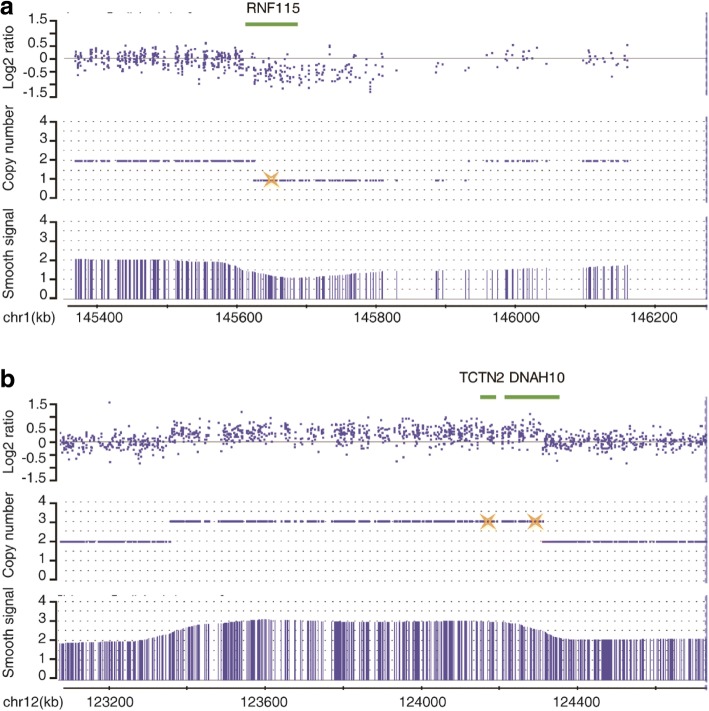
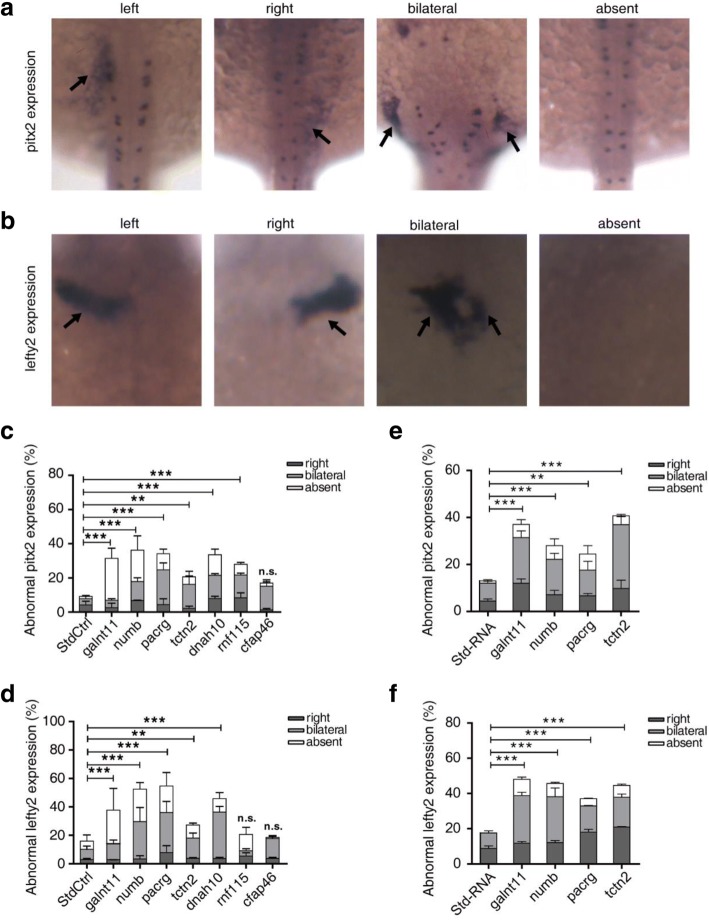
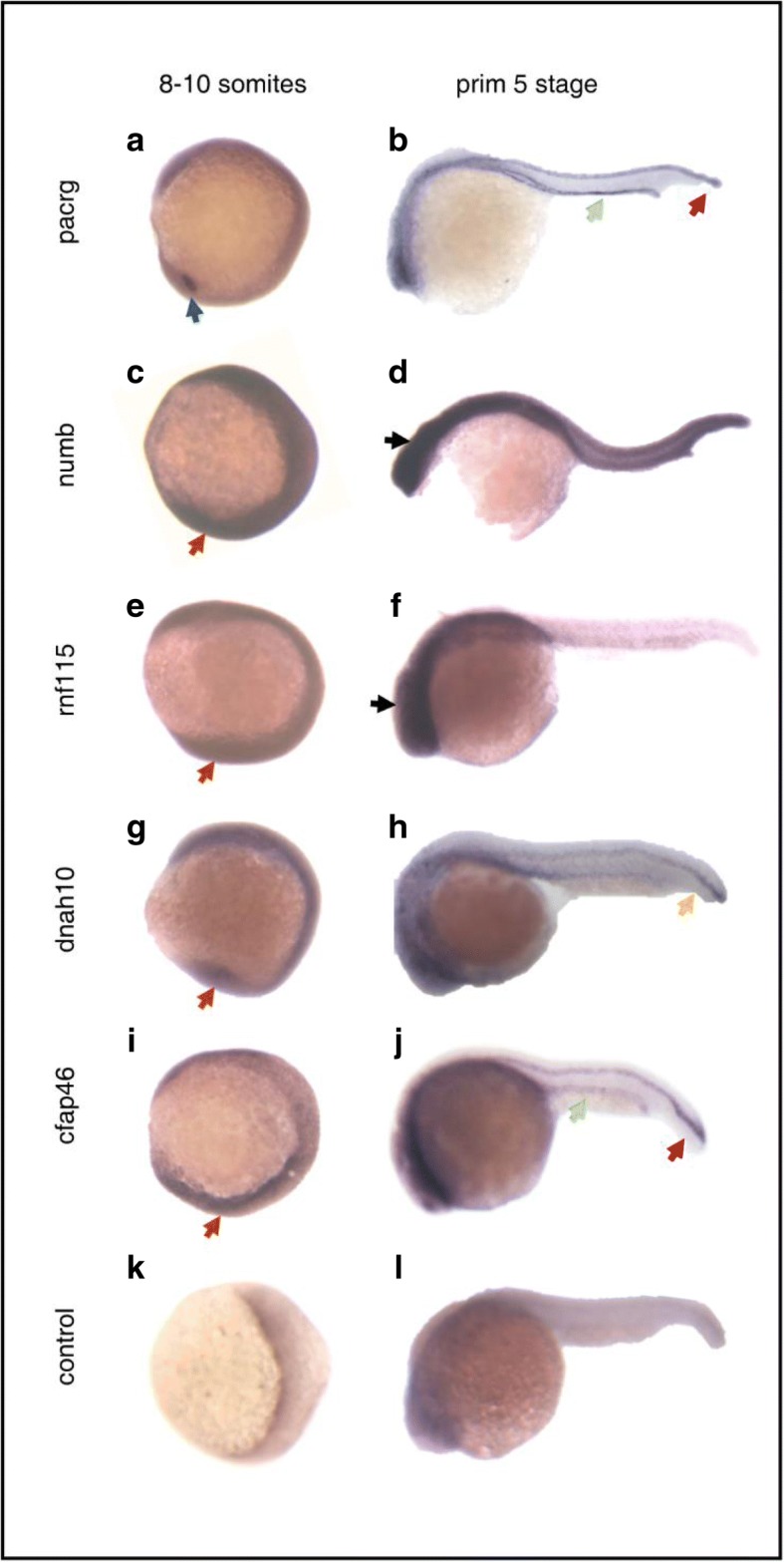
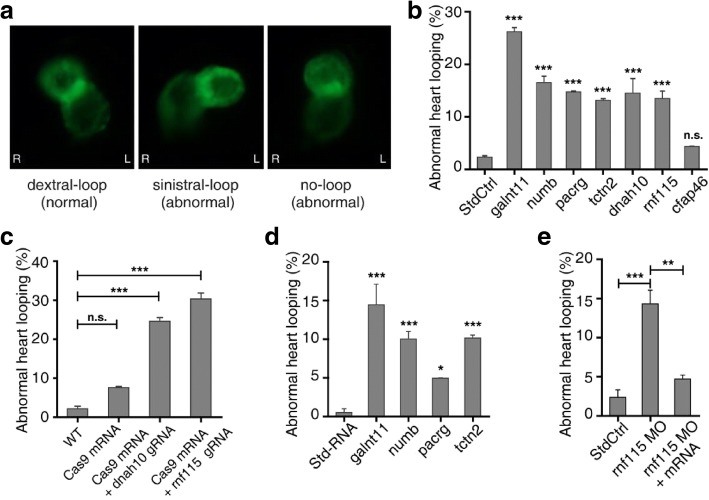
Nineteen rare CNVs were identified for the first time in patients with Htx. These CNVs include 5 heterozygous genic deletions, 4 internal genic duplications, and 10 complete duplications of at least one gene. Further analyses of the 19 rare CNVs identified six novel potential candidate genes (NUMB, PACRG, TCTN2, DANH10, RNF115, and TTC40) linked to left-right patterning. These candidate genes exhibited early expression patterns in zebrafish embryos. Functional testing revealed that downregulation and over-expression of five candidate genes (numb, pacrg, tctn2, dnah10, and rnf115) in zebrafish resulted in disruption of cardiac looping and abnormal expression of lefty2 or pitx2, molecular markers of left-right patterning.
Our findings show that Htx with congenital heart defects in some sporadic patients may be attributed to rare CNVs. Furthermore, DNAH10 and RNF115 are Htx candidate genes involved in left-right patterning which have not previously been reported in either humans or animals. Our results also advance understanding of the genetic components of Htx.
异构(Htx)综合征是一类由左右体模式形成畸形引起的先天性疾病。大约 90%的异构患者患有严重的先天性心脏病;因此,Htx 患者的生存率和预后都不理想。然而,大多数 Htx 病例的潜在病因和机制仍不清楚。本研究旨在探讨罕见拷贝数变异(CNVs)在 Htx 发病机制中的作用。
我们收集了 63 例散发性先天性心脏病 Htx 患者,使用 Affymetrix CytoScan HD 微阵列和实时聚合酶链反应检测罕见 CNVs。通过参考与左右发育相关的先前文献,选择与罕见 CNVs 相关的潜在候选基因。通过整体原位杂交、形态发生素敲低、规律成簇间隔短回文重复(CRISPR)/CRISPR 相关蛋白 9(Cas9)介导的突变、以及斑马鱼模型的过表达方法进一步分析候选基因的表达模式和功能。
首次在 Htx 患者中发现了 19 个罕见 CNVs。这些 CNVs 包括 5 个杂合性基因缺失、4 个内部基因内重复和 10 个至少一个基因的完全重复。对 19 个罕见 CNVs 的进一步分析确定了 6 个新的潜在候选基因(NUMB、PACRG、TCTN2、DANH10、RNF115 和 TTC40)与左右模式形成有关。这些候选基因在斑马鱼胚胎中表现出早期的表达模式。功能测试显示,在斑马鱼中下调和过表达 5 个候选基因(numb、pacrg、tctn2、dnah10 和 rnf115)会导致心脏环化异常和 lefty2 或 pitx2 的异常表达,lefty2 或 pitx2 是左右模式形成的分子标记物。
我们的研究结果表明,一些散发性患者的先天性心脏病 Htx 可能归因于罕见 CNVs。此外,DNAH10 和 RNF115 是参与左右模式形成的 Htx 候选基因,以前在人类或动物中均未报道过。我们的研究结果也加深了对 Htx 遗传成分的理解。