Department of Preventive Medicine, College of Korean Medicine, Kyung Hee University, Seoul, Korea.
Department of Cardiovascular and Neurologic Disease (Stroke center), College of Korean Medicine, Kyung Hee University, Seoul, Korea.
Cell Death Dis. 2018 May 29;9(6):649. doi: 10.1038/s41419-018-0658-y.
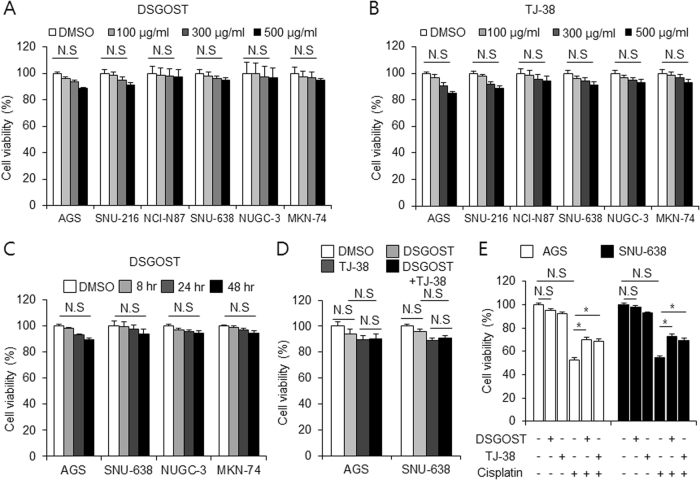
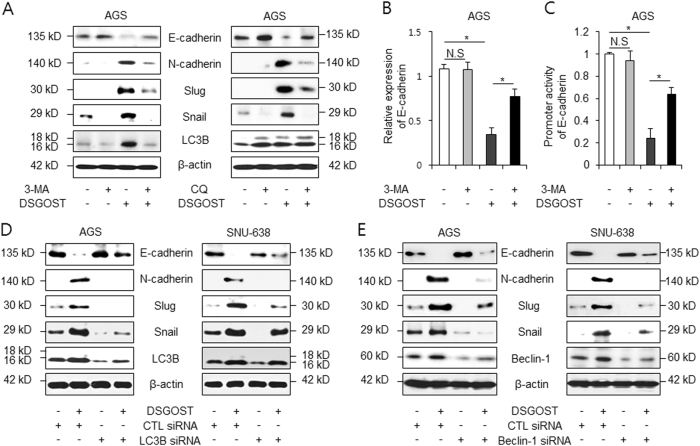
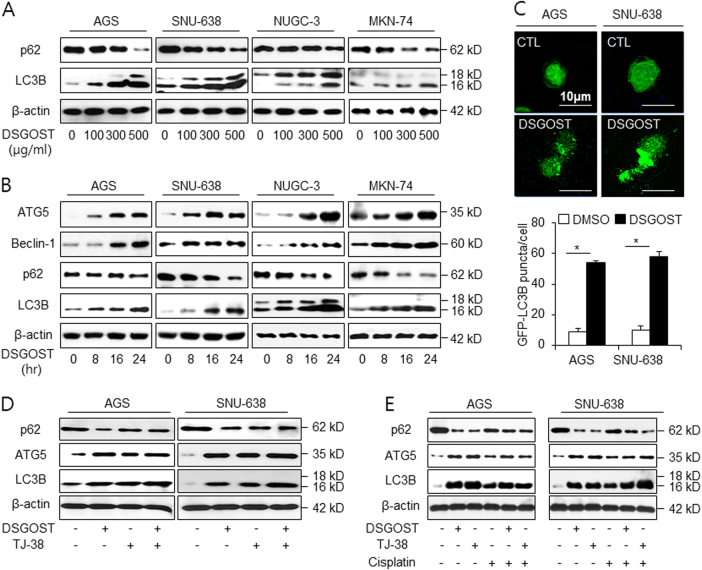
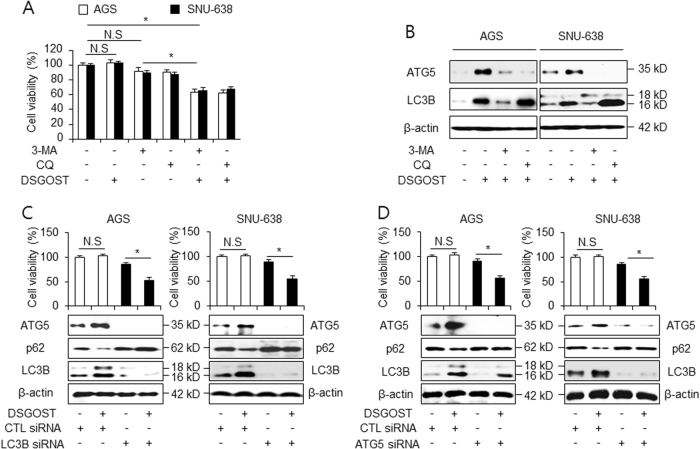
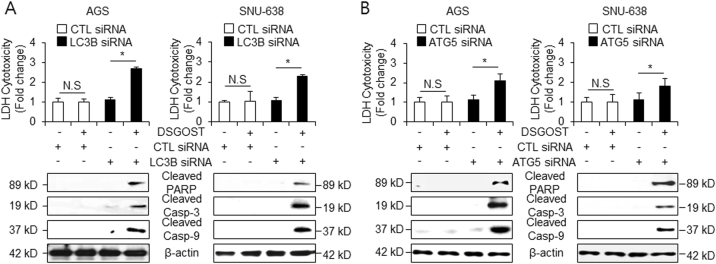
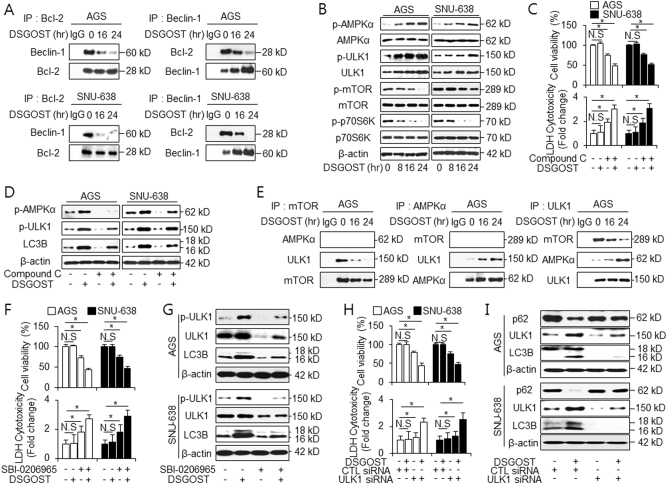
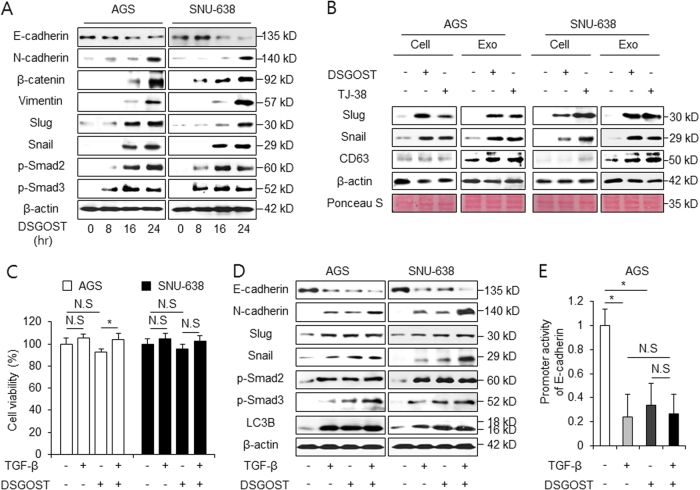
Danggui-Sayuk-Ga-Osuyu-Saenggang-Tang (DSGOST in Korean, Danggui-Sini-Jia-Wuzhuyu-Shengian-Tang in Chinese, and Tokishigyakukagoshuyushokyoto (TJ-38) in Japanese), a well-known traditional Korean/Chinese/Japanese medicine, has long been used to treat vascular diseases such as Raynaud's phenomenon (RP). However, anticancer effect of DSGOST remains elusive. In this study, we checked if DSGOST has an anticancer effect against gastric cancer cells, and investigated the mechanisms underlying DSGOST resistance. Moreover, DSGOST regulates chemoresistance in cisplatin-treated gastric cancer cells. Interestingly, DSGOST treatment induced the accumulation of GFP-LC3 puncta and increased the level of autophagy markers, such as LC3-II, ATG5, and Beclin-1, indicating activated autophagy. Furthermore, DSGOST could activate epithelial-to-mesenchymal transition (EMT) and exosomes via induction of autophagy. DSGOST in combination with TGFβ also induced autophagy and EMT. However, autophagy inhibition induces DSGOST-mediated cell death in gastric cancer cells. In addition, autophagy inhibition blocks the activation of DSGOST-mediated EMT markers including N-cadherin, Snail, Slug, vimentin, β-catenin, p-Smad2, and p-Smad3. Taken together, these findings indicated that prosurvival autophagy was one of the mechanisms involved in the resistance of gastric cancer to DSGOST. Targeting the inhibition of autophagy could be an effective therapeutic approach to overcome resistance to DSGOST in gastric cancer.
当归芍药加味汤(DSGOST,在韩语中)、当归四逆加吴茱萸生姜汤(DSGOST,在中文中)和独活寄生汤(TJ-38,在日语中),一种著名的韩/中/日传统药物,长期以来一直用于治疗血管疾病,如雷诺现象(RP)。然而,DSGOST 的抗癌作用仍不清楚。在这项研究中,我们检查了 DSGOST 是否对胃癌细胞具有抗癌作用,并研究了 DSGOST 耐药的机制。此外,DSGOST 调节顺铂处理的胃癌细胞的化学耐药性。有趣的是,DSGOST 处理诱导 GFP-LC3 斑点的积累,并增加自噬标志物的水平,如 LC3-II、ATG5 和 Beclin-1,表明自噬被激活。此外,DSGOST 可以通过诱导自噬来激活上皮间质转化(EMT)和外泌体。DSGOST 与 TGFβ 联合也诱导自噬和 EMT。然而,自噬抑制诱导 DSGOST 介导的胃癌细胞死亡。此外,自噬抑制阻断了 DSGOST 介导的 EMT 标志物的激活,包括 N-钙黏蛋白、Snail、Slug、波形蛋白、β-catenin、p-Smad2 和 p-Smad3。总之,这些发现表明,存活的自噬是胃癌对 DSGOST 耐药的机制之一。靶向自噬抑制可能是克服胃癌对 DSGOST 耐药的有效治疗方法。