Department of Materials Engineering, School of Engineering, The University of Tokyo, 7-3-1 Hongo, Bunkyo-ku, Tokyo, 113-8656, Japan.
Sci Rep. 2018 May 29;8(1):8282. doi: 10.1038/s41598-018-26719-4.
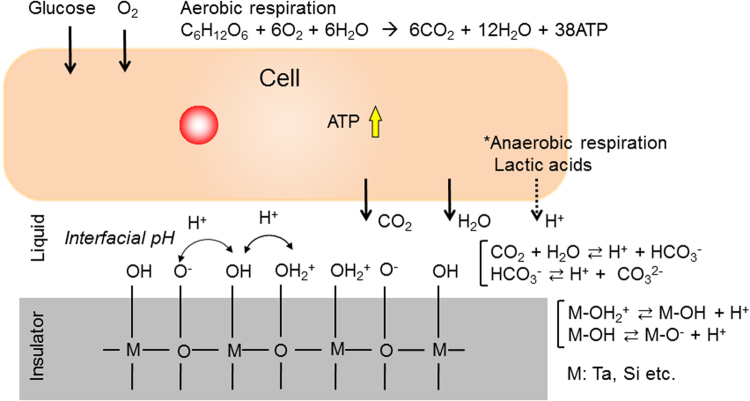
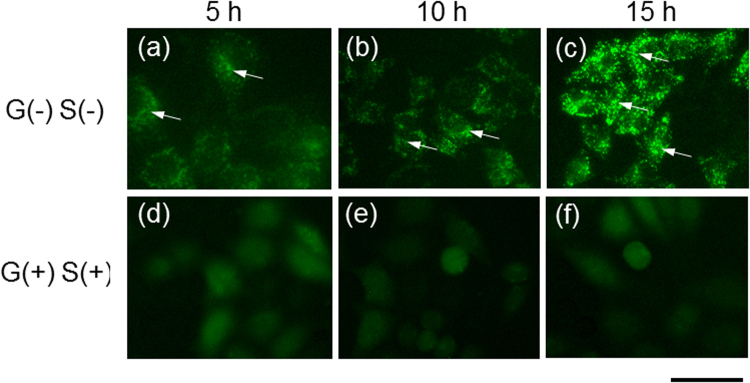
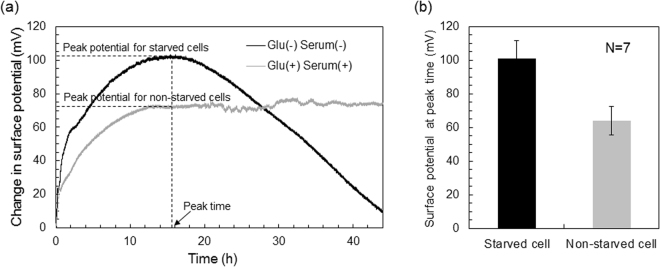
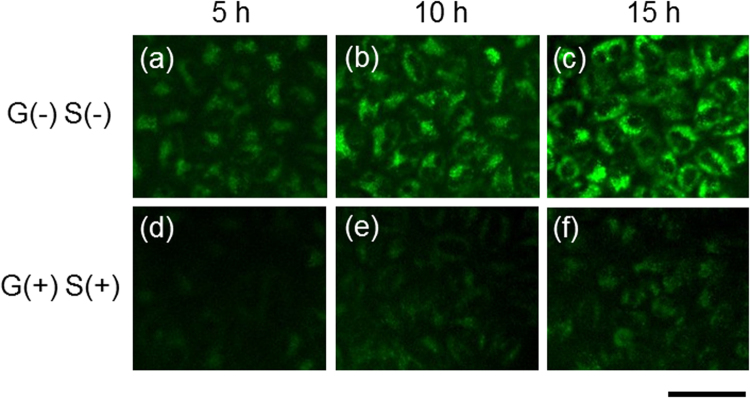
In this study, we report a novel method for the in situ measurement of autophagy under nutrient starvation using a principle of semiconductor technology. A semiconductor-based field-effect transistor (FET) biosensor enables the direct detection of ionic or molecular charges under biological conditions. In particular, cellular respiration accompanied by the generation of carbon dioxide can be continuously and directly monitored as a change in pH at a cell/sensor interface. When autophagy was induced in HeLa cells on a FET biosensor under nutrient starvation, the surface potential increased more significantly for about 15 h than that for nonstarved cells. This positive shift indicates an increase in the number of hydrogen ions produced from the respiration of starved cells because the sensing surface was previously designed to be sensitive to pH variation. Therefore, we have found that cellular respiration is more activated by autophagy under nutrient starvation because the amino acids that decomposed from proteins in autophagic cells would have been rapidly spent in cellular respiration.
在这项研究中,我们报告了一种使用半导体技术原理原位测量营养饥饿下自噬的新方法。基于半导体的场效应晶体管(FET)生物传感器能够在生物条件下直接检测离子或分子电荷。特别地,伴随着二氧化碳生成的细胞呼吸可以作为细胞/传感器界面处 pH 值的变化被连续和直接监测。当 HeLa 细胞在营养饥饿下的 FET 生物传感器上诱导自噬时,表面电势比非饥饿细胞增加得更显著,约 15 小时。这种正移表示从饥饿细胞的呼吸中产生的氢离子数量增加,因为传感表面之前被设计为对 pH 值变化敏感。因此,我们发现营养饥饿下自噬会更激活细胞呼吸,因为自噬细胞中分解的氨基酸会在细胞呼吸中迅速消耗。