Wang Yonghua, Liu Jing, Yang Xuecheng, Liu Yanan, Liu Yong, Li Yanjiang, Sun Lijiang, Yang Xiaokun, Niu Haitao
Department of Urology.
Department of Pediatrics, The Affiliated Hospital of Qingdao University, Qingdao 266000, People's Republic of China.
Onco Targets Ther. 2018 May 16;11:2891-2899. doi: 10.2147/OTT.S165840. eCollection 2018.
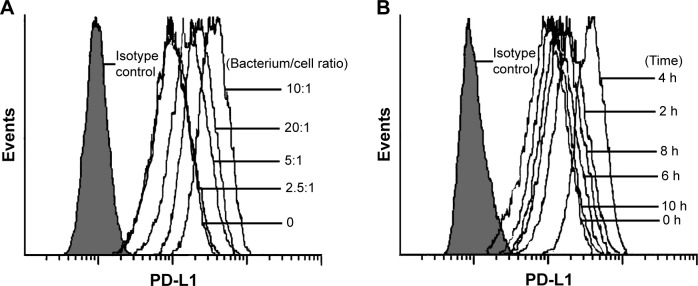
Programmed death-ligand 1 (PD-L1) is a critical immune checkpoint molecule which promotes immunosuppression by binding to PD-1 on T-cells in tumor immunity. We have previously identified that activation of toll like receptor 4 (TLR-4), which serves an important role in the induction of antitumor immune response during Bacillus Calmette-Guérin (BCG) immunotherapy, could upregulate PD-L1 expression in bladder cancer (BCa) cells through the classical mitogen-activated protein kinase (MAPK) pathway and subsequently weaken the cytotoxicity of cytotoxic T lymphocyte (CTL). It is, therefore, necessary to investigate the possible potential relationship between PD-L1 expression and BCG immunotherapy.
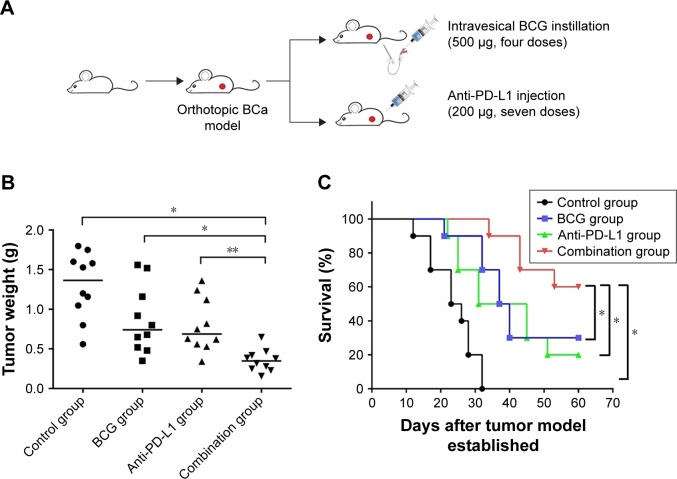
In this study we investigated the effects of BCG treatment on PD-L1 expression in BCa cells and also evaluated the efficacy of BCG and anti-PD-L1 combination therapy in immunocompetent orthotopic rat BCa models.
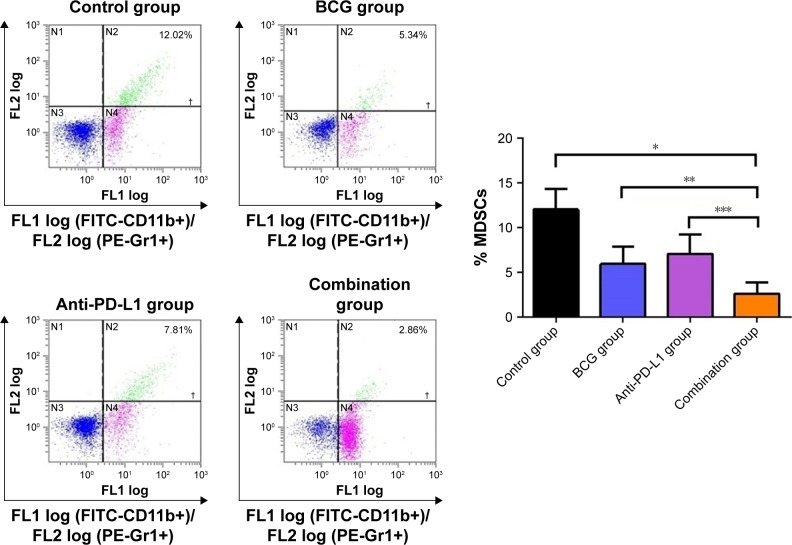
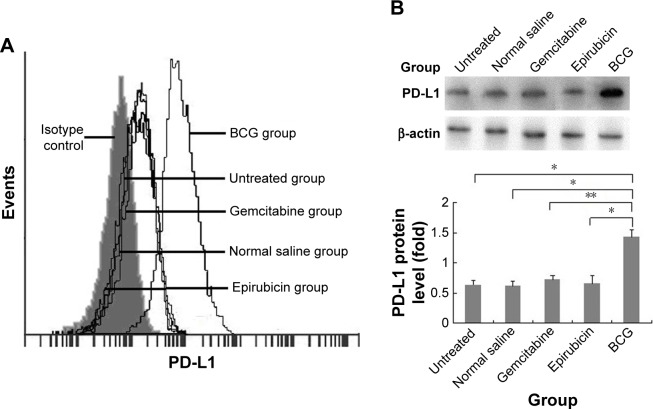
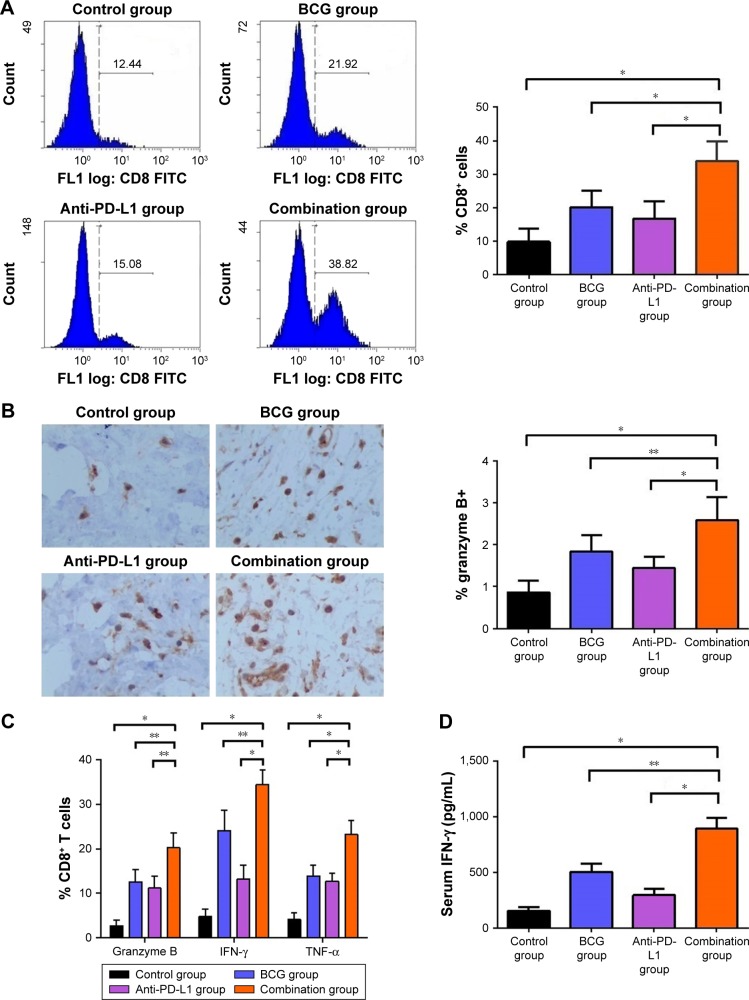
We found that PD-L1 expression was obviously upregulated in BCa cells in response to BCG treatment both in vitro and in vivo. Moreover, BCG and anti-PD-L1 combination treatment activated a potent antitumor immune response with the increase in the number and activity of tumor-infiltrating CD8 T cells, as well as the reduction in myeloid-derived suppressor cells (MDSCs), and eventually elicits prominent tumor growth inhibition and prolonged survival, and was found to be much more effective than either agent alone.
These findings highlight the adaptive dynamic regulation of PD-L1 in response to BCG immunotherapy and suggest that combination of BCG immunotherapy with PD-L1 blockade may be an effective antitumor strategy for improving treatment outcomes of BCa.
程序性死亡配体1(PD-L1)是一种关键的免疫检查点分子,在肿瘤免疫中通过与T细胞上的PD-1结合促进免疫抑制。我们之前已经确定,在卡介苗(BCG)免疫治疗期间诱导抗肿瘤免疫反应中起重要作用的Toll样受体4(TLR-4)的激活,可通过经典的丝裂原活化蛋白激酶(MAPK)途径上调膀胱癌细胞(BCa)中PD-L1的表达,随后削弱细胞毒性T淋巴细胞(CTL)的细胞毒性。因此,有必要研究PD-L1表达与BCG免疫治疗之间可能的潜在关系。
在本研究中,我们研究了BCG治疗对BCa细胞中PD-L1表达的影响,并评估了BCG与抗PD-L1联合治疗在具有免疫活性的原位大鼠BCa模型中的疗效。
我们发现,在体外和体内,BCG治疗均可使BCa细胞中的PD-L1表达明显上调。此外,BCG与抗PD-L1联合治疗激活了强大的抗肿瘤免疫反应,肿瘤浸润性CD8 T细胞的数量和活性增加,髓源性抑制细胞(MDSC)减少,最终导致显著的肿瘤生长抑制和生存期延长,并且发现联合治疗比单独使用任何一种药物都更有效。
这些发现突出了PD-L1对BCG免疫治疗的适应性动态调节,并表明BCG免疫治疗与PD-L1阻断相结合可能是改善BCa治疗效果的有效抗肿瘤策略。