Department of Bioscience and Biotechnology, Graduate School of Bioresource and Bioenvironmental Sciences, Kyushu University, Fukuoka 8128581, Japan.
Department of Biology, Univ. Paris-Sud, Univ. Paris-Saclay, Orsay F-91405, France.
Nucleic Acids Res. 2018 Jul 6;46(12):6206-6217. doi: 10.1093/nar/gky460.
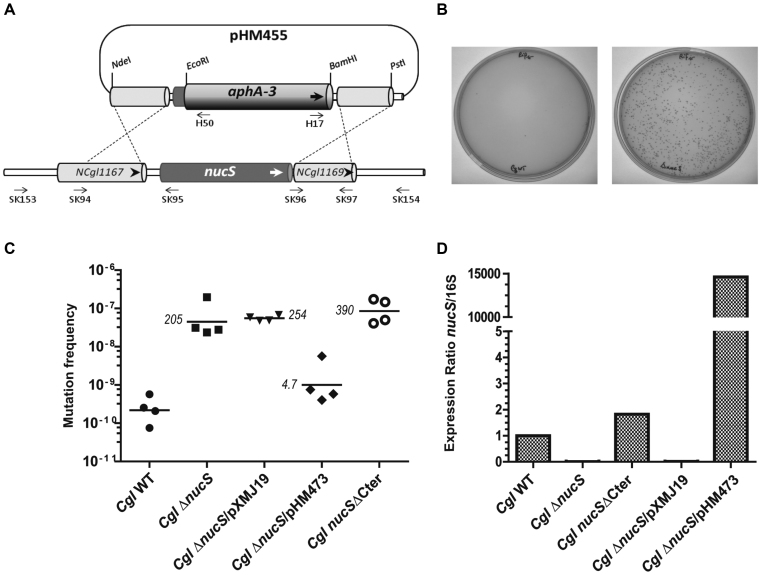
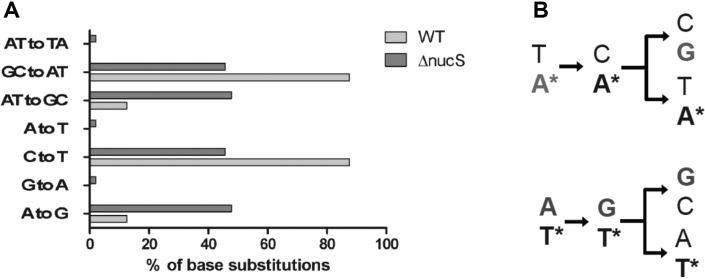
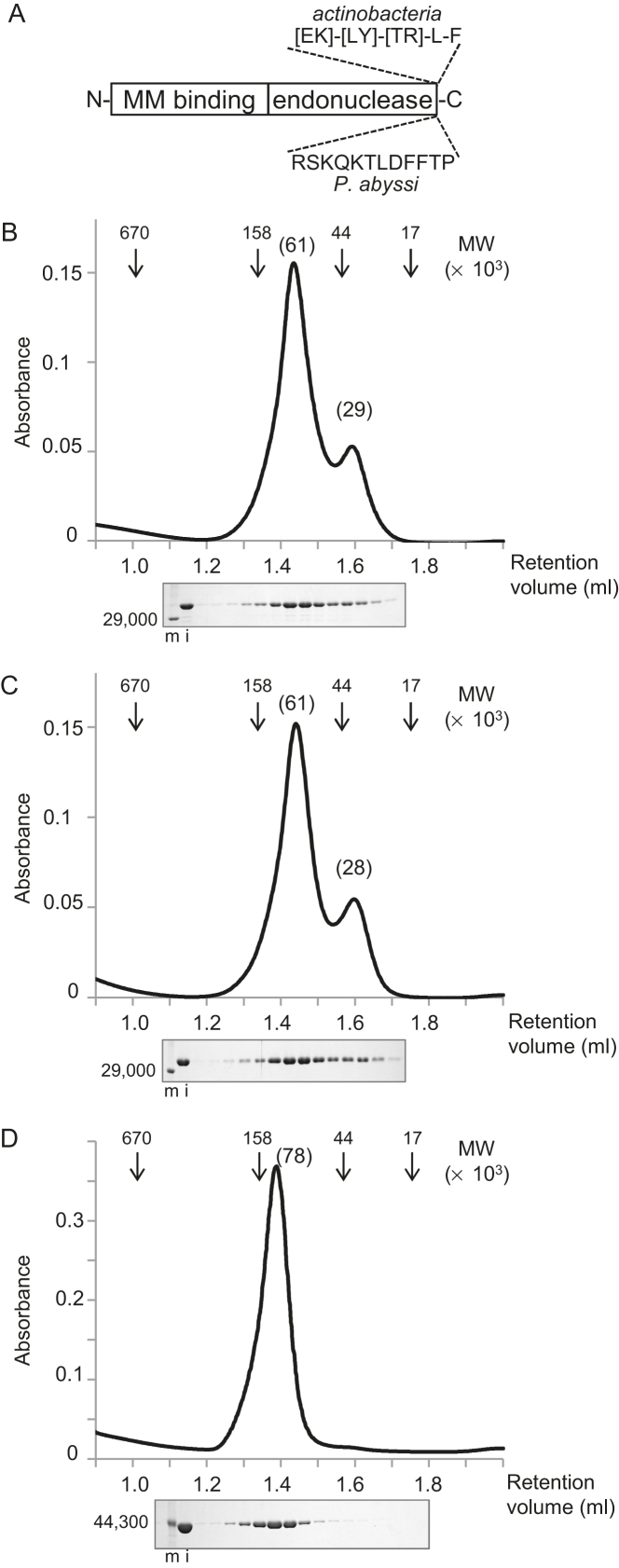
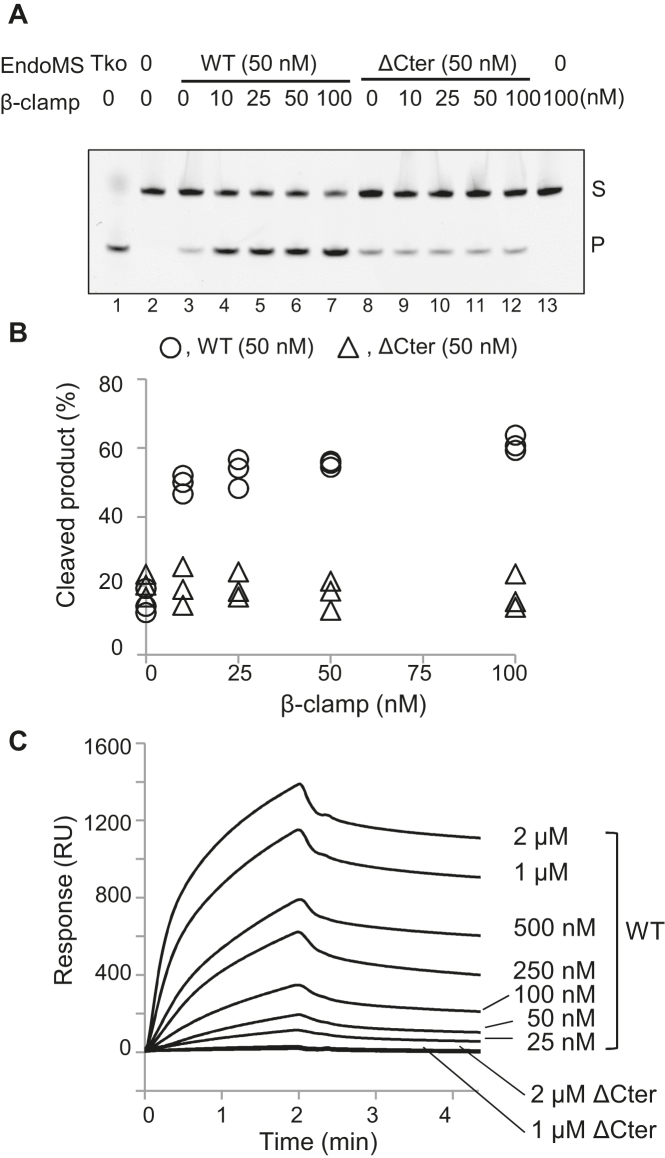
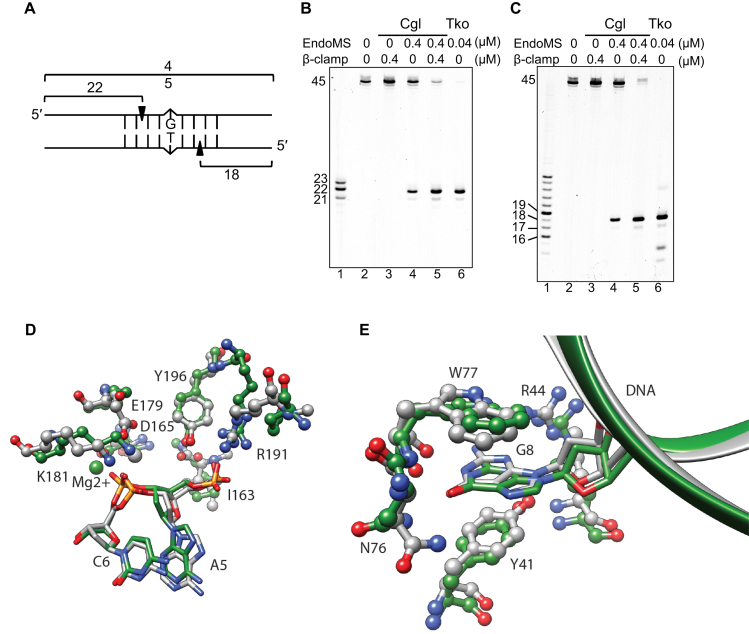
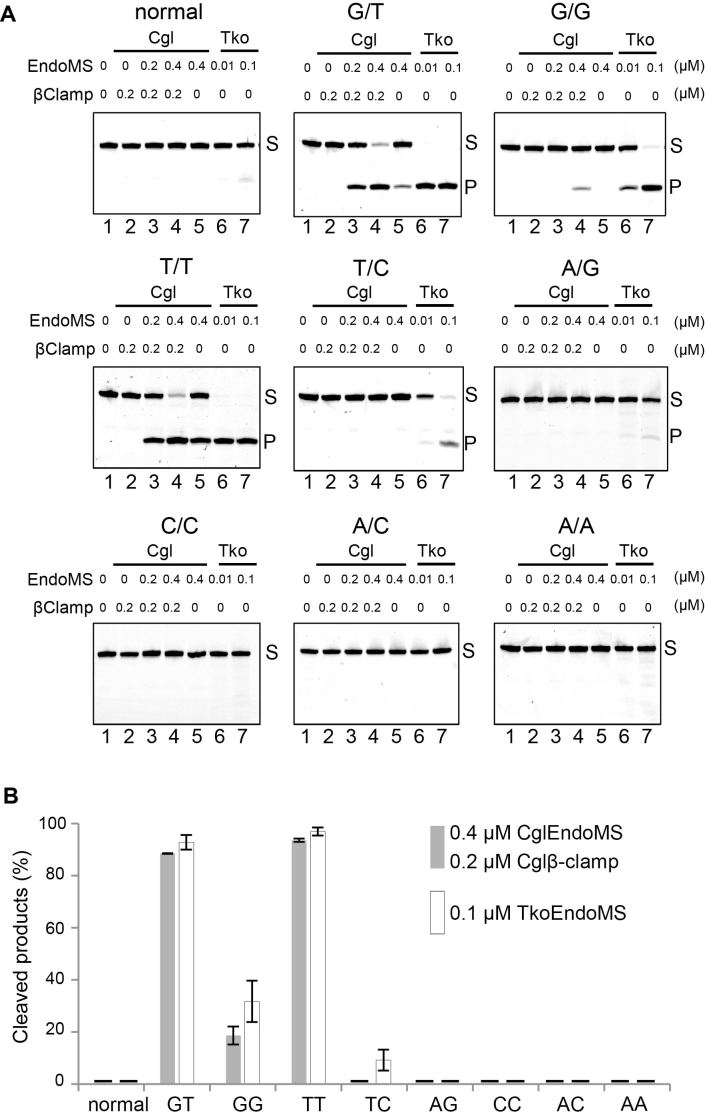
The mismatch repair (MMR) system, exemplified by the MutS/MutL proteins, is widespread in Bacteria and Eukarya. However, molecular mechanisms how numerous archaea and bacteria lacking the mutS/mutL genes maintain high replication fidelity and genome stability have remained elusive. EndoMS is a recently discovered hyperthermophilic mismatch-specific endonuclease encoded by nucS in Thermococcales. We deleted the nucS from the actinobacterium Corynebacterium glutamicum and demonstrated a drastic increase of spontaneous transition mutations in the nucS deletion strain. The observed spectra of these mutations were consistent with the enzymatic properties of EndoMS in vitro. The robust mismatch-specific endonuclease activity was detected with the purified C. glutamicum EndoMS protein but only in the presence of the β-clamp (DnaN). Our biochemical and genetic data suggest that the frequently occurring G/T mismatch is efficiently repaired by the bacterial EndoMS-β-clamp complex formed via a carboxy-terminal sequence motif of EndoMS proteins. Our study thus has great implications for understanding how the activity of the novel MMR system is coordinated with the replisome and provides new mechanistic insight into genetic diversity and mutational patterns in industrially and clinically (e.g. Mycobacteria) important archaeal and bacterial phyla previously thought to be devoid of the MMR system.
错配修复 (MMR) 系统,以 MutS/MutL 蛋白为代表,广泛存在于细菌和真核生物中。然而,大量缺乏 mutS/mutL 基因的古菌和细菌如何维持高复制保真度和基因组稳定性的分子机制仍然难以捉摸。EndoMS 是一种最近发现的热嗜古菌特异性内切酶,由 Thermococcales 中的 nucS 编码。我们从放线菌谷氨酸棒杆菌中删除了 nucS,并证明 nucS 缺失菌株中自发转换突变的急剧增加。这些突变的观察谱与体外 EndoMS 的酶学特性一致。用纯化的 C. glutamicum EndoMS 蛋白检测到了强大的错配特异性内切酶活性,但仅在 β-夹(DnaN)存在的情况下才检测到。我们的生化和遗传数据表明,细菌 EndoMS-β-夹复合物通过 EndoMS 蛋白的羧基末端序列基序形成,有效地修复了经常发生的 G/T 错配。因此,我们的研究对于理解新型 MMR 系统的活性如何与复制体协调具有重要意义,并为以前被认为缺乏 MMR 系统的工业和临床(例如分枝杆菌)重要古菌和细菌门的遗传多样性和突变模式提供了新的机制见解。