Preston Claudia C, Wyles Saranya P, Reyes Santiago, Storm Emily C, Eckloff Bruce W, Faustino Randolph S
Genetics and Genomics Group, Sanford Research, 2301 E. 60th Street N, Sioux Falls, SD, 57104, USA.
Department of Dermatology, Mayo Clinic, 200 1st St SW, Rochester, MN, 55905, USA.
BMC Syst Biol. 2018 May 30;12(1):62. doi: 10.1186/s12918-018-0590-x.
Atrial fibrillation is a cardiac disease driven by numerous idiopathic etiologies. NUP155 is a nuclear pore complex protein that has been identified as a clinical driver of atrial fibrillation, yet the precise mechanism is unknown. The present study employs a systems biology algorithm to identify effects of NUP155 disruption on cardiogenicity in a model of stem cell-derived differentiation.
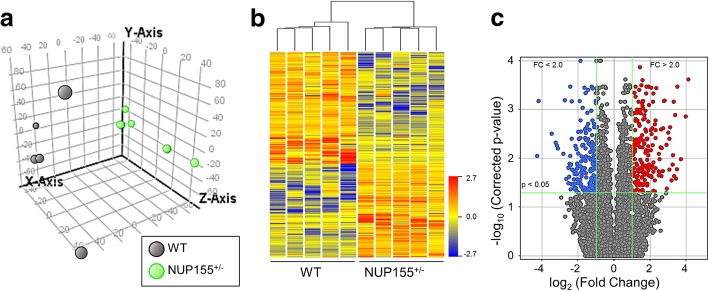
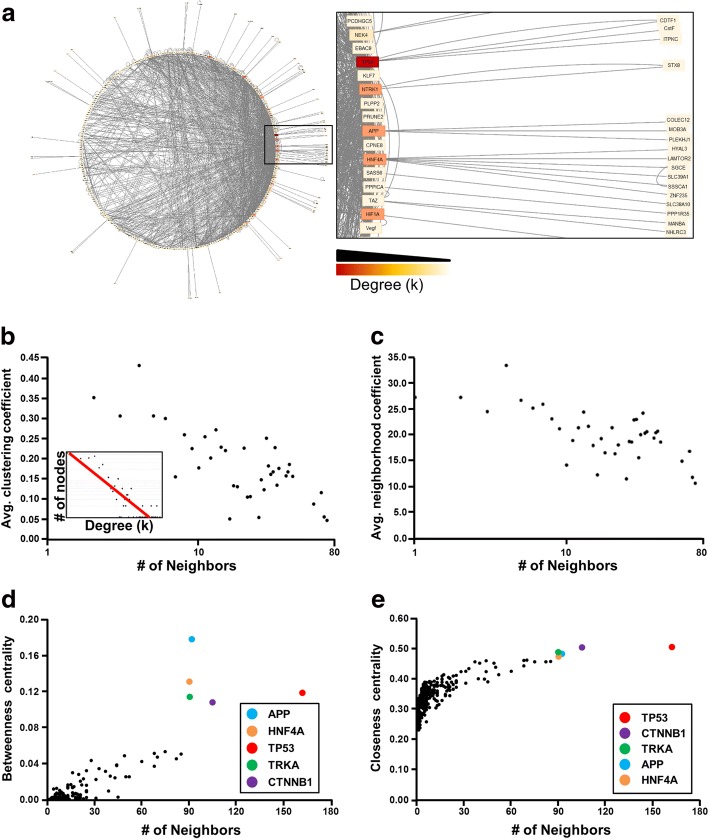
Embryonic stem (ES) cell lines (n = 5) with truncated NUP155 were cultured in parallel with wild type (WT) ES cells (n = 5), and then harvested for RNAseq. Samples were run on an Illumina HiSeq 2000. Reads were analyzed using Strand NGS, Cytoscape, DAVID and Ingenuity Pathways Analysis to deconvolute the NUP155-disrupted transcriptome. Network topological analysis identified key features that controlled framework architecture and functional enrichment.
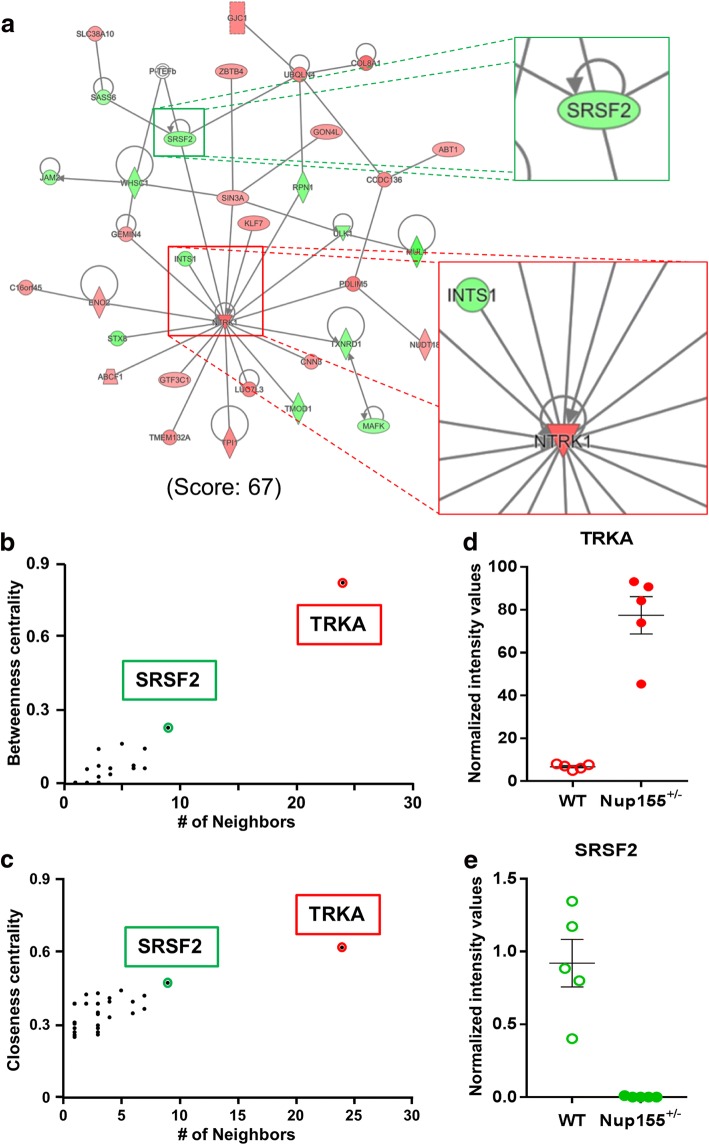
In NUP155 truncated ES cells, significant expression changes were detected in 326 genes compared to WT. These genes segregated into clusters that enriched for specific gene ontologies. Deconvolution of the collective framework into discrete sub-networks identified a module with the highest score that enriched for Cardiovascular System Development, and revealed NTRK1/TRKA and SRSF2/SC35 as critical hubs within this cardiogenic module.
The strategy of pluripotent transcriptome deconvolution used in the current study identified a novel association of NUP155 with potential drivers of arrhythmogenic AF. Here, NUP155 regulates cardioplasticity of a sub-network embedded within a larger framework of genome integrity, and exemplifies how transcriptome cardiogenicity in an embryonic stem cell genome is recalibrated by nucleoporin dysfunction.
心房颤动是一种由多种特发性病因驱动的心脏疾病。NUP155是一种核孔复合体蛋白,已被确定为心房颤动的临床驱动因素,但其确切机制尚不清楚。本研究采用系统生物学算法,在干细胞衍生分化模型中确定NUP155破坏对心脏发生的影响。
将截短NUP155的胚胎干细胞系(n = 5)与野生型(WT)胚胎干细胞(n = 5)平行培养,然后收获进行RNA测序。样本在Illumina HiSeq 2000上运行。使用Strand NGS、Cytoscape、DAVID和 Ingenuity Pathways Analysis对读数进行分析,以解卷积NUP155破坏的转录组。网络拓扑分析确定了控制框架结构和功能富集的关键特征。
在截短NUP155的胚胎干细胞中,与野生型相比,在326个基因中检测到显著的表达变化。这些基因聚集成簇,富集特定的基因本体。将集体框架解卷积为离散的子网络,确定了一个得分最高的模块,该模块富集了心血管系统发育,并揭示NTRK1/TRKA和SRSF2/SC35是该心脏发生模块中的关键枢纽。
本研究中使用的多能转录组解卷积策略确定了NUP155与致心律失常性房颤的潜在驱动因素之间的新型关联。在这里,NUP155调节嵌入在基因组完整性更大框架内的子网络的心脏可塑性,并举例说明了核孔蛋白功能障碍如何重新校准胚胎干细胞基因组中的转录组心脏发生能力。