Institute of Immunology and Immunotherapy, Cancer Immunology and Immunotherapy Centre, University of Birmingham, Birmingham, UK.
Infection and Immunity Program and Department of Biochemistry and Molecular Biology, Biomedicine Discovery Institute, Monash University, Clayton, VIC, Australia.
J Immunother Cancer. 2018 Jul 13;6(1):70. doi: 10.1186/s40425-018-0386-y.
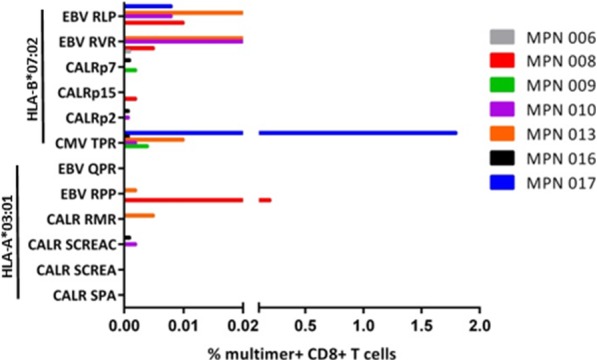
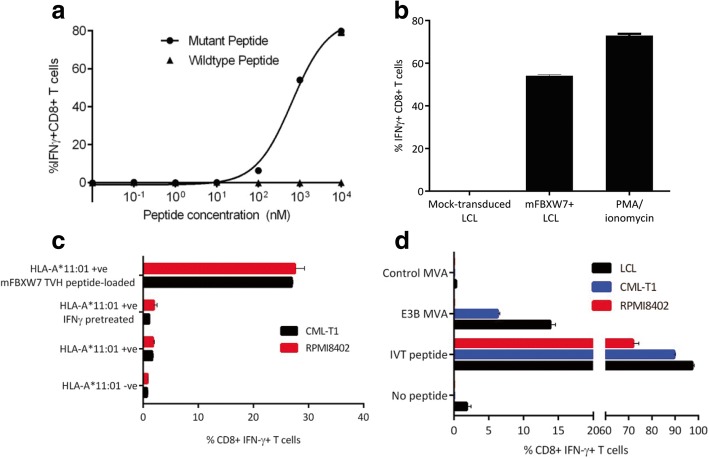
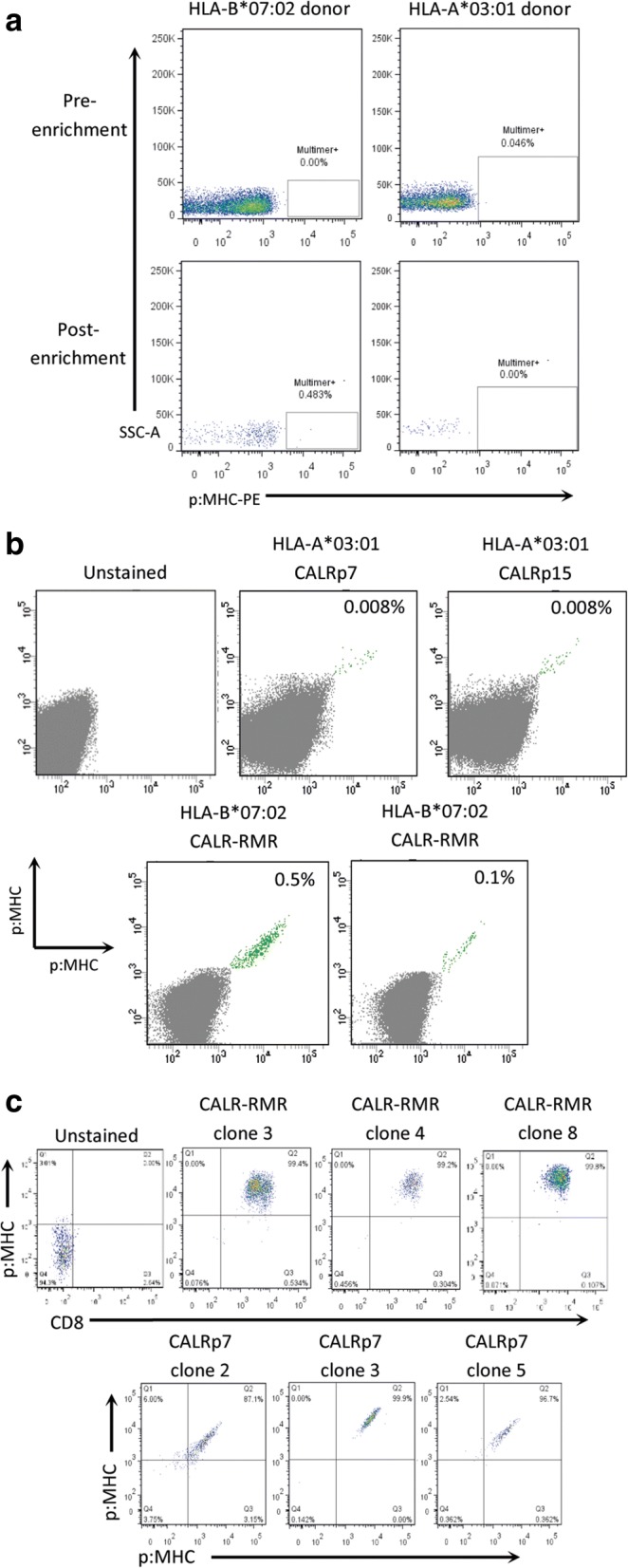
Mutation-derived neoantigens represent an important class of tumour-specific, tumour rejection antigens, and are attractive targets for TCR gene therapy of cancer. The majority of such mutations are patient-specific and targeting these requires a fully personalized approach. However, some mutations are found recurrently among cancer patients, and represent potential targets for neoantigen-specific TCR gene therapy that is more widely applicable. Therefore, we have investigated if some cancer mutations found recurrently in hematological malignancies encode immunogenic neoantigens presented by common European Caucasoid HLA class I alleles and can form targets for TCR gene therapy. We initially focused on identifying HLA class I neoepitopes derived from calreticulin (CALR) exon 9 mutations, found in ~ 80% of JAK2wt myeloproliferative neoplasms (MPN). Based on MHC class I peptide predictions, a number of peptides derived from mutant CALR (mCALR) were predicted to bind to HLA-A03:01 and HLA-B07:02. However, using mass spectrometry and ex vivo pMHC multimer staining of PBMC from MPN patients with CALR exon 9 mutations, we found no evidence that these peptides were naturally processed and presented on the surface of mCALR-expressing target cells. We next developed a protocol utilizing pMHC multimers to isolate CD8 T cells from healthy human donor PBMC that are specific for mCALR and additional putative neoepitopes found recurrently in hematological malignancies. Using this approach, CD8 T cells specific for HLA-A03:01- and HLA-B07:02-presented mCALR peptides and an HLA-A11:01-presented mutant FBXW7 (mFBXW7) peptide were successfully isolated. TCRs isolated from mCALR-specific CD8 T cell populations were not able to recognize target cells engineered to express mCALR. In contrast, mFBXW7-specific CD8 T cells were able to recognize target cells engineered to express mFBXW7. In conclusion, while we found no evidence for mCALR derived neoepitope presentation in the context of the HLA class I alleles studied, our data suggests that the recurrent pR465H mutation in FBXW7 may encode an HLA-A11:01 presented neoepitope, and warrants further investigation as a target for T cell based immunotherapy of cancer.
突变衍生的新抗原代表了一类重要的肿瘤特异性、肿瘤排斥抗原,是癌症 TCR 基因治疗的有吸引力的靶点。大多数此类突变是患者特异性的,需要完全个性化的方法来靶向这些突变。然而,一些突变在癌症患者中反复出现,代表了更广泛应用的新抗原特异性 TCR 基因治疗的潜在靶点。因此,我们研究了在血液恶性肿瘤中反复出现的一些癌症突变是否编码由常见的欧洲白种人 HLA Ⅰ类等位基因呈递的免疫原性新抗原,并能成为 TCR 基因治疗的靶点。我们最初专注于鉴定来自钙网蛋白(CALR)外显子 9 突变的 HLA Ⅰ类新表位,该突变存在于约 80%的 JAK2wt 骨髓增殖性肿瘤(MPN)中。基于 MHC Ⅰ类肽预测,一些源自突变 CALR(mCALR)的肽被预测与 HLA-A03:01 和 HLA-B07:02 结合。然而,通过质谱分析和来自 CALR 外显子 9 突变的 MPN 患者的 PBMC 的体外 pMHC 多聚体染色,我们没有发现这些肽被自然加工并呈现在表达 mCALR 的靶细胞表面的证据。我们接下来开发了一种利用 pMHC 多聚体从健康人类供体 PBMC 中分离针对 mCALR 和其他在血液恶性肿瘤中反复出现的假定新抗原的 CD8 T 细胞的方案。使用这种方法,成功分离出针对 HLA-A03:01 和 HLA-B07:02 呈递 mCALR 肽和 HLA-A11:01 呈递突变 FBXW7(mFBXW7)肽的 CD8 T 细胞。从 mCALR 特异性 CD8 T 细胞群体中分离出的 TCR 不能识别工程表达 mCALR 的靶细胞。相比之下,mFBXW7 特异性 CD8 T 细胞能够识别工程表达 mFBXW7 的靶细胞。总之,虽然我们没有发现研究的 HLA Ⅰ类等位基因背景下 mCALR 衍生的新表位呈递的证据,但我们的数据表明 FBXW7 中的反复 pR465H 突变可能编码 HLA-A11:01 呈递的新抗原,值得进一步研究作为癌症 T 细胞免疫治疗的靶点。