Programa de Biologia Estrutural, Instituto de Bioquímica Médica Leopoldo de Meis, Instituto Nacional de Ciência e Tecnologia de Biologia Estrutural e Bioimagem, Centro Nacional de Ressonância Magnética Nuclear Jiri Jonas, Universidade Federal do Rio de Janeiro, Rio de Janeiro, RJ 21941-901, Brazil.
Programa de Biologia Estrutural, Instituto de Bioquímica Médica Leopoldo de Meis, Instituto Nacional de Ciência e Tecnologia de Biologia Estrutural e Bioimagem, Centro Nacional de Ressonância Magnética Nuclear Jiri Jonas, Universidade Federal do Rio de Janeiro, Rio de Janeiro, RJ 21941-901, Brazil; Department of Biochemistry and Molecular Genetics, University of Virginia, Charlottesville, Virginia 22908.
J Biol Chem. 2018 Jul 20;293(29):11374-11387. doi: 10.1074/jbc.RA118.003285. Epub 2018 May 31.
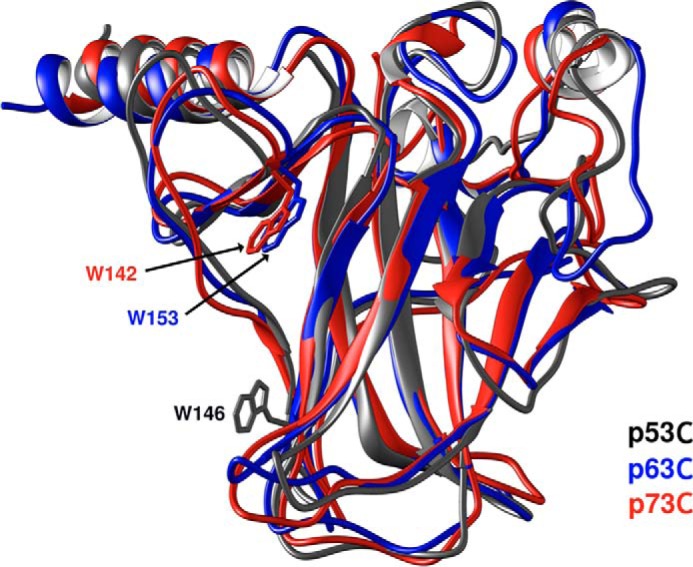
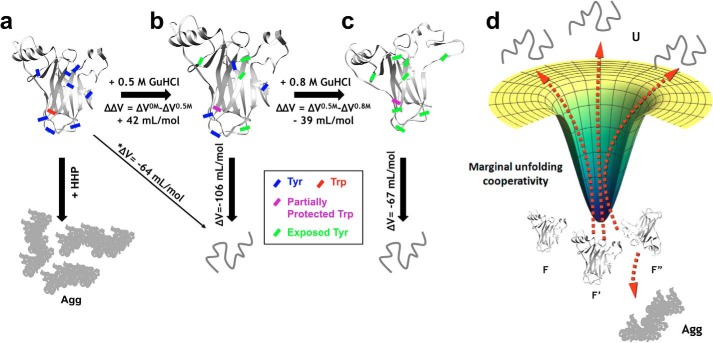
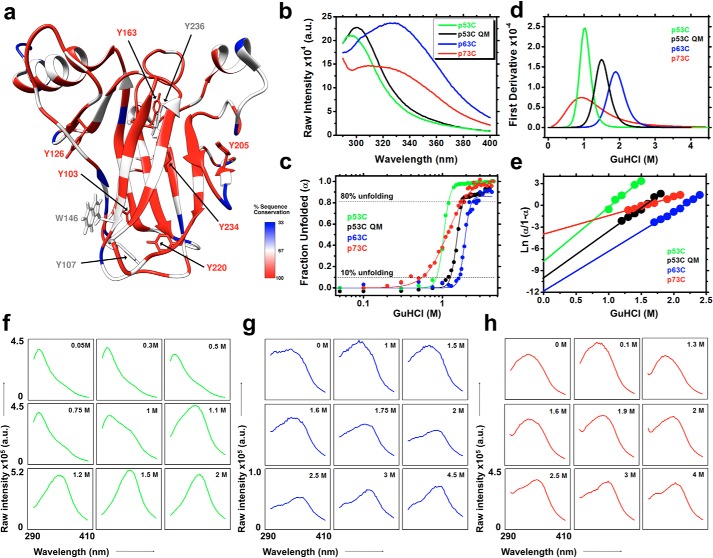
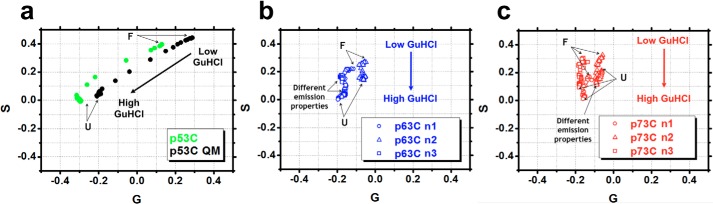
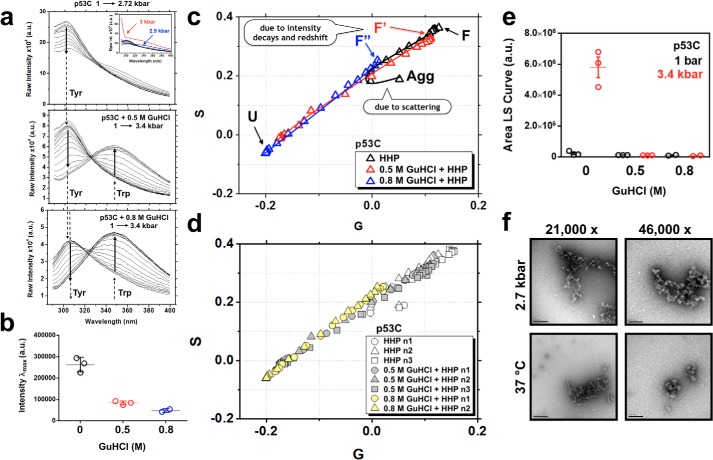
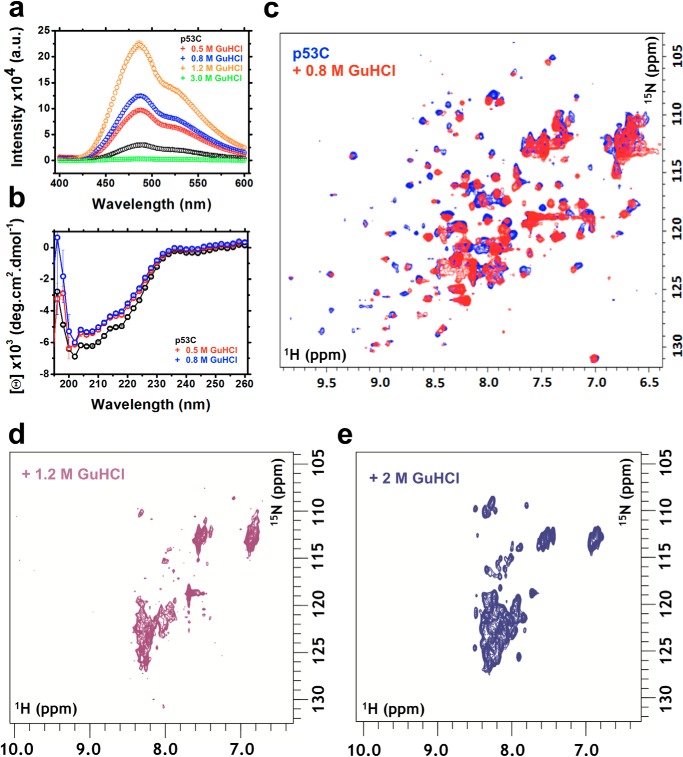
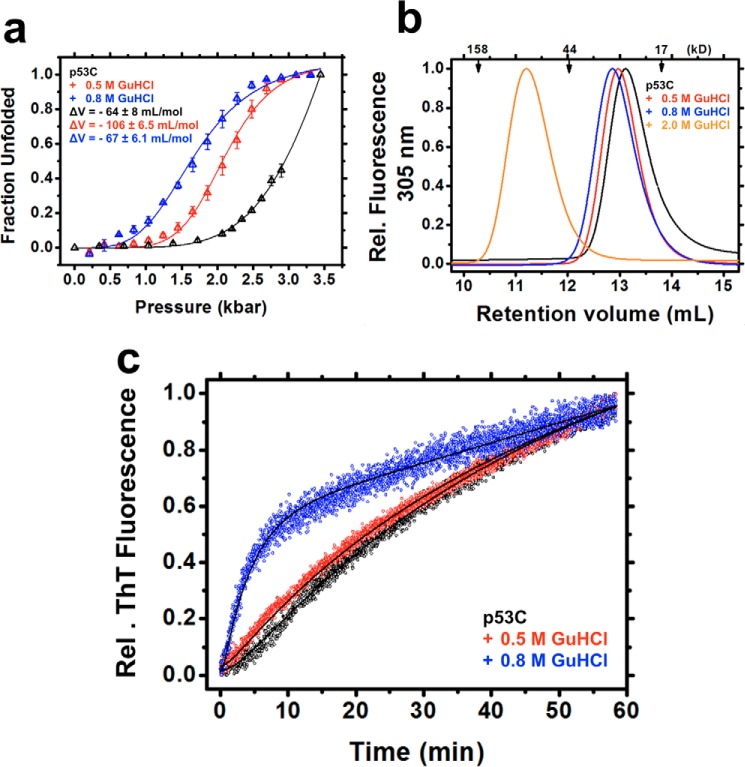
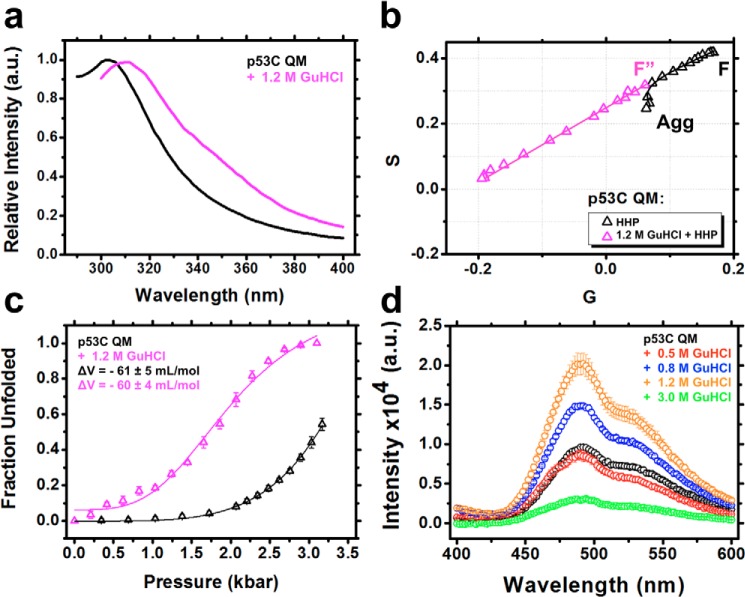
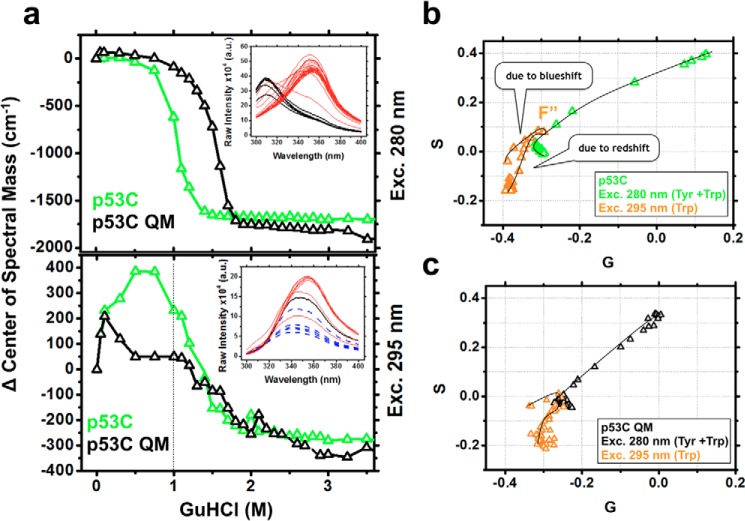
The functionality of the tumor suppressor p53 is altered in more than 50% of human cancers, and many individuals with cancer exhibit amyloid-like buildups of aggregated p53. An understanding of what triggers the pathogenic amyloid conversion of p53 is required for the further development of cancer therapies. Here, perturbation of the p53 core domain (p53C) with subdenaturing concentrations of guanidine hydrochloride and high hydrostatic pressure revealed native-like molten globule (MG) states, a subset of which were highly prone to amyloidogenic aggregation. We found that MG conformers of p53C, probably representing population-weighted averages of multiple states, have different volumetric properties, as determined by pressure perturbation and size-exclusion chromatography. We also found that they bind the fluorescent dye 4,4'-dianilino-1,1'-binaphthyl-5,5'-disulfonic acid (bis-ANS) and have a native-like tertiary structure that occludes the single Trp residue in p53. Fluorescence experiments revealed conformational changes of the single Trp and Tyr residues before p53 unfolding and the presence of MG conformers, some of which were highly prone to aggregation. p53C exhibited marginal unfolding cooperativity, which could be modulated from unfolding to aggregation pathways with chemical or physical forces. We conclude that trapping amyloid precursor states in solution is a promising approach for understanding p53 aggregation in cancer. Our findings support the use of single-Trp fluorescence as a probe for evaluating p53 stability, effects of mutations, and the efficacy of therapeutics designed to stabilize p53.
抑癌基因 p53 的功能在超过 50%的人类癌症中发生改变,许多癌症患者表现出 p53 聚集的淀粉样堆积。为了进一步开发癌症治疗方法,需要了解是什么引发了 p53 的致病淀粉样转化。在这里,用亚变性浓度的盐酸胍和高压处理 p53 的核心结构域(p53C),揭示了类似天然的无定形的熔融球体(MG)状态,其中一些非常容易发生淀粉样聚集。我们发现 p53C 的 MG 构象体(可能代表多种状态的加权平均)具有不同的体积特性,这是通过压力扰动和尺寸排阻色谱法确定的。我们还发现它们结合荧光染料 4,4'-二苯胺基-1,1'-联萘-5,5'-二磺酸(bis-ANS),具有类似天然的三级结构,封闭了 p53 中的单个 Trp 残基。荧光实验揭示了单个 Trp 和 Tyr 残基在 p53 展开之前的构象变化,以及 MG 构象体的存在,其中一些非常容易聚集。p53C 表现出微小的展开协同性,可以通过化学或物理力从展开途径调节到聚集途径。我们得出结论,在溶液中捕获淀粉样前体状态是理解癌症中 p53 聚集的一种很有前途的方法。我们的发现支持使用单-Trp 荧光作为评估 p53 稳定性、突变影响以及设计用于稳定 p53 的治疗药物效果的探针。