Li Lele, Wang Yang, Xiu Yang, Liu Shuying
Jilin Ginseng Academy, Changchun University of Chinese Medicine, Changchun 130117, China.
J Anal Methods Chem. 2018 May 3;2018:9598672. doi: 10.1155/2018/9598672. eCollection 2018.
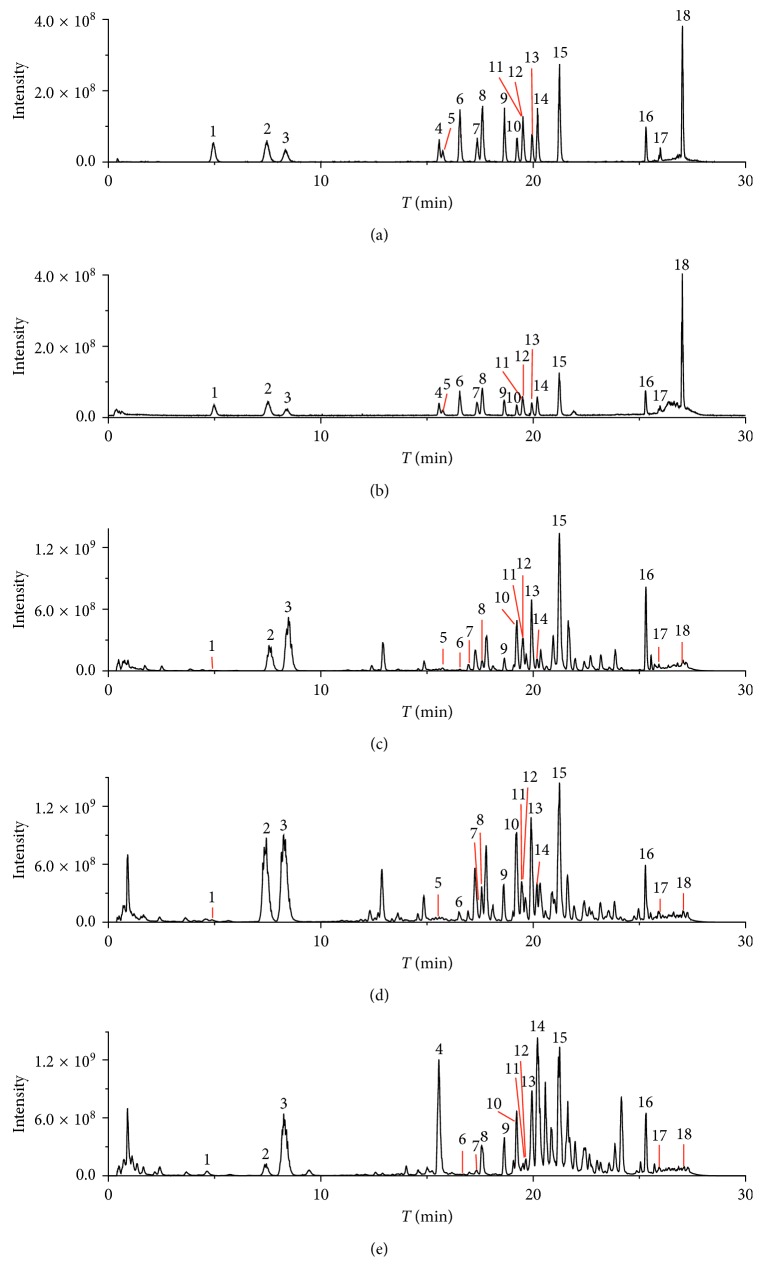
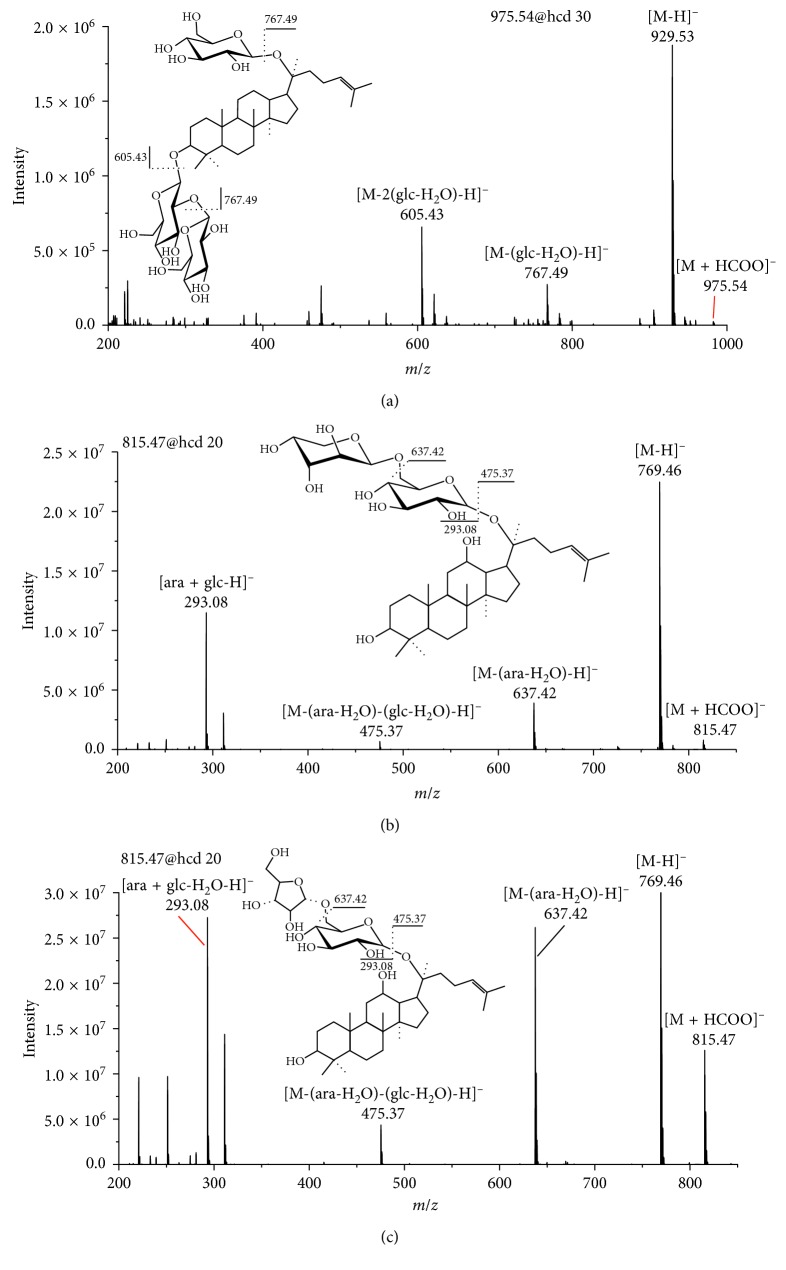
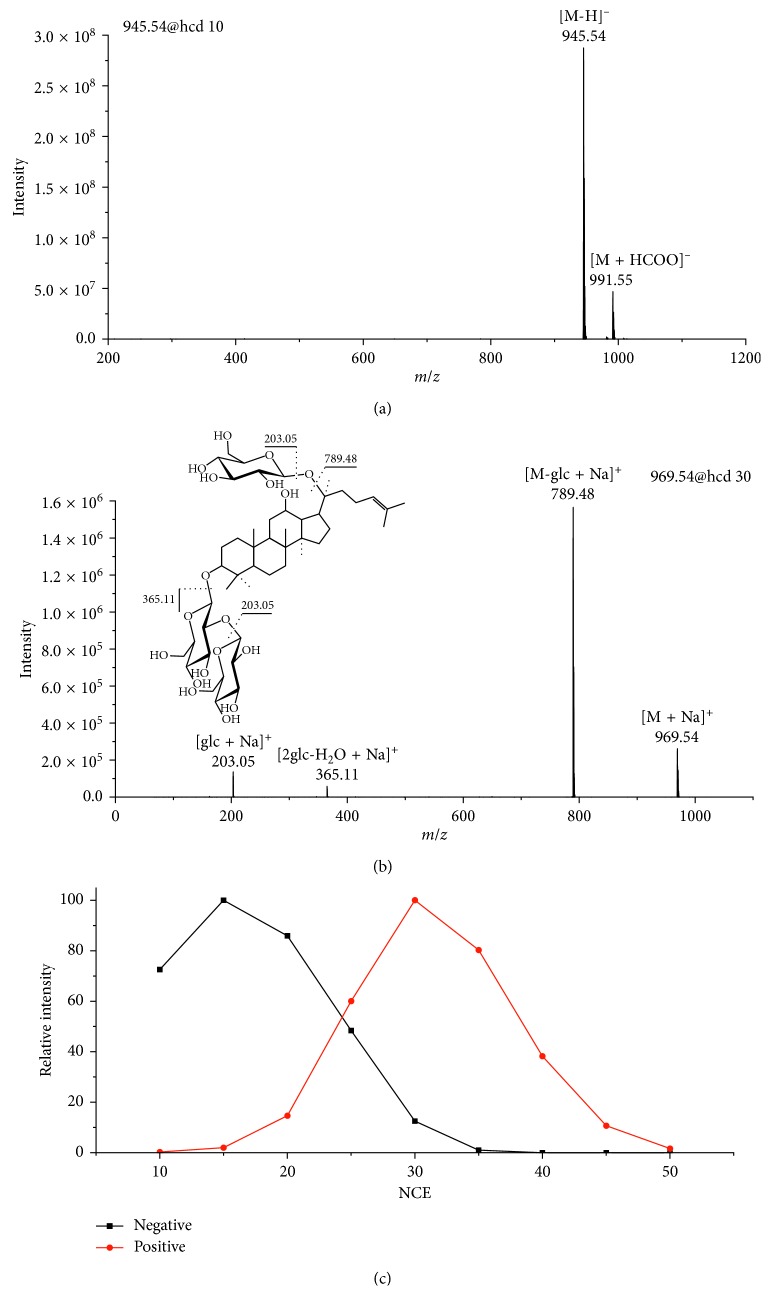
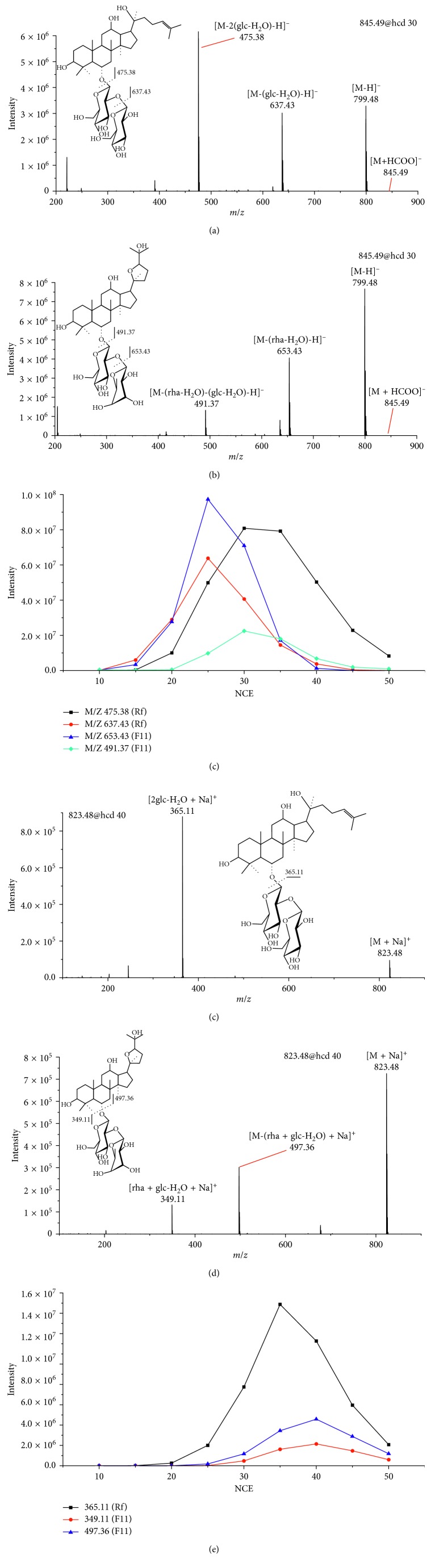
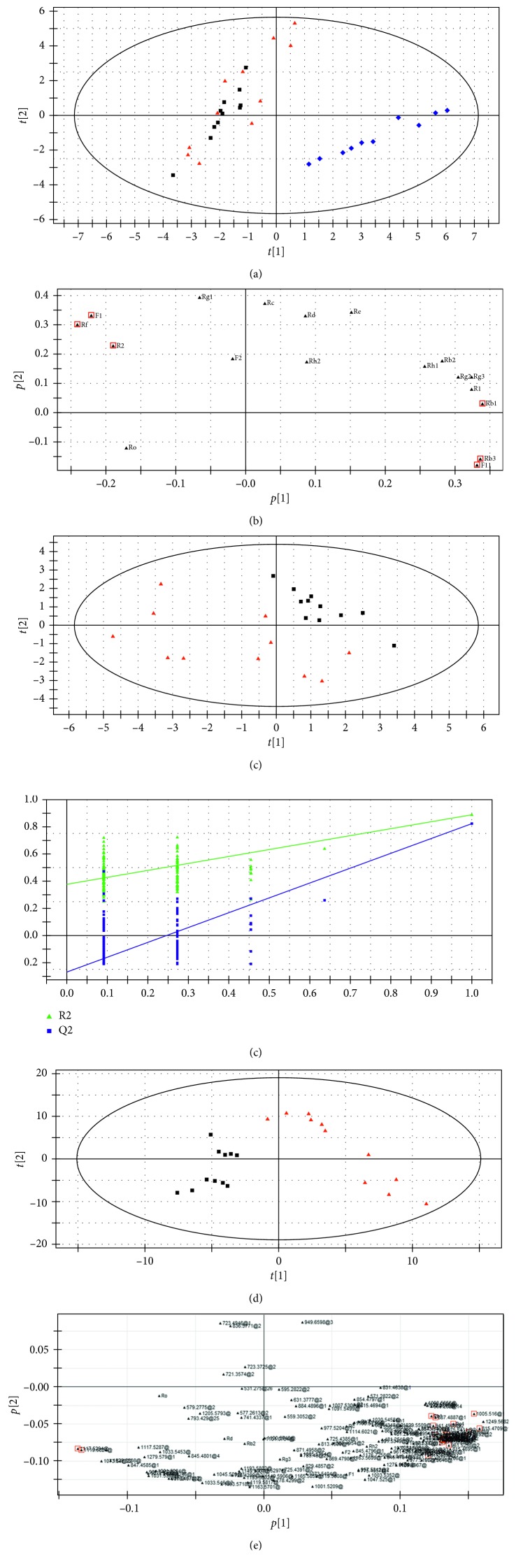
Two quantitative methods (-ESI full scan and -ESI PRM MS) were developed to analyze ginsenosides in ginseng stem-leaf by using UPLC-Q-Exactive Orbitrap/MS. By means of -ESI PRM MS method, the contents of eighteen ginsenosides in Asian ginseng stem-leaf (ASGSL) and American ginseng stem-leaf (AMGSL) were analyzed. The principal component analysis (PCA) model was built to discriminate Asian ginseng stem-leaf (ASGSL) from American ginseng stem-leaf (AMGSL) based on -ESI PRM MS data, and six ginsenosides (F11, Rf, R2, F1, Rb1, and Rb3) were obtained as the markers. To further explore the differences between cultivated ginseng stem-leaf and forest ginseng stem-leaf, the partial least squares-discriminant analysis (PLS-DA) model was built based on -ESI full scan data. And twenty-six markers were selected to discriminate cultivated ginseng stem-leaf (CGSL) from forest ginseng stem-leaf (FGSL). This study provides reliable and effective methods to quantify and discriminate among different types of ginseng stem-leaf in the commercial market.
开发了两种定量方法(-ESI全扫描和-ESI PRM MS),用于使用超高效液相色谱-四极杆-静电场轨道阱质谱仪(UPLC-Q-Exactive Orbitrap/MS)分析人参茎叶中的人参皂苷。通过-ESI PRM MS方法,分析了亚洲人参茎叶(ASGSL)和西洋参茎叶(AMGSL)中18种人参皂苷的含量。基于-ESI PRM MS数据建立了主成分分析(PCA)模型,以区分亚洲人参茎叶(ASGSL)和西洋参茎叶(AMGSL),并获得了6种人参皂苷(F11、Rf、R2、F1、Rb1和Rb3)作为标志物。为了进一步探究栽培人参茎叶和林下参茎叶之间的差异,基于-ESI全扫描数据建立了偏最小二乘判别分析(PLS-DA)模型。并选择了26个标志物来区分栽培人参茎叶(CGSL)和林下参茎叶(FGSL)。本研究为商业市场中不同类型人参茎叶的定量和鉴别提供了可靠有效的方法。