Kartheek R M, David M
Environmental Toxicology and Molecular Biology Laboratory, Department of PG Studies and Research in Zoology, Karnatak University, Dharwad- 580003, India.
Toxicol Rep. 2018 Mar 9;5:448-456. doi: 10.1016/j.toxrep.2018.02.019. eCollection 2018.
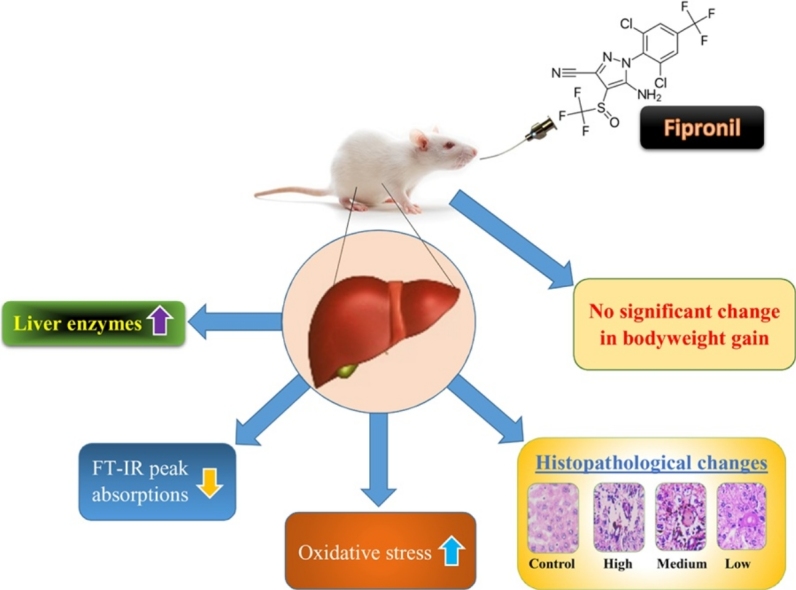
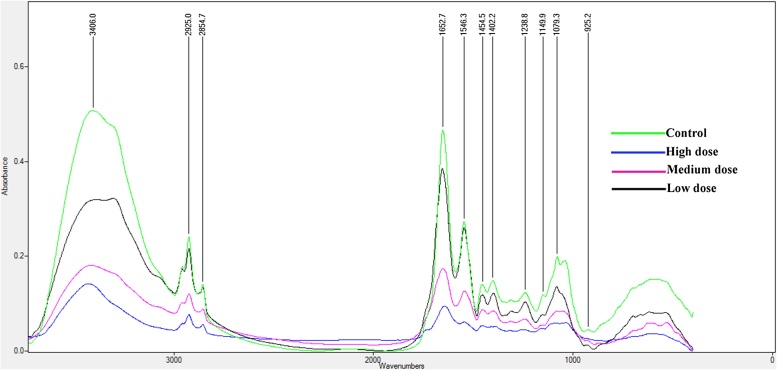
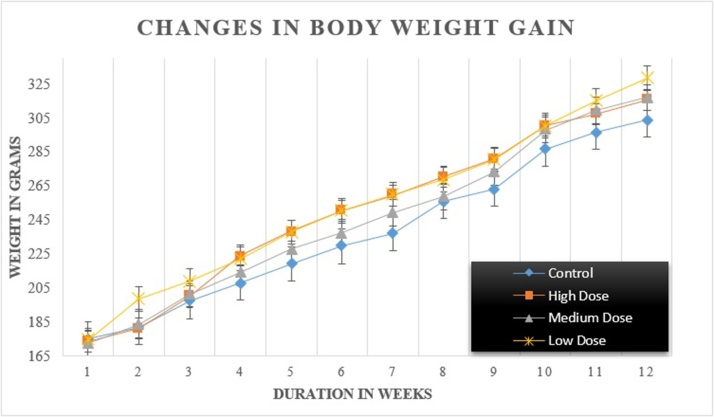
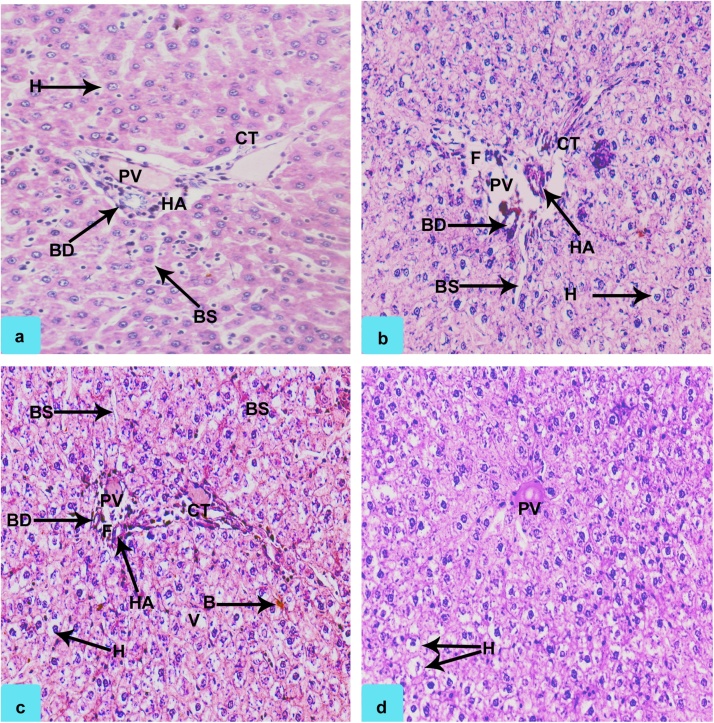
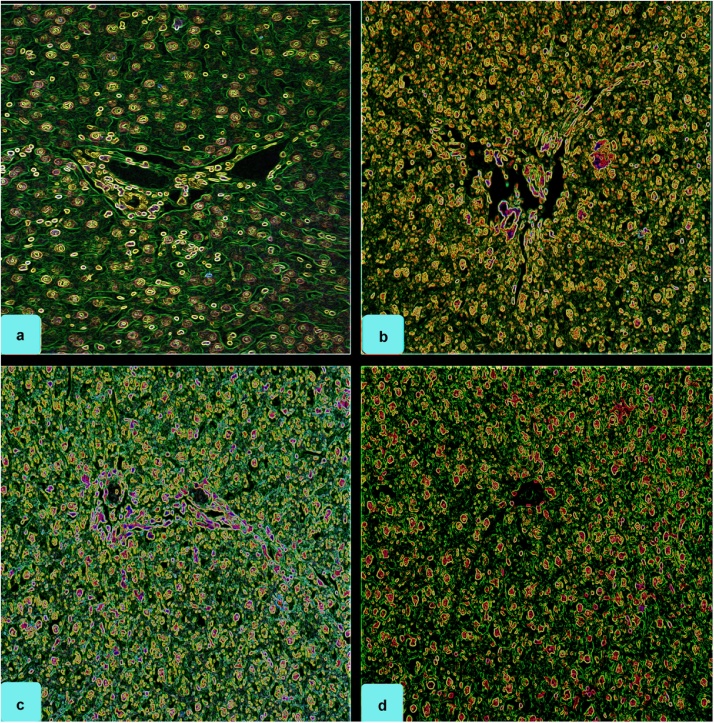
Extensive pesticide application has contributed to environmental contamination globally, imposing adverse health effects on non-target organisms. Need for an understanding of cellular response following pesticide exposure is, therefore, paradigmatic for elucidating perturbations occurring within biological systems. The present investigation was aimed to examine safe and toxic dose level of a persistent, synthetic, phenylpyrazole based insecticide, Fipronil (FPN) on rat liver. Experimental animals were divided into four groups and gavaged with 0.0 (control), 32.33 (high), 12.12 (medium) and 6.46 mg/kg body weight/day (low dose) of FPN for 90 days. While results for liver catalase and glutathione -transferase indicated significant changes in high and medium dose groups, the superoxide dismutase and glutathione peroxidase activity suggested significant changes in all exposed groups as compared to control. Elevated levels of liver malondialdehyde reflected oxidative damage potential under the exposed groups but remained insignificant for low dose. Histologically, structural irregularities with findings like impaired portal vein and hypertrophy of hepatocytes were prominent under all the exposed groups. The FT-IR based spectral investigation further revealed changes in absorption patterns and peak intensities in rats exposed to FPN. Significant elevation was also noticed in liver enzymes; alanine aminotransferase, aspartate aminotransferase and alkaline phosphatase in rat serum suggesting the toxicity in dose -dependent pattern. Based on the outcome, it could be ascertained that the toxicity of FPN is certain at high and medium dose levels but remains ambiguous at a low dose of 6.46 mg/kg body weight/day. The current upshots serve as a preliminary report thereby advising the farming community against the usage of FPN insecticide.
广泛使用农药已导致全球环境污染,对非目标生物产生不利的健康影响。因此,了解农药暴露后的细胞反应对于阐明生物系统内发生的扰动至关重要。本研究旨在检测一种基于苯基吡唑的持久性合成杀虫剂氟虫腈(FPN)对大鼠肝脏的安全剂量和毒性剂量水平。将实验动物分为四组,分别以0.0(对照组)、32.33(高剂量组)、12.12(中剂量组)和6.46毫克/千克体重/天(低剂量组)的氟虫腈灌胃90天。虽然肝脏过氧化氢酶和谷胱甘肽转移酶的结果表明高剂量组和中剂量组有显著变化,但超氧化物歧化酶和谷胱甘肽过氧化物酶活性表明,与对照组相比,所有暴露组均有显著变化。肝脏丙二醛水平升高反映了暴露组的氧化损伤潜力,但低剂量组不明显。组织学上,所有暴露组均出现明显的结构异常,如门静脉受损和肝细胞肥大。基于傅里叶变换红外光谱的研究进一步揭示了暴露于氟虫腈的大鼠吸收模式和峰强度的变化。大鼠血清中的谷丙转氨酶、谷草转氨酶和碱性磷酸酶等肝酶也显著升高,表明毒性呈剂量依赖性。根据结果可以确定,氟虫腈在高剂量和中剂量水平具有一定毒性,但在6.46毫克/千克体重/天的低剂量水平毒性仍不明确。目前的结果作为初步报告,建议农业社区不要使用氟虫腈杀虫剂。