Veterans Affairs Puget Sound Health Care System, Seattle, WA 98108, USA.
Division of Metabolism, Endocrinology and Nutrition, Department of Medicine, University of Washington, Seattle, WA 98195, USA.
J Diabetes Res. 2018 Apr 30;2018:6106051. doi: 10.1155/2018/6106051. eCollection 2018.
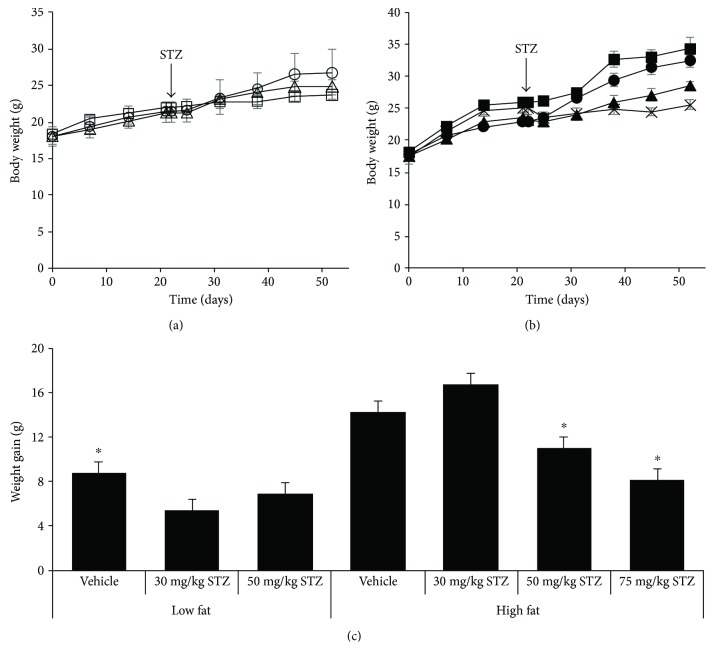
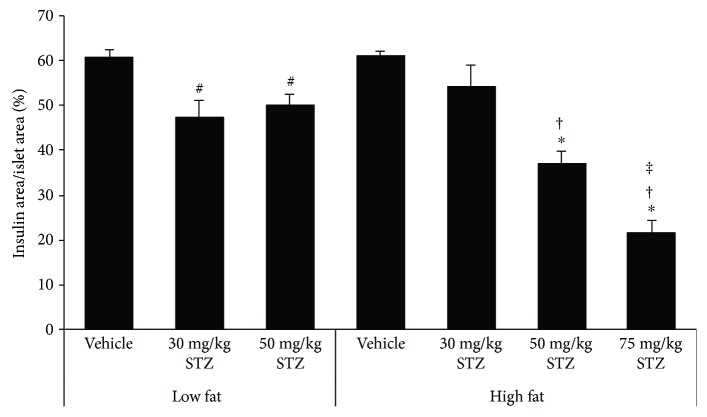
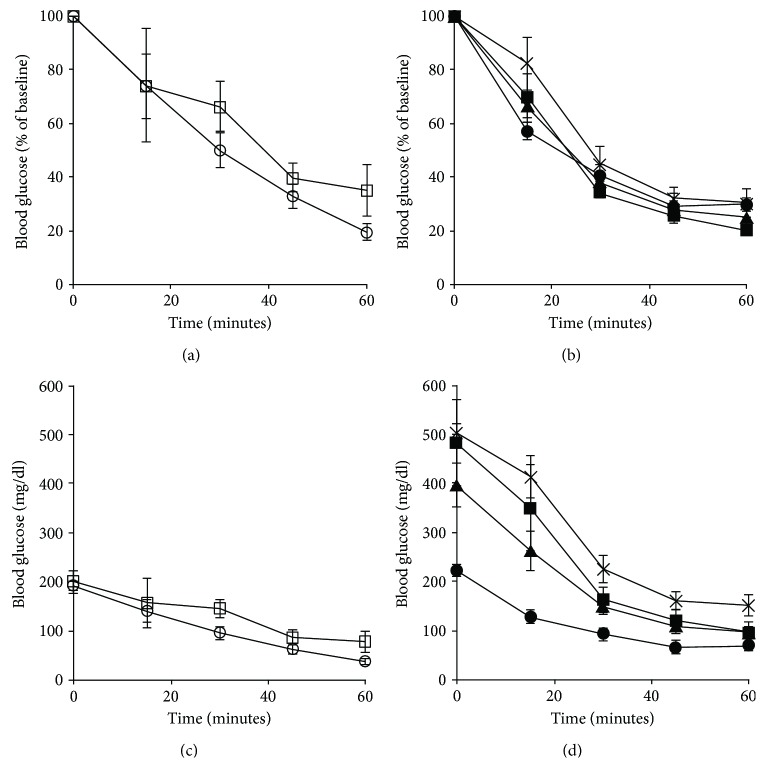
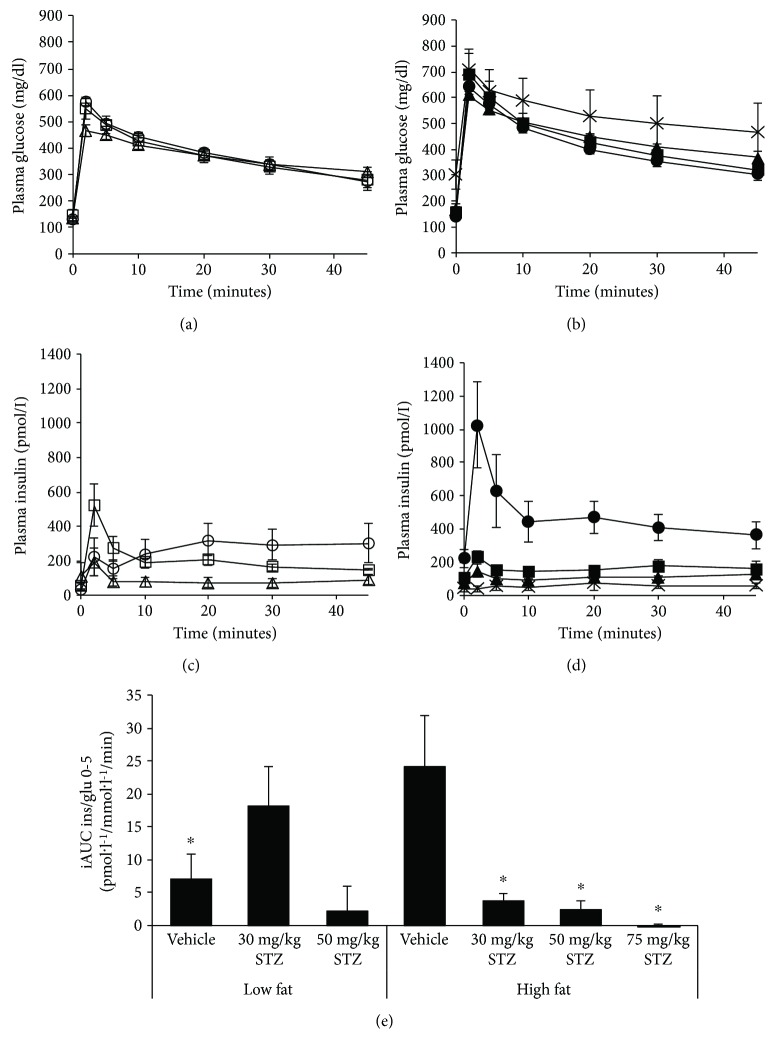
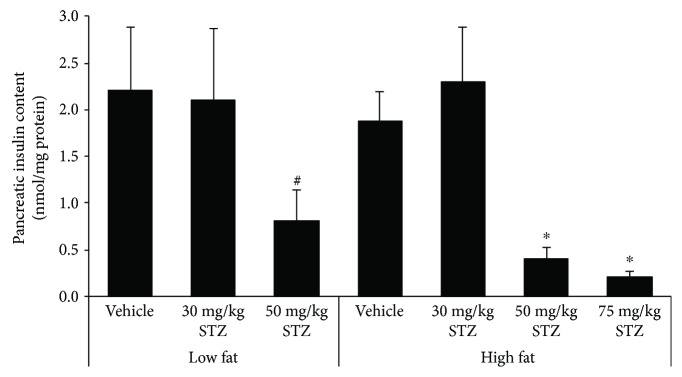
Loss of first-phase insulin release is an early pathogenic feature of type 2 diabetes (T2D). Various mouse models exist to study T2D; however, few recapitulate the early -cell defects seen in humans. We sought to develop a nongenetic mouse model of T2D that exhibits reduced first-phase insulin secretion without a significant deficit in pancreatic insulin content. C57BL/6J mice were fed 10% or 60% fat diet for three weeks, followed by three consecutive, once-daily intraperitoneal injections of the -cell toxin streptozotocin (STZ; 30, 50, or 75 mg/kg) or vehicle. Four weeks after injections, the first-phase insulin response to glucose was reduced in mice when high-fat diet was combined with 30, 50, or 75 mg/kg STZ. This was accompanied by diminished second-phase insulin release and elevated fed glucose levels. Further, body weight gain, pancreatic insulin content, and -cell area were decreased in high fat-fed mice treated with 50 and 75 mg/kg STZ, but not 30 mg/kg STZ. Low fat-fed mice were relatively resistant to STZ, with the exception of reduced pancreatic insulin content and -cell area. Together, these data demonstrate that in high fat-fed mice, three once-daily injections of 30 mg/kg STZ produces a model of -cell failure without insulin deficiency that may be useful in studies investigating the etiology and progression of human T2D.
第一时相胰岛素分泌缺失是 2 型糖尿病(T2D)的早期发病特征。存在多种用于研究 T2D 的小鼠模型,但很少有模型能重现人类β细胞早期缺陷。我们试图开发一种不依赖遗传的 T2D 小鼠模型,该模型表现为第一时相胰岛素分泌减少,而胰岛β细胞胰岛素含量无显著缺失。C57BL/6J 小鼠高脂饮食(10%或 60%脂肪)喂养 3 周,随后连续 3 天每日腹腔注射一次胰岛β细胞毒素链脲佐菌素(STZ;30、50 或 75mg/kg)或对照溶剂。注射后 4 周,高脂饮食与 30、50 或 75mg/kg STZ 联合应用时,小鼠对葡萄糖的第一时相胰岛素反应降低。这伴随着第二时相胰岛素释放减少和餐后血糖水平升高。此外,高脂喂养且接受 50 和 75mg/kg STZ 处理的小鼠体重增加、胰腺胰岛素含量和β细胞面积减少,但接受 30mg/kg STZ 处理的小鼠则无此变化。低脂喂养的小鼠对 STZ 相对耐受,除了胰腺胰岛素含量和β细胞面积减少。综上,这些数据表明,高脂喂养的小鼠,每日腹腔注射 3 次 30mg/kg STZ 可产生一种β细胞衰竭但不伴胰岛素缺乏的模型,这可能有助于研究人类 T2D 的病因和进展。