Amaya Clarissa N, Perkins Mariah, Belmont Andres, Herrera Connie, Nasrazadani Arezo, Vargas Alejandro, Khayou Thuraieh, Montoya Alexa, Ballou Yessenia, Galvan Dana, Rivas Alexandria, Rains Steven, Patel Luv, Ortega Vanessa, Lopez Christopher, Chow William, Dickerson Erin B, Bryan Brad A
Department of Biomedical Sciences, Texas Tech University Health Sciences Center, El Paso, TX, USA.
Department of Biochemistry, Baylor University, Waco, TX, USA.
Oncoscience. 2018 Apr 29;5(3-4):109-119. doi: 10.18632/oncoscience.413. eCollection 2018 Mar.
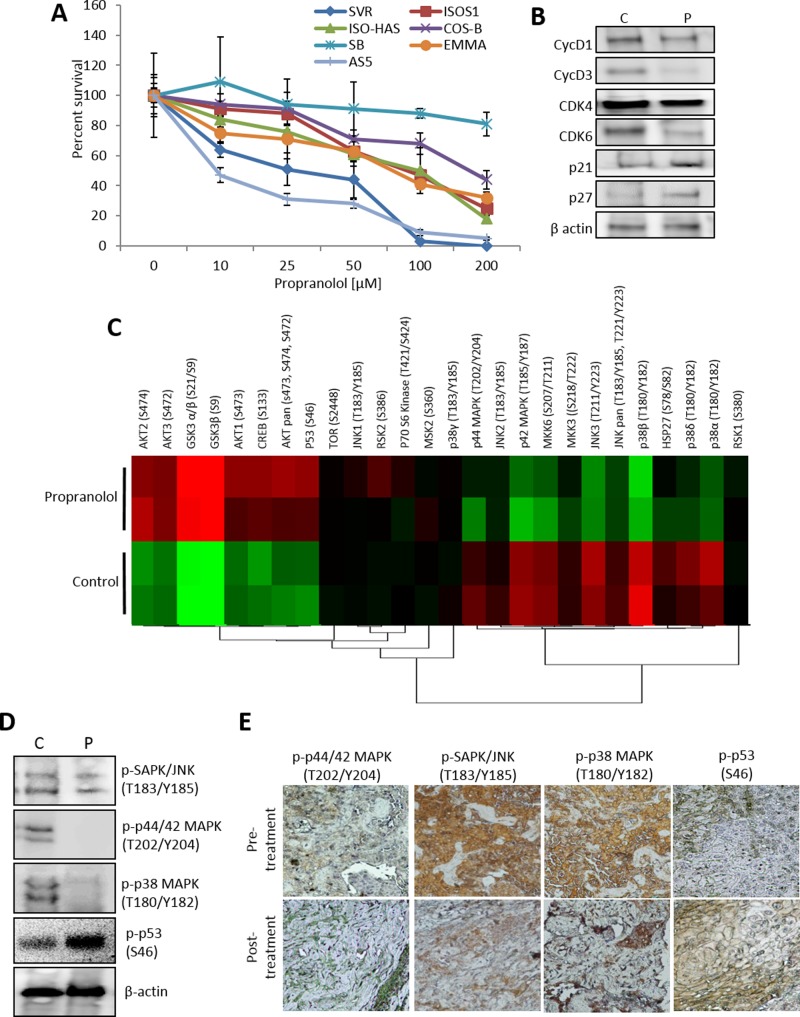
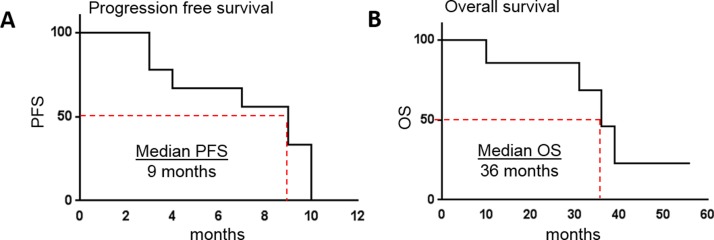
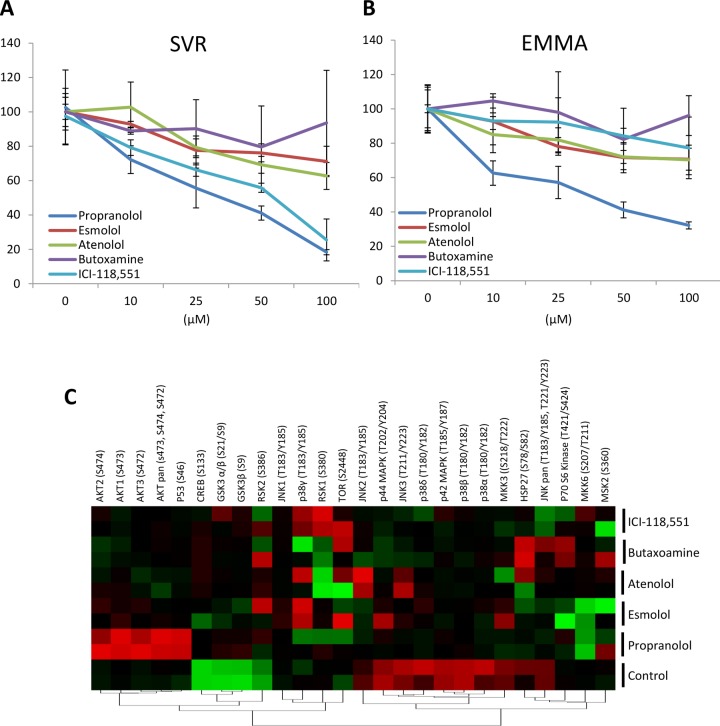
Patients with metastatic angiosarcoma undergoing chemotherapy, radiation, and/or surgery experience a median progression free survival of less than 6 months and a median overall survival of less than 12 months. Given the aggressive nature of this cancer, angiosarcoma clinical responses to chemotherapy or targeted therapeutics are generally very poor. Inhibition of beta adrenergic receptor (β-AR) signaling has recently been shown to decrease angiosarcoma tumor cell viability, abrogate tumor growth in mouse models, and decrease proliferation rates in preclinical and clinical settings. In the current study we used cell and animal tumor models to show that β-AR antagonism abrogates mitogenic signaling and reduces angiosarcoma tumor cell viability, and these molecular alterations translated into patient tumors. We demonstrated that non-selective β-AR antagonists are superior to selective β-AR antagonists at inhibiting angiosarcoma cell viability. A prospective analysis of non- selective β-AR antagonists in a single arm clinical study of metastatic angiosarcoma patients revealed that incorporation of either propranolol or carvedilol into patients' treatment regimens leads to a median progression free and overall survival of 9 and 36 months, respectively. These data suggest that incorporation of non-selective β-AR antagonists into existing therapies against metastatic angiosarcoma can enhance clinical outcomes.
接受化疗、放疗和/或手术的转移性血管肉瘤患者的无进展生存期中位数少于6个月,总生存期中位数少于12个月。鉴于这种癌症的侵袭性,血管肉瘤对化疗或靶向治疗的临床反应通常非常差。最近研究表明,抑制β-肾上腺素能受体(β-AR)信号传导可降低血管肉瘤肿瘤细胞的活力,在小鼠模型中消除肿瘤生长,并在临床前和临床环境中降低增殖率。在本研究中,我们使用细胞和动物肿瘤模型表明,β-AR拮抗作用可消除促有丝分裂信号并降低血管肉瘤肿瘤细胞的活力,并且这些分子改变在患者肿瘤中也有体现。我们证明,在抑制血管肉瘤细胞活力方面,非选择性β-AR拮抗剂优于选择性β-AR拮抗剂。在一项针对转移性血管肉瘤患者的单臂临床研究中,对非选择性β-AR拮抗剂进行的前瞻性分析显示,将普萘洛尔或卡维地洛纳入患者的治疗方案后,无进展生存期和总生存期的中位数分别为9个月和36个月。这些数据表明,将非选择性β-AR拮抗剂纳入现有的转移性血管肉瘤治疗方案中可以改善临床结果。