Division of Biology and Medicine, Brown University, Providence, RI, USA.
Department of Medicine, Division of Infectious Diseases, University of Massachusetts, Medical School, Worcester, MA, USA.
BMC Biol. 2018 May 31;16(1):60. doi: 10.1186/s12915-018-0532-5.
Drosophila is a powerful model for the study of factors modulating innate immunity. This study examines the effect of water-loss dehydration on innate immune responsiveness in the Drosophila renal system (Malpighian tubules; MTs), and how this leads to elevated host defense and contributes to immunosenescence.
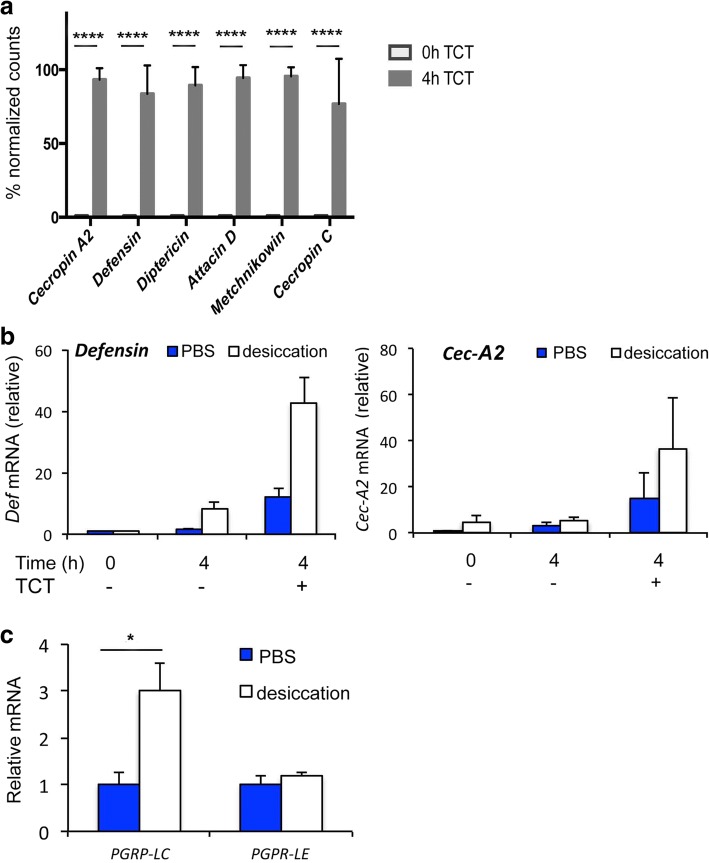
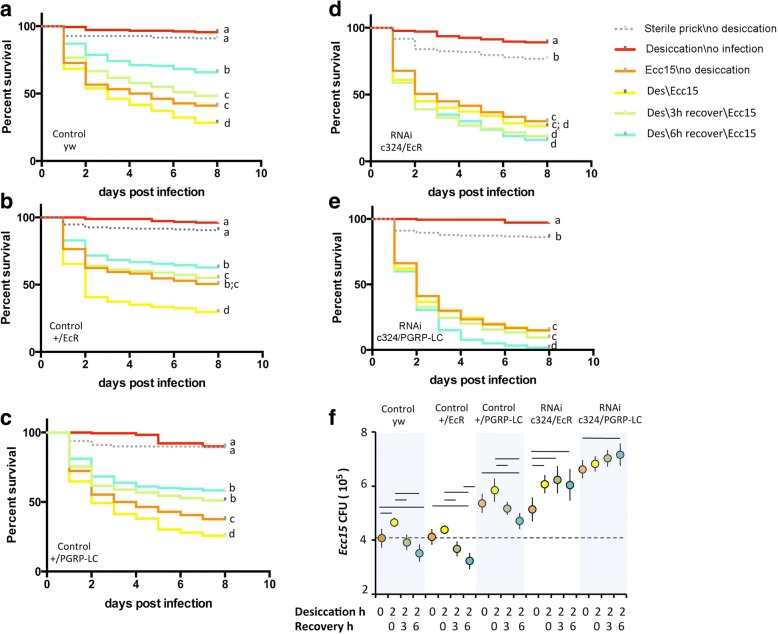
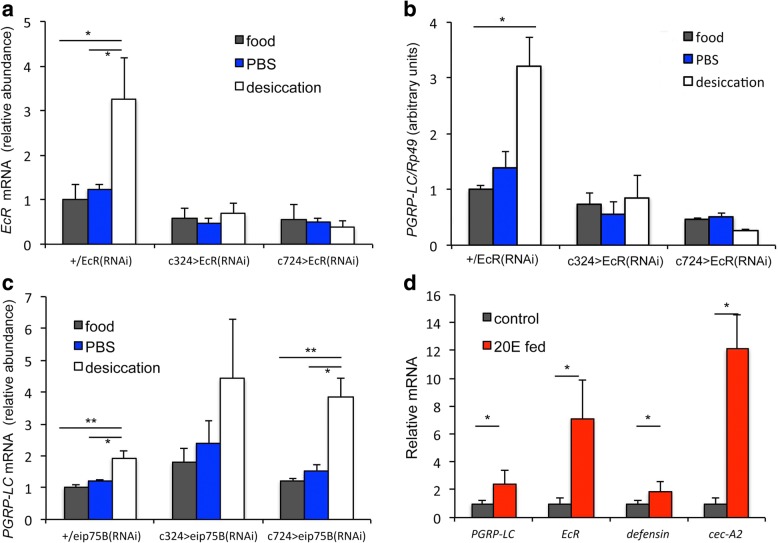
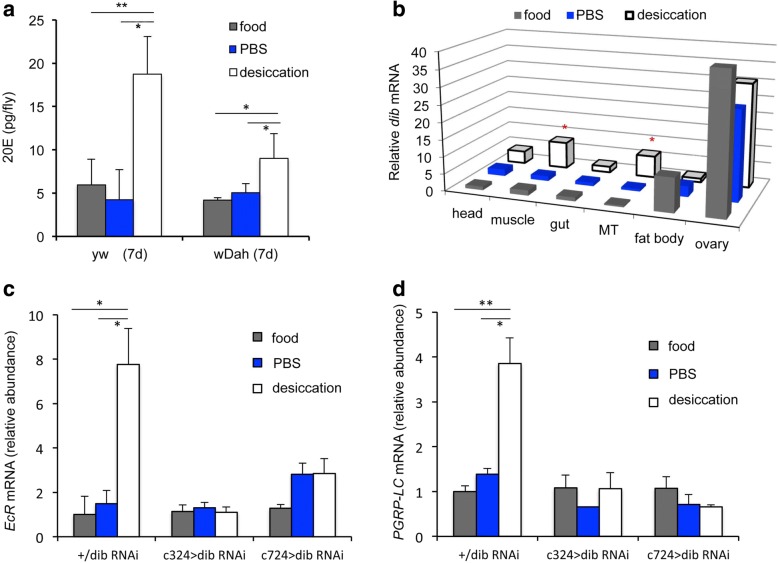
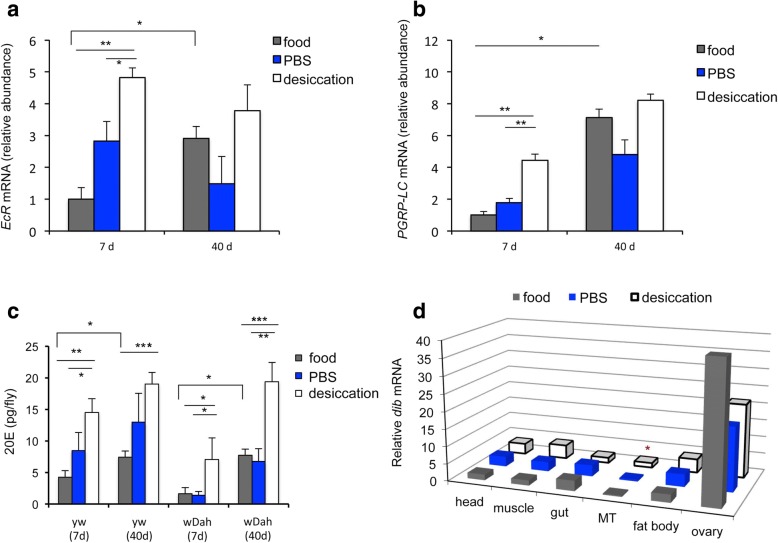
A short period of desiccation-elevated peptidoglycan recognition protein-LC (PGRP-LC) expression in MTs, increased antimicrobial peptide (AMP) gene induction, and protected animals from bacterial infection. We show that desiccation increased ecdysone synthesis in MTs, while inhibition of ecdysone synthesis or ecdysone receptor expression, specifically within MTs, prevented induction of PGRP-LC and reduced protection from bacterial infection. Additionally, aged flies are constitutively water-stressed and have elevated levels of ecdysone and PGRP-LC. Conversely, adults aged at high relative humidity show less water loss and have reduced expression of PGRP-LC and AMPs.
The Drosophila renal system is an important contributor to host defense and can modulate immune responses in an organ autonomous manner, responding to environmental changes such as desiccation. Desiccation primes immune responsiveness by elevating PGRP-LC expression specifically in MTs. In response to desiccation, ecdysone is produced in MTs and acts in a paracrine fashion to increase PGRP-LC expression, immune responsiveness, and improve host defense. This activity of the renal system may contribute to the immunosenescence observed in Drosophila.
果蝇是研究调节先天免疫因素的有力模型。本研究探讨了失水脱水对果蝇肾系统(马氏管;MTs)先天免疫反应的影响,以及这如何导致宿主防御能力提高,并有助于免疫衰老。
短时间的干燥会导致 MTs 中肽聚糖识别蛋白 LC(PGRP-LC)表达升高,抗菌肽(AMP)基因诱导增加,并保护动物免受细菌感染。我们表明,干燥会增加 MTs 中的蜕皮激素合成,而抑制蜕皮激素合成或蜕皮激素受体表达,特别是在 MTs 中,会阻止 PGRP-LC 的诱导,并减少对细菌感染的保护。此外,衰老的果蝇持续受到水分胁迫,并且具有更高水平的蜕皮激素和 PGRP-LC。相反,在高相对湿度下老化的成虫失水较少,PGRP-LC 和 AMP 的表达降低。
果蝇的肾系统是宿主防御的重要贡献者,能够以器官自主的方式调节免疫反应,对环境变化(如干燥)做出反应。干燥通过特异性地在 MTs 中升高 PGRP-LC 表达来启动免疫反应性。响应干燥,蜕皮激素在 MTs 中产生,并以旁分泌方式作用于增加 PGRP-LC 表达、免疫反应性并改善宿主防御。肾系统的这种活性可能有助于果蝇中观察到的免疫衰老。