Wang Bowen, Zuo Jiahui, Kang Wenzhen, Wei Qianqi, Li Jianhui, Wang Chunfu, Liu Zhihui, Lu Yuanan, Zhuang Yan, Dang Bianli, Liu Qing, Kang Wen, Sun Yongtao
Department of Infectious Diseases, Tangdu Hospital, The Fourth Military Medical University, 569 Xinsi Road, Xi'an, Shaanxi 710038, China.
Clinical Laboratory, Tangdu Hospital, The Fourth Military Medical University, 569 Xinsi Road, Xi'an, Shaanxi 710038, China.
Mol Ther Nucleic Acids. 2018 Jun 1;11:130-141. doi: 10.1016/j.omtn.2018.01.012. Epub 2018 Feb 7.
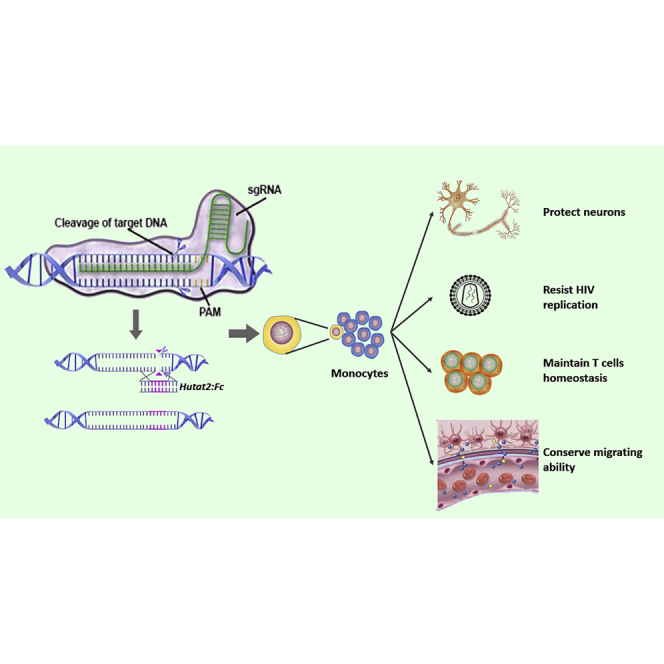
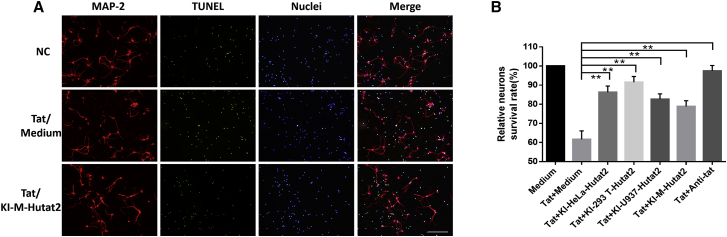
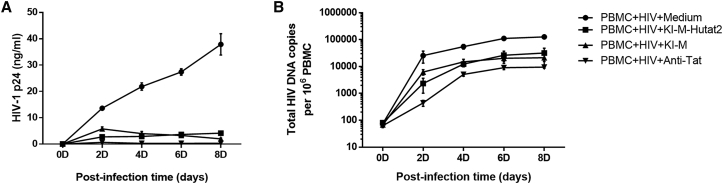
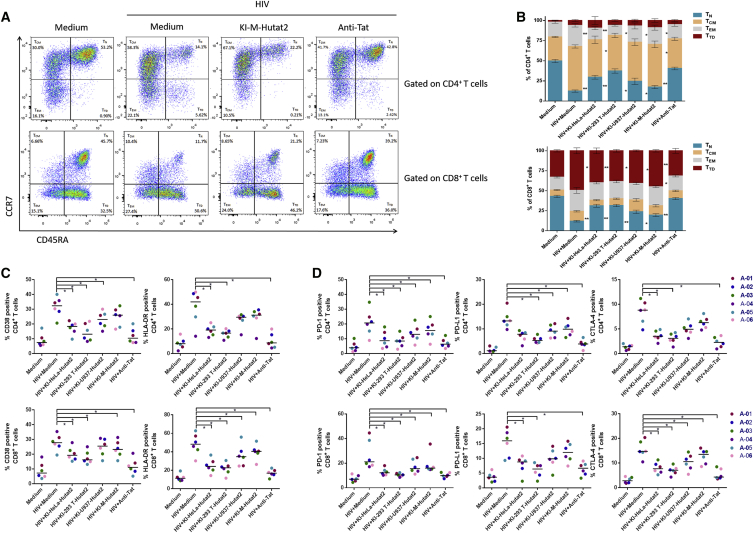
The ability of monocytes to travel through the bloodstream, traverse tissue barriers, and aggregate at disease sites endows these cells with the attractive potential to carry therapeutic genes into the nervous system. However, gene editing in primary human monocytes has long been a challenge. Here, we applied the CRISPR/Cas9 system to deliver the large functional Hutat2:Fc DNA fragment into the genome of primary monocytes to neutralize HIV-1 transactivator of transcription (Tat), an essential neurotoxic factor that causes HIV-associated neurocognitive disorder (HAND) in the nervous system. Following homology-directed repair (HDR), ∼10% of the primary human monocytes exhibited knockin of the Hutat2:Fc gene in the AAVS1 locus, the "safe harbor" locus of the human genome, without selection. Importantly, the release of Hutat2:Fc by these modified monocytes protected neurons from Tat-induced neurotoxicity, reduced HIV replication, and restored T cell homeostasis. Moreover, compared with lentiviral transfection, CRISPR-mediated knockin had the advantage of maintaining the migrating function of monocytes. These results establish CRISPR/Cas9-mediated Hutat2:Fc knockin monocytes and provide a potential method to cross the blood-brain barrier for HAND therapy.
单核细胞能够在血液中穿行、穿越组织屏障并在疾病部位聚集,这赋予了这些细胞将治疗性基因导入神经系统的诱人潜力。然而,在原代人单核细胞中进行基因编辑长期以来一直是一项挑战。在此,我们应用CRISPR/Cas9系统将大的功能性Hutat2:Fc DNA片段导入原代单核细胞的基因组,以中和HIV-1转录激活因子(Tat),这是一种在神经系统中导致HIV相关神经认知障碍(HAND)的重要神经毒性因子。在同源定向修复(HDR)后,约10%的原代人单核细胞在人类基因组的“安全港”位点AAVS1中表现出Hutat2:Fc基因的敲入,且无需筛选。重要的是,这些修饰后的单核细胞释放的Hutat2:Fc保护神经元免受Tat诱导的神经毒性,减少HIV复制,并恢复T细胞稳态。此外,与慢病毒转染相比,CRISPR介导的敲入具有维持单核细胞迁移功能的优势。这些结果确立了CRISPR/Cas9介导的Hutat2:Fc敲入单核细胞,并为通过血脑屏障进行HAND治疗提供了一种潜在方法。