Molecular & Behavioral Neuroscience Institute, University of Michigan, Ann Arbor, Michigan.
Molecular & Behavioral Neuroscience Institute, University of Michigan, Ann Arbor, Michigan.
Biol Psychiatry. 2018 Oct 15;84(8):555-562. doi: 10.1016/j.biopsych.2018.04.013. Epub 2018 May 3.
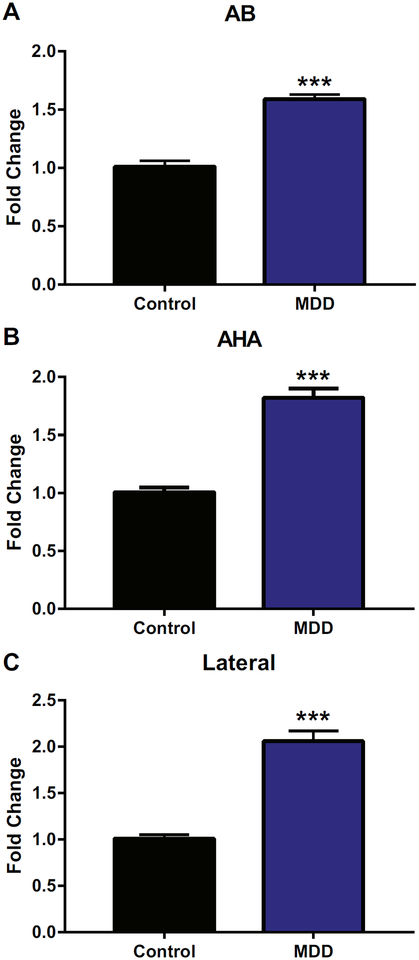
While downregulation of several growth factors in major depressive disorder is well established, less attention has been paid to the upregulation of other growth factors. Yet, upregulated growth factors may offer better therapeutic targets. We show that connective tissue growth factor (CTGF) represents a target based on its upregulation in major depressive disorder and studies in animal models implicating it in negative affect.
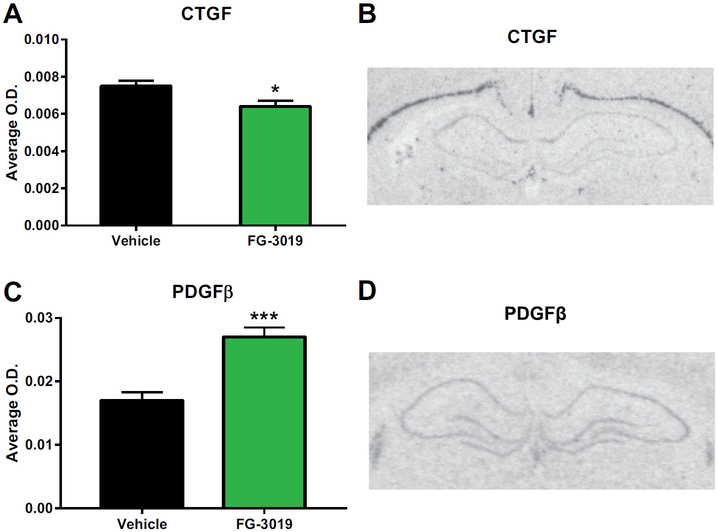
CTGF gene expression was first evaluated in the postmortem human amygdala. The findings were followed up in outbred rats and in two rat lines that were selectively bred for differences in novelty-seeking and anxiety behavior (bred low responders and bred high responders). We studied the impact of social defeat and early-life treatment with fibroblast growth factor 2 on CTGF expression. Finally, we assessed the ability of an anti-CTGF antibody (FG-3019) to alter CTGF expression and emotionality.
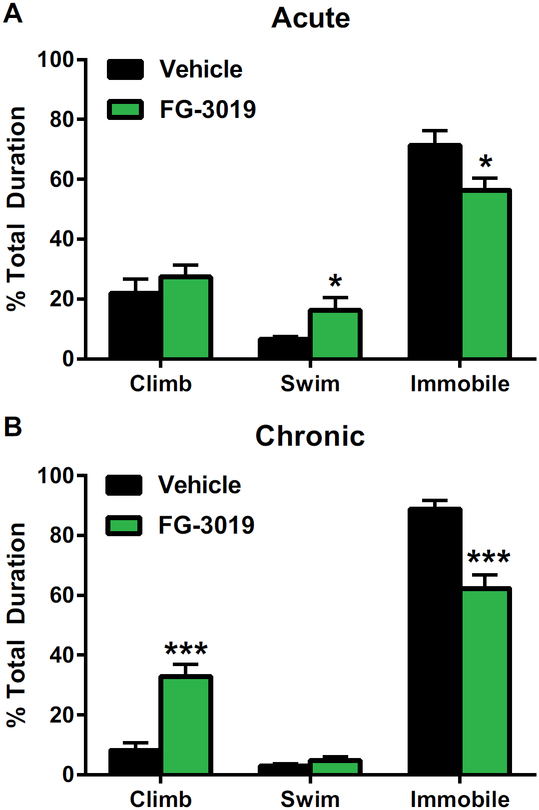
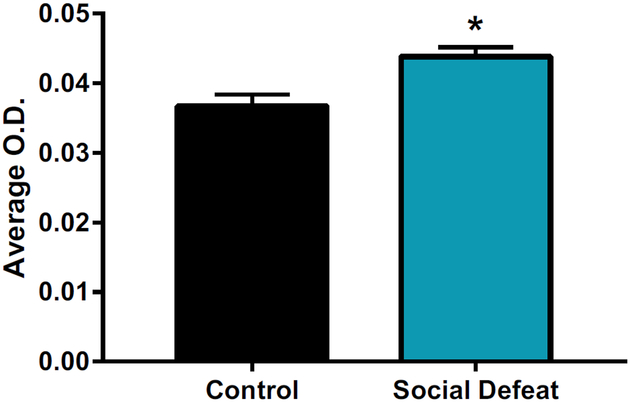
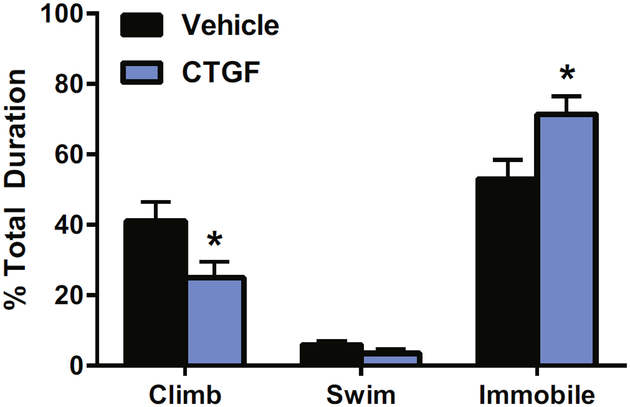
In the human amygdala, CTGF expression was significantly increased in major depressive disorder compared with control subjects. CTGF expression was also significantly increased in the dentate gyrus of adult bred low responders compared with bred high responders. Social defeat stress in bred low responders significantly increased CTGF expression in the dentate gyrus. Early-life fibroblast growth factor 2, a treatment that reduces anxiety-like behavior throughout life, decreased CTGF expression in the adult dentate gyrus. In outbred rats, CTGF administration increased depression-like behavior. Chronic treatment with FG-3019 decreased CTGF expression, and acute and chronic treatment was antidepressant.
This study is the first to implicate CTGF as a prodepressant molecule that could serve as a target for the development of novel therapeutics.
虽然在重度抑郁症中几种生长因子的下调已得到充分证实,但对其他生长因子的上调关注较少。然而,上调的生长因子可能提供更好的治疗靶点。我们表明,结缔组织生长因子 (CTGF) 是一个基于其在重度抑郁症中上调的靶点,并且在动物模型中的研究表明它与负性情绪有关。
首先在尸检的人杏仁核中评估 CTGF 基因表达。在近交大鼠和两种选择性繁殖用于新奇寻求和焦虑行为差异的大鼠品系(繁殖低反应者和繁殖高反应者)中进行了后续研究。我们研究了社交挫败和早期生活中纤维母细胞生长因子 2 处理对 CTGF 表达的影响。最后,我们评估了抗 CTGF 抗体 (FG-3019) 改变 CTGF 表达和情绪的能力。
在人杏仁核中,与对照相比,重度抑郁症患者的 CTGF 表达明显增加。与繁殖高反应者相比,繁殖低反应者成年齿状回中的 CTGF 表达也明显增加。社交挫败应激在繁殖低反应者中显着增加了齿状回中的 CTGF 表达。早期生活中的纤维母细胞生长因子 2,一种可降低终生焦虑样行为的治疗方法,降低了成年齿状回中的 CTGF 表达。在近交大鼠中,CTGF 给药增加了抑郁样行为。慢性 FG-3019 治疗降低了 CTGF 表达,急性和慢性治疗具有抗抑郁作用。
这项研究首次表明 CTGF 是一种促抑郁分子,可作为开发新型治疗方法的靶标。