Department of Pathology, Stanford University School of Medicine, Stanford, CA 94305, USA.
Department of Pathology, Stanford University School of Medicine, Stanford, CA 94305, USA; Department of Pharmacology, College of Pharmaceutical Science, Soochow University, Suzhou, China.
Cell Metab. 2018 Jul 3;28(1):130-144.e7. doi: 10.1016/j.cmet.2018.05.007. Epub 2018 May 31.
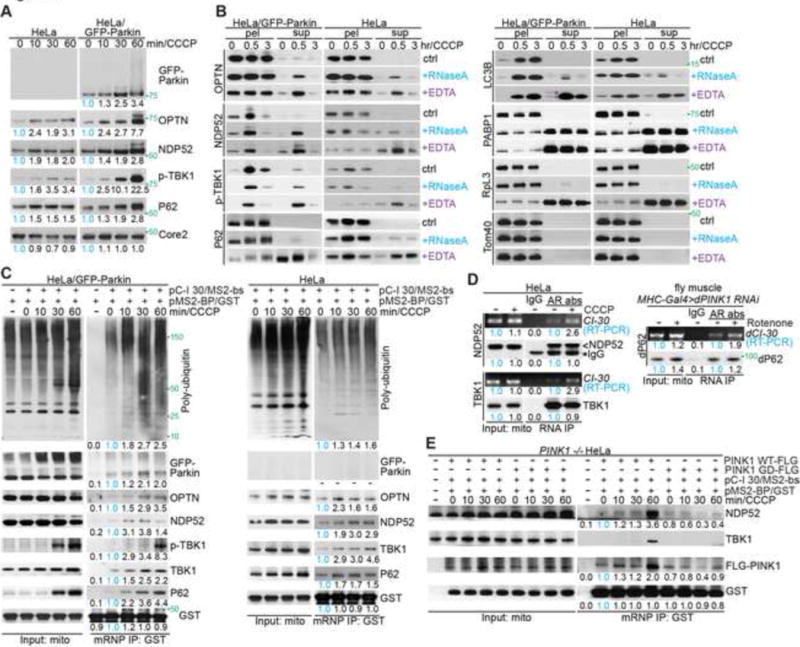
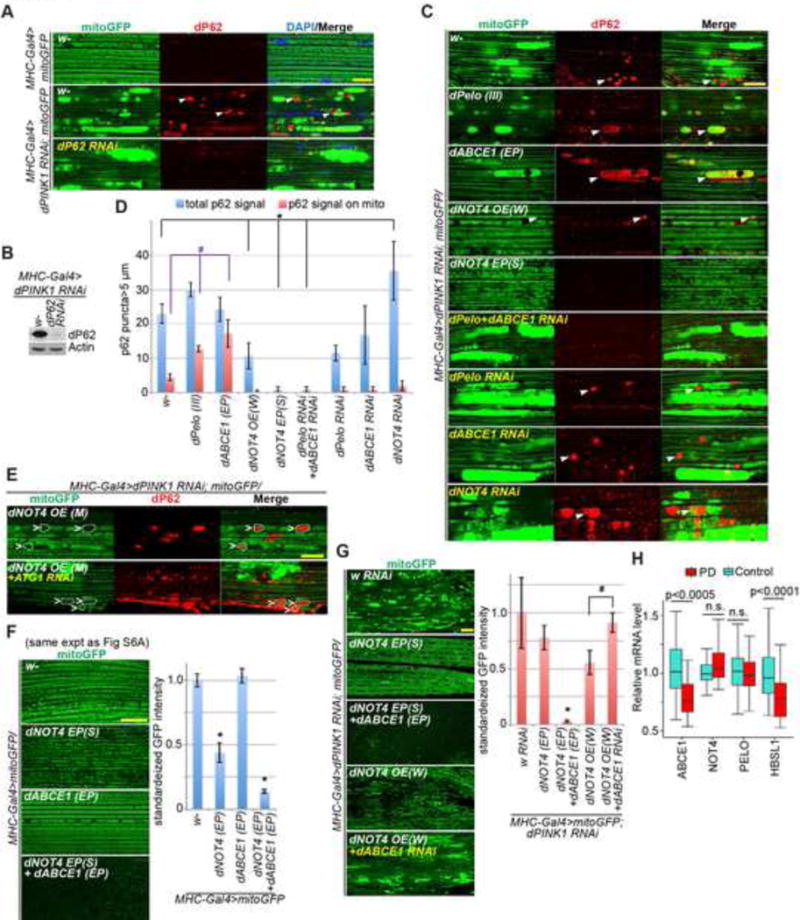
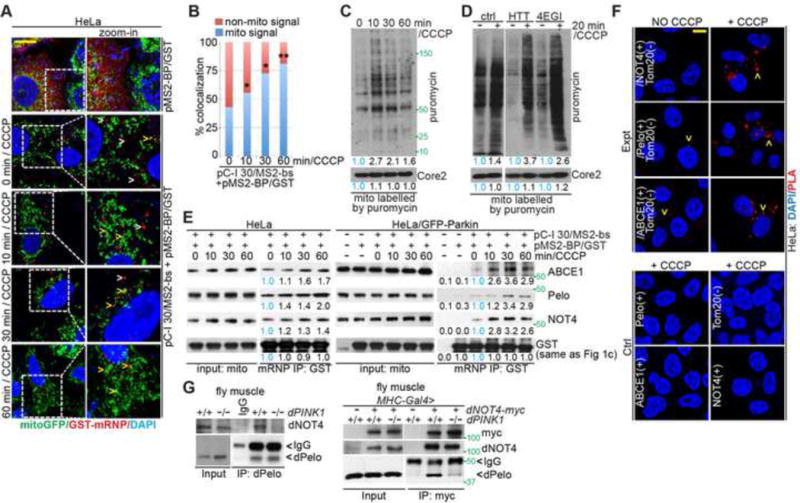
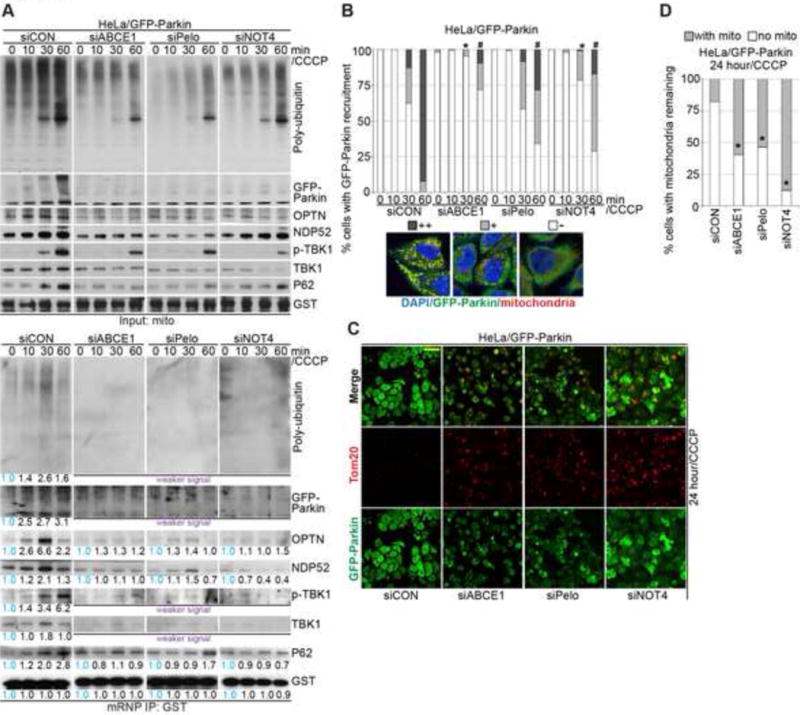
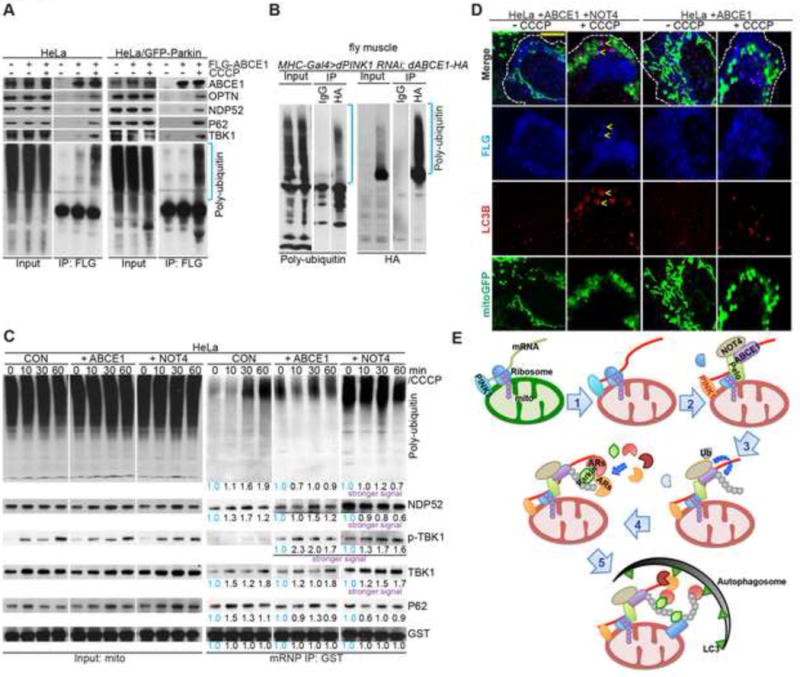
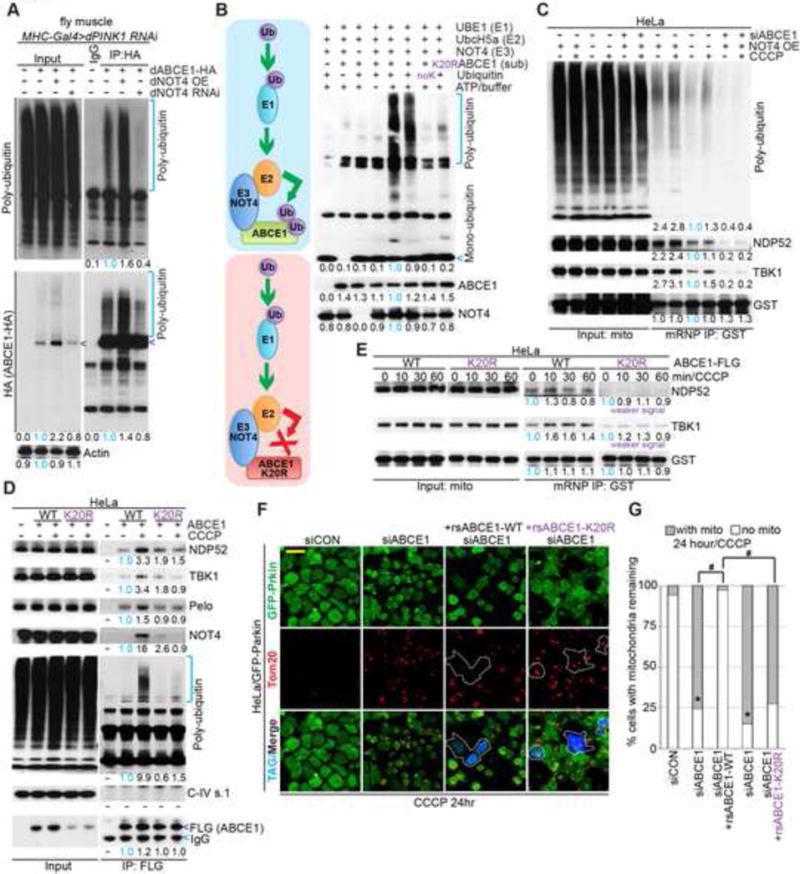
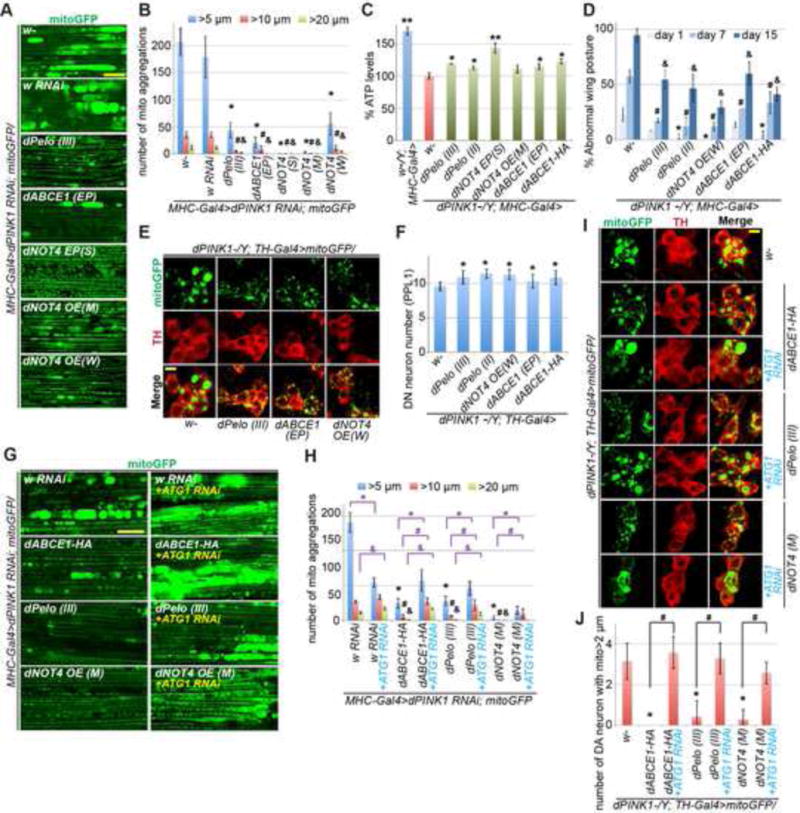
Translation of mRNAs is tightly regulated and constantly surveyed for errors. Aberrant translation can trigger co-translational protein and RNA quality control processes, impairments of which cause neurodegeneration by still poorly understood mechanism(s). Here we show that quality control of translation of mitochondrial outer membrane (MOM)-localized mRNA intersects with the turnover of damaged mitochondria, both orchestrated by the mitochondrial kinase PINK1. Mitochondrial damage causes stalled translation of complex-I 30 kDa subunit (C-I30) mRNA on MOM, triggering the recruitment of co-translational quality control factors Pelo, ABCE1, and NOT4 to the ribosome/mRNA-ribonucleoprotein complex. Damage-induced ubiquitination of ABCE1 by NOT4 generates poly-ubiquitin signals that attract autophagy receptors to MOM to initiate mitophagy. In the Drosophila PINK1 model, these factors act synergistically to restore mitophagy and neuromuscular tissue integrity. Thus ribosome-associated co-translational quality control generates an early signal to trigger mitophagy. Our results have broad therapeutic implications for the understanding and treatment of neurodegenerative diseases.
mRNA 的翻译受到严格调控,并经常对其进行错误检测。异常翻译会引发共翻译的蛋白质和 RNA 质量控制过程,这些过程的损伤通过仍未被充分理解的机制导致神经退行性变。在这里,我们表明,线粒体外膜 (MOM) 定位 mRNA 的翻译质量控制与受损线粒体的周转相交织,这两者都由线粒体激酶 PINK1 协调。线粒体损伤导致 MOM 上的复合物-I 30 kDa 亚基 (C-I30) mRNA 的翻译停滞,触发共翻译质量控制因子 Pelo、ABCE1 和 NOT4 向核糖体/mRNA-核糖核蛋白复合物的募集。NOT4 对 ABCE1 的损伤诱导泛素化产生多泛素信号,吸引自噬受体到 MOM 以启动线粒体自噬。在果蝇 PINK1 模型中,这些因子协同作用以恢复线粒体自噬和神经肌肉组织完整性。因此,核糖体相关的共翻译质量控制产生了触发线粒体自噬的早期信号。我们的研究结果对理解和治疗神经退行性疾病具有广泛的治疗意义。