Despras Guillaume, Zamaleeva Alsu I, Dardevet Lucie, Tisseyre Céline, Magalhaes Joao Gamelas, Garner Charlotte, De Waard Michel, Amigorena Sebastian, Feltz Anne, Mallet Jean-Maurice, Collot Mayeul
Laboratory of Biomolecules (LBM) , UPMC Université Paris 06 , Ecole Normale Supérieure (ENS) , CNRS, UMR 7203 , Paris F-75005 , France . Email:
Ecole Normale Supérieure , Institut de Biologie de l'ENS (IBENS) , INSERM U1024 , CNRS UMR 8197 , Paris F-75005 , France.
Chem Sci. 2015 Oct 1;6(10):5928-5937. doi: 10.1039/c5sc01113b. Epub 2015 Jul 14.
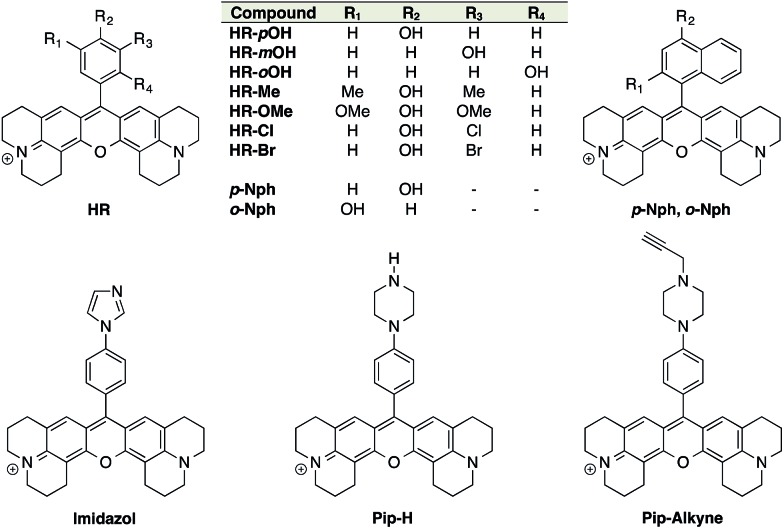
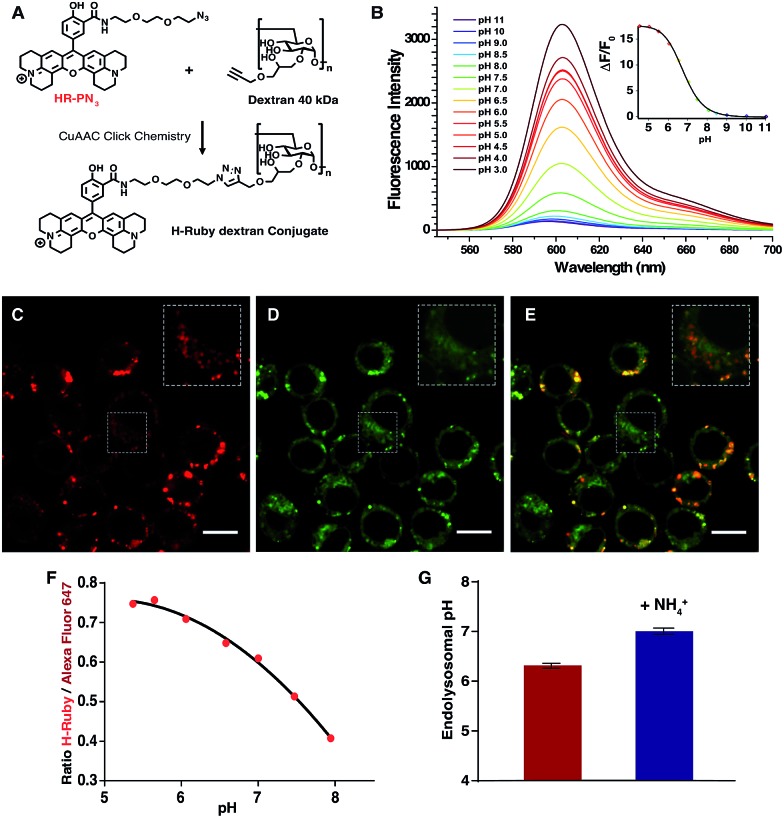
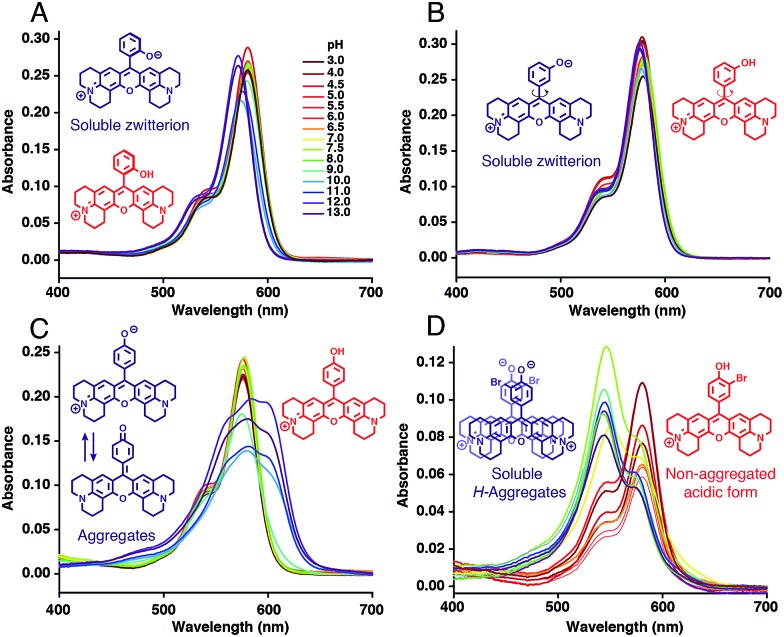
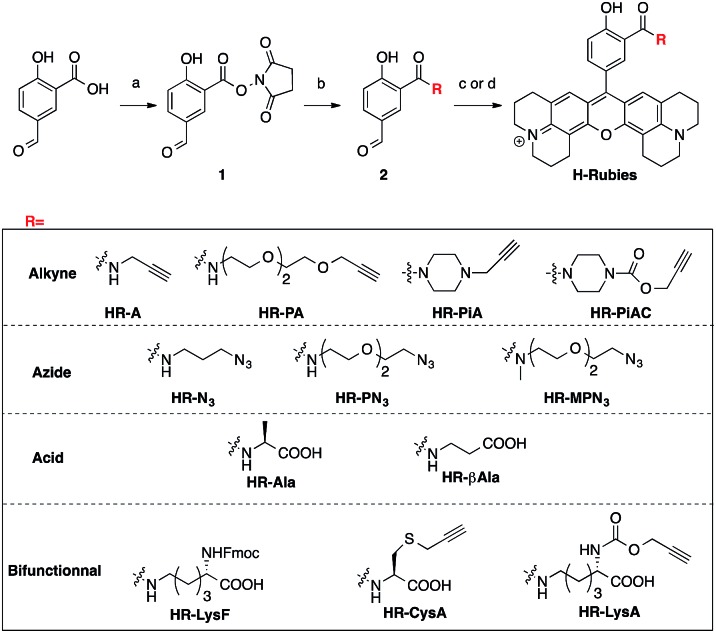
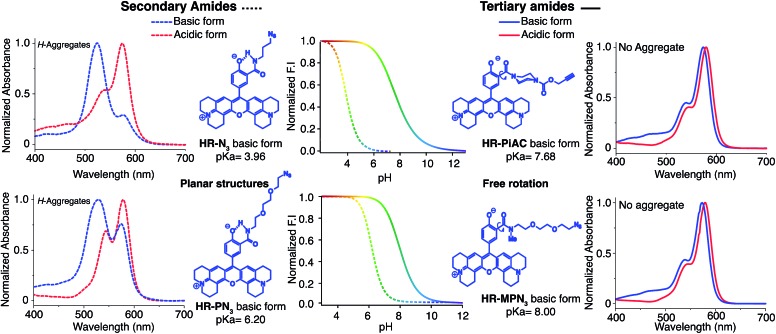
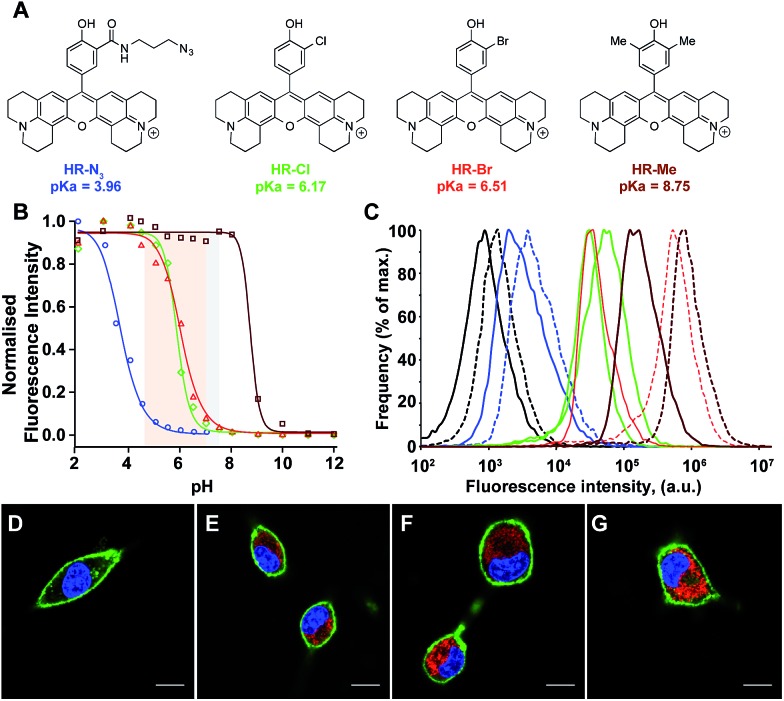
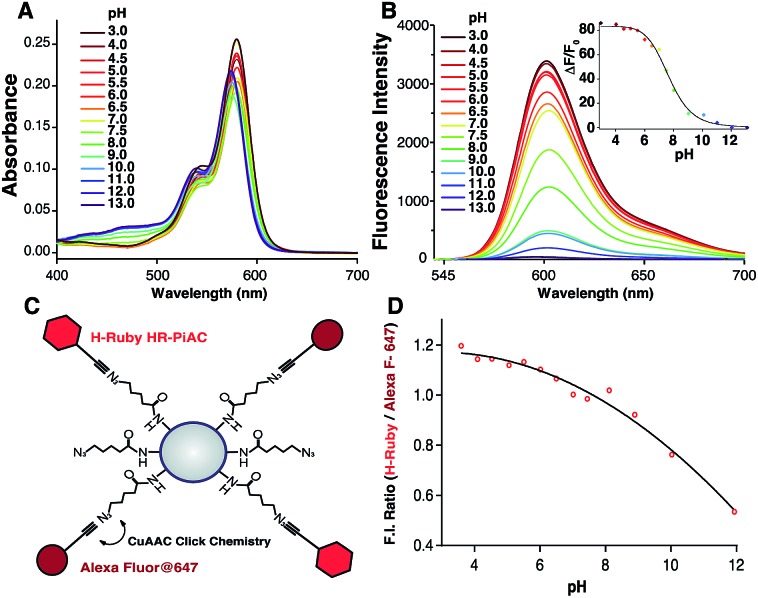
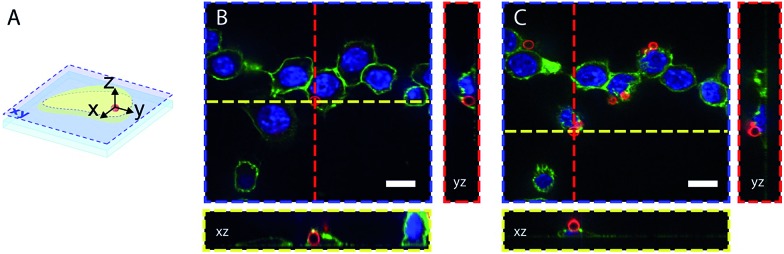
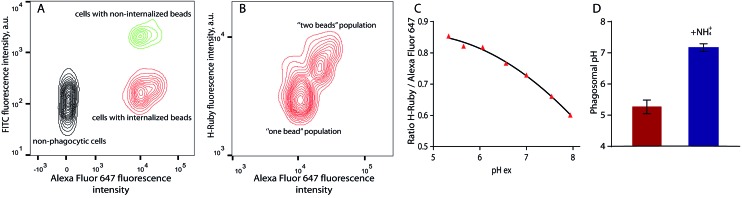
Monitoring intracellular pH has drawn much attention due to its undeniably important function in cells. The widespread development of fluorescent imaging techniques makes pH sensitive fluorescent dyes valuable tools, especially red-emitting dyes which help to avoid the overcrowded green end of the spectral band. Herein, we present H-Rubies, a family of pH sensors based on a phenol moiety and a X-rhodamine fluorophore that display a bright red fluorescence upon acidification with p values spanning from 4 to 9. Slight structural modifications led to dramatic changes in their physicochemical properties and a relationship between their structures, their ability to form -aggregates, and their apparent p was established. While molecular form H-Rubies can be used to monitor mitochondrial acidification of glioma cells, their functionalised forms were linked click chemistry to dextrans or microbeads containing a near infrared Cy5 (Alexa-647) in order to provide ratiometric systems that were used to measure respectively the phagosomal and endosomal pH in macrophages (RAW 264.7 cells) using flow cytometry.
由于细胞内pH在细胞中具有不可否认的重要功能,监测细胞内pH已引起广泛关注。荧光成像技术的广泛发展使pH敏感荧光染料成为有价值的工具,尤其是发射红光的染料,有助于避免光谱带绿色端过于拥挤。在此,我们展示了H-Rubies,这是一类基于酚基部分和X-罗丹明荧光团的pH传感器,在用p值范围为4至9的酸进行酸化时会发出明亮的红色荧光。轻微的结构修饰导致其物理化学性质发生显著变化,并建立了它们的结构、形成聚集体的能力与其表观p之间的关系。虽然分子形式的H-Rubies可用于监测胶质瘤细胞的线粒体酸化,但其功能化形式通过点击化学与含有近红外Cy5(Alexa-647)的葡聚糖或微珠相连,以提供比率系统,用于使用流式细胞术分别测量巨噬细胞(RAW 264.7细胞)中的吞噬体和内体pH。