Department of Clinical and Experimental Sciences, Division of Anatomy and Physiopathology, University of Brescia, Brescia, Italy.
Interdipartimental University Center of Research "Adaption and Regeneration of Tissues and Organs (ARTO)", University of Brescia, Brescia, Italy.
Biomed Res Int. 2018 May 16;2018:4597321. doi: 10.1155/2018/4597321. eCollection 2018.
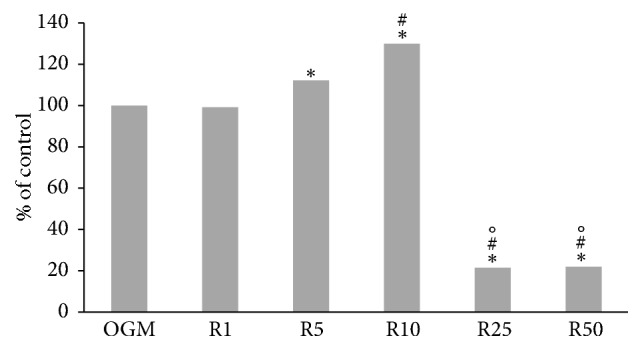
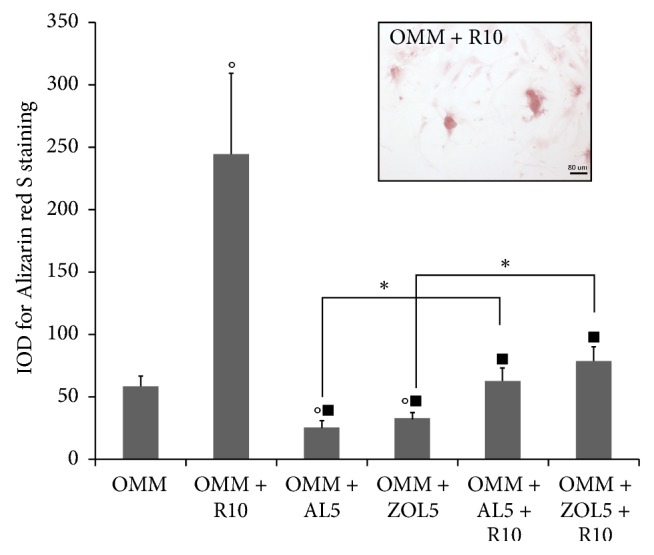
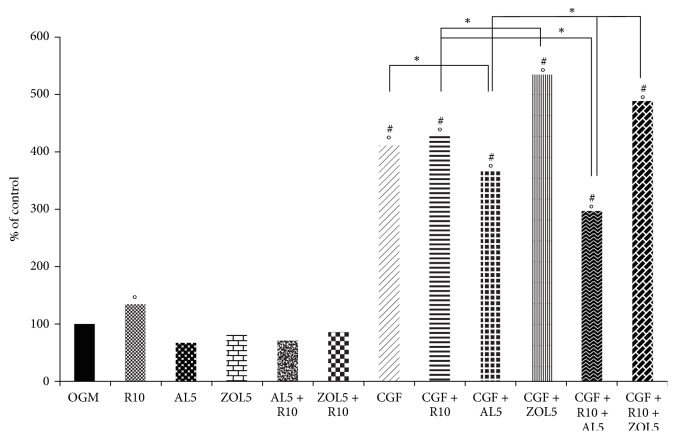
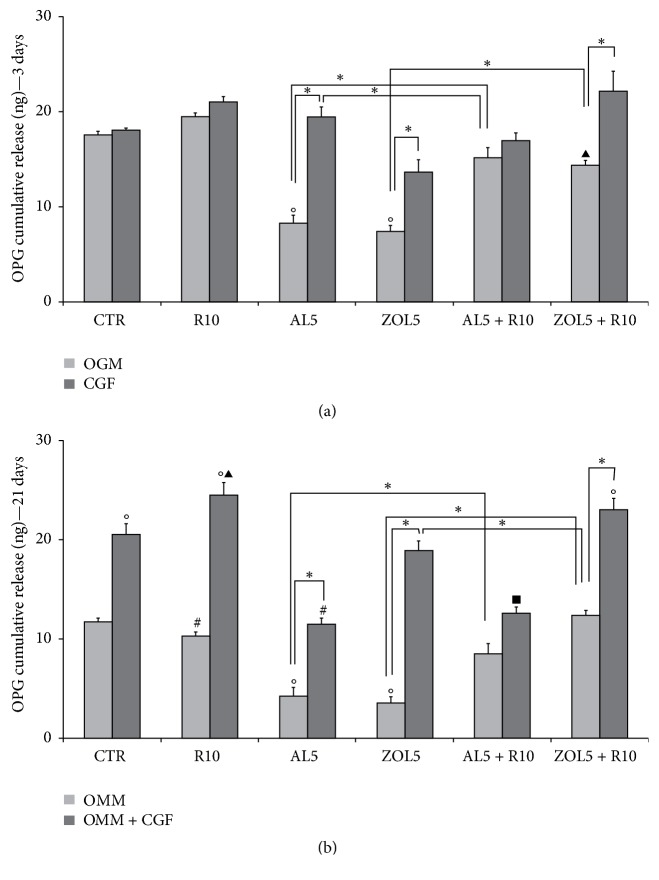
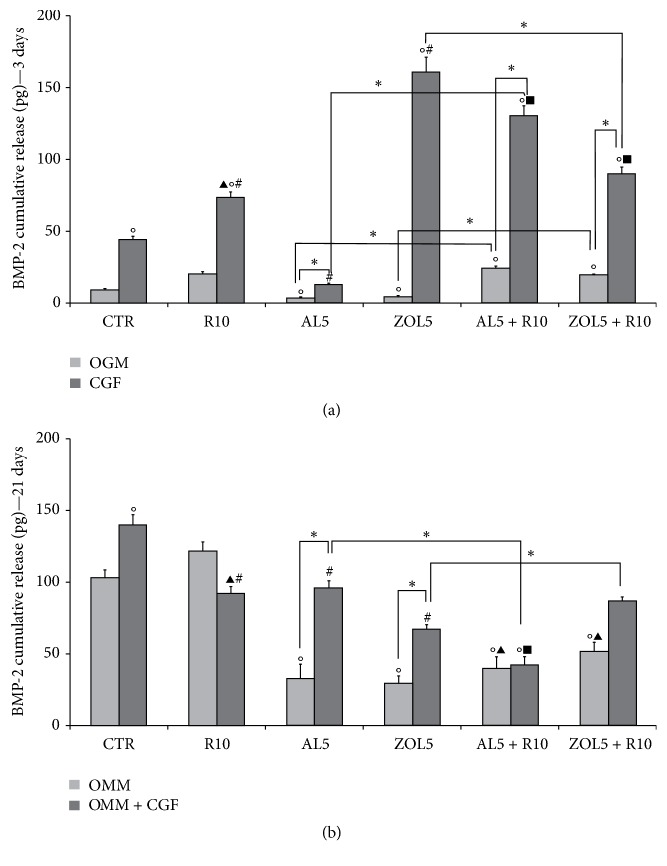
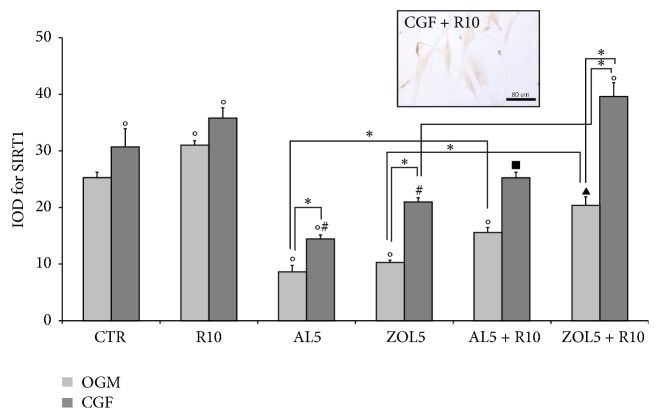
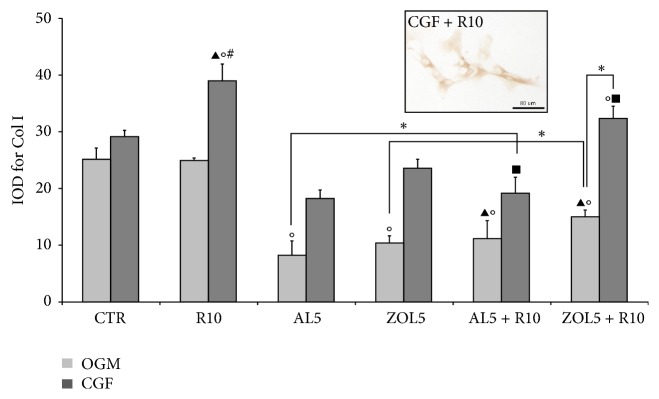
Bisphosphonates are primary pharmacological agents against osteoclast-mediated bone loss and widely used in the clinical practice for prevention and treatment of a variety of skeletal conditions, such as low bone density and osteogenesis imperfecta, and pathologies, such as osteoporosis, malignancies metastatic to bone, Paget disease of bone, multiple myeloma, and hypercalcemia of malignancy. However, long-term bisphosphonate treatment is associated with pathologic conditions including osteonecrosis of the jaw, named BRONJ, which impaired bone regeneration process. Clinical management of BRONJ is controversy and one recent approach is the use of platelet concentrates, such as Concentrated Growth Factors, alone or together with biomaterials or antioxidants molecules, such as resveratrol. The aim of the present study was to investigate the effects of Concentrated Growth Factors and/or resveratrol on the proliferation and differentiation of human osteoblasts, treated or not with bisphosphonates. Human osteoblasts were stimulated for 3 days in complete medium and for 21 days in mineralization medium. At the end of the experimental period, the effect on osteoblast proliferation and differentiation was evaluated using different techniques such as MTT, ELISA for the quantification/detection of osteoprotegerin and bone morphogenetic protein-2, immunohistochemistry for sirtuin 1 and collagen type I, and the Alizarin Red S staining for the rate of mineralization. Results obtained showed that Concentrated Growth Factors and/or resveratrol significantly increased osteoblast proliferation and differentiation and that the cotreatment with Concentrated Growth Factors and resveratrol had a protective role on osteoblasts treated with bisphosphonates. In conclusion, these data suggest that this approach could be promised in the clinical management of BRONJ.
双膦酸盐是抗破骨细胞介导的骨丢失的主要药物,广泛应用于预防和治疗各种骨骼疾病,如低骨密度和成骨不全症,以及病理学疾病,如骨质疏松症、骨转移恶性肿瘤、骨 Paget 病、多发性骨髓瘤和恶性肿瘤高钙血症。然而,长期使用双膦酸盐治疗与病理状况有关,包括颌骨骨坏死,称为 BRONJ,其破坏了骨再生过程。BRONJ 的临床管理存在争议,最近的一种方法是单独使用或与生物材料或抗氧化剂分子(如白藜芦醇)一起使用血小板浓缩物,如浓缩生长因子。本研究的目的是研究浓缩生长因子和/或白藜芦醇对接受或不接受双膦酸盐治疗的人成骨细胞增殖和分化的影响。人成骨细胞在完全培养基中刺激 3 天,在矿化培养基中刺激 21 天。在实验期末,使用不同的技术,如 MTT、骨保护素和骨形态发生蛋白-2 的定量/检测 ELISA、沉默调节蛋白 1 和 I 型胶原的免疫组织化学以及茜素红 S 染色来评估成骨细胞增殖和分化的影响。结果表明,浓缩生长因子和/或白藜芦醇显著增加了成骨细胞的增殖和分化,并且浓缩生长因子和白藜芦醇的共同处理对接受双膦酸盐治疗的成骨细胞具有保护作用。总之,这些数据表明,这种方法可能有望用于 BRONJ 的临床管理。