Sato Naoki, Sato Kaoru, Toyoshima Masakazu
Department of Life Sciences, Graduate School of Arts and Sciences, University of Tokyo, Komaba, Meguro-ku, Tokyo 153-8902, Japan.
Department of Social Engineering, Graduate School of Decision Science and Technology, Tokyo Institute of Technology, Ookayama, Meguro-ku, Tokyo 152-8550, Japan.
Heliyon. 2018 Mar 27;4(3):e00586. doi: 10.1016/j.heliyon.2018.e00586. eCollection 2018 Mar.
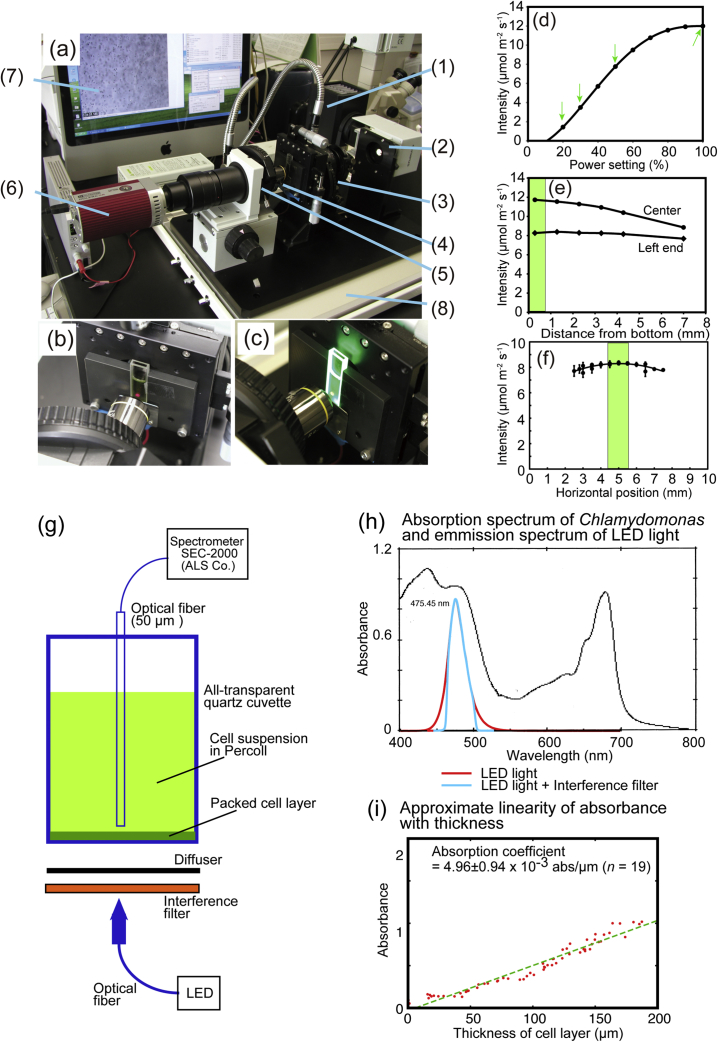
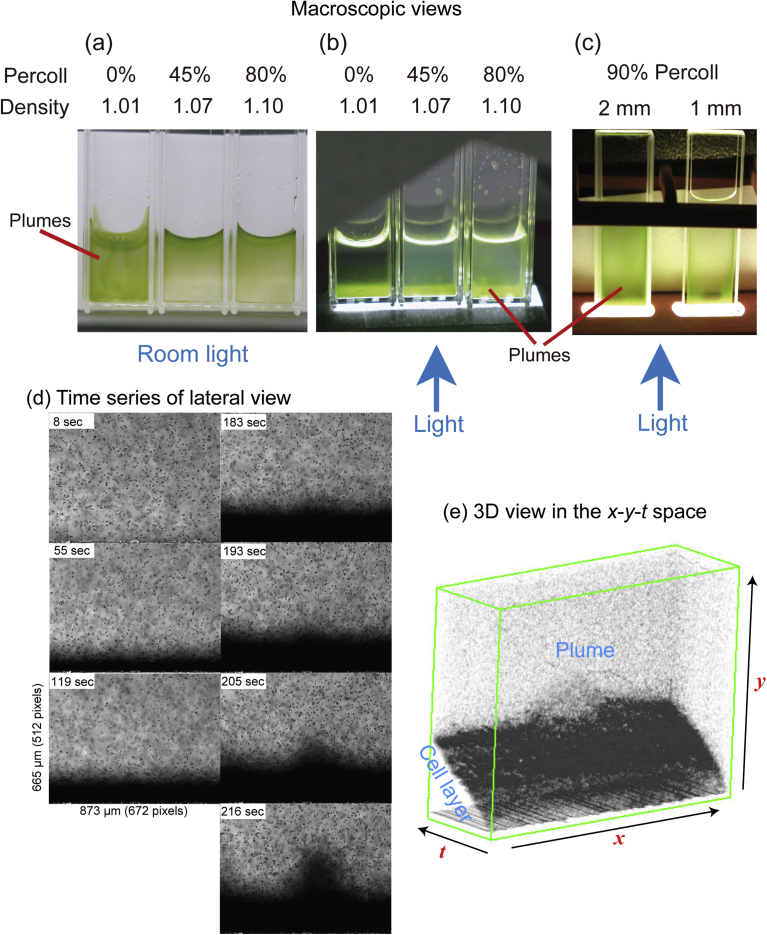
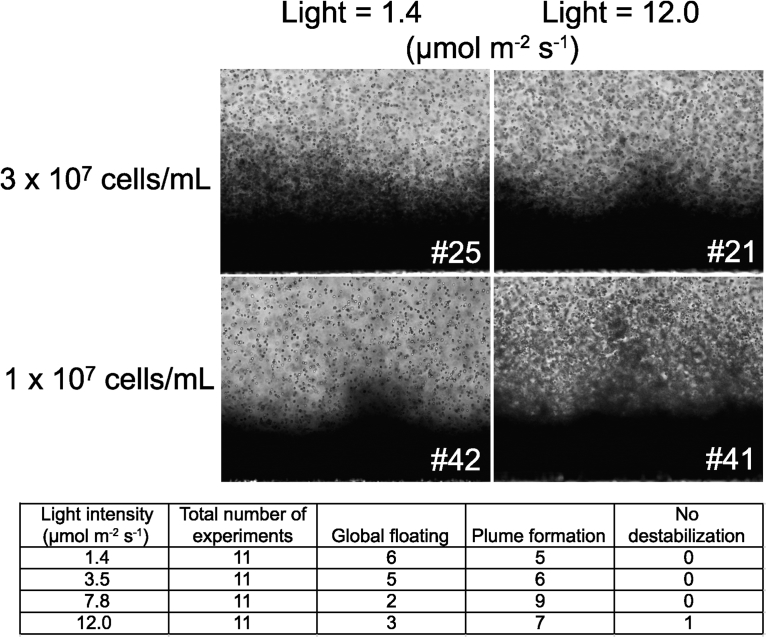
Bioconvection is a convective flow found in a suspension of motile cells that swim against gravity, and is a primitive form of order formation of cells, which has been studied both experimentally and theoretically. We formulate here an inverted bioconvection occurring in a suspension of phototactic cells in a high-density medium, which is illuminated from the bottom. We used a highly phototactic strain 137c of in the experiments. Using a custom-made lateral microscope, we observed a close view of cellular dynamics in the initiation of inverted bioconvection. In conventional bioconvection, convective flows of cells are formed spontaneously with or without formation of the surface cell layer. In inverted convection, a crowded cell layer was initially formed at the bottom, which was a prerequisite for the subsequent emergence of plumes, namely, floating populations of cells. The plume formation was a result of neither uneven initial cell density nor unequal light intensity. Based on detailed analysis of individual cells, we constructed a model of inverted bioconvection, in which each cell experiences a transition between two modes of movement: phototactically swimming cell and non-motile cell aggregate. A simulation using the CompuCell3D software reproduced basic behaviors of the plume formation. The modal transition has not been a subject of basic studies, but provides an interesting target of study of cell-to-cell interactions.
生物对流是在一群逆重力游动的活动细胞悬浮液中发现的一种对流,是细胞有序形成的一种原始形式,已从实验和理论两方面进行了研究。我们在此阐述一种发生在高密度介质中受光趋性细胞悬浮液里的反向生物对流,该悬浮液从底部进行光照。在实验中我们使用了高度光趋性的137c菌株。通过一台定制的侧视显微镜,我们观察到了反向生物对流起始阶段细胞动力学的特写。在传统生物对流中,细胞的对流在有或没有表面细胞层形成的情况下自发形成。在反向对流中,最初在底部形成了一个密集的细胞层,这是随后羽流(即漂浮的细胞群体)出现的先决条件。羽流的形成既不是初始细胞密度不均的结果,也不是光强不等的结果。基于对单个细胞的详细分析,我们构建了一个反向生物对流模型,其中每个细胞经历两种运动模式之间的转变:光趋性游动细胞和非活动细胞聚集体。使用CompuCell3D软件进行的模拟重现了羽流形成的基本行为。这种模式转变并非基础研究的主题,但为细胞间相互作用的研究提供了一个有趣的目标。