a Department of Cell Death and Proliferation , Institut d'Investigacions Biomèdiques de Barcelona, Consejo Superior de Investigaciones Científicas (CSIC), Institut d'Investigacions Biomèdiques August Pi i Sunyer (IDIBAPS) , Barcelona , Spain.
c Departament de Biomedicina, Facultat de Medicina , Universitat de Barcelona , Barcelona , Spain.
Autophagy. 2018;14(7):1129-1154. doi: 10.1080/15548627.2018.1438807. Epub 2018 Jun 4.
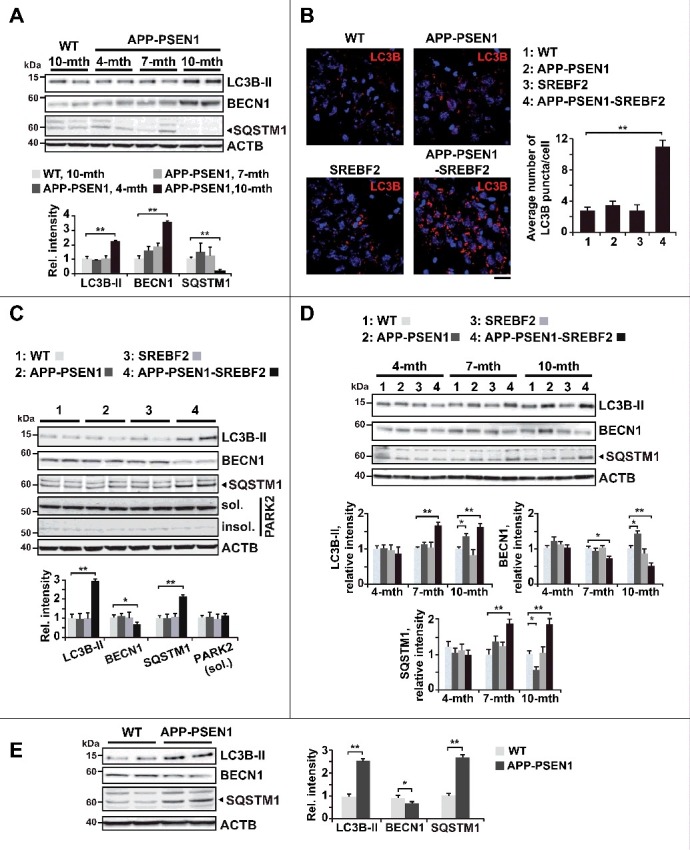
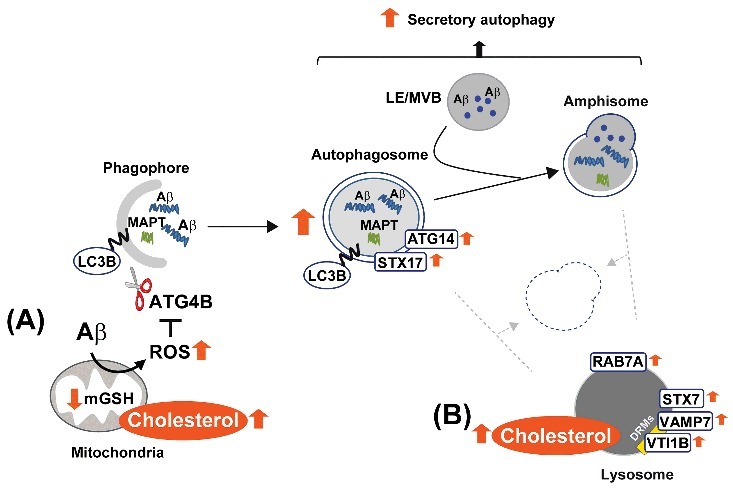
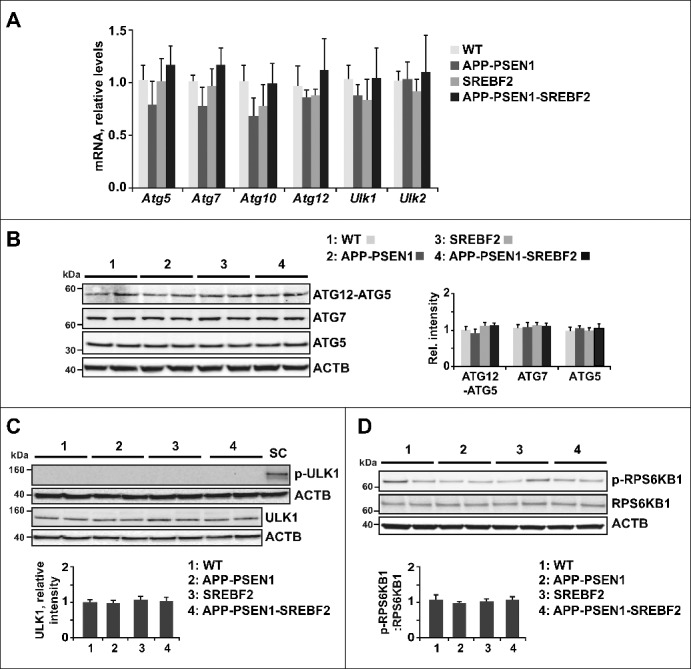
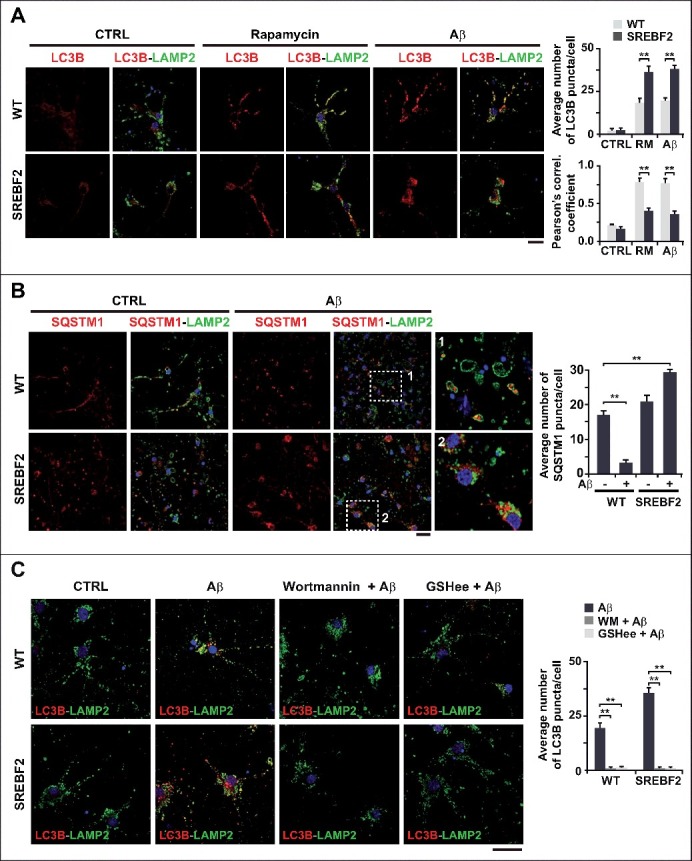
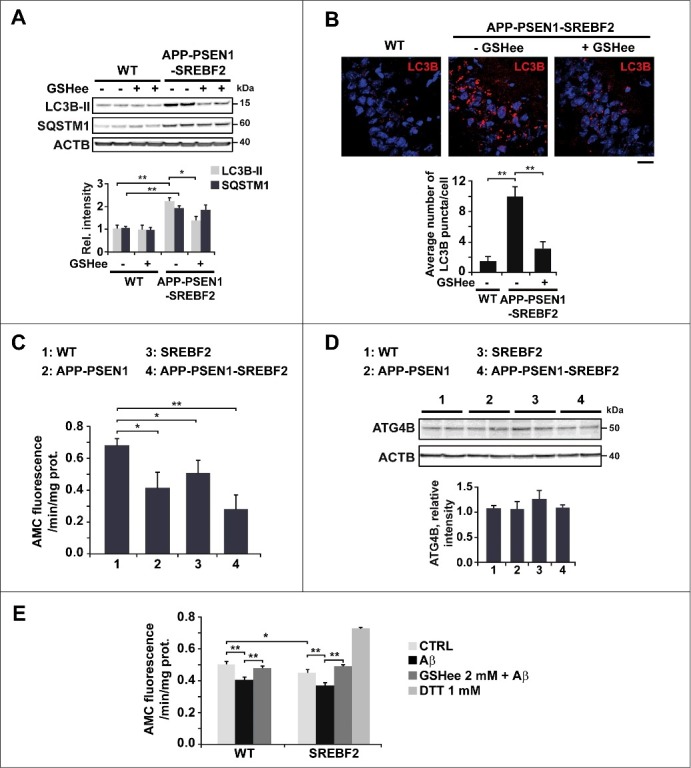
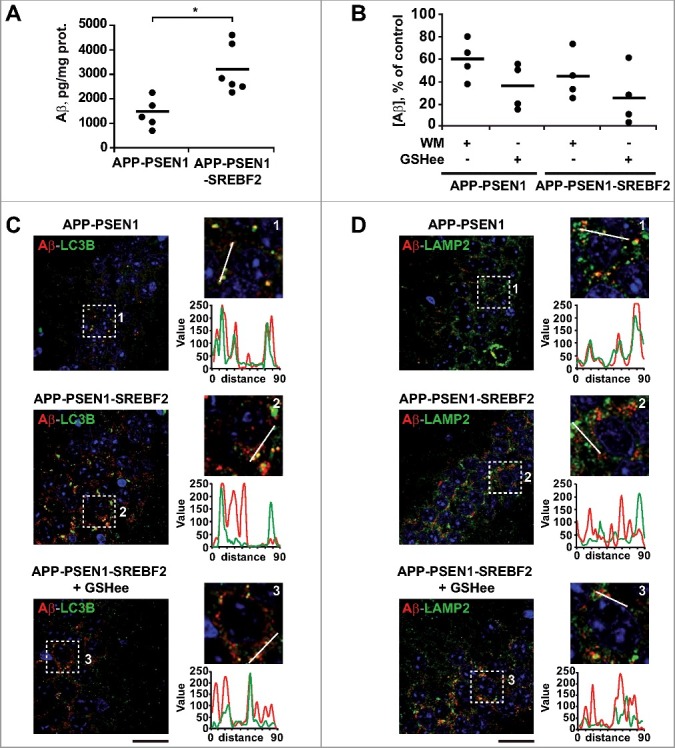
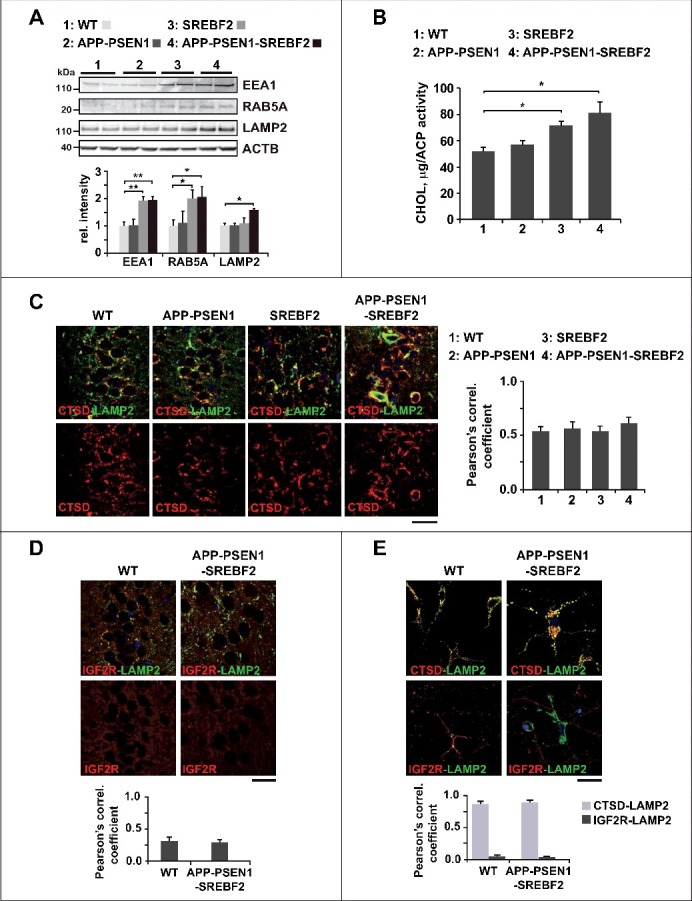
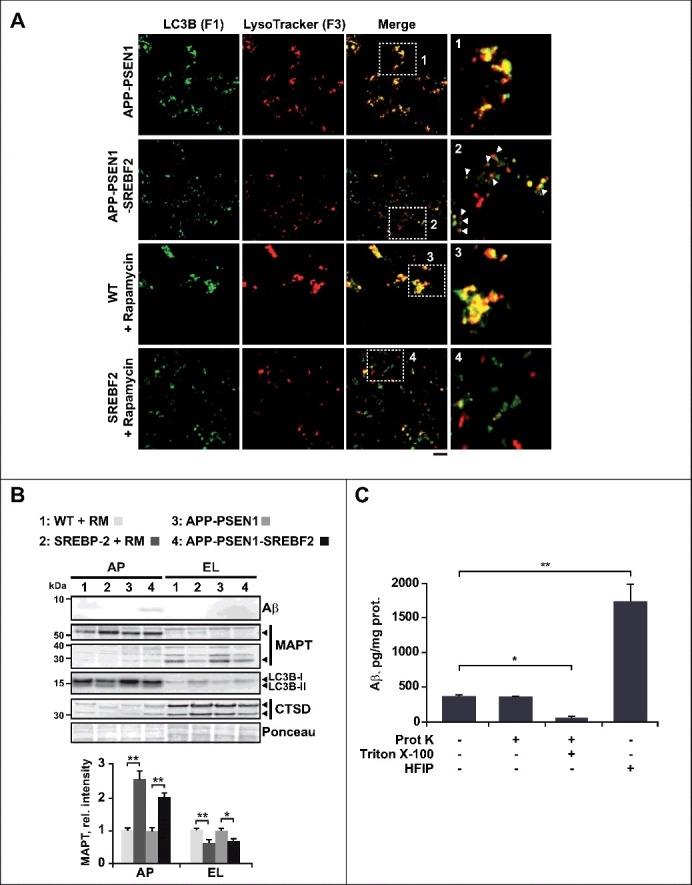
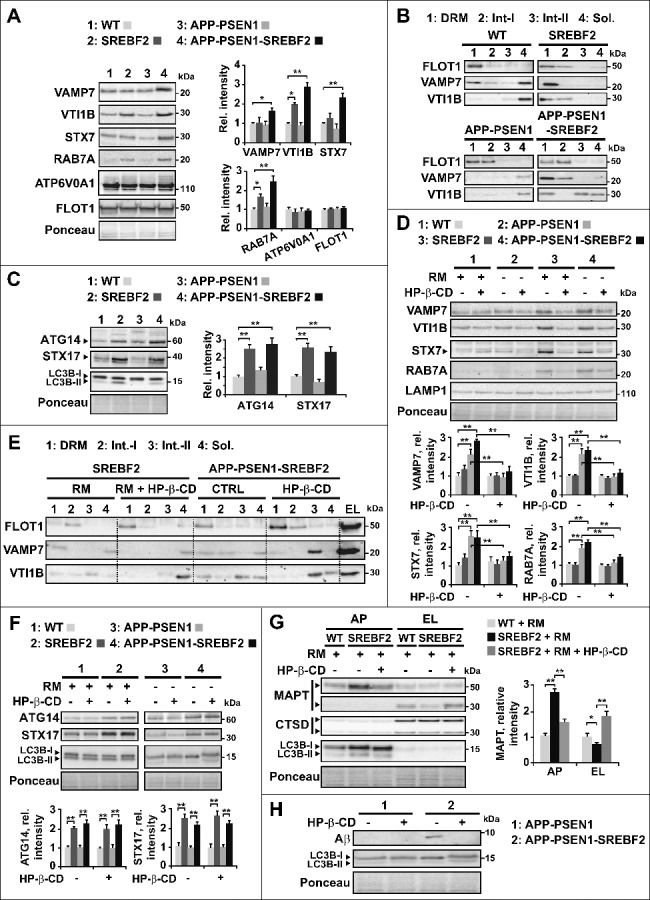
Macroautophagy/autophagy failure with the accumulation of autophagosomes is an early neuropathological feature of Alzheimer disease (AD) that directly affects amyloid beta (Aβ) metabolism. Although loss of presenilin 1 function has been reported to impair lysosomal function and prevent autophagy flux, the detailed mechanism leading to autophagy dysfunction in AD remains to be elucidated. The resemblance between pathological hallmarks of AD and Niemann-Pick Type C disease, including endosome-lysosome abnormalities and impaired autophagy, suggests cholesterol accumulation as a common link. Using a mouse model of AD (APP-PSEN1-SREBF2 mice), expressing chimeric mouse-human amyloid precursor protein with the familial Alzheimer Swedish mutation (APP695swe) and mutant presenilin 1 (PSEN1-dE9), together with a dominant-positive, truncated and active form of SREBF2/SREBP2 (sterol regulatory element binding factor 2), we demonstrated that high brain cholesterol enhanced autophagosome formation, but disrupted its fusion with endosomal-lysosomal vesicles. The combination of these alterations resulted in impaired degradation of Aβ and endogenous MAPT (microtubule associated protein tau), and stimulated autophagy-dependent Aβ secretion. Exacerbated Aβ-induced oxidative stress in APP-PSEN1-SREBF2 mice, due to cholesterol-mediated depletion of mitochondrial glutathione/mGSH, is critical for autophagy induction. In agreement, in vivo mitochondrial GSH recovery with GSH ethyl ester, inhibited autophagosome synthesis by preventing the oxidative inhibition of ATG4B deconjugation activity exerted by Aβ. Moreover, cholesterol-enrichment within the endosomes-lysosomes modified the levels and membrane distribution of RAB7A and SNAP receptors (SNAREs), which affected its fusogenic ability. Accordingly, in vivo treatment with 2-hydroxypropyl-β-cyclodextrin completely rescued these alterations, making it a potential therapeutic tool for AD.
自噬体的积累导致巨自噬/自噬失败是阿尔茨海默病(AD)的早期神经病理学特征,直接影响淀粉样β(Aβ)代谢。虽然已经报道了早老素 1 功能的丧失会损害溶酶体功能并阻止自噬流,但导致 AD 中自噬功能障碍的详细机制仍有待阐明。AD 的病理特征与尼曼-匹克 C 型疾病(包括内体-溶酶体异常和自噬受损)非常相似,这表明胆固醇积累是一个共同的联系。使用 AD 的小鼠模型(表达嵌合鼠-人淀粉样前体蛋白的 APP-PSEN1-SREBF2 小鼠),具有家族性阿尔茨海默病瑞典突变(APP695swe)和突变早老素 1(PSEN1-dE9),以及活性形式的 SREBF2/SREBP2(固醇调节元件结合因子 2),我们证明了高脑胆固醇增强了自噬体的形成,但破坏了其与内体-溶酶体囊泡的融合。这些改变的结合导致 Aβ 和内源性 MAPT(微管相关蛋白 tau)的降解受损,并刺激了自噬依赖性 Aβ 分泌。由于胆固醇介导的线粒体谷胱甘肽/mGSH 的耗竭,APP-PSEN1-SREBF2 小鼠中加剧的 Aβ 诱导的氧化应激对于自噬诱导至关重要。一致地,用 GSH 乙基酯进行体内线粒体 GSH 恢复通过防止 Aβ 对 ATG4B 去共轭活性的氧化抑制,抑制了自噬体的合成。此外,内体-溶酶体中胆固醇的富集改变了 RAB7A 和 SNAP 受体(SNAREs)的水平和膜分布,这影响了其融合能力。因此,体内用 2-羟丙基-β-环糊精治疗完全挽救了这些改变,使其成为 AD 的潜在治疗工具。