Liu Qiong, Sun Ning-Ning, Wu Zheng-Zhi, Fan Da-Hua, Cao Mei-Qun
Department of Cardiovascular Medicine, XiangYa Hospital of Central South University, Changsha, Hunan Province, China.
Shenzhen Institute of Geriatrics, Shenzhen Second People's Hospital, The First Affiliated Hospital of Shenzhen University, Shenzhen, Guangdong Province, China.
Neural Regen Res. 2018 May;13(5):837-845. doi: 10.4103/1673-5374.232478.
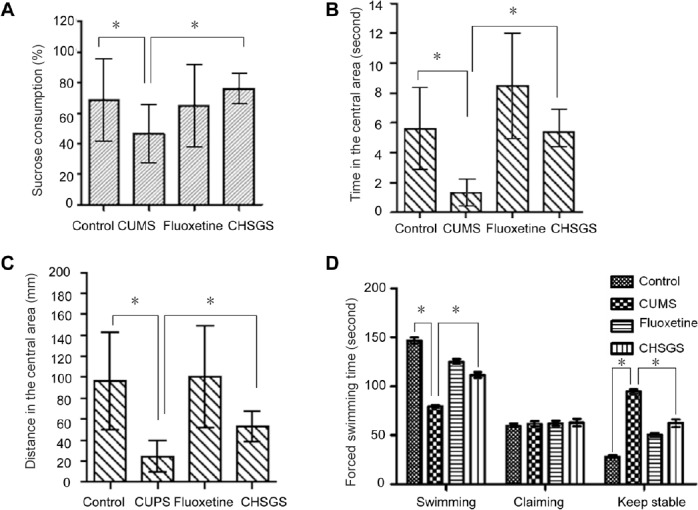
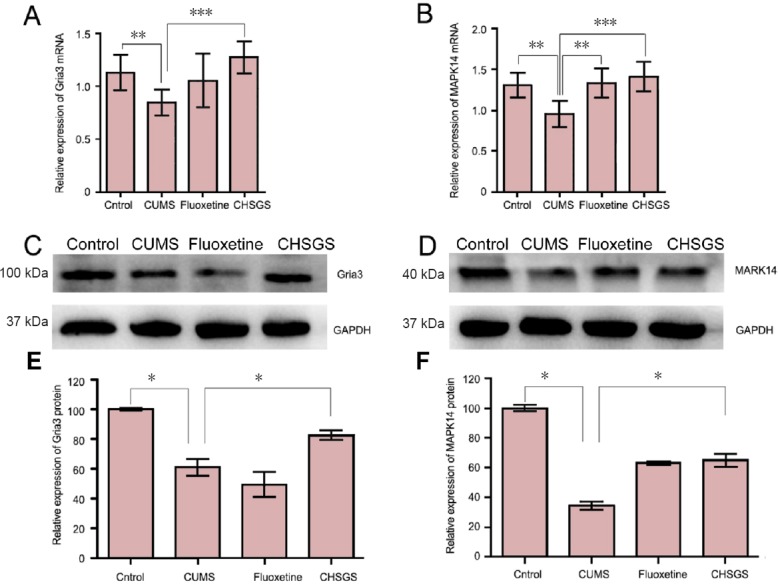
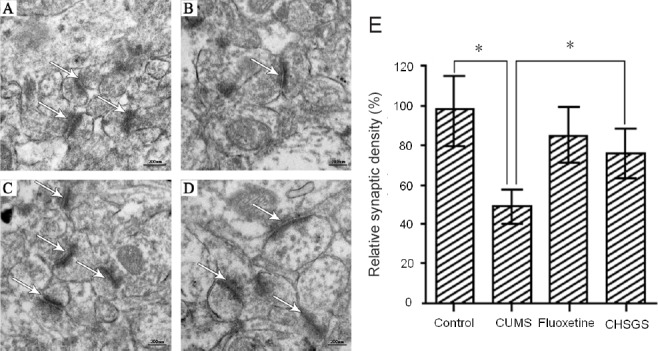
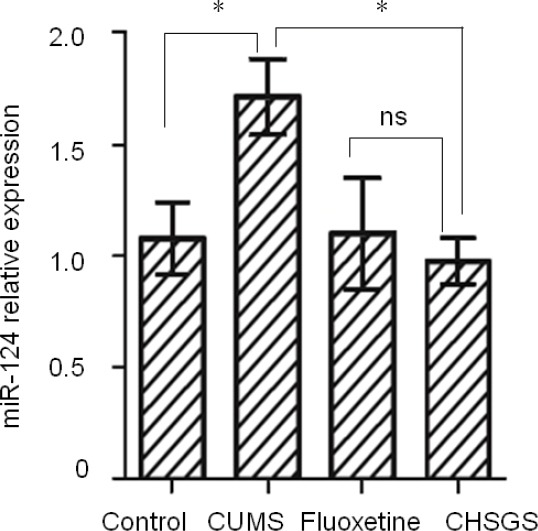
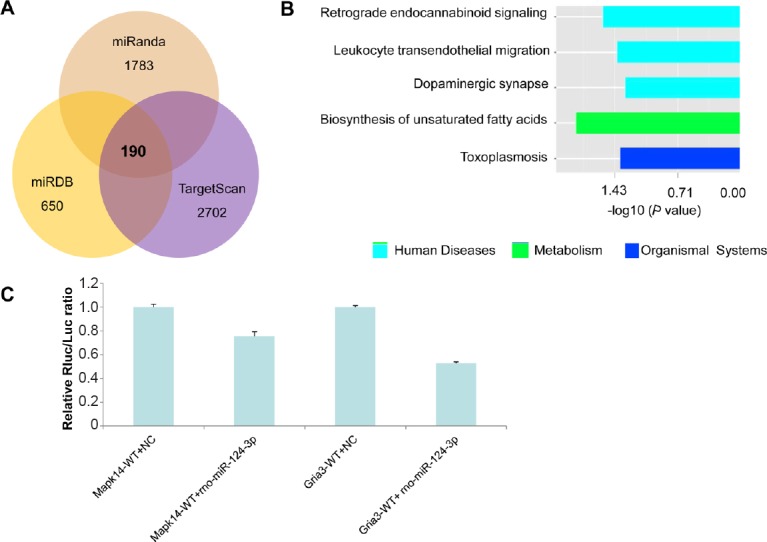
Dysregulation of miR-124 has been reported to be involved in the pathophysiology of depression. Chaihu-Shugan-San, a traditional Chinese medicine, has antidepressive activity; however, the underlying mechanisms remain unclear. In this study, to generate a rodent model of depression, rats were subjected to a combination of solitary confinement and chronic unpredictable mild stress for 28 days. Rats were intragastrically administered Chaihu-Shugan-San (2.835 mL/kg/d) for 4 weeks, once a day. Real-time reverse-transcription quantitative polymerase chain reaction, miRNA microarray, western blot assay and transmission electron microscopy demonstrated that Chaihu-Shugan-San downregulated miR-124 expression and upregulated the mRNA and protein levels of mitogen-activated protein kinase 14 (MAPK14) and glutamate receptor subunit 3 (Gria3). Chaihu-Shugan-San also promoted synapse formation in the hippocampus. The open field test, sucrose consumption test and forced swimming test were used to assess depression-like behavior. After intragastric administration of Chaihu-Shugan-San, sucrose consumption increased, while the depressive behaviors were substantially reduced. Together, these findings suggest that Chaihu-Shugan-San exerts an antidepressant-like effect by downregulating miR-124 expression and by releasing the inhibition of the MAPK14 and Gria3 signaling pathways.
据报道,miR-124的失调与抑郁症的病理生理学有关。中药柴胡疏肝散具有抗抑郁活性,但其潜在机制尚不清楚。在本研究中,为建立抑郁症啮齿动物模型,对大鼠进行单独禁闭和慢性不可预测轻度应激联合处理28天。大鼠每天一次灌胃给予柴胡疏肝散(2.835 mL/kg/d),持续4周。实时逆转录定量聚合酶链反应、miRNA微阵列、蛋白质印迹分析和透射电子显微镜显示,柴胡疏肝散下调miR-124表达,上调丝裂原活化蛋白激酶14(MAPK14)和谷氨酸受体亚基3(Gria3)的mRNA和蛋白质水平。柴胡疏肝散还促进海马体中突触的形成。采用旷场试验、蔗糖消耗试验和强迫游泳试验评估抑郁样行为。灌胃给予柴胡疏肝散后,蔗糖消耗量增加,抑郁行为明显减少。这些研究结果共同表明,柴胡疏肝散通过下调miR-124表达并解除对MAPK14和Gria3信号通路的抑制发挥抗抑郁样作用。