Shinohara Hisashi, Kurahashi Yasunori, Haruta Shusuke, Ishida Yoshinori, Sasako Mitsuru
Department of Surgery Hyogo College of Medicine Nishinomiya Japan.
Department of Gastroenterological Surgery Toranomon Hospital Minato-ku Japan.
Ann Gastroenterol Surg. 2017 Oct 23;2(1):28-36. doi: 10.1002/ags3.12048. eCollection 2018 Jan.
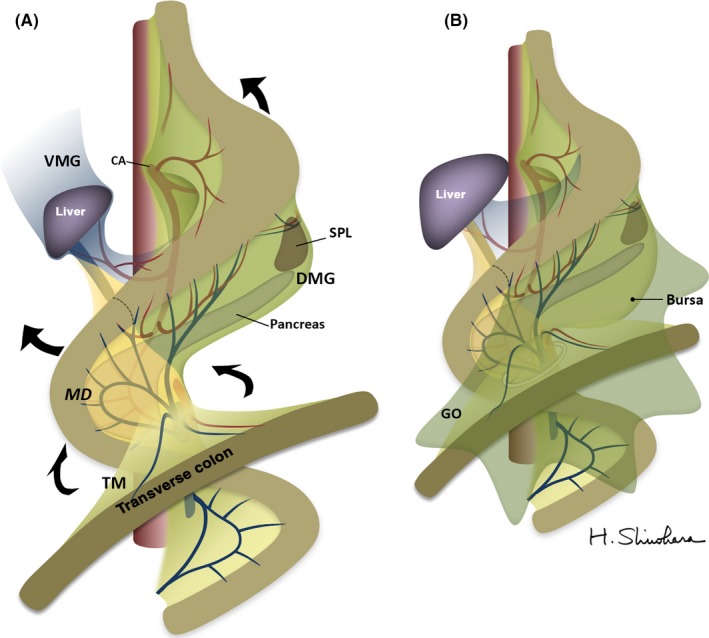
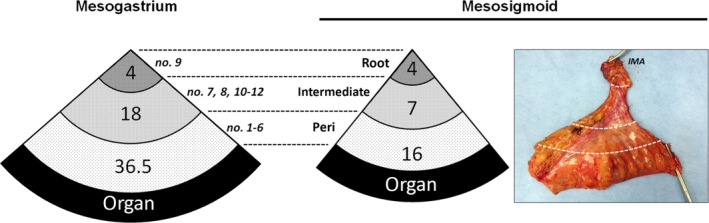
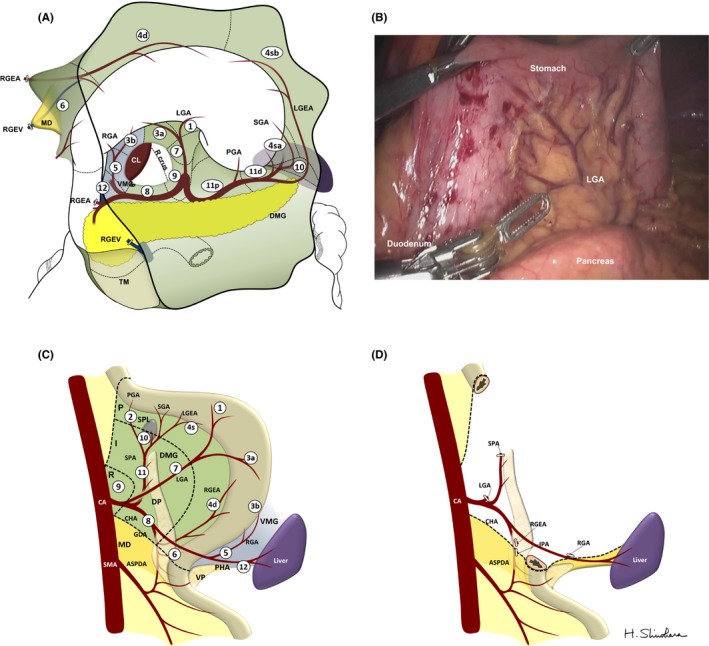
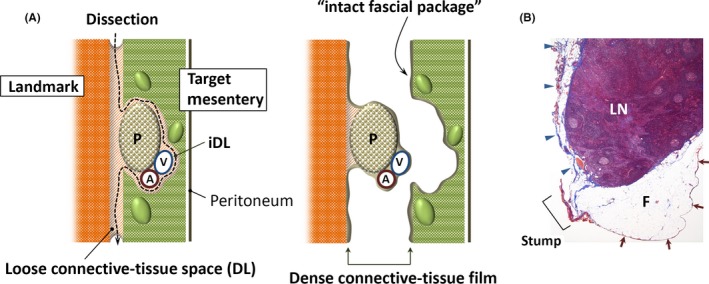
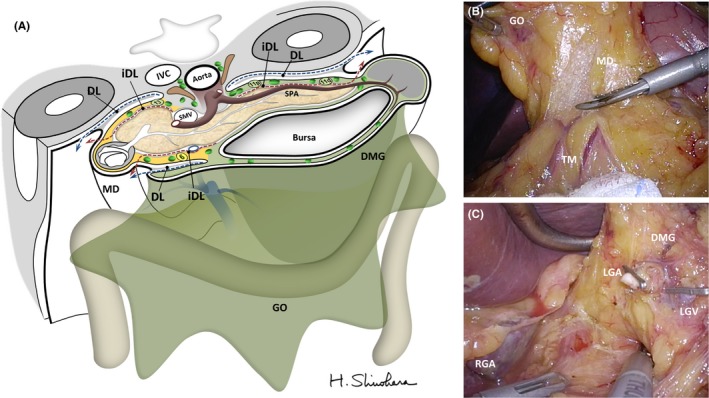
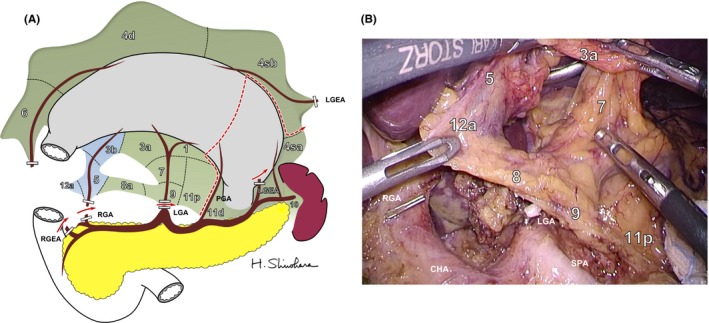
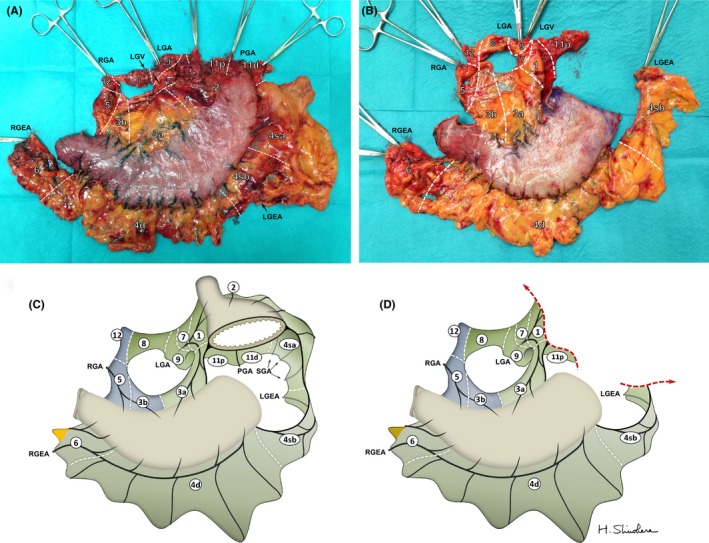
Gastrointestinal cancer surgery aims at en bloc removal of the primary tumor with its lymphatic drainage by excising organ-specific mesentery as an "intact package". This concept was advocated in colorectal cancer surgery as total mesorectal excision (TME) or complete mesocolic excision (CME) procedures, but is not directly applicable to stomach cancer as a result of the morphological complexities of the gastric mesentery. In this review, we discuss the unique anatomical features of the mesogastrium by introducing its embryology, disclose its similarity to the mesosigmoid, and then propose a theoretical concept to mesentery-based D2 gastrectomy, namely systematic mesogastric excision, which can universalize the operative strategy of stomach cancer with that of TME and CME colorectal counterparts.
胃肠道癌手术旨在通过将特定器官的系膜作为一个“完整包裹”切除,整块切除原发性肿瘤及其淋巴引流区域。这一概念在结直肠癌手术中以全直肠系膜切除术(TME)或完整结肠系膜切除术(CME)的形式被提倡,但由于胃系膜的形态复杂性,它并不直接适用于胃癌手术。在本综述中,我们通过介绍胃系膜的胚胎学来探讨其独特的解剖学特征,揭示其与乙状结肠系膜的相似性,然后提出基于系膜的D2胃癌根治术的理论概念,即系统性胃系膜切除术,这可以使胃癌的手术策略与结直肠癌的TME和CME手术策略通用化。