Folkhälsan Institute of Genetics, 00014, Helsinki, Finland.
Department of Medical and Clinical Genetics, Medicum and Research Programs Unit, Molecular Neurology, University of Helsinki, Helsinki, Finland.
BMC Genomics. 2018 Jun 4;19(1):432. doi: 10.1186/s12864-018-4810-y.
CCHCR1 (Coiled-Coil α-Helical Rod protein 1) is a putative psoriasis candidate gene with the risk alleles CCHCR1*WWCC and *Iso3, the latter inhibiting the translation of isoform 1. CCHCR1 was recently shown to be a centrosomal protein, as well as a component of cytoplasmic processing bodies (P-bodies) that regulate mRNA turnover. The function of CCHCR1 has remained unsettled, partly because of the inconsistent findings; it has been shown to play a wide variety of roles in divergent processes, e.g., cell proliferation and steroidogenesis. Here we utilized RNA sequencing (RNAseq) using HEK293 cells overexpressing isoforms 1 or 3 (Iso1, Iso3 cells), in combination with the coding non-risk or risk (*WWCC) haplotype of CCHCR1. Our aim was to study the overall role of CCHCR1 and the effects of its variants.
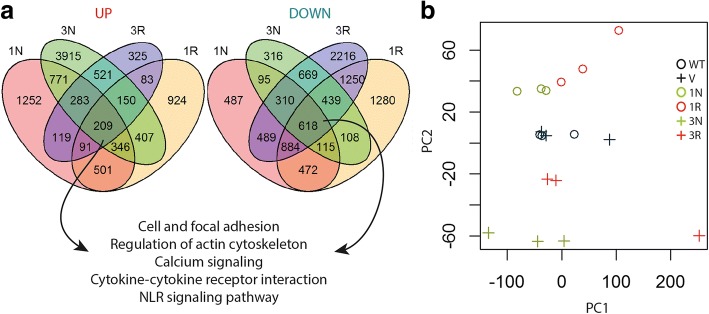
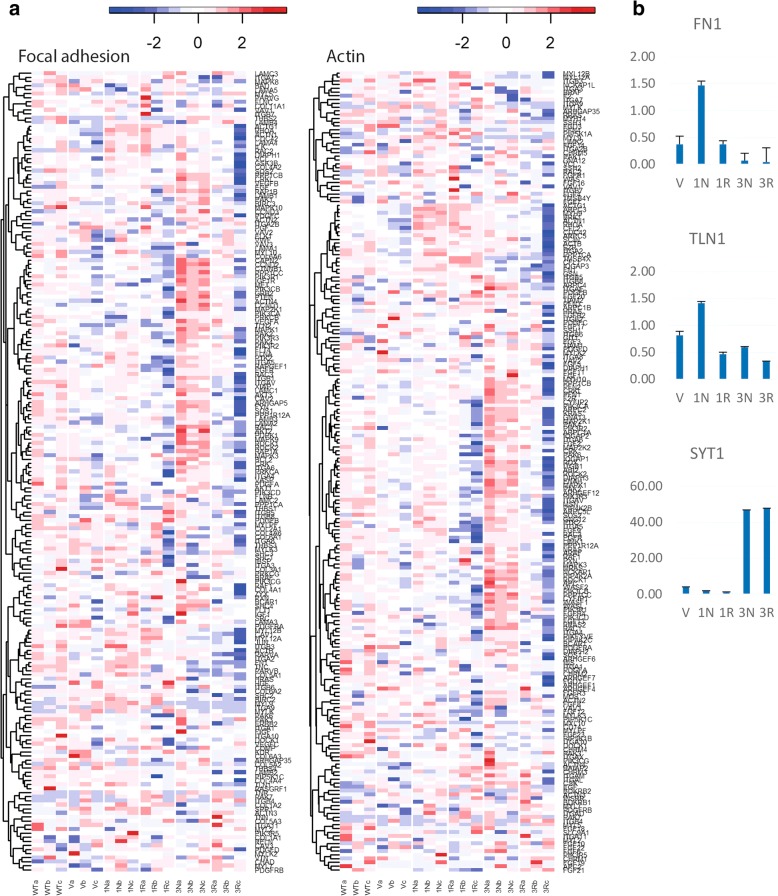
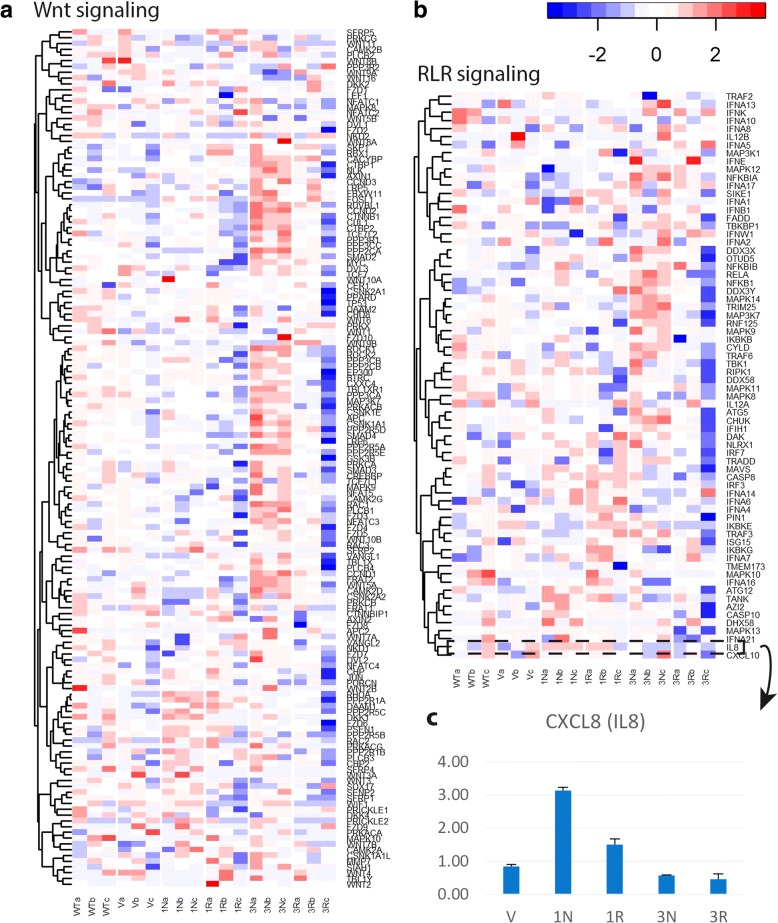
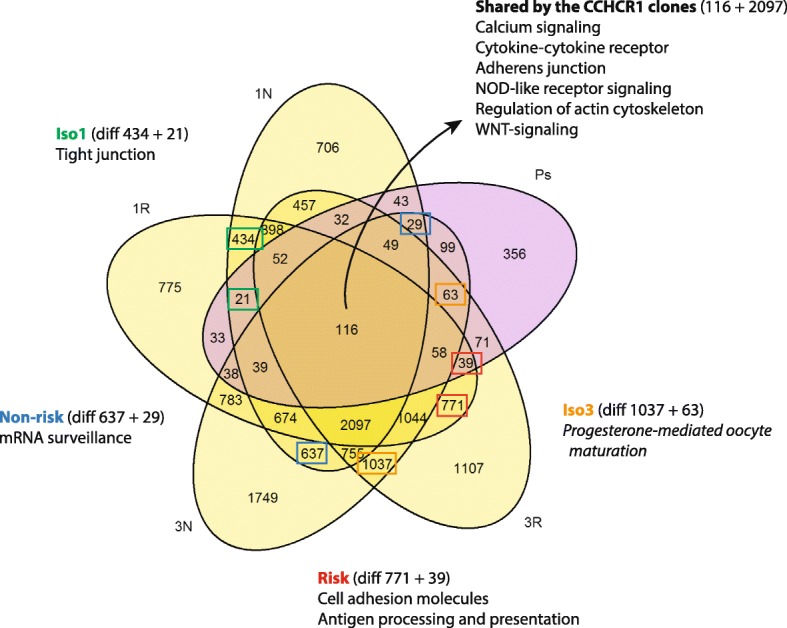
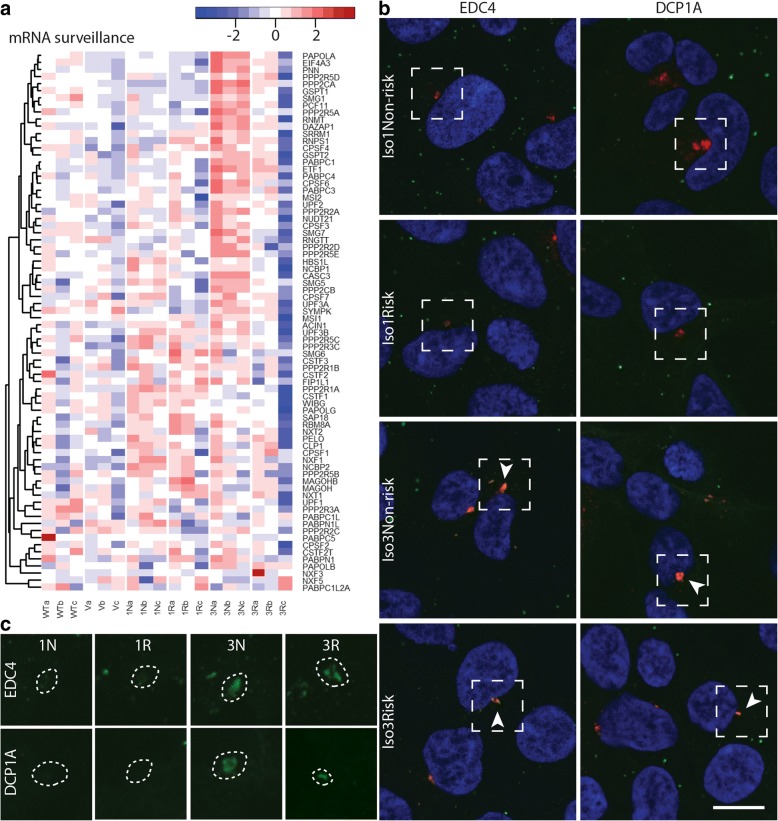
The overexpression of CCHCR1 variants in HEK293 cells resulted in cell line-specific expression profiles though several similarities were observable. Overall the Iso1 and Iso3 cells showed a clear isoform-specific clustering as two separate groups, and the Non-risk and Risk cells often exhibited opposite effects. The RNAseq supported a role for CCHCR1 in the centrosomes and P-bodies; the most highlighted pathways included regulation of cytoskeleton, adherens and tight junctions, mRNA surveillance and RNA transport. Interestingly, both the RNAseq and immunofluorescent localization revealed variant-specific differences for CCHCR1 within the P-bodies.
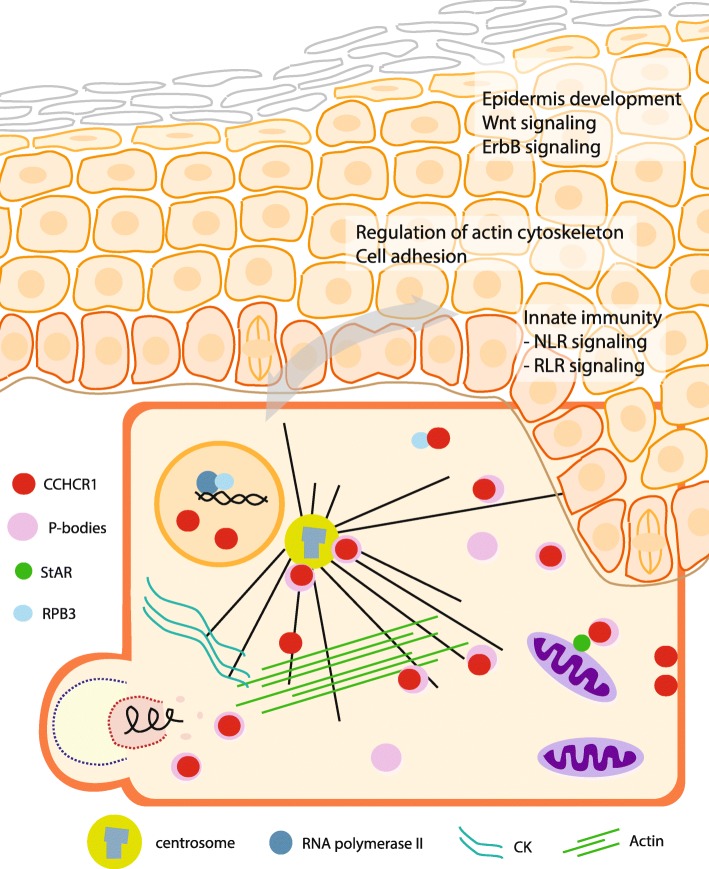
CCHCR1 influenced a wide variety of signaling pathways, which could reflect its active role in the P-bodies and centrosomes that both are linked to the cytoskeleton; as a centrosomal P-body protein CCHCR1 may regulate diverse cytoskeleton-mediated functions, such as cell adhesion and -division. The present findings may explain the previous inconsistent observations about the functions of CCHCR1.
CCHCR1(卷曲螺旋 α-螺旋棒状蛋白 1)是一个潜在的银屑病候选基因,其风险等位基因 CCHCR1WWCC 和Iso3 后者抑制 1 型异构体的翻译。CCHCR1 最近被证明是一种中心体蛋白,也是细胞质处理体(P 体)的组成部分,P 体调节 mRNA 周转。CCHCR1 的功能仍未确定,部分原因是研究结果不一致;它已被证明在各种不同的过程中发挥广泛的作用,例如细胞增殖和类固醇生成。在这里,我们使用过表达 1 型或 3 型(Iso1、Iso3 细胞)异构体的 HEK293 细胞进行 RNA 测序(RNAseq),并结合 CCHCR1 的编码非风险或风险(*WWCC)单倍型。我们的目的是研究 CCHCR1 的整体作用及其变体的影响。
CCHCR1 变体在 HEK293 细胞中的过表达导致细胞系特异性表达谱,尽管可以观察到一些相似之处。总体而言,Iso1 和 Iso3 细胞表现出明显的异构体特异性聚类,分为两个独立的组,非风险和风险细胞通常表现出相反的作用。RNAseq 支持 CCHCR1 在中心体和 P 体中的作用;最突出的途径包括细胞骨架、黏着连接和紧密连接、mRNA 监测和 RNA 运输的调节。有趣的是,RNAseq 和免疫荧光定位都揭示了 P 体中 CCHCR1 的变体特异性差异。
CCHCR1 影响了广泛的信号通路,这可能反映了其在中心体和 P 体中的活跃作用,中心体和 P 体都与细胞骨架有关;作为中心体 P 体蛋白,CCHCR1 可能调节多种细胞骨架介导的功能,如细胞黏附和细胞分裂。目前的发现可以解释以前关于 CCHCR1 功能的不一致观察结果。