Hunan Hybrid Rice Research Center/State Key Laboratory of Hybrid Rice, Changsha, 410125, China.
Hunan Institute of Microbiology, Changsha, 410009, China.
BMC Microbiol. 2018 Jun 4;18(1):51. doi: 10.1186/s12866-018-1174-z.
Exploiting soil microorganisms in the rhizosphere of plants can significantly improve agricultural productivity; however, the mechanism by which microorganisms specifically affect agricultural productivity is poorly understood. To clarify this uncertainly, the rhizospheric microbial communities of super rice plants at various growth stages were analysed using 16S rRNA high-throughput gene sequencing; microbial communities were then related to soil properties and rice productivity.
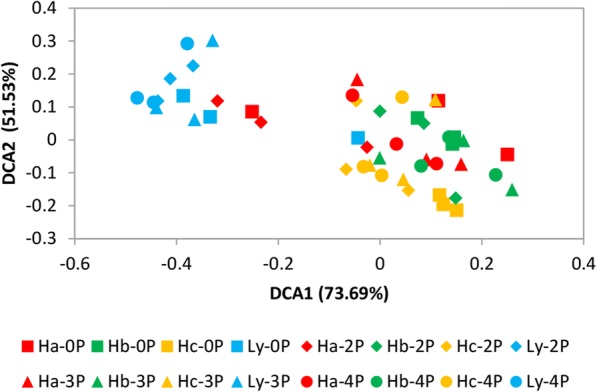
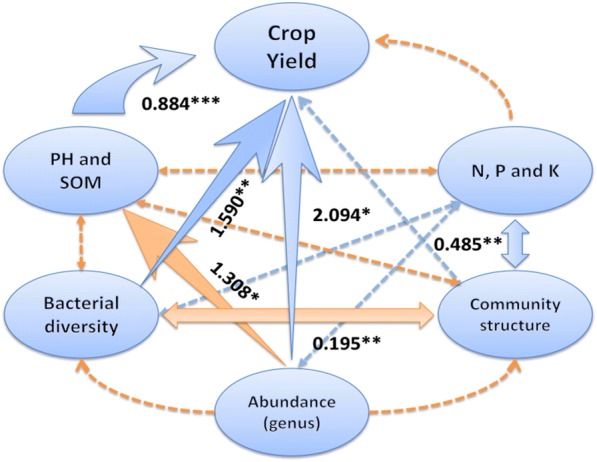
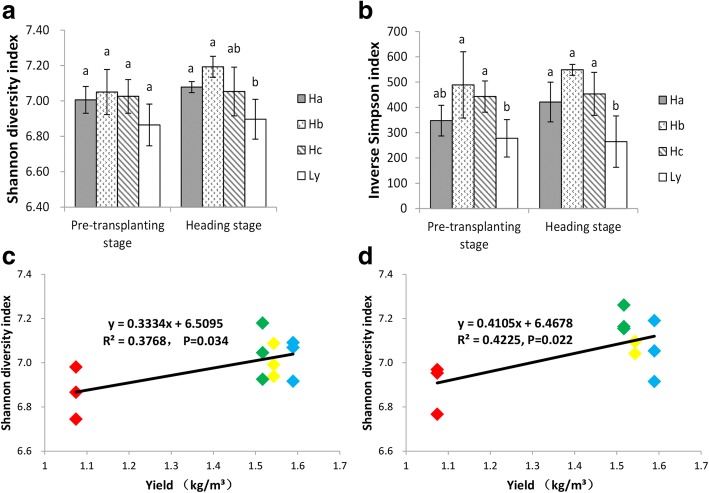
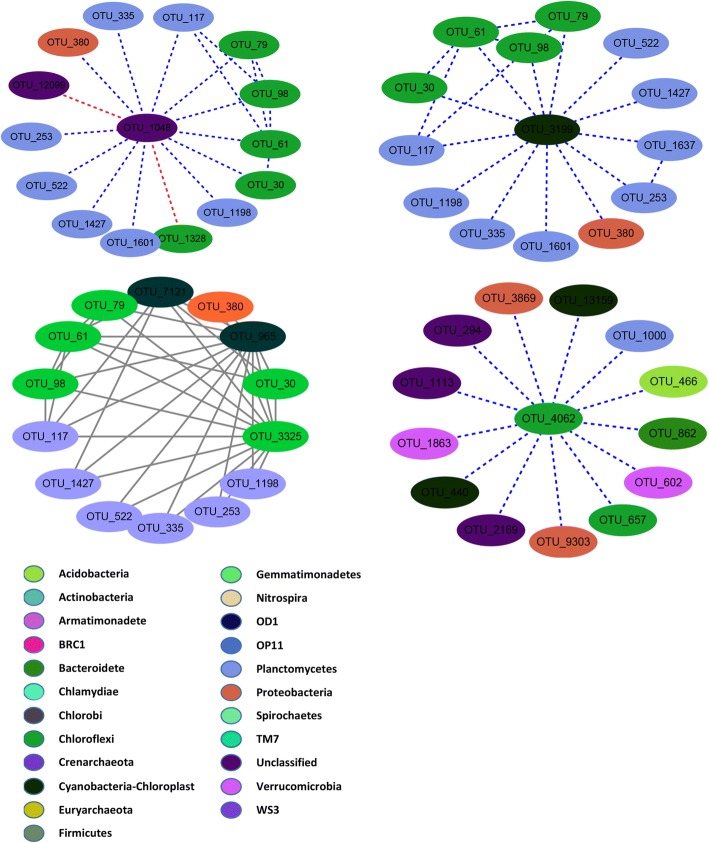
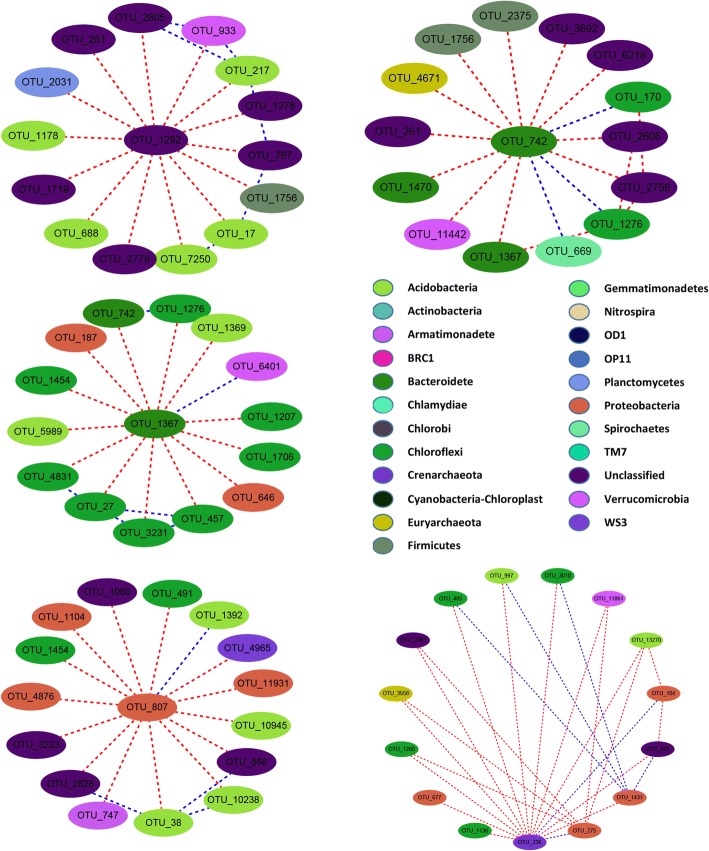
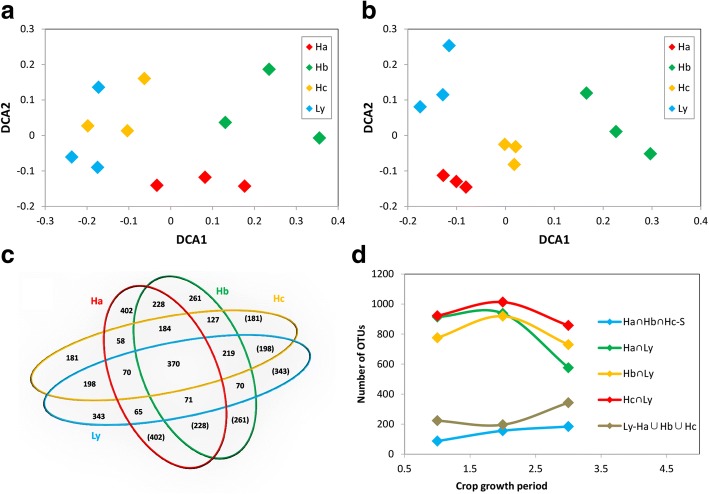
The rhizospheric bacterial communities were characterized by the phyla Proteobacteria, Acidobacteria, Chloroflexi, and Verrucomicrobia during all stages of rice growth. Rice production differed by approximately 30% between high- and low-yield sites that had uniform fertilization regimes and climatic conditions, suggesting the key role of microbial communities. Mantel tests showed a strong correlation between soil conditions and rhizospheric bacterial communities, and microorganisms had different effects on crop yield. Among the four growing periods, the rhizospheric bacterial communities present during the heading stage showed a more significant correlation (p < 0.05) with crop yield, suggesting their potential in regulating crop production. The biological properties (i.e., microbes) reflected the situation of agricultural land better than the physicochemical characterics (i.e., nutrient elements), which provides theoretical support for agronomic production. Molecular ecological network (MEN) analysis suggested that differences in productivity were caused by the interaction between the soil characteristics and the bacterial communities.
During the heading stage of rice cropping, the rhizospheric microbial community is vital for the resulting rice yield. According to network analysis, the cooperative relationship (i.e., positive interaction) between between microbes may contribute significantly to yield, and the biological properties (i.e., microbes) better reflected the real conditions of agricultural land than did the physicochemical characteristics (i.e., nutrient elements).
开发植物根际土壤中的微生物可以显著提高农业生产力;然而,微生物如何具体影响农业生产力的机制还不清楚。为了澄清这一不确定性,本研究利用 16S rRNA 高通量基因测序分析了不同生长阶段超级水稻根际微生物群落;然后将微生物群落与土壤特性和水稻生产力联系起来。
在水稻生长的各个阶段,根际细菌群落以变形菌门、酸杆菌门、绿弯菌门和疣微菌门为特征。在施肥制度和气候条件均相同的高、低产田中,水稻产量差异约为 30%,这表明微生物群落起着关键作用。Mantel 检验表明土壤条件与根际细菌群落之间存在很强的相关性,微生物对作物产量有不同的影响。在四个生长时期中,抽穗期根际细菌群落与作物产量的相关性(p < 0.05)更为显著,这表明它们在调节作物生产方面具有潜力。生物特性(即微生物)比理化特性(即养分元素)更能反映农田的实际情况,为农业生产提供了理论支持。分子生态网络(MEN)分析表明,生产力的差异是由土壤特性和细菌群落之间的相互作用引起的。
在水稻种植的抽穗期,根际微生物群落对水稻的产量至关重要。根据网络分析,微生物之间的合作关系(即正相互作用)可能对产量有重要贡献,生物特性(即微生物)比理化特性(即养分元素)更能反映农田的实际情况。