Vardjan Nina, Chowdhury Helena H, Horvat Anemari, Velebit Jelena, Malnar Maja, Muhič Marko, Kreft Marko, Krivec Špela G, Bobnar Saša T, Miš Katarina, Pirkmajer Sergej, Offermanns Stefan, Henriksen Gjermund, Storm-Mathisen Jon, Bergersen Linda H, Zorec Robert
Laboratory of Neuroendocrinology - Molecular Cell Physiology, Institute of Pathophysiology, Faculty of Medicine, University of Ljubljana, Ljubljana, Slovenia.
Laboratory of Cell Engineering, Celica Biomedical, Ljubljana, Slovenia.
Front Mol Neurosci. 2018 May 8;11:148. doi: 10.3389/fnmol.2018.00148. eCollection 2018.
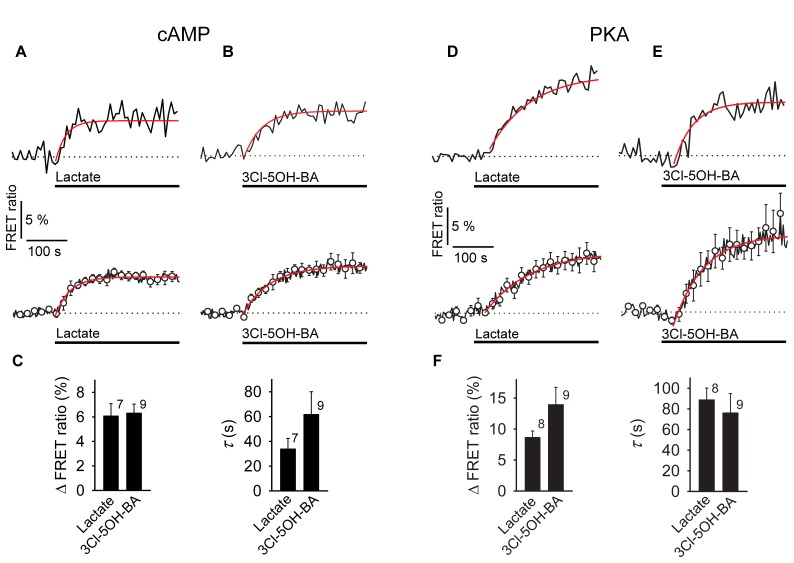
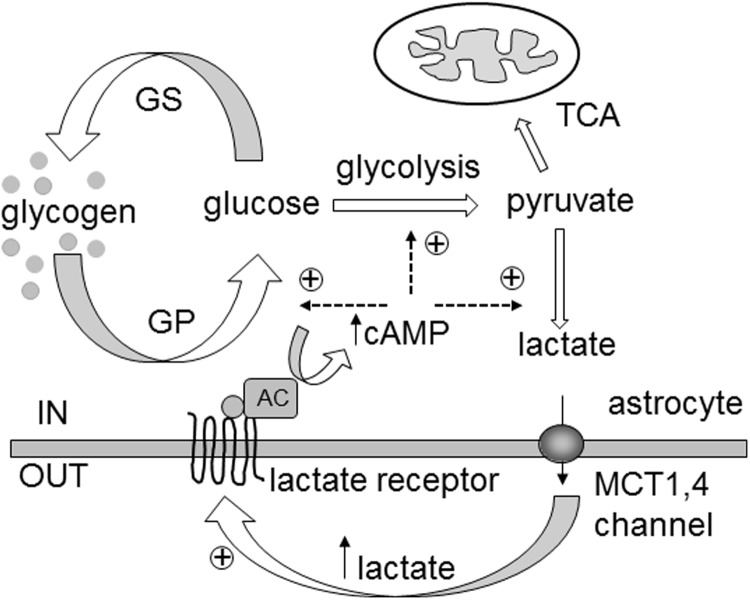
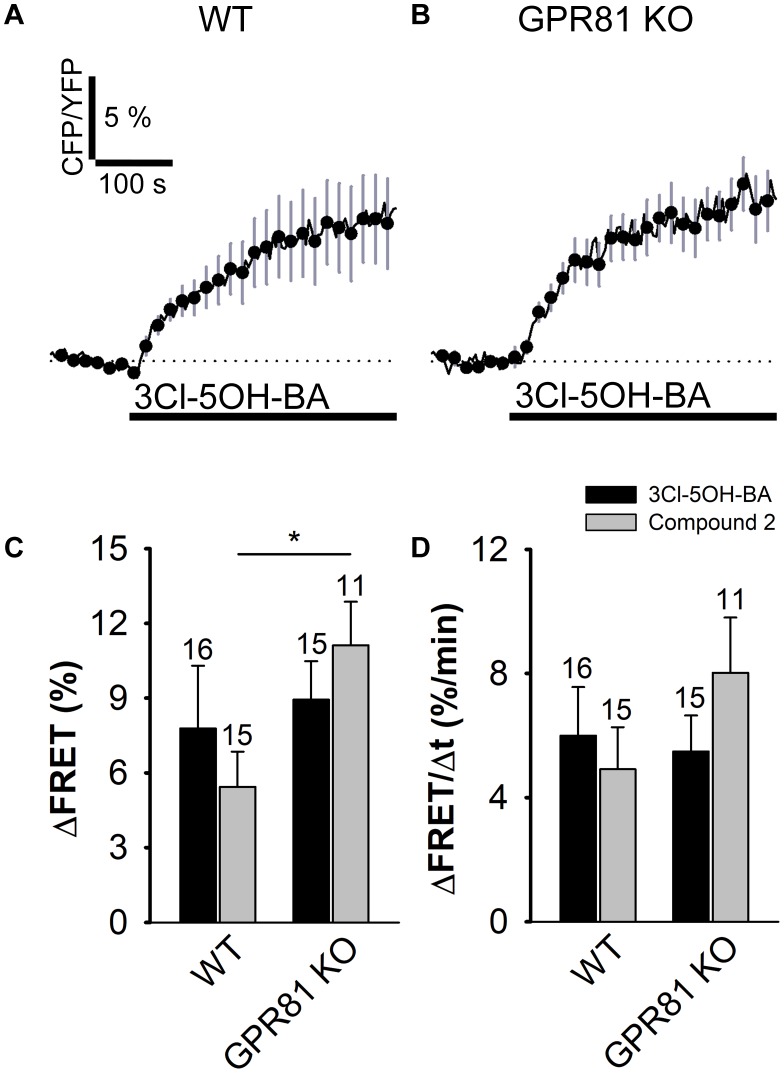
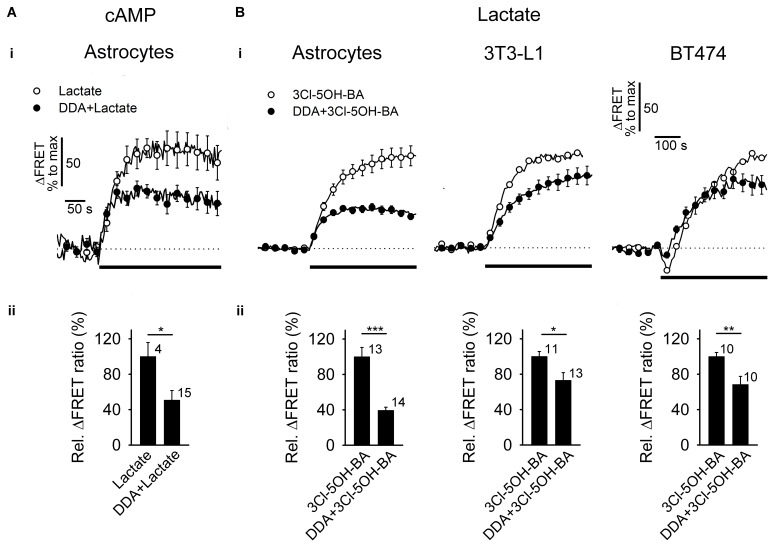
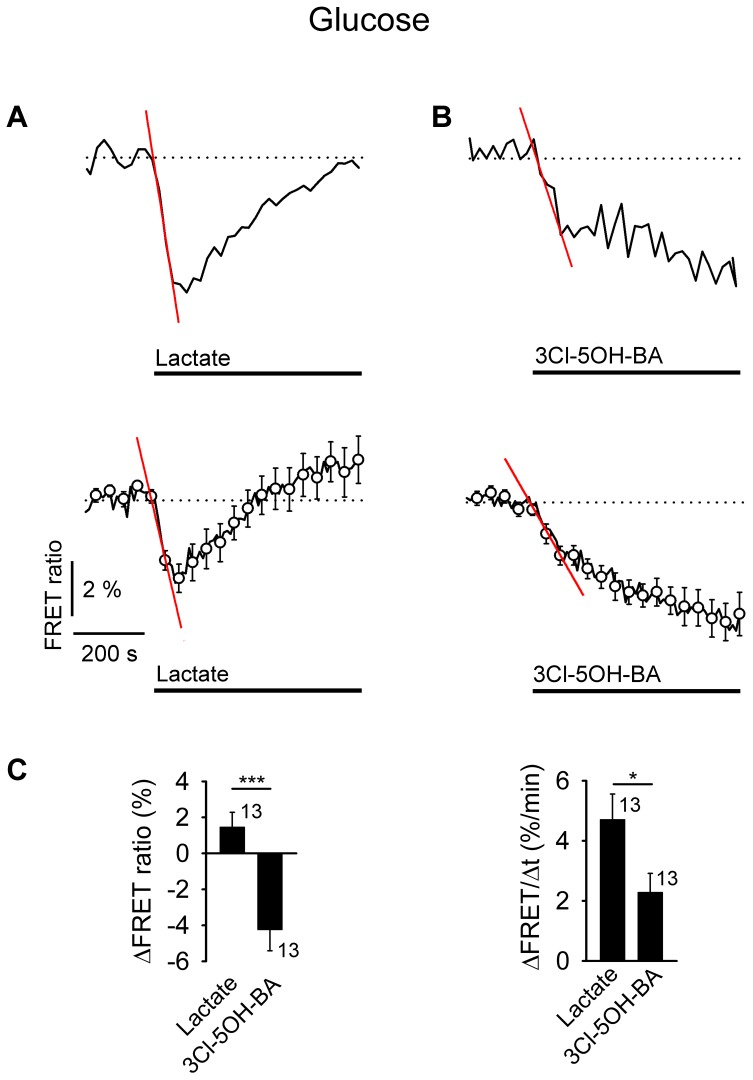
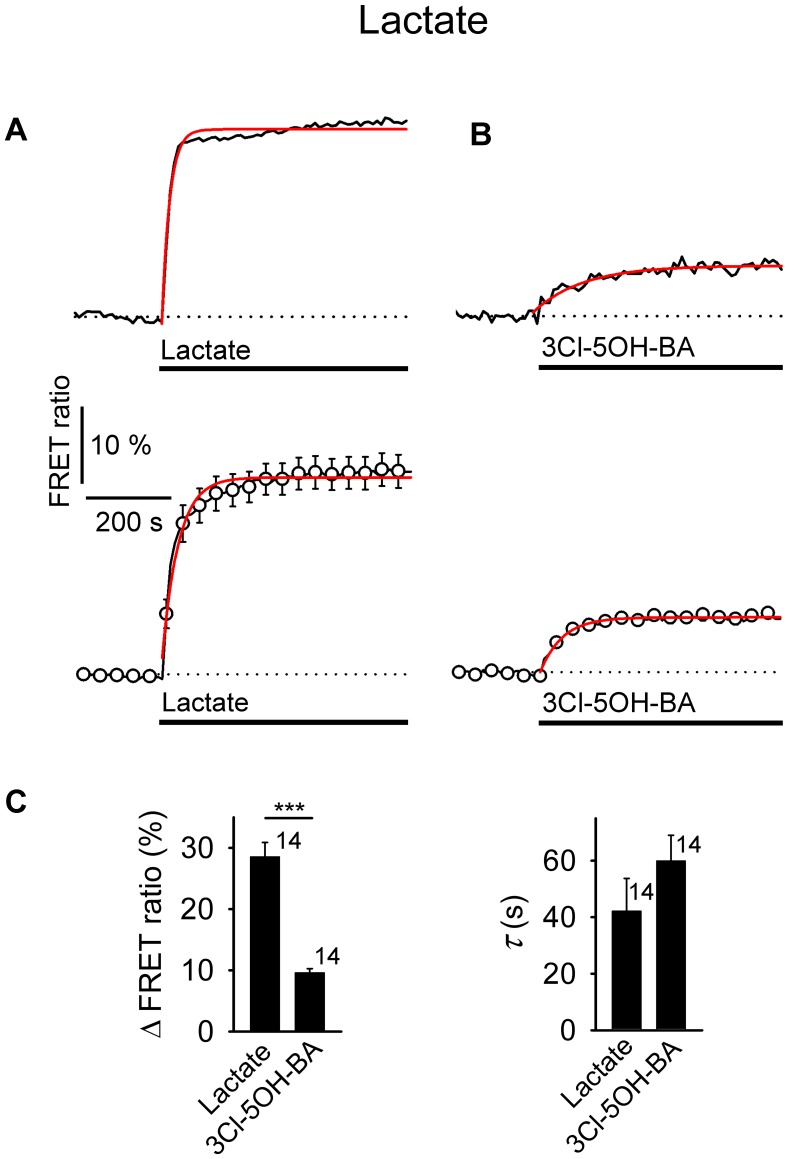
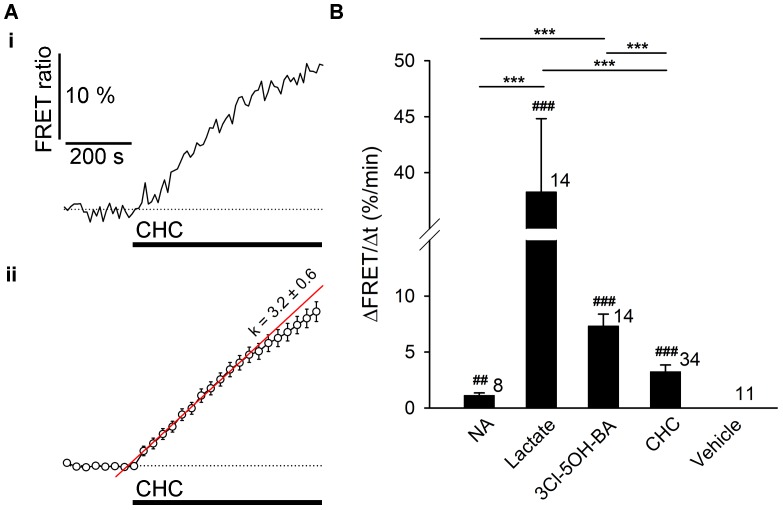
Besides being a neuronal fuel, L-lactate is also a signal in the brain. Whether extracellular L-lactate affects brain metabolism, in particular astrocytes, abundant neuroglial cells, which produce L-lactate in aerobic glycolysis, is unclear. Recent studies suggested that astrocytes express low levels of the L-lactate GPR81 receptor (EC ≈ 5 mM) that is in fat cells part of an autocrine loop, in which the G-protein mediates reduction of cytosolic cyclic adenosine monophosphate (cAMP). To study whether a similar signaling loop is present in astrocytes, affecting aerobic glycolysis, we measured the cytosolic levels of cAMP, D-glucose and L-lactate in single astrocytes using fluorescence resonance energy transfer (FRET)-based nanosensors. In contrast to the situation in fat cells, stimulation by extracellular L-lactate and the selective GPR81 agonists, 3-chloro-5-hydroxybenzoic acid (3Cl-5OH-BA) or 4-methyl--(5-(2-(4-methylpiperazin-1-yl)-2-oxoethyl)-4-(2-thienyl)-1,3-thiazol-2-yl)cyclohexanecarboxamide (Compound 2), like adrenergic stimulation, elevated intracellular cAMP and L-lactate in astrocytes, which was reduced by the inhibition of adenylate cyclase. Surprisingly, 3Cl-5OH-BA and Compound 2 increased cytosolic cAMP also in GPR81-knock out astrocytes, indicating that the effect is GPR81-independent and mediated by a novel, yet unidentified, excitatory L-lactate receptor-like mechanism in astrocytes that enhances aerobic glycolysis and L-lactate production via a positive feedback mechanism.
除了作为神经元的能量来源外,L-乳酸也是大脑中的一种信号分子。细胞外L-乳酸是否会影响大脑代谢,尤其是星形胶质细胞(一种丰富的神经胶质细胞,在有氧糖酵解过程中产生L-乳酸)的代谢,目前尚不清楚。最近的研究表明,星形胶质细胞表达低水平的L-乳酸GPR81受体(EC≈5 mM),该受体在脂肪细胞中是自分泌环的一部分,其中G蛋白介导细胞溶质环磷酸腺苷(cAMP)的减少。为了研究星形胶质细胞中是否存在类似的信号环,影响有氧糖酵解,我们使用基于荧光共振能量转移(FRET)的纳米传感器测量了单个星形胶质细胞中cAMP、D-葡萄糖和L-乳酸的细胞溶质水平。与脂肪细胞的情况相反,细胞外L-乳酸和选择性GPR81激动剂3-氯-5-羟基苯甲酸(3Cl-5OH-BA)或4-甲基-(5-(2-(4-甲基哌嗪-1-基)-2-氧代乙基)-4-(2-噻吩基)-1,3-噻唑-2-基)环己烷甲酰胺(化合物2)的刺激,与肾上腺素能刺激一样,会升高星形胶质细胞内的cAMP和L-乳酸水平,而腺苷酸环化酶的抑制会降低这种水平。令人惊讶的是,3Cl-5OH-BA和化合物2在GPR81基因敲除的星形胶质细胞中也会增加细胞溶质cAMP,这表明这种效应不依赖于GPR81,而是由星形胶质细胞中一种新的、尚未确定的兴奋性L-乳酸受体样机制介导的,该机制通过正反馈机制增强有氧糖酵解和L-乳酸的产生。