Liver Cancer Institute, Zhongshan Hospital, Fudan University, Shanghai, P. R. China.
State Key Laboratory of Genetic Engineering, Fudan University, Shanghai, P. R. China.
Cancer Commun (Lond). 2024 Nov;44(11):1231-1260. doi: 10.1002/cac2.12607. Epub 2024 Sep 2.
The efficacy of immune checkpoint blockade therapy in patients with hepatocellular carcinoma (HCC) remains poor. Although serine- and arginine-rich splicing factor (SRSF) family members play crucial roles in tumors, their impact on tumor immunology remains unclear. This study aimed to elucidate the role of SRSF10 in HCC immunotherapy.
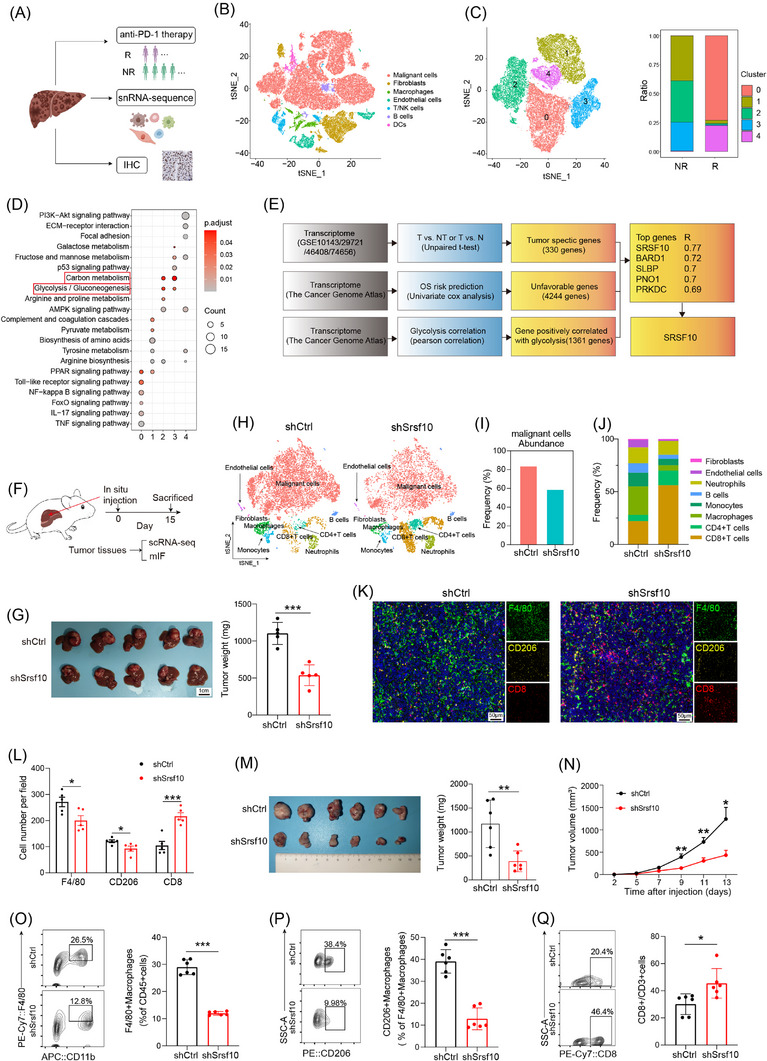
To identify the key genes associated with immunotherapy resistance, we conducted single-nuclear RNA sequencing, multiplex immunofluorescence, and The Cancer Genome Atlas and Gene Expression Omnibus database analyses. We investigated the biological functions of SRSF10 in immune evasion using in vitro co-culture systems, flow cytometry, various tumor-bearing mouse models, and patient-derived organotypic tumor spheroids.
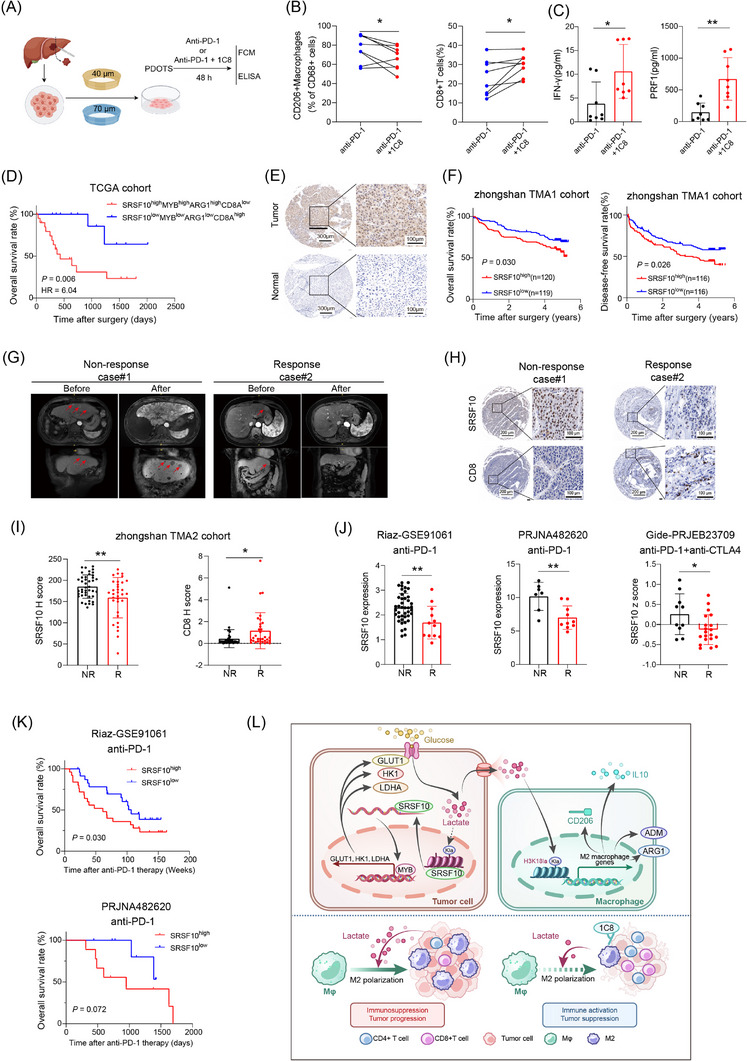
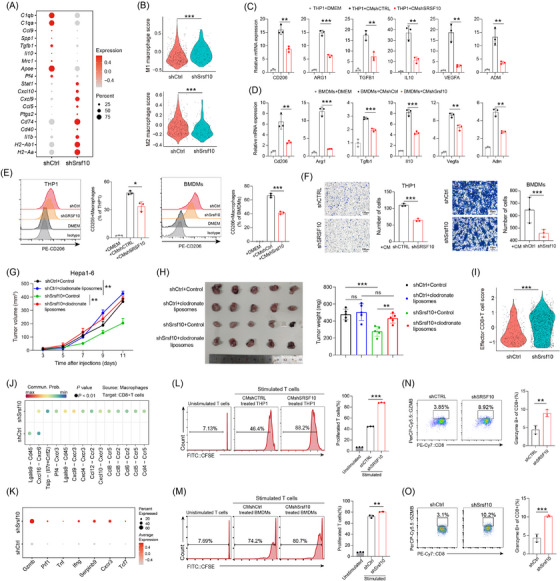
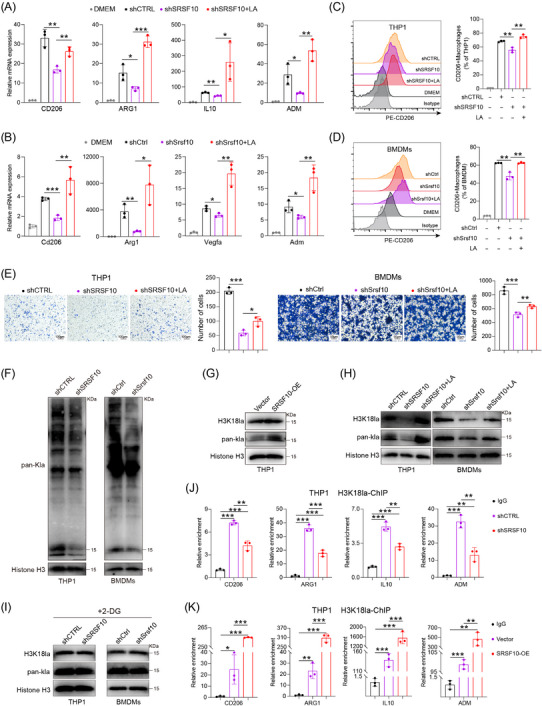
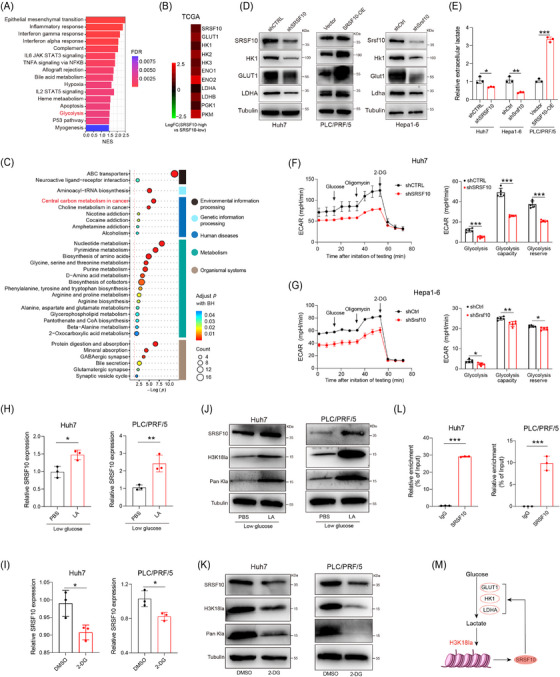
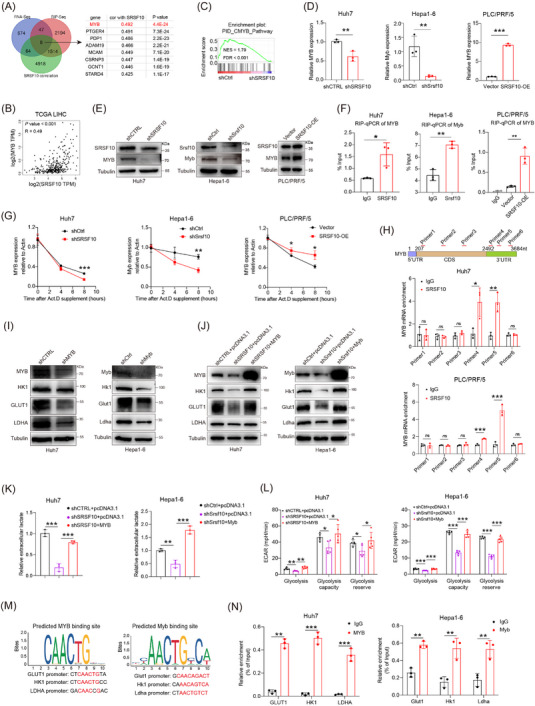
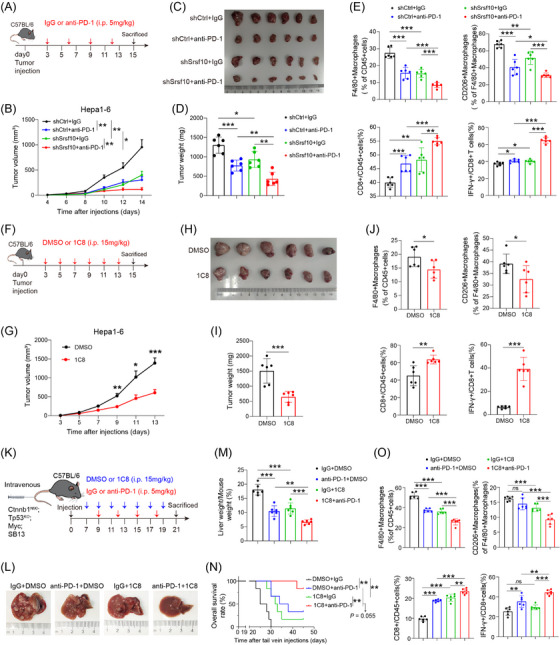
SRSF10 was upregulated in various tumors and associated with poor prognosis. Moreover, SRSF10 positively regulated lactate production, and SRSF10/glycolysis/ histone H3 lysine 18 lactylation (H3K18la) formed a positive feedback loop in tumor cells. Increased lactate levels promoted M2 macrophage polarization, thereby inhibiting CD8 T cell activity. Mechanistically, SRSF10 interacted with the 3'-untranslated region of MYB, enhancing MYB RNA stability, and subsequently upregulating key glycolysis-related enzymes including glucose transporter 1 (GLUT1), hexokinase 1 (HK1), lactate dehydrogenase A (LDHA), resulting in elevated intracellular and extracellular lactate levels. Lactate accumulation induced histone lactylation, which further upregulated SRSF10 expression. Additionally, lactate produced by tumors induced lactylation of the histone H3K18la site upon transport into macrophages, thereby activating transcription and enhancing pro-tumor macrophage activity. M2 macrophages, in turn, inhibited the enrichment of CD8 T cells and the proportion of interferon-γCD8 T cells in the tumor microenvironment (TME), thus creating an immunosuppressive TME. Clinically, SRSF10 could serve as a biomarker for assessing immunotherapy resistance in various solid tumors. Pharmacological targeting of SRSF10 with a selective inhibitor 1C8 enhanced the efficacy of programmed cell death 1 (PD-1) monoclonal antibodies (mAbs) in both murine and human preclinical models.
The SRSF10/MYB/glycolysis/lactate axis is critical for triggering immune evasion and anti-PD-1 resistance. Inhibiting SRSF10 by 1C8 may overcome anti-PD-1 tolerance in HCC.
免疫检查点阻断疗法在肝细胞癌(HCC)患者中的疗效仍然很差。尽管丝氨酸/精氨酸丰富剪接因子(SRSF)家族成员在肿瘤中发挥着关键作用,但它们对肿瘤免疫学的影响仍不清楚。本研究旨在阐明 SRSF10 在 HCC 免疫治疗中的作用。
为了确定与免疫治疗耐药相关的关键基因,我们进行了单核 RNA 测序、多重免疫荧光和癌症基因组图谱和基因表达综合数据库分析。我们使用体外共培养系统、流式细胞术、各种荷瘤小鼠模型和患者来源的器官样肿瘤球体研究了 SRSF10 在免疫逃逸中的生物学功能。
SRSF10 在各种肿瘤中上调,并与预后不良相关。此外,SRSF10 正向调节乳酸的产生,并且 SRSF10/糖酵解/组蛋白 H3 赖氨酸 18 乳酰化(H3K18la)在肿瘤细胞中形成正反馈回路。增加的乳酸水平促进了 M2 巨噬细胞极化,从而抑制了 CD8 T 细胞的活性。在机制上,SRSF10 与 MYB 的 3'-非翻译区相互作用,增强了 MYB RNA 的稳定性,随后上调了包括葡萄糖转运蛋白 1(GLUT1)、己糖激酶 1(HK1)、乳酸脱氢酶 A(LDHA)在内的关键糖酵解相关酶,导致细胞内和细胞外乳酸水平升高。乳酸积累诱导组蛋白乳酰化,进一步上调 SRSF10 的表达。此外,肿瘤产生的乳酸在运输到巨噬细胞时诱导组蛋白 H3K18la 位点的乳酰化,从而激活转录并增强促肿瘤巨噬细胞的活性。M2 巨噬细胞反过来抑制 CD8 T 细胞在肿瘤微环境(TME)中的富集和干扰素-γCD8 T 细胞的比例,从而形成免疫抑制性 TME。临床上,SRSF10 可作为评估各种实体瘤免疫治疗耐药的生物标志物。用选择性抑制剂 1C8 靶向 SRSF10 可增强程序性细胞死亡 1(PD-1)单克隆抗体(mAb)在鼠和人临床前模型中的疗效。
SRSF10/MYB/糖酵解/乳酸轴对于触发免疫逃逸和抗 PD-1 耐药至关重要。用 1C8 抑制 SRSF10 可能会克服 HCC 中抗 PD-1 的耐受。