Institute of Parasitology, Biomedical Research Center Seltersberg, Justus Liebig University Giessen, Giessen, Germany.
Clinical Development Animal Health, Animal Center, Bayer Animal Health GmbH, Leverkusen, Germany.
Front Immunol. 2018 May 8;9:968. doi: 10.3389/fimmu.2018.00968. eCollection 2018.
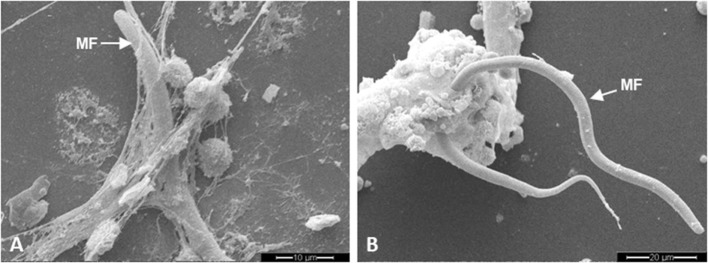
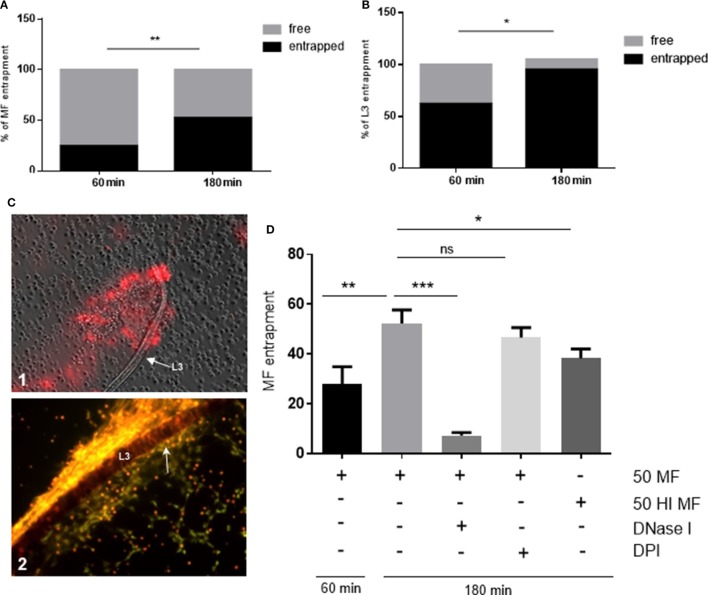
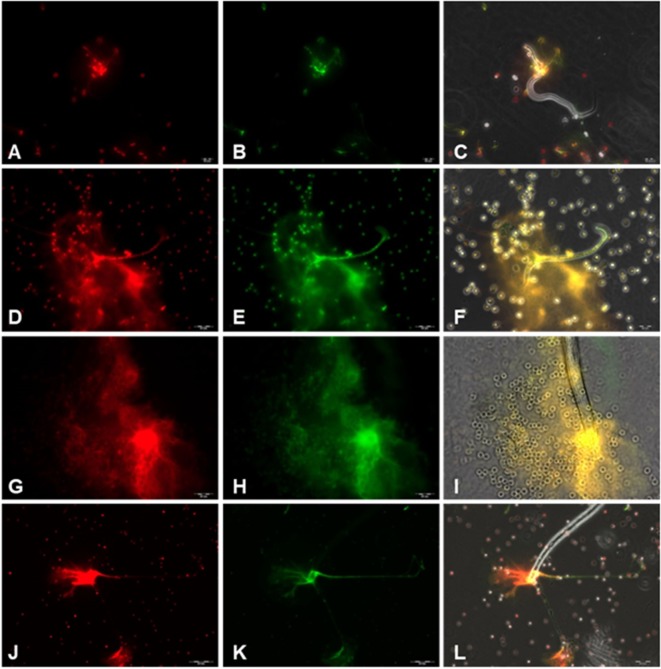
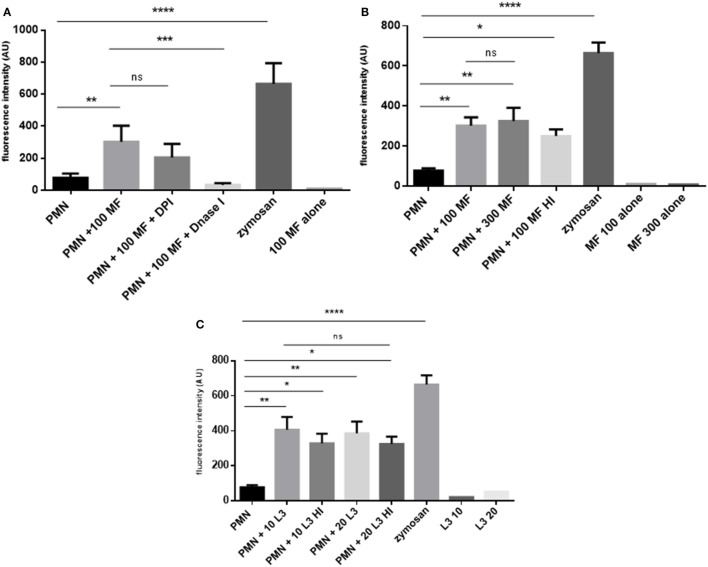
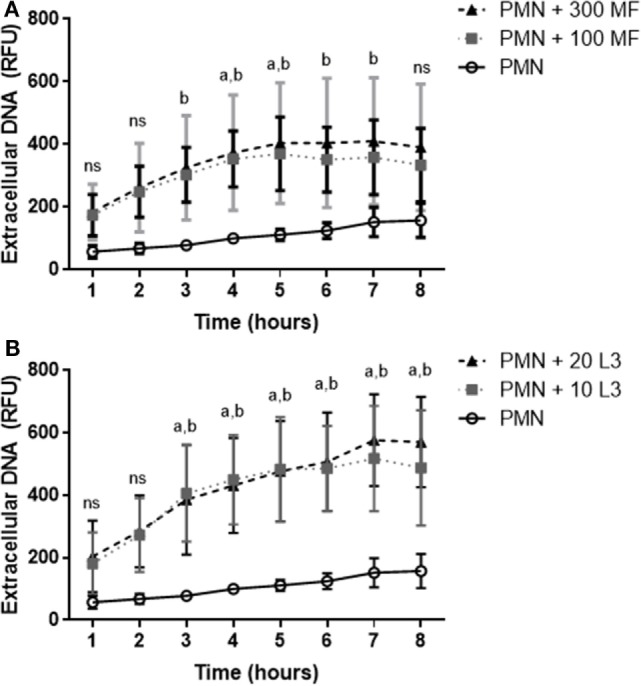
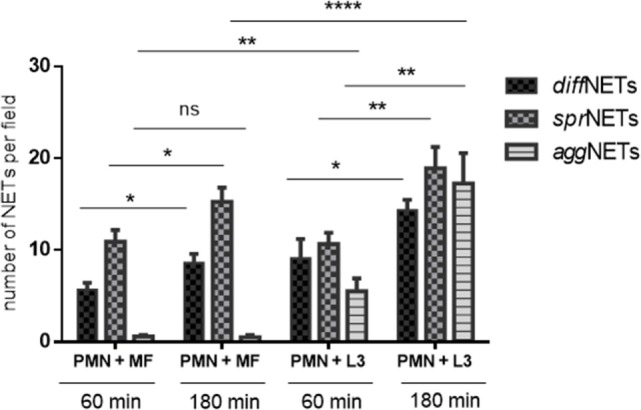
Heartworm disease is a zoonotic vector-borne disease caused by mainly affecting canids. Infectious third-stage larvae (L3) are transmitted to the definitive hosts culicid mosquitoes; adult nematodes reside in the pulmonary arteries and in the right heart releasing unsheathed first-stage larvae (microfilariae) into the bloodstream leading to chronic and sometimes fatal disease. So far, early innate immune reactions triggered by these different stages in the canine host have scarcely been investigated. Therefore, microfilariae and L3 were analyzed for their capacity to induce neutrophil extracellular traps (NETs) in canine polymorphonuclear neutrophils (PMN). Overall, scanning electron microscopy analysis revealed both larval stages as strong inducers of canine NETosis. Co-localization of PMN-derived extracellular DNA with granulocytic histones, neutrophil elastase, or myeloperoxidase in parasite-entrapping structures confirmed the classical characteristics of NETosis. Quantitative analyses showed that both larval stages triggered canine NETs in a time-dependent but dose-independent manner. Moreover, parasite-induced NET formation was not influenced by the parasites viability since heat-inactivated microfilariae and L3 also induced NETs. In addition, parasite/PMN confrontation promoted significant entrapment but not killing of microfilariae and L3. Both, NETosis and larval entrapment was significantly reversed DNase I treatments while treatments with the NADPH oxidase inhibitor diphenyleneiodonium failed to significantly influence these reactions. Interestingly, different types of NETs were induced by microfilariae and L3 since microfilarial stages merely induced spread and diffuse NETs while the larger L3 additionally triggered aggregated NET formation.
心丝虫病是一种由主要感染犬类的血源传播的人畜共患病。感染的第三期幼虫(L3)通过库蚊传播给终宿主;成体线虫位于肺动脉和右心,将未鞘化的第一期幼虫(微丝蚴)释放到血液中,导致慢性甚至有时致命的疾病。到目前为止,犬宿主中这些不同阶段引发的早期先天免疫反应还鲜有研究。因此,本研究分析了微丝蚴和 L3 诱导犬嗜中性粒细胞(PMN)形成中性粒细胞胞外诱捕网(NETs)的能力。总体而言,扫描电子显微镜分析表明,这两个幼虫期均能强烈诱导犬类 NETosis。PMN 来源的细胞外 DNA 与颗粒性组蛋白、中性粒细胞弹性蛋白酶或髓过氧化物酶在寄生虫捕获结构中的共定位证实了 NETosis 的经典特征。定量分析显示,这两个幼虫期以时间依赖但剂量非依赖的方式触发犬类 NETosis。此外,寄生虫诱导的 NET 形成不受寄生虫活力的影响,因为热灭活的微丝蚴和 L3 也能诱导 NETosis。此外,寄生虫/PMN 对峙促进了微丝蚴和 L3 的显著捕获,但不会导致其死亡。DNase I 处理显著逆转了 NETosis 和幼虫捕获,而 NADPH 氧化酶抑制剂二苯乙烯碘的处理未能显著影响这些反应。有趣的是,微丝蚴和 L3 诱导了不同类型的 NETs,因为微丝蚴期仅诱导扩散和弥漫性 NETs,而较大的 L3 还额外触发聚集性 NET 形成。