Michels Judith, Becker Natalia, Suciu Stefan, Kaiser Iris, Benner Axel, Kosaloglu-Yalcin Zeynep, Agoussi Sandrine, Halama Niels, Pawlita Michael, Waterboer Tim, Eichmüller Stefan B, Jäger Dirk, Eggermont Alexander M M, Zörnig Inka
Department of Medical Oncology, Gustave Roussy Comprehensive Cancer Center, Villejuif/Paris-Sud, France.
Université Paris-Sud, Kremlin Bicêtre, Paris, France.
Oncoimmunology. 2018 Feb 12;7(6):e1428157. doi: 10.1080/2162402X.2018.1428157. eCollection 2018.
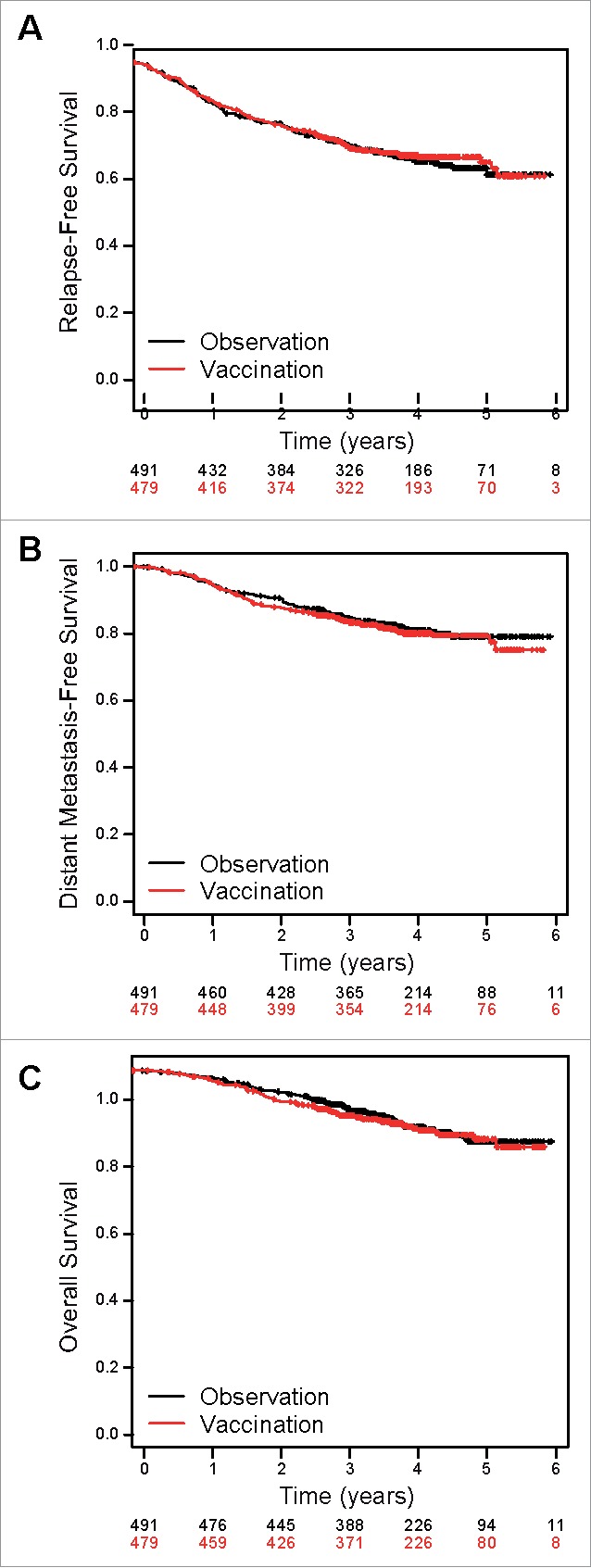
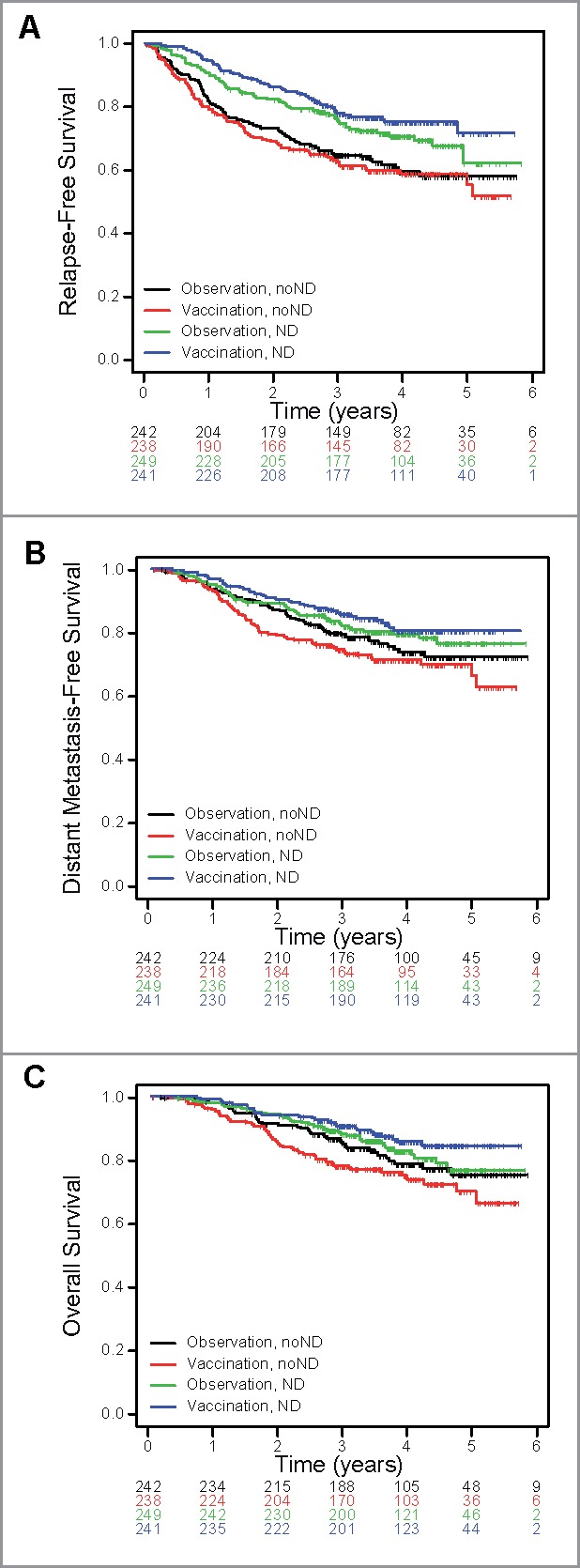
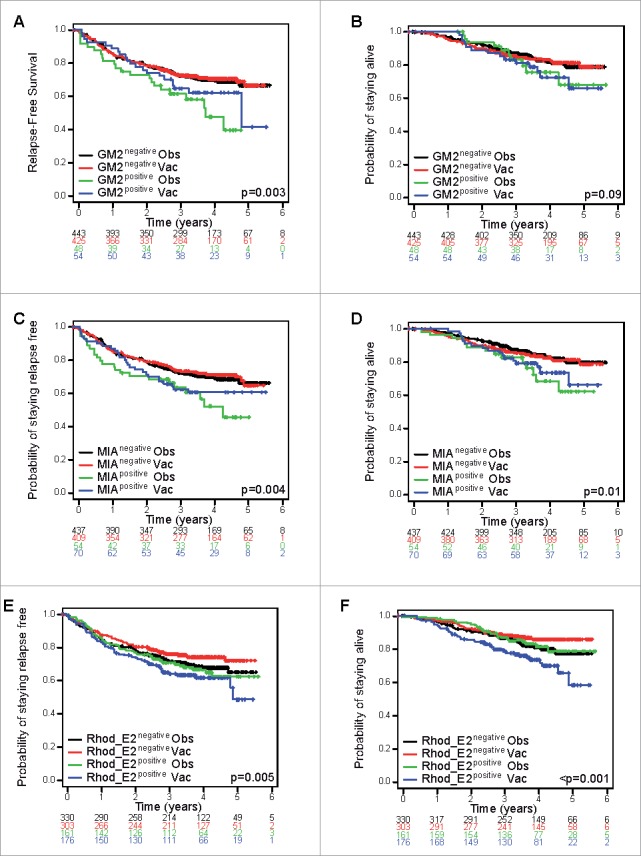
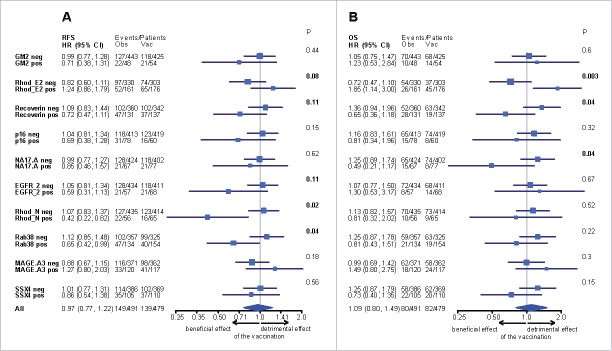
Determine the prognostic and predictive significance of tumor associated antigen (TAA)-specific serum antibodies in melanoma patients of a large adjuvant vaccination phase III trial. Serum IgG antibodies were measured against a panel of 43 antigens by a bead-based multiplex assay in 970 stage II melanoma patients of the EORTC18961 trial, evaluating adjuvant ganglioside GM2-KLH/QS-21 vaccination versus observation. Primary end point was relapse-free survival (RFS). Patients' sera at baseline, after 12 and 48 weeks of study treatment and at the last available time point (at recurrence/remission) were evaluated. Prognostic clinical variables are gender, surgical confirmation of lymph node-negative status, Breslow thickness and ulceration of the primary. Prognostic spontaneous antibody responses were associated with a significant dismal (GM2, Rhod_E2, SSX2) or good prognosis (CyclinB1, SCYE1v1) for RFS, distant metastasis-free (DMFS) or overall survival (OS). Predictive spontaneous antibody responses based on significant interaction with treatment were RhodN = 0.02, Rab38 = 0.04 for RFS, RhodE2 = 0.006, Recoverin = 0.04 for DMFS and RhodE2 = 0.003; Recoverin = 0.04, NA17.A = 0.04, for OS respectively. The subgroups of patients according to antibody responses for RFS were determined for RhodN sero-negative (n = 849, HR = 1.07, = 0.6); RhodN sero-positive (n = 121,HR = 0.42, = 0.01) and Rab38 sero-negative (n = 682, HR = 1.12, = 0.42), Rab38 sero-positive (n = 288, HR = 0.65, = 0.04) patients respectively. We identified prognostic serum antibody responses against TAA in stage II melanoma patients. A set of antibody responses correlated with a beneficial outcome for GM2 vaccination.
在一项大型辅助疫苗接种III期试验的黑色素瘤患者中,确定肿瘤相关抗原(TAA)特异性血清抗体的预后和预测意义。通过基于微珠的多重分析,在EORTC18961试验的970例II期黑色素瘤患者中,检测针对43种抗原的血清IgG抗体,评估辅助神经节苷脂GM2-KLH/QS-21疫苗接种与观察的效果。主要终点是无复发生存期(RFS)。对患者基线、研究治疗12周和48周后以及最后一个可用时间点(复发/缓解时)的血清进行评估。预后临床变量包括性别、淋巴结阴性状态的手术确认、Breslow厚度和原发灶溃疡情况。预后性自发抗体反应与RFS、无远处转移生存期(DMFS)或总生存期(OS)的显著不良(GM2、Rhod_E2、SSX2)或良好预后(细胞周期蛋白B1、SCYE1v1)相关。基于与治疗的显著相互作用的预测性自发抗体反应,对于RFS,RhodN = 0.02,Rab38 = 0.04;对于DMFS,RhodE2 = 0.006,恢复蛋白 = 0.04;对于OS,RhodE2 = 0.003,恢复蛋白 = 0.04,NA17.A = 0.04。根据RFS的抗体反应确定患者亚组,分别为RhodN血清阴性(n = 849,HR = 1.07,P = 0.6);RhodN血清阳性(n = 121,HR = 0.42,P = 0.01)和Rab38血清阴性(n = 682,HR = 1.12,P = 0.42),Rab38血清阳性(n = 288,HR = 0.65,P = 0.04)的患者。我们在II期黑色素瘤患者中鉴定出针对TAA的预后性血清抗体反应。一组抗体反应与GM2疫苗接种的有益结果相关。