Willeberg Preben W, McAloon Conor G, Houtsma Erik, Higgins Isabella, Clegg Tracy Ann, More Simon J
Department of Diagnostic and Scientific Advice, National Veterinary Institute, Technical University of Denmark, Copenhagen, Denmark.
Section of Herd Health and Animal Husbandry, UCD School of Veterinary Medicine, University College Dublin, Dublin, Ireland.
Front Vet Sci. 2018 May 23;5:82. doi: 10.3389/fvets.2018.00082. eCollection 2018.
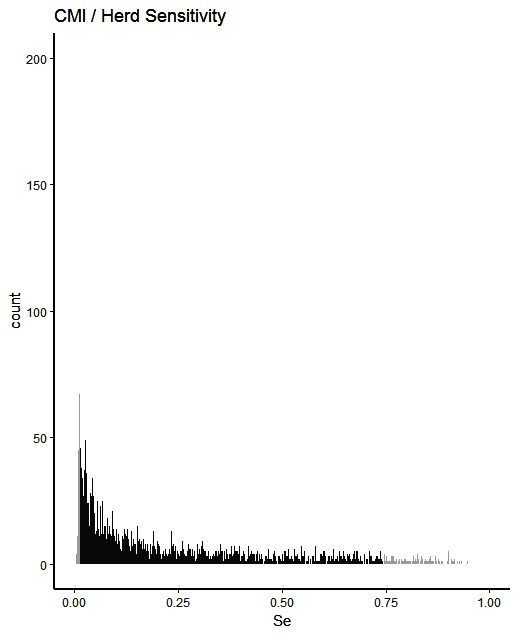
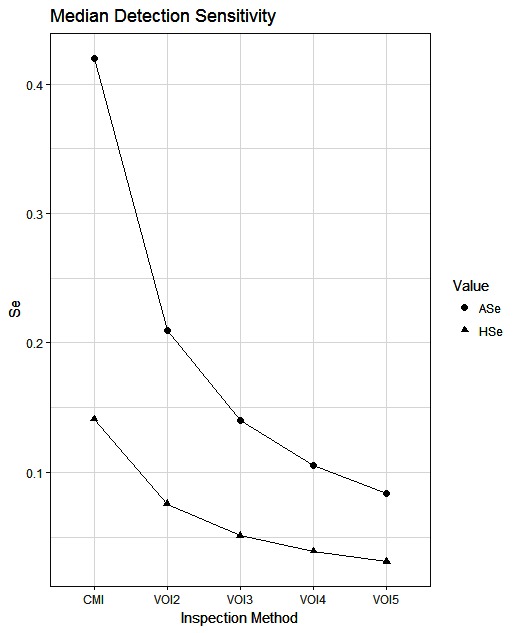
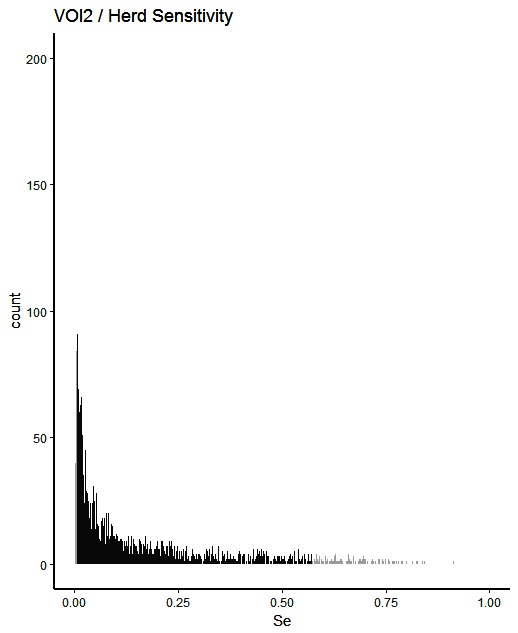
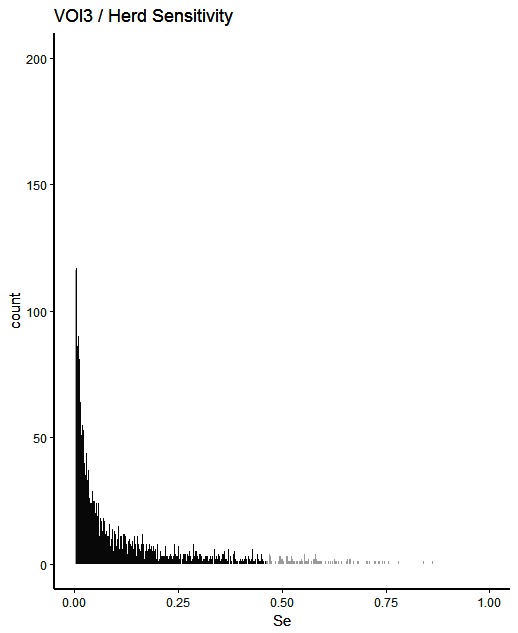
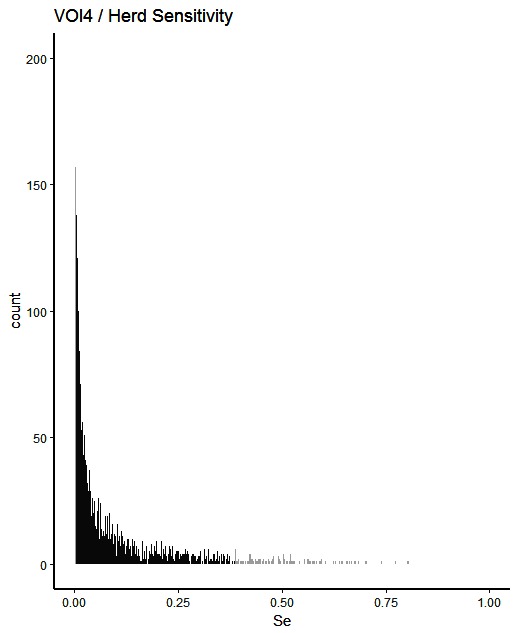
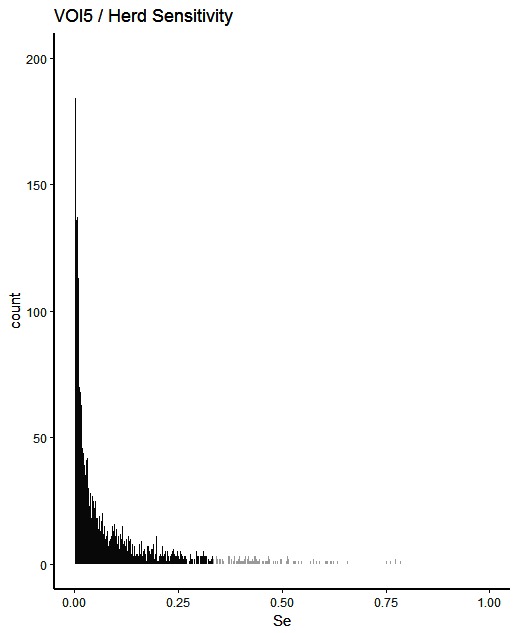
The European Food Safety Authority (EFSA) has published a series of opinions to assess the impact of changing from the current meat inspection procedures (CMI) to visual-only inspection (VOI) procedures. Concern has been raised that changes from CMI to VOI would adversely affect the effectiveness of surveillance for bovine tuberculosis (bTB) in EU member states, both for countries with and without official status of bTB freedom (OTF and non-OTF countries, respectively). This study was conducted to estimate the impact of a change from CMI to VOI in abattoirs on herd-level detection sensitivity in Ireland, a non-OTF country. Using national Irish data, we identified all herds that sold at least one animal to slaughter during 2010-12 whilst unrestricted for bTB. For each of these herds, we calculated the number of cattle sent to slaughter whilst unrestricted, the number of factory lesion tests (FLT) that had been performed, and estimated the apparent within-herd prevalence (AP). A FLT is a whole-herd test conducted in a herd following the confirmation of bTB in an animal at slaughter. We considered five different inspection scenarios, each based on meat inspection and bacteriology in series, including current meat inspection (CMI) and four visual-only inspection scenarios (VOI2, VOI3, VOI4, VOI5) with reducing inspection sensitivities. Separately for each inspection scenario, a simulation model was used to estimate the herd-level detection sensitivity and the number of bTB-herds (that is, herds that sent at least one animal detected with to slaughter when unrestricted during 2010-12) that would and would not be detected. The simulated mean herd-level detection sensitivity estimates were 0.24 for CMI, and 0.16, 0.12, 0.10 and 0.08 for VOI2-5, assuming a 2-, 3-, 4- and 5-fold decrease, respectively, in the animal-level detection sensitivity of VOI relative to that of CMI. The estimated number of non-detected bTB-herds is substantial with CMI, and increases in the series of VOI scenarios with decreasing herd-level detection sensitivity. If VOI were introduced without alternative surveillance means to compensate for the decrease in animal-level inspection sensitivity, such changes might jeopardise bTB surveillance, control and eradication programmes in cattle herds of non-OTF countries, including Ireland.
欧洲食品安全局(EFSA)发布了一系列意见,以评估从当前肉类检验程序(CMI)转变为仅视觉检查(VOI)程序的影响。有人担心,从CMI转变为VOI会对欧盟成员国牛结核病(bTB)监测的有效性产生不利影响,无论是对于有和没有官方bTB无疫状态(分别为OTF和非OTF国家)的国家。本研究旨在估计爱尔兰(一个非OTF国家)屠宰场从CMI转变为VOI对畜群水平检测敏感性的影响。利用爱尔兰的全国数据,我们确定了在2010 - 12年期间出售至少一头动物用于屠宰且未受bTB限制的所有畜群。对于这些畜群中的每一个,我们计算了在未受限制的情况下送往屠宰的牛的数量、进行的工厂病变检测(FLT)的数量,并估计了表观畜群内患病率(AP)。FLT是在屠宰时动物确诊为bTB后在畜群中进行的全群检测。我们考虑了五种不同的检查方案,每种方案均基于串联的肉类检查和细菌学检查,包括当前的肉类检查(CMI)和四种仅视觉检查方案(VOI2、VOI3、VOI4、VOI5),其检查敏感性逐渐降低。对于每个检查方案,分别使用模拟模型来估计畜群水平检测敏感性以及在2010 - 12年期间未受限制时会被检测到和不会被检测到的bTB畜群(即至少有一头动物被检测到送往屠宰的畜群)的数量。假设VOI相对于CMI在动物水平检测敏感性分别降低2倍、3倍、4倍和5倍,模拟的平均畜群水平检测敏感性估计值对于CMI为0.24,对于VOI2 - 5分别为0.16、0.12、0.10和0.08。在CMI情况下,估计未检测到的bTB畜群数量相当可观,并且在VOI方案系列中随着畜群水平检测敏感性的降低而增加。如果引入VOI而没有替代监测手段来弥补动物水平检查敏感性的降低,这种变化可能会危及包括爱尔兰在内的非OTF国家牛群的bTB监测、控制和根除计划。