Genentech, Inc-A Member of the Roche Group, 1 DNA Way, B35-7 North, South San Francisco, CA, 94080, USA.
Drug Saf. 2018 Nov;41(11):1073-1085. doi: 10.1007/s40264-018-0690-y.
Within the field of Pharmacovigilance, the most common approaches for assessing causality between a report of a drug and a corresponding adverse event are clinical judgment, probabilistic methods and algorithms. Although multiple methods using these three approaches have been proposed, there is currently no universally accepted method for assessing drug-event causality in ICSRs and variability in drug-event causality assessments is well documented.
This study describes the development and validation of an Individual Case Safety Report (ICSR) Causality Decision Support Tool to assist Safety Professionals (SPs) performing causality assessments.
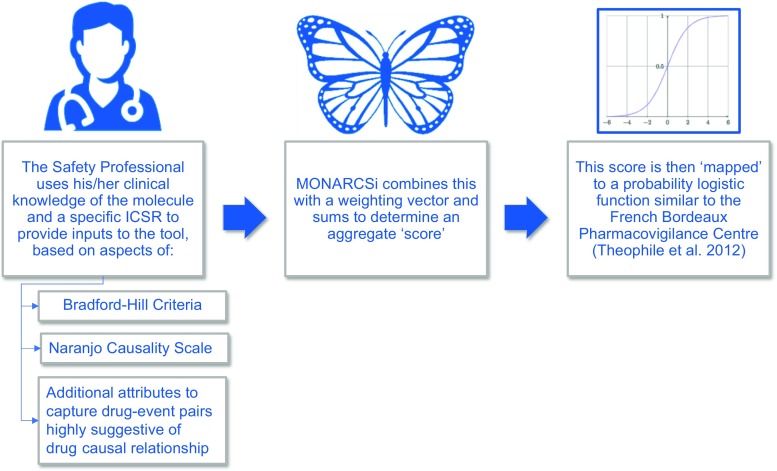
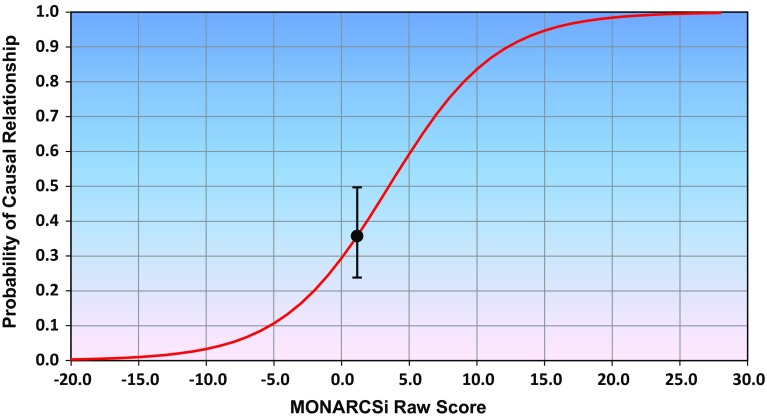
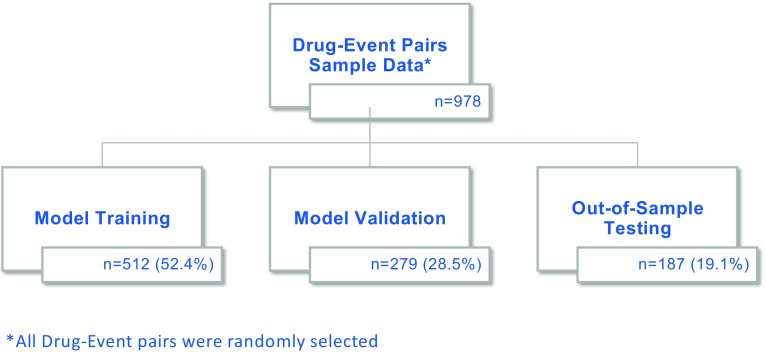
Roche developed this model with nine drug-event pair features capturing important aspects of Naranjo's scoring system, selected Bradford-Hill criteria, and internal Roche safety practices. Each of the features was weighted based on individual safety professional (n = 65) assessments of the importance of that feature when assessing causality, using an ordinal weighting scale (0 = no importance, 4 = very high importance). The mean and associated standard deviation for each feature weight was calculated and were used as inputs to a fitted logistic equation, which calculated the probability of a causal relationship between the drug and adverse event. Model training, validation, and testing were conducted by comparing MONARCSi causality classifications to previous company causality assessments for 978 randomly selected, clinical trial drug-event pairs based on their respective features and weights.
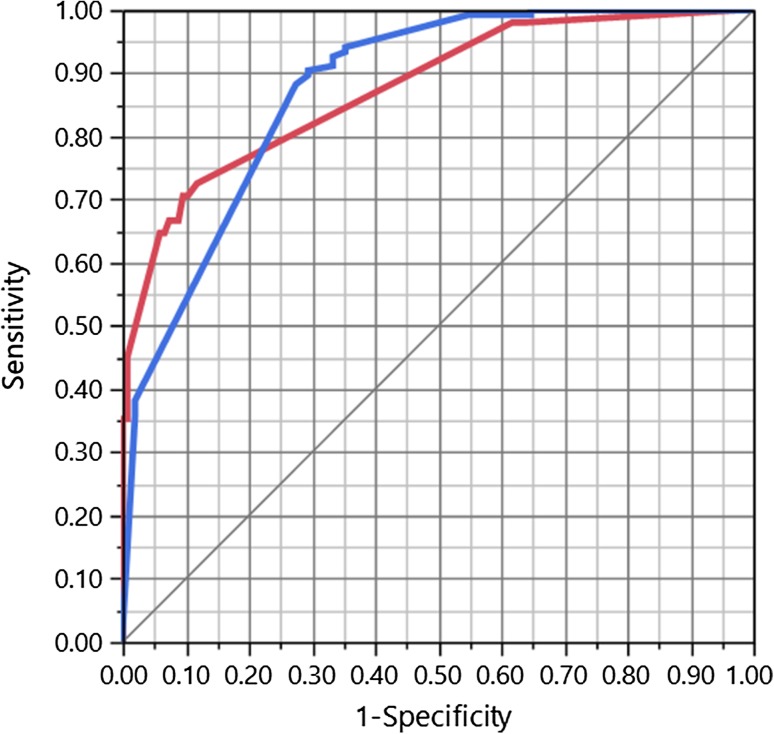
The final model test, a two-by-two comparison of the results, showed substantial agreement (Gwet Kappa = 0.77) between MONARCSi and Roche safety professionals' assessments of causality, using global introspection. The model exhibited moderate sensitivity (65%) and high specificity (93%), high positive and negative predictive values (79 and 88%, respectively), and an F score of 71%.
Analysis suggests that the MONARCSi model could potentially be a useful decision support tool to assist pharmacovigilance safety professionals when evaluating drug-event causality in a consistent and documentable manner.
在药物警戒领域,评估药品报告与相应不良事件之间因果关系最常用的方法是临床判断、概率方法和算法。尽管已经提出了多种使用这三种方法的方法,但目前在 ICSR 中还没有普遍接受的方法来评估药物-事件因果关系,药物-事件因果关系评估的可变性也有充分的记录。
本研究描述了开发和验证一种用于协助药物警戒安全专业人员进行因果关系评估的个例安全性报告(ICSR)因果关系决策支持工具。
罗氏公司使用了九个药物-事件对特征来开发该模型,这些特征涵盖了 Naranjo 评分系统、Bradford-Hill 标准以及罗氏内部安全实践的重要方面。每个特征的权重都是根据安全专业人员(n=65)对评估因果关系时该特征重要性的评估,使用有序权重量表(0=不重要,4=非常重要)进行加权。计算每个特征权重的平均值和标准差,并将其用作拟合逻辑方程的输入,该方程计算药物与不良事件之间因果关系的概率。通过比较 MONARCSi 因果关系分类与公司对 978 个随机选择的临床试验药物-事件对的先前因果关系评估,基于各自的特征和权重,对模型进行了培训、验证和测试。
最终模型测试,即对结果的两乘二比较,表明 MONARCSi 和罗氏安全专业人员对因果关系的评估具有实质性一致性(Gwet Kappa=0.77),使用全局内省。该模型表现出中等敏感性(65%)和高特异性(93%)、高阳性和阴性预测值(分别为 79%和 88%)以及 F 分数为 71%。
分析表明,MONARCSi 模型有可能成为一种有用的决策支持工具,帮助药物警戒安全专业人员以一致和可记录的方式评估药物-事件因果关系。