Institute of Insect Science, College of Agriculture and Biotechnology, Zhejiang University, 310058, Hangzhou, China.
Ministry of Agriculture Key Lab of Molecular Biology of Crop Pathogens and Insect Pests, Zhejiang University, 310058, Hangzhou, China.
Nat Commun. 2018 Jun 7;9(1):2205. doi: 10.1038/s41467-018-04504-1.
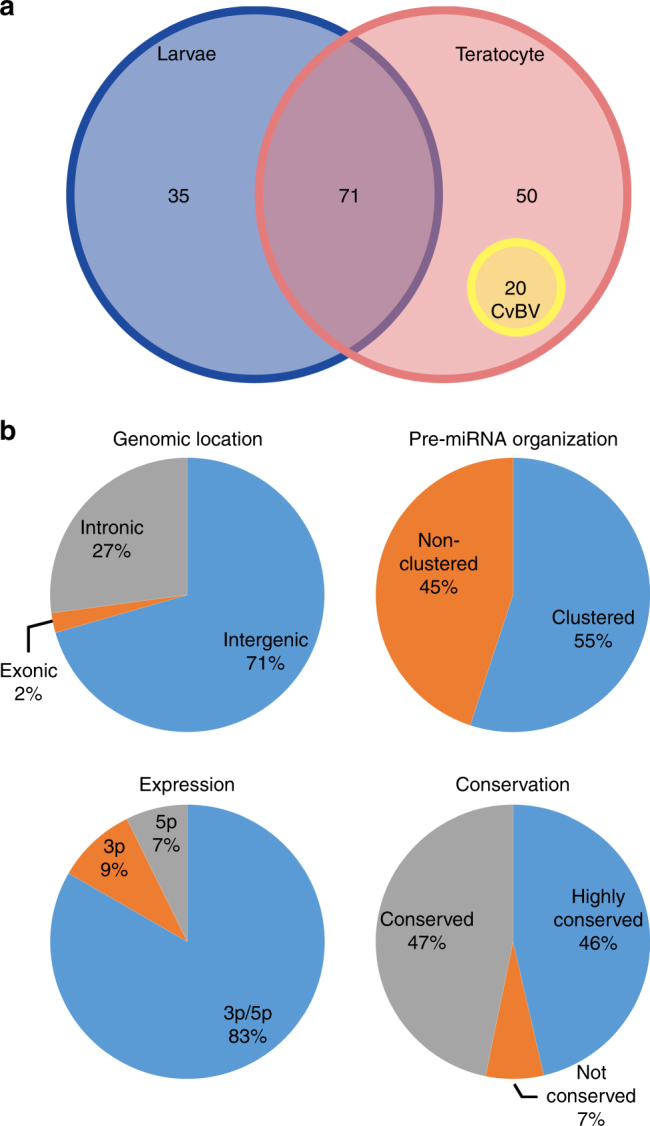
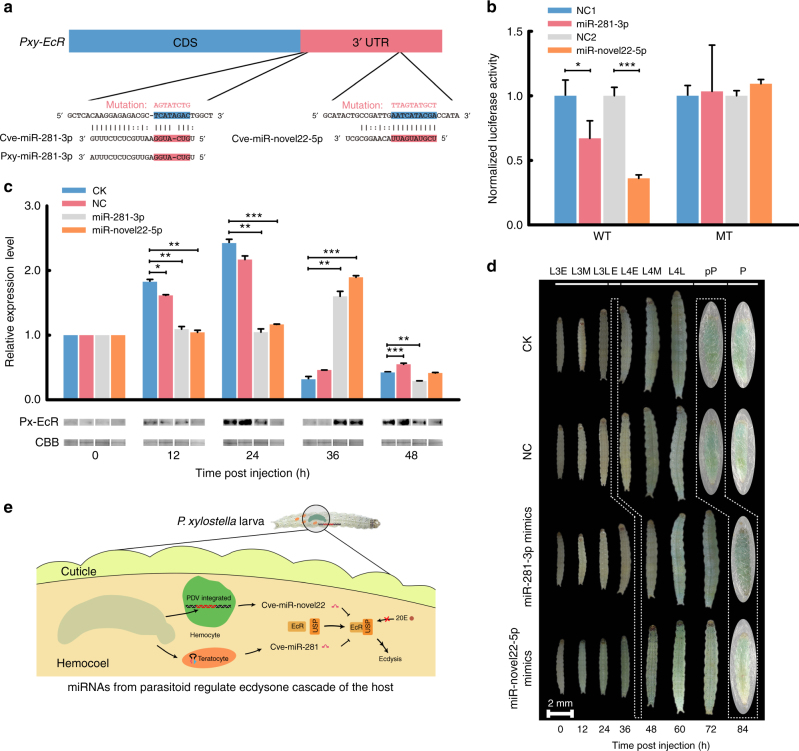
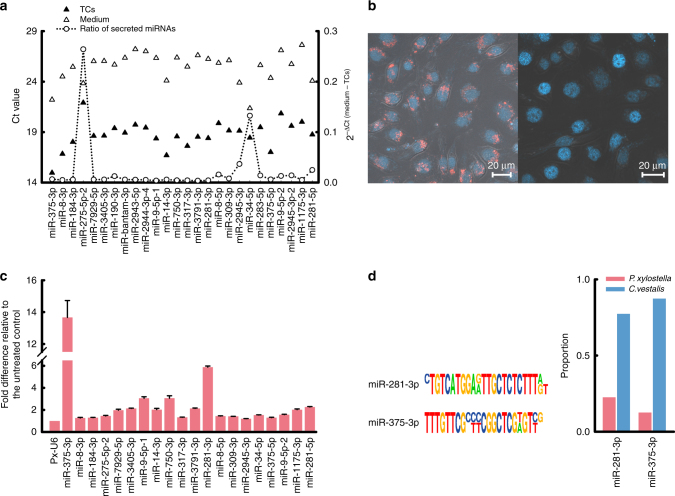
Parasitic wasps produce several factors including venom, polydnaviruses (PDVs) and specialized wasp cells named teratocytes that benefit the survival of offspring by altering the physiology of hosts. However, the underlying molecular mechanisms for the alterations remain unclear. Here we find that the teratocytes of Cotesia vestalis, an endoparasitoid of the diamondback moth Plutella xylostella, and its associated bracovirus (CvBV) can produce miRNAs and deliver the products into the host via different ways. Certain miRNAs in the parasitized host are mainly produced by teratocytes, while the expression level of miRNAs encoded by CvBV can be 100-fold greater in parasitized hosts than non-parasitized ones. We further show that one teratocyte-produced miRNA (Cve-miR-281-3p) and one CvBV-produced miRNA (Cve-miR-novel22-5p-1) arrest host growth by modulating expression of the host ecdysone receptor (EcR). Altogether, our results show the first evidence of cross-species regulation by miRNAs in animal parasitism and their possible function in the alteration of host physiology during parasitism.
寄生蜂会产生多种因子,包括毒液、多粒病毒(PDV)和专门的蜂细胞,称为胚胎细胞,这些因子通过改变宿主的生理机能来促进后代的生存。然而,改变的潜在分子机制尚不清楚。在这里,我们发现小菜蛾钻蛀性天敌菜蛾绒茧蜂的胚胎细胞及其相关的杆状病毒(CvBV)可以产生 microRNA,并通过不同的方式将产物递送到宿主中。在被寄生的宿主中,某些 microRNA 主要由胚胎细胞产生,而由 CvBV 编码的 microRNA 的表达水平在被寄生的宿主中比未被寄生的宿主高 100 倍。我们进一步表明,一种由胚胎细胞产生的 microRNA(Cve-miR-281-3p)和一种由 CvBV 产生的 microRNA(Cve-miR-novel22-5p-1)通过调节宿主蜕皮激素受体(EcR)的表达来阻止宿主生长。总之,我们的研究结果首次证明了 microRNA 在动物寄生中的跨物种调节及其在寄生过程中改变宿主生理机能的可能功能。