Center for Life Nanoscience, Istituto Italiano di Tecnologia, Rome, Italy.
Department of Physiology and Pharmacology, Sapienza University, Rome, Italy.
Cell Death Dis. 2018 Jun 7;9(6):685. doi: 10.1038/s41419-018-0740-5.
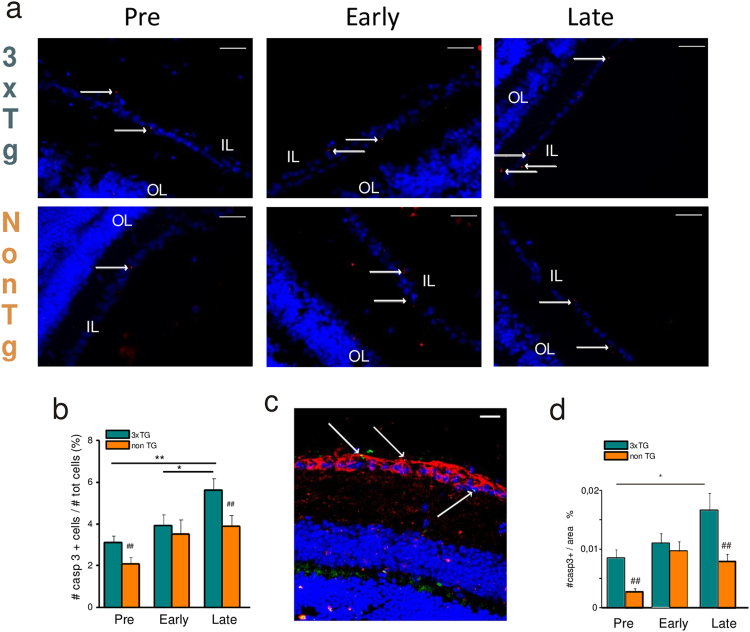
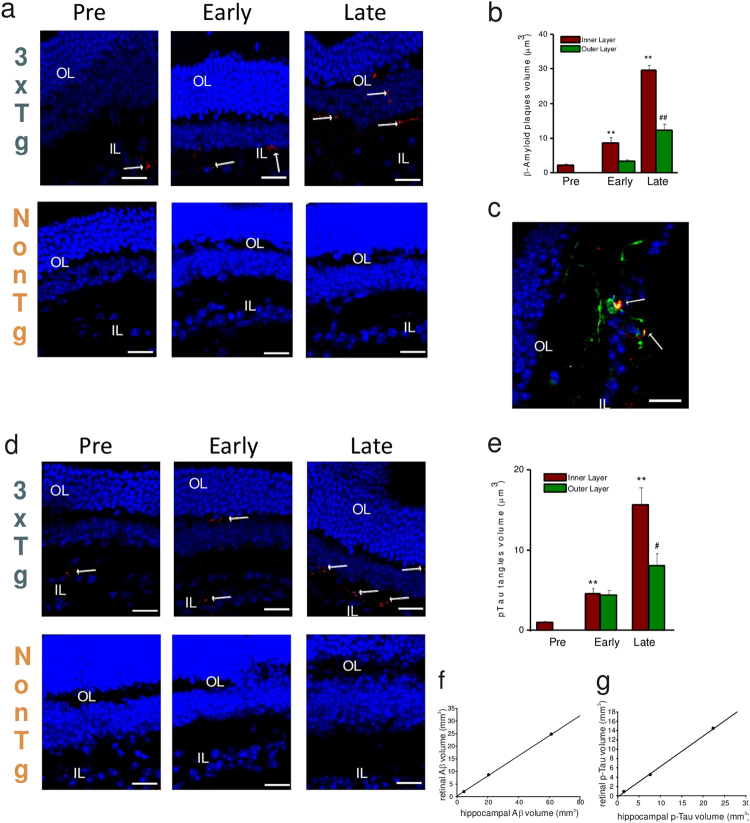
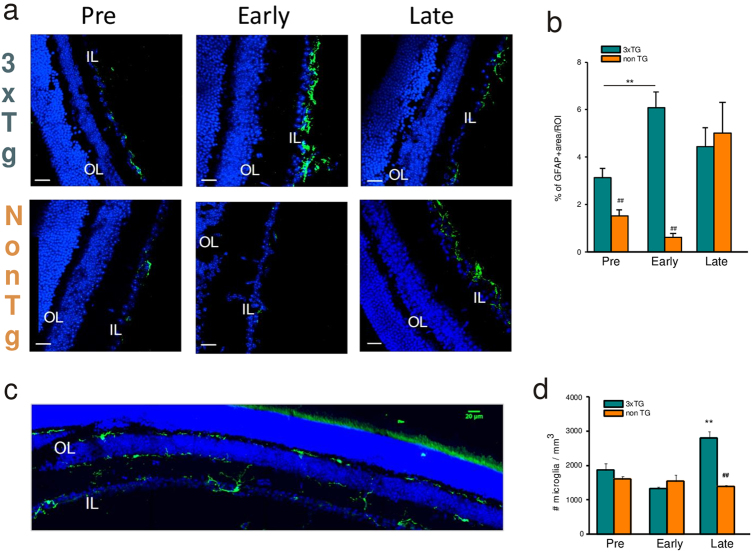
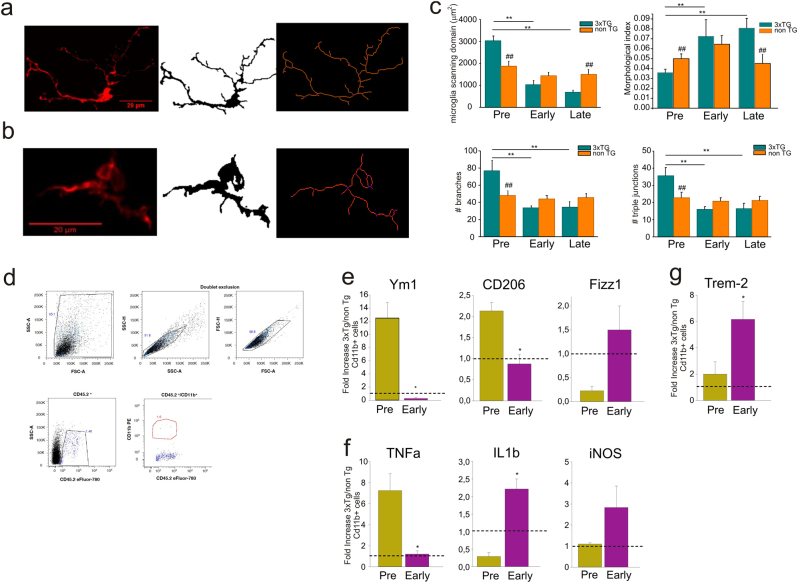
Alzheimer's disease (AD) is the most common cause of dementia in the elderly. In the pathogenesis of AD a pivotal role is played by two neurotoxic proteins that aggregate and accumulate in the central nervous system: amyloid beta and hyper-phosphorylated tau. Accumulation of extracellular amyloid beta plaques and intracellular hyper-phosphorylated tau tangles, and consequent neuronal loss begins 10-15 years before any cognitive impairment. In addition to cognitive and behavioral deficits, sensorial abnormalities have been described in AD patients and in some AD transgenic mouse models. Retina can be considered a simple model of the brain, as some pathological changes and therapeutic strategies from the brain may be observed or applicable to the retina. Here we propose new retinal biomarkers that could anticipate the AD diagnosis and help the beginning and the follow-up of possible future treatments. We analyzed retinal tissue of triple-transgenic AD mouse model (3xTg-AD) for the presence of pathological hallmarks during disease progression. We found the presence of amyloid beta plaques, tau tangles, neurodegeneration, and astrogliosis in the retinal ganglion cell layer of 3xTg-AD mice, already at pre-symptomatic stage. Moreover, retinal microglia in pre-symptomatic mice showed a ramified, anti-inflammatory phenotype which, during disease progression, switches to a pro-inflammatory, less ramified one, becoming neurotoxic. We hypothesize retina as a window through which monitor AD-related neurodegeneration process.
阿尔茨海默病(AD)是老年人中最常见的痴呆症病因。在 AD 的发病机制中,两种神经毒性蛋白的聚集和积累在中枢神经系统中起着关键作用:淀粉样β和过度磷酸化的 tau。细胞外淀粉样β斑块和细胞内过度磷酸化的 tau 缠结的积累,以及随之而来的神经元丧失,在任何认知障碍出现之前 10-15 年就开始了。除了认知和行为缺陷外,AD 患者和一些 AD 转基因小鼠模型中还描述了感觉异常。视网膜可以被认为是大脑的简单模型,因为大脑中的一些病理变化和治疗策略可能会在视网膜中观察到或适用于视网膜。在这里,我们提出了新的视网膜生物标志物,这些标志物可以预测 AD 的诊断,并有助于开始和随访可能的未来治疗。我们分析了三转基因 AD 小鼠模型(3xTg-AD)的视网膜组织,以观察疾病进展过程中是否存在病理特征。我们发现,在 3xTg-AD 小鼠的视网膜神经节细胞层中已经存在淀粉样β斑块、tau 缠结、神经退行性变和星形胶质细胞增生,甚至在症状前阶段。此外,症状前小鼠的视网膜小胶质细胞表现出分支的抗炎表型,而在疾病进展过程中,它们会转变为具有较少分支的促炎表型,从而具有神经毒性。我们假设视网膜是一个监测 AD 相关神经退行性变过程的窗口。