Institute of Crop Science and Zhejiang Key Laboratory of Crop Germplasm, Zhejiang University, Hangzhou 310058, China.
Oil Crops Research Institute, Chinese Academy of Agricultural Sciences, Wuhan 430000, China.
Biomed Res Int. 2018 May 16;2018:9248123. doi: 10.1155/2018/9248123. eCollection 2018.
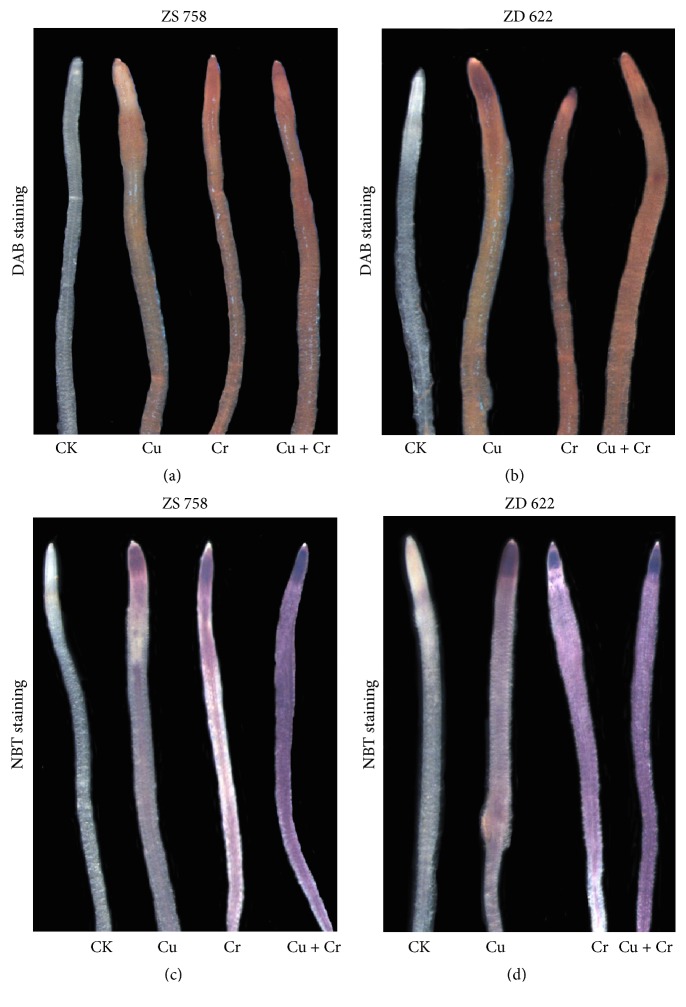
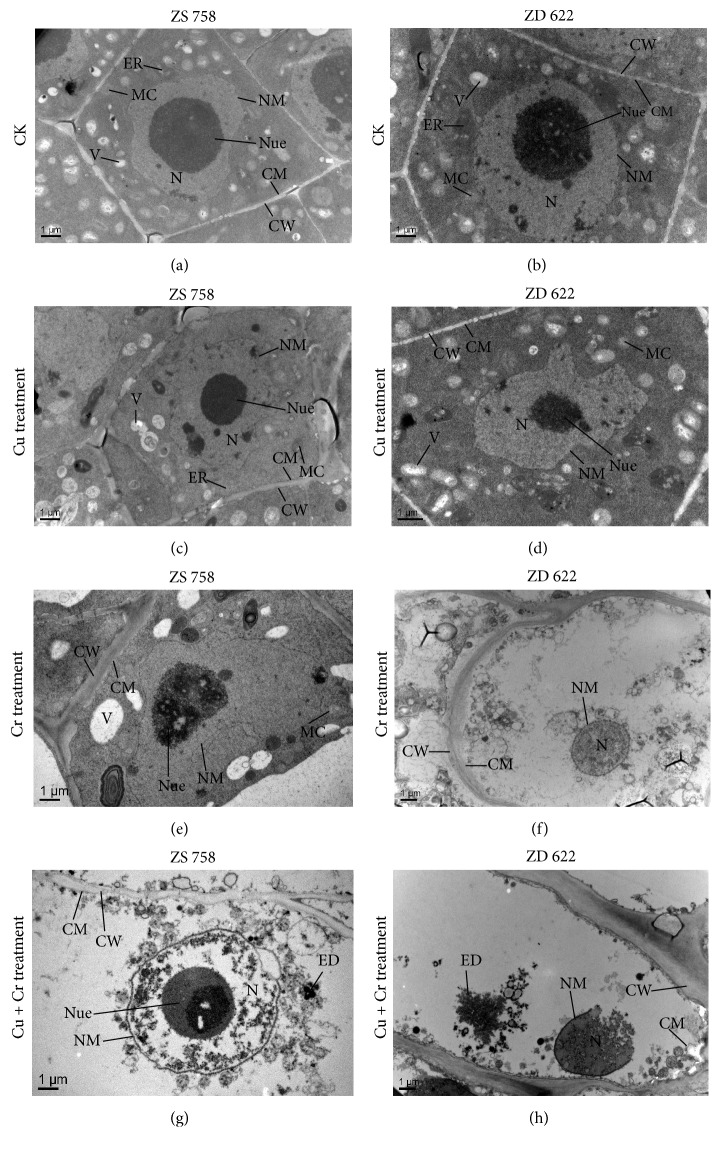
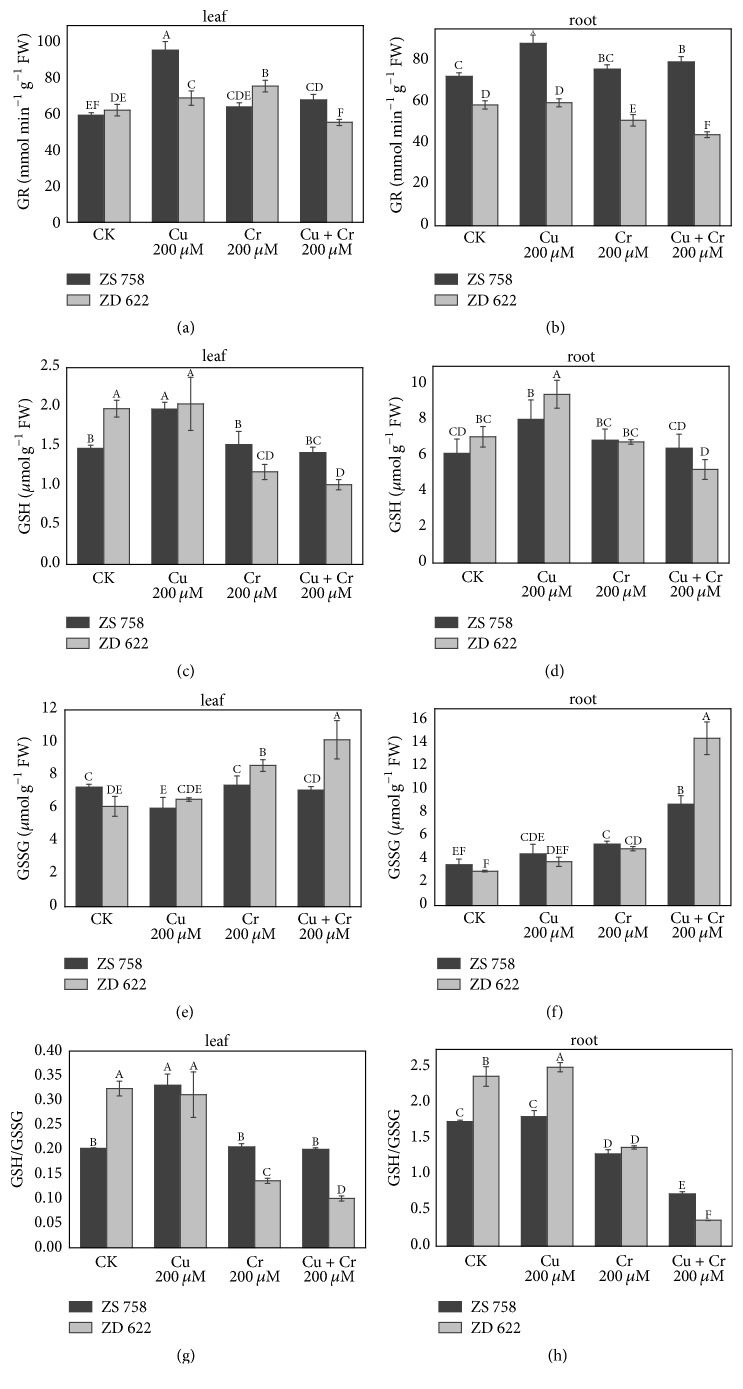
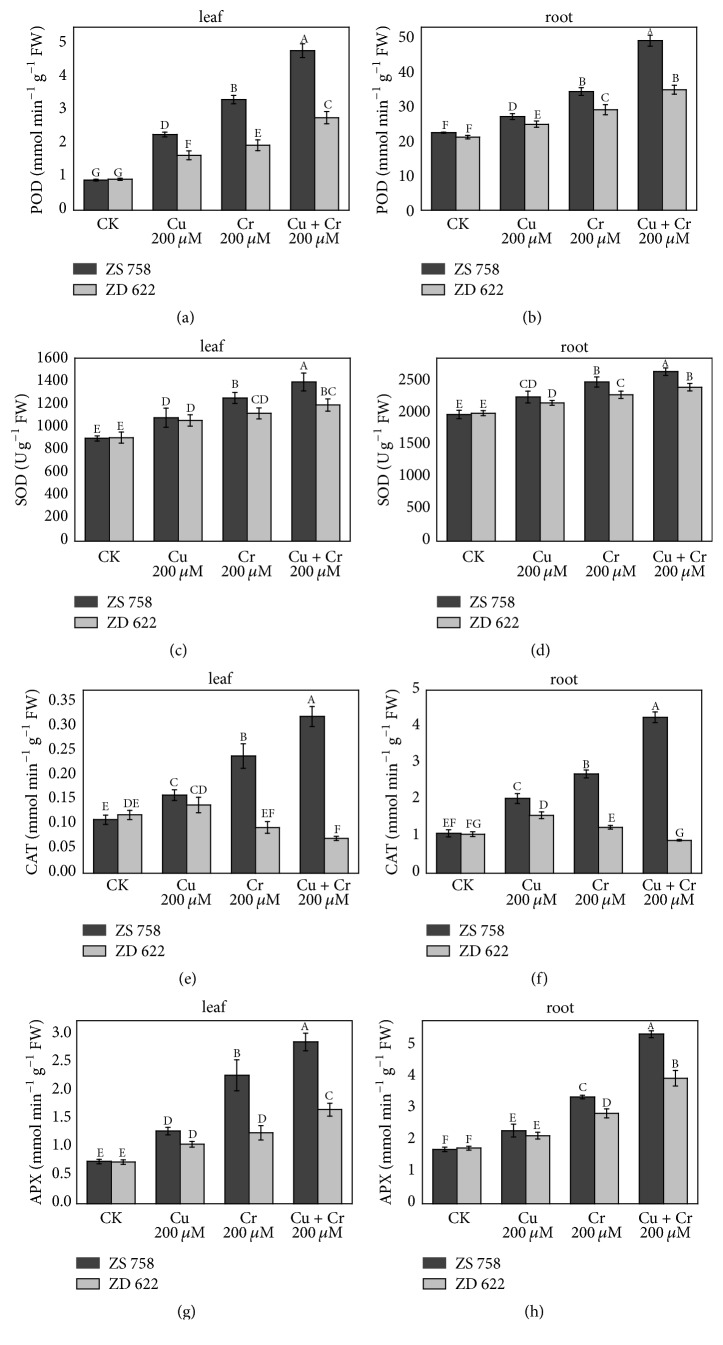
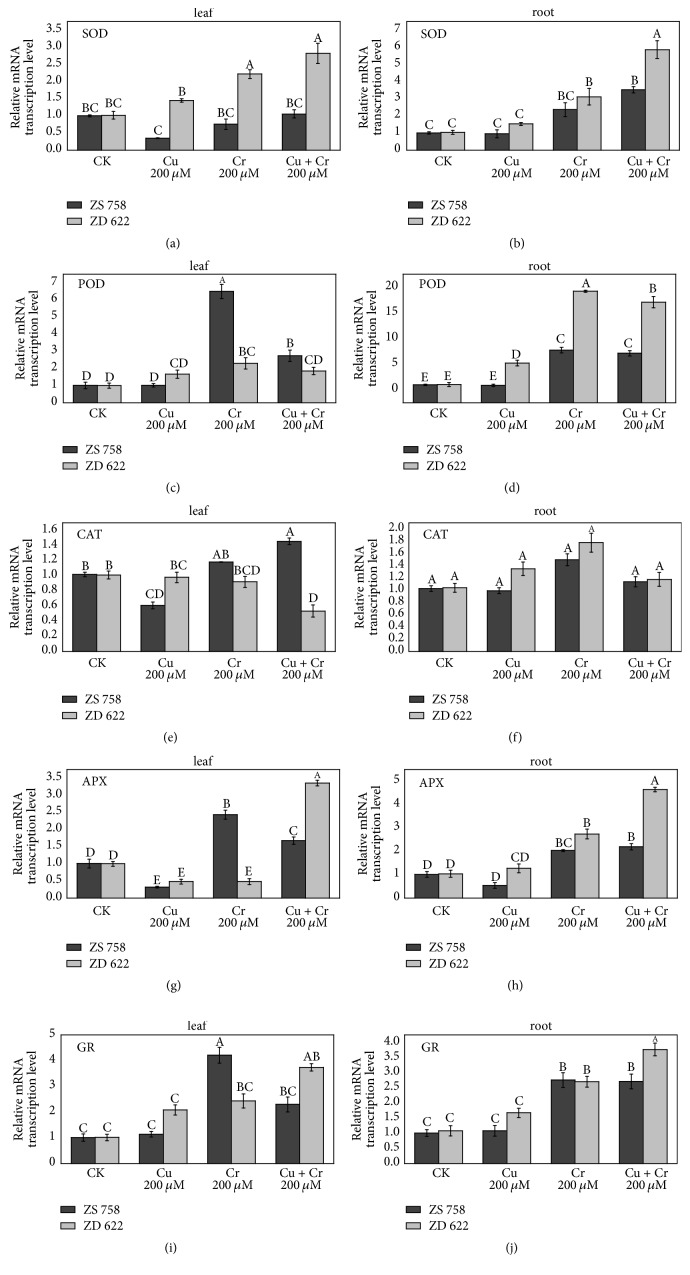
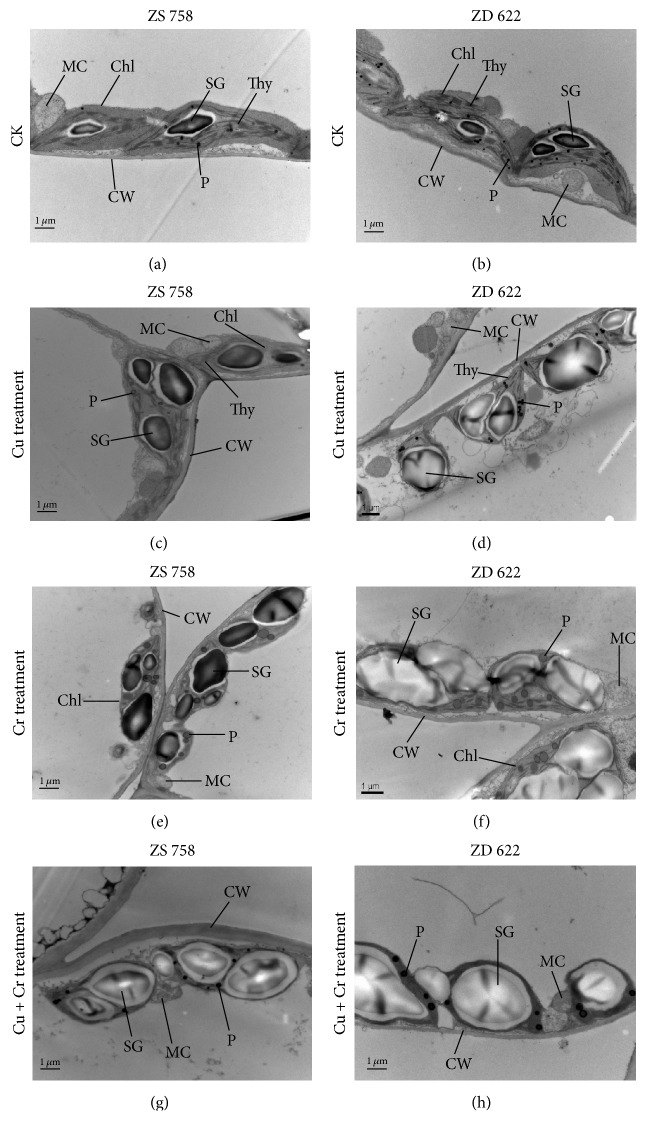
Heavy metal accumulation causes huge environmental problems, particularly in agricultural ecosystems which have deteriorative effects on the yield and quality of crops. Individual copper (Cu) and chromium (Cr) effects have been investigated extensively in plants; however, co-contamination of Cu and Cr induced stress on L. is still unclear. In the present experiment, the interactive effects of Cu and Cr were studied in two cultivars (Zheda 622 and ZS 758). Results showed that the application of Cr was more toxic than Cu, and their combined stress had shown a significant adverse effect on plant growth. Biomass and photosynthetic pigment were decreased remarkably under all metal treatments. Individual treatments of Cu and Cr and their combination cause the accumulation of ROS and lipid peroxidation. Moreover, the activities of antioxidant enzymes and their mRNA transcription levels, such as catalase (CAT), ascorbate peroxidase, glutathione reductase, superoxide dismutase, and peroxidase, were increased, especially when treated with Cr alone or under Cu+Cr combined treatment in both cultivars, except for the CAT activity which was decreased in both leaves and roots of sensitive cultivar Zheda 622 as compared with their respective controls. Additionally, nonenzymatic antioxidants like reduced and oxidized glutathione showed a differential activity pattern in roots and leaves of both cultivars. A more pronounced modification in chloroplast ultrastructure was observed in both cultivars under Cu+Cr treatment followed by Cr and Cu alone treatments. Furthermore, synergistic effects of Cu and Cr were prominent; this may be due to the enhanced metals uptake under combined treatment, which suggests that Cr and Cu interaction is not competitive but is rather additive and genotypic-dependent.
重金属积累会导致严重的环境问题,尤其是在农业生态系统中,这会对作物的产量和质量产生破坏性影响。个体铜(Cu)和铬(Cr)对植物的影响已经得到了广泛的研究;然而,Cu 和 Cr 的共污染对 L. 造成的胁迫仍不清楚。在本实验中,研究了两种品种(Zheda 622 和 ZS 758)中 Cu 和 Cr 的互作效应。结果表明,Cr 的应用比 Cu 更具毒性,它们的联合胁迫对植物生长表现出显著的不利影响。在所有金属处理下,生物量和光合色素都显著减少。单独处理 Cu 和 Cr 及其组合会导致 ROS 和脂质过氧化的积累。此外,抗氧化酶及其 mRNA 转录水平的活性增加,如过氧化氢酶(CAT)、抗坏血酸过氧化物酶、谷胱甘肽还原酶、超氧化物歧化酶和过氧化物酶,尤其是在单独用 Cr 处理或在两个品种的 Cu+Cr 联合处理下,除了敏感品种 Zheda 622 的 CAT 活性在叶片和根部都比对照有所下降。此外,非酶抗氧化剂如还原型和氧化型谷胱甘肽在两个品种的根和叶中表现出不同的活性模式。在 Cu+Cr 处理后,两个品种的叶绿体超微结构都发生了更明显的改变,其次是 Cr 和 Cu 单独处理。此外,Cu 和 Cr 的协同效应很明显;这可能是由于联合处理下金属吸收增强所致,这表明 Cr 和 Cu 的相互作用不是竞争性的,而是加性的和基因型依赖性的。