Department of Environmental Sciences and Engineering, Government College University, Faisalabad, Pakistan.
Department of Biological Sciences and Technology, China Medical University, Taichung, Taiwan.
PLoS One. 2022 Jan 7;17(1):e0262140. doi: 10.1371/journal.pone.0262140. eCollection 2022.
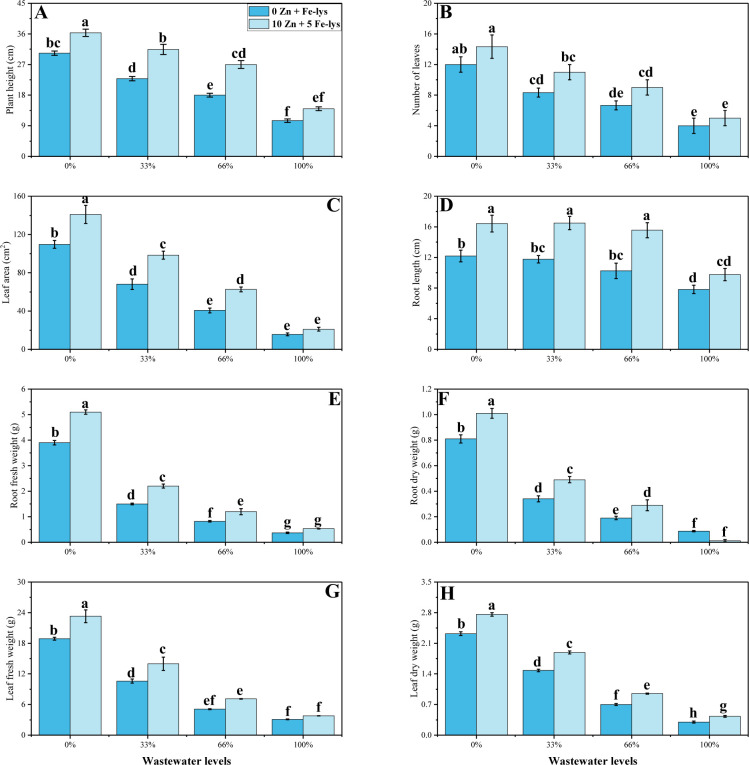
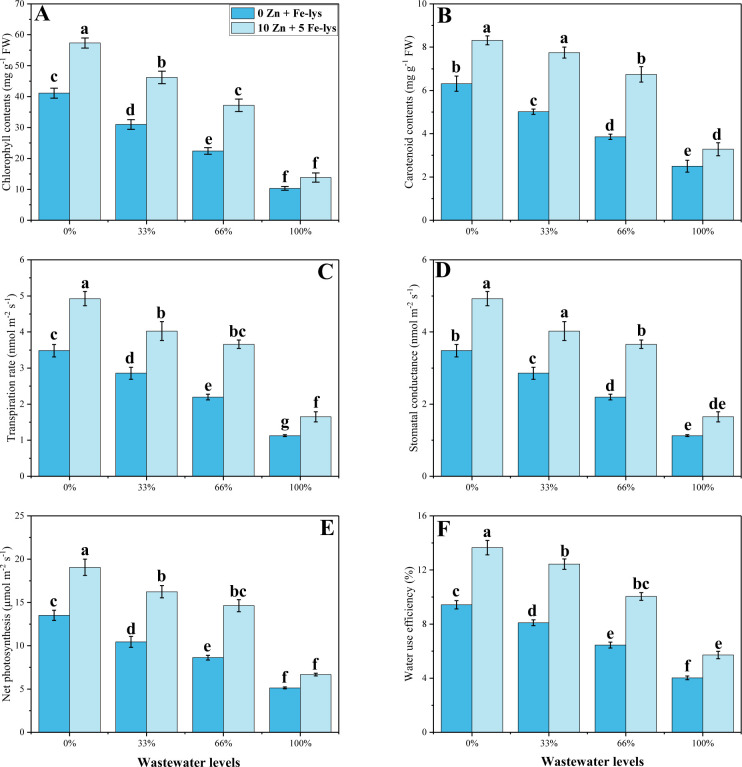
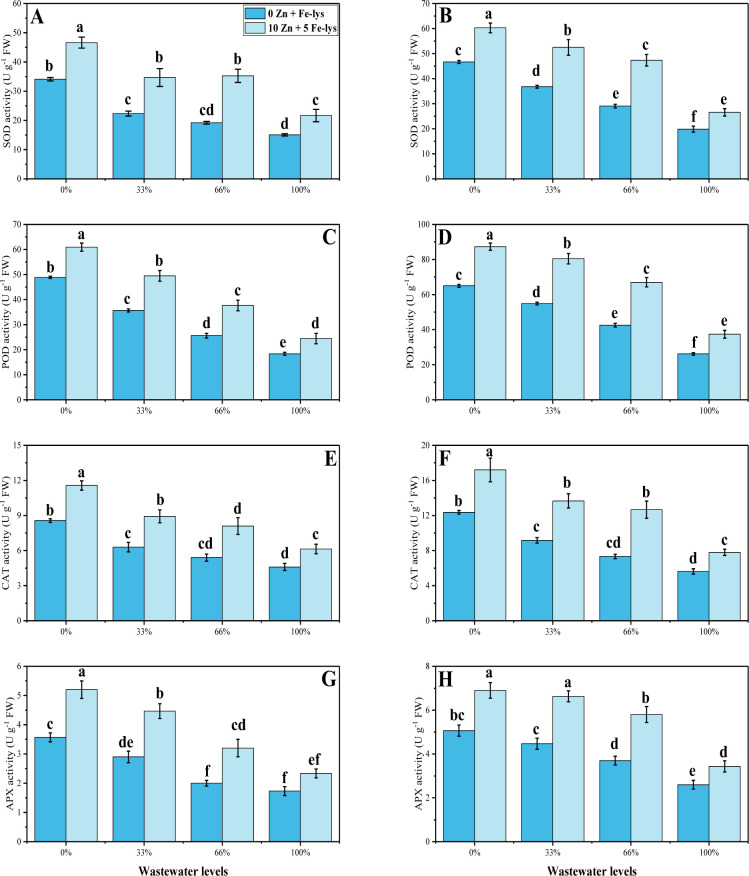
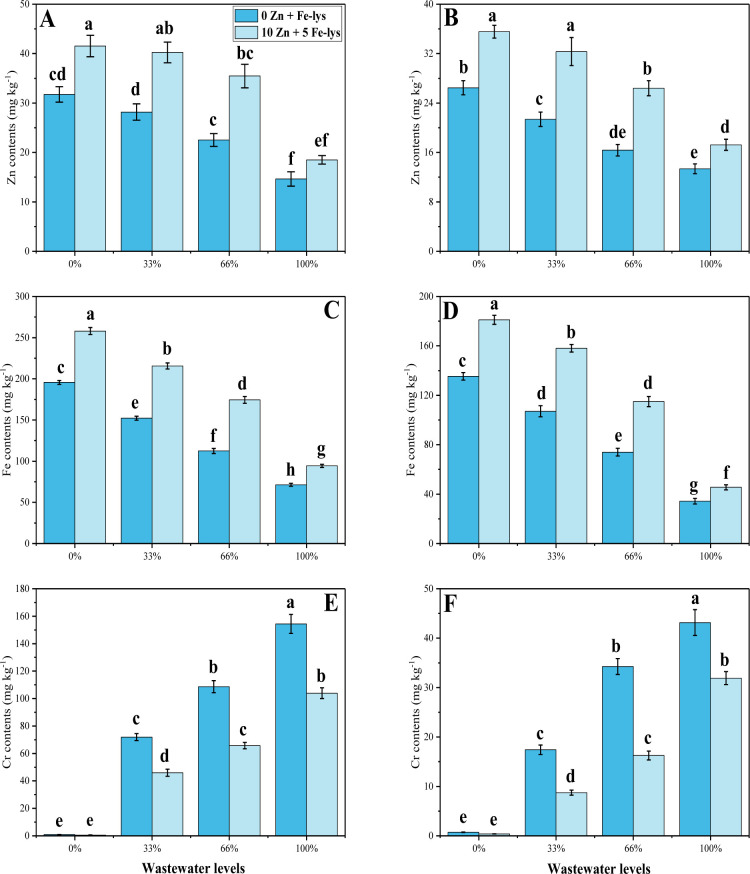
Environmental contamination of chromium (Cr) has gained substantial consideration worldwide because of its high levels in the water and soil. A pot experiment using oil seed crop (rapeseed (Brassica napus L.)) grown under different levels of tannery wastewater (0, 33, 66 and 100%) in the soil using the foliar application of zinc (Zn) and iron (Fe)-lysine (lys) has been conducted. Results revealed that a considerable decline in the plant growth and biomass elevates with the addition of concentrations of tannery wastewater. Maximum decline in plant height, number of leaves, root length, fresh and dry biomass of root and leaves were recorded at the maximum level of tannery wastewater application (100%) compared to the plants grown without the addition of tannery wastewater (0%) in the soil. Similarly, contents of carotenoid and chlorophyll, gas exchange parameters and activities of various antioxidants (superoxidase dismutase (SOD), peroxidase (POD), catalase (CAT) and ascorbate peroxidase (APX)) were also reduced significantly (P < 0.05) with the increasing concentration of tannery wastewater (33, 66 and 100%) in the soil. In addition, a combined application of Zn and Fe-lys reduced the accumulation and uptake of toxic Cr, while boosting the uptake of essential micronutrients such as Zn and Fe in different tissues of the plants. Results concluded that exogenous application of micronutrients chelated with amino acid successfully mitigate Cr stress in B. napus. Under field conditions, supplementation with these micronutrient-chelated amino acids may be an effective method for alleviating metal stress in other essential seed crops.
铬(Cr)的环境污染已在全球范围内引起了广泛关注,因为其在水和土壤中的含量很高。本研究采用盆栽试验,用不同浓度(0、33、66 和 100%)的制革废水处理土壤,并用叶面喷施锌(Zn)和铁(Fe)-赖氨酸(lys)处理油菜(Brassica napus L.)。结果表明,随着制革废水浓度的增加,植物生长和生物量显著下降。与未添加制革废水(0%)的植株相比,在添加制革废水的最高浓度(100%)下,植株的株高、叶片数、根长、根和叶片的鲜重和干重均显著下降。同样,在土壤中添加不同浓度(33、66 和 100%)的制革废水后,类胡萝卜素和叶绿素含量、气体交换参数以及各种抗氧化剂(超氧化物歧化酶(SOD)、过氧化物酶(POD)、过氧化氢酶(CAT)和抗坏血酸过氧化物酶(APX))的活性也显著降低(P < 0.05)。此外,Zn 和 Fe-lys 的联合应用减少了有毒 Cr 的积累和吸收,同时促进了植物不同组织中必需微量元素 Zn 和 Fe 的吸收。结果表明,外施与氨基酸螯合的微量元素成功缓解了油菜对 Cr 的胁迫。在田间条件下,补充这些微量元素-氨基酸螯合物可能是缓解其他重要种子作物金属胁迫的有效方法。