Oh Byeongsang, Yeung Albert, Klein Penelope, Larkey Linda, Ee Carolyn, Zaslawski Chris, Knobf Tish, Payne Peter, Stener-Victorin Elisabet, Lee Richard, Choi Whanseok, Chun Mison, Bonucci Massimo, Lang Hanne-Doris, Pavlakis Nick, Boyle Fran, Clarke Stephen, Back Michael, Yang Peiying, Wei Yulong, Guo Xinfeng, Weng Chi-Hsiu D, Irwin Michael R, Elfiky Aymen A, Rosenthal David
Sydney Medical School, University of Sydney, Sydney, NSW 2006, Australia.
School of Life Science, University of Technology, Ultimo, NSW 2007, Australia.
Medicines (Basel). 2018 Jun 8;5(2):51. doi: 10.3390/medicines5020051.
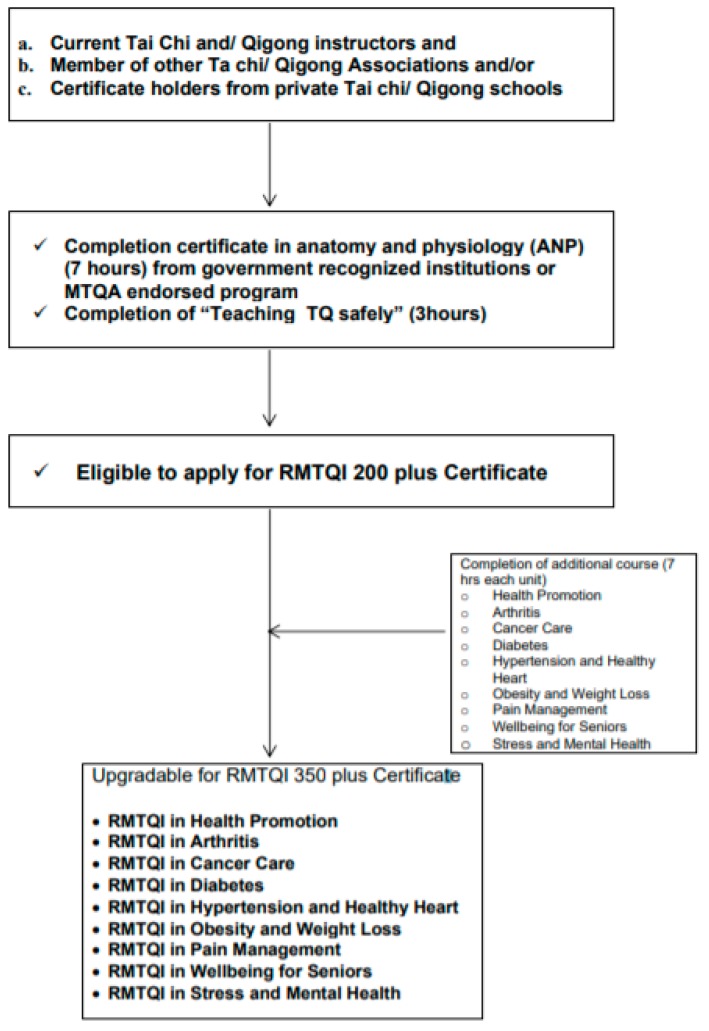
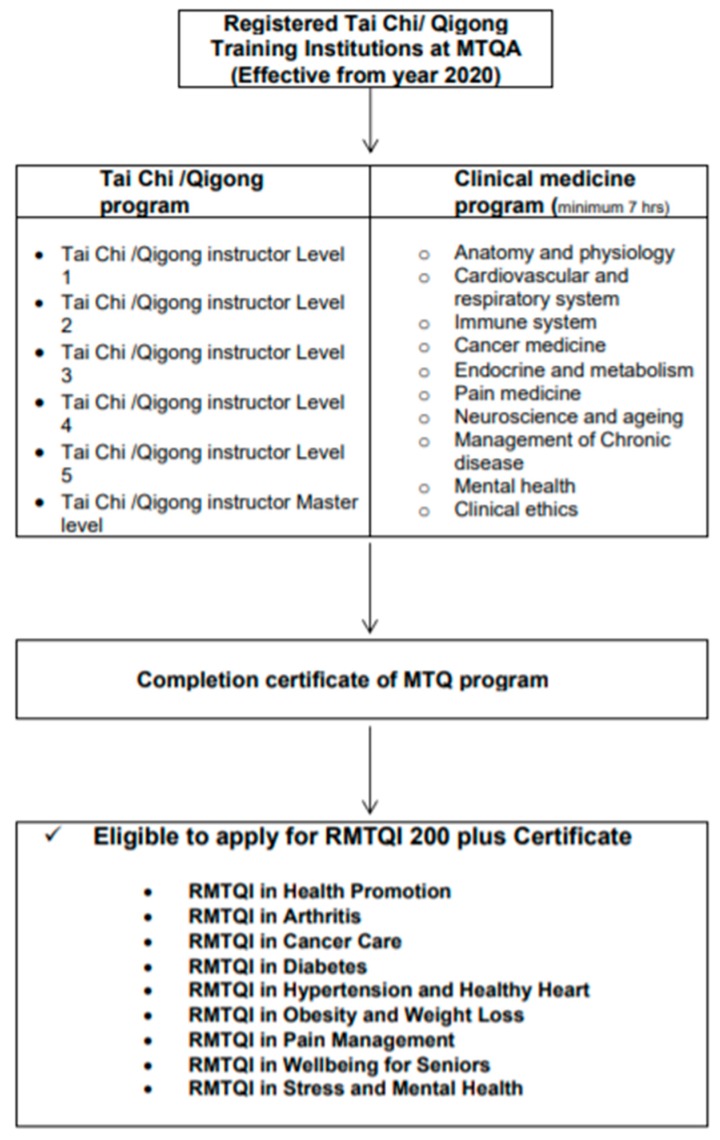
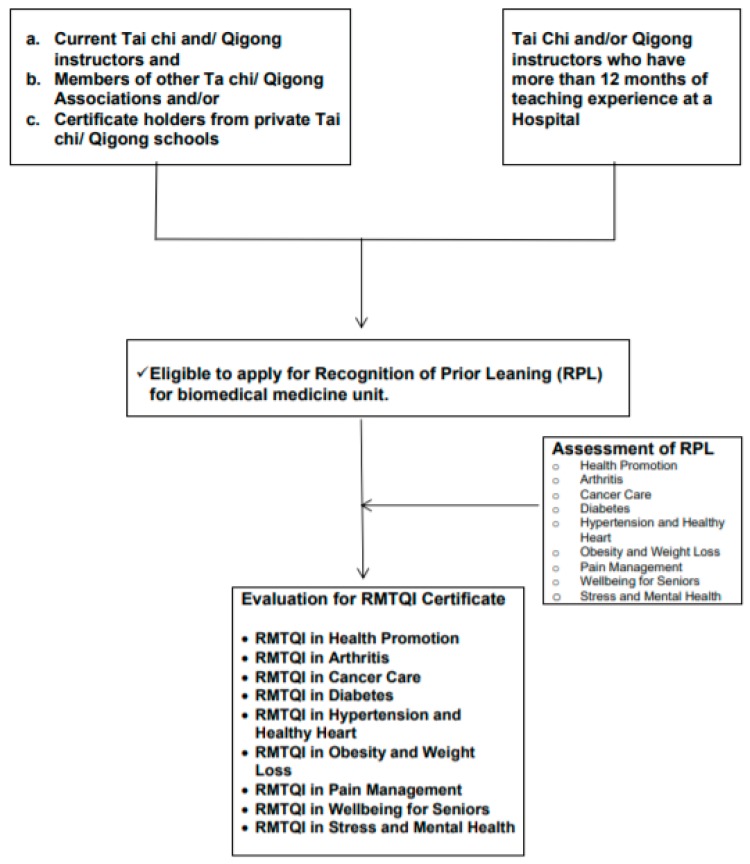
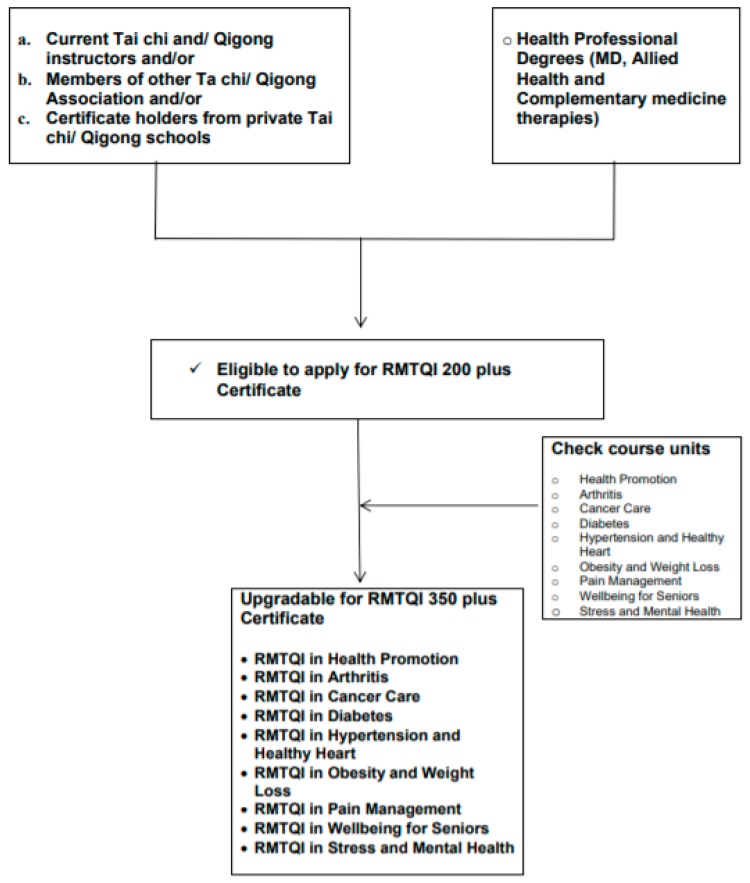
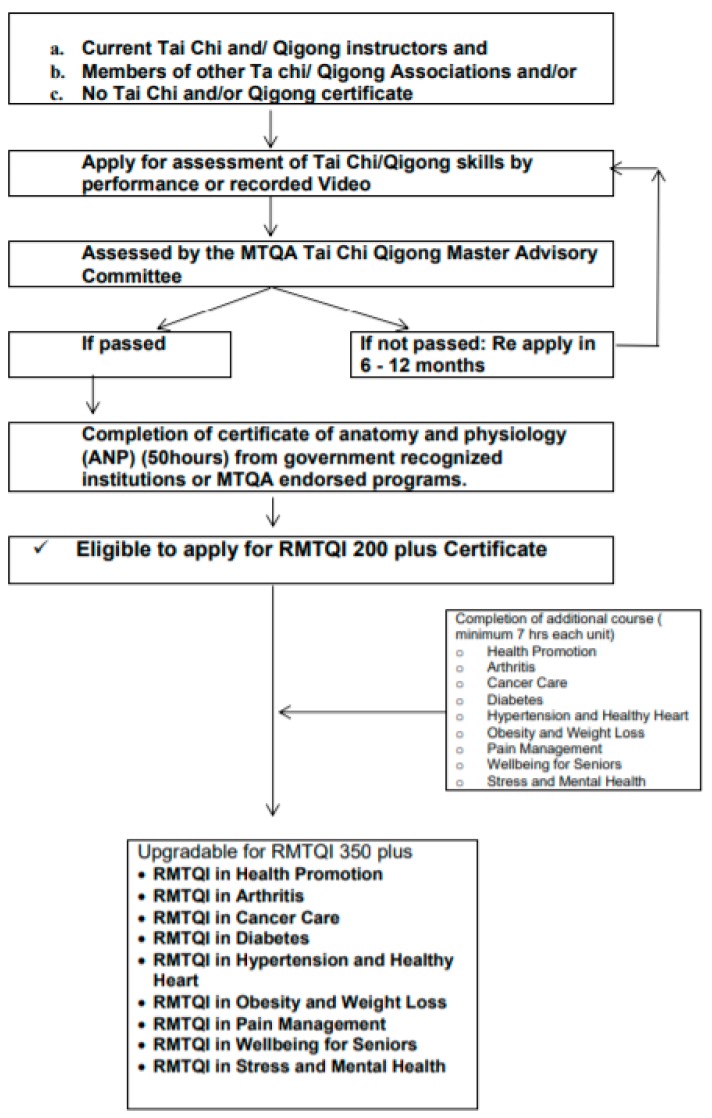
Evidence of the health and wellbeing benefits of (TQ) have emerged in the past two decades, but TQ is underutilized in modern health care in Western countries due to lack of promotion and the availability of professionally qualified TQ instructors. To date, there are no government regulations for TQ instructors or for training institutions in China and Western countries, even though TQ is considered to be a part of Traditional Chinese medicine that has the potential to manage many chronic diseases. Based on an integrative health care approach, the accreditation standard guideline initiative for TQ instructors and training institutions was developed in collaboration with health professionals, integrative medicine academics, Tai Chi and Qigong master instructors and consumers including public safety officers from several countries, such as Australia, Canada, China, Germany, Italy, Korea, Sweden and USA. In this paper, the rationale for organizing the (MTQA) is discussed and the accreditation standard guideline for TQ instructors and training institutions developed by the committee members of MTQA is presented. The MTQA acknowledges that the proposed guidelines are broad, so that the diversity of TQ instructors and training institutions can be integrated with recognition that these guidelines can be developed with further refinement. Additionally, these guidelines face challenges in understanding the complexity of TQ associated with different principles, philosophies and schools of thought. Nonetheless, these guidelines represent a necessary first step as primary resource to serve and guide health care professionals and consumers, as well as the TQ community.
在过去二十年中,已出现了太极(TQ)对健康有益的证据,但由于缺乏推广以及专业合格的太极教练,太极在西方国家现代医疗保健中未得到充分利用。尽管太极被视为中医的一部分,有潜力管理多种慢性病,但目前在中国和西方国家,对于太极教练或培训机构均没有政府规定。基于综合医疗保健方法,与来自澳大利亚、加拿大、中国、德国、意大利、韩国、瑞典和美国等多个国家的健康专业人员、整合医学学者、太极拳和气功大师教练以及包括公共安全官员在内的消费者合作,制定了太极教练和培训机构的认证标准指南倡议。本文讨论了组织太极质量保证(MTQA)的基本原理,并介绍了MTQA委员会成员制定的太极教练和培训机构认证标准指南。MTQA认识到所提议的指南较为宽泛,以便能够整合太极教练和培训机构的多样性,同时认识到这些指南可进一步完善。此外,这些指南在理解与不同原则、理念和思想流派相关的太极复杂性方面面临挑战。尽管如此,这些指南作为服务和指导医疗保健专业人员、消费者以及太极团体的主要资源,代表了必要的第一步。