College of Agronomy, Northwest A&F University, Yangling 712100, Shaanxi, China.
Int J Mol Sci. 2018 Jun 8;19(6):1708. doi: 10.3390/ijms19061708.
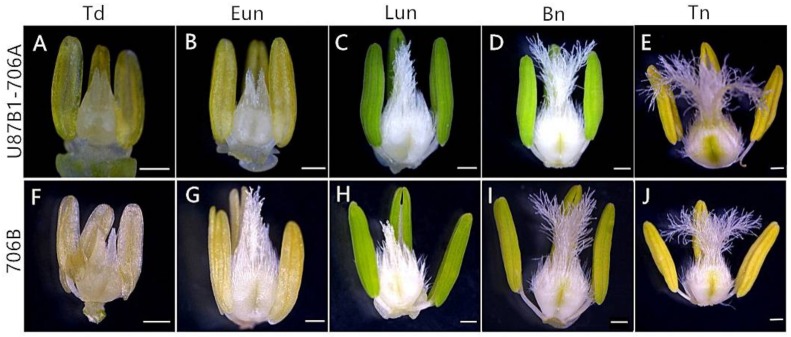
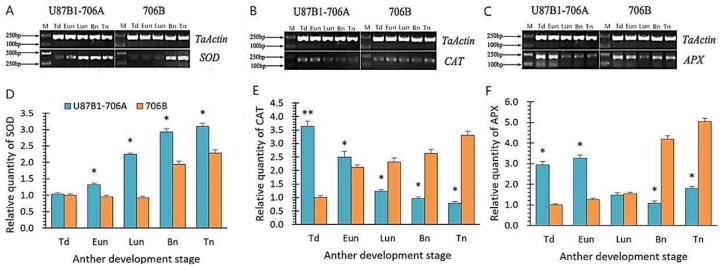
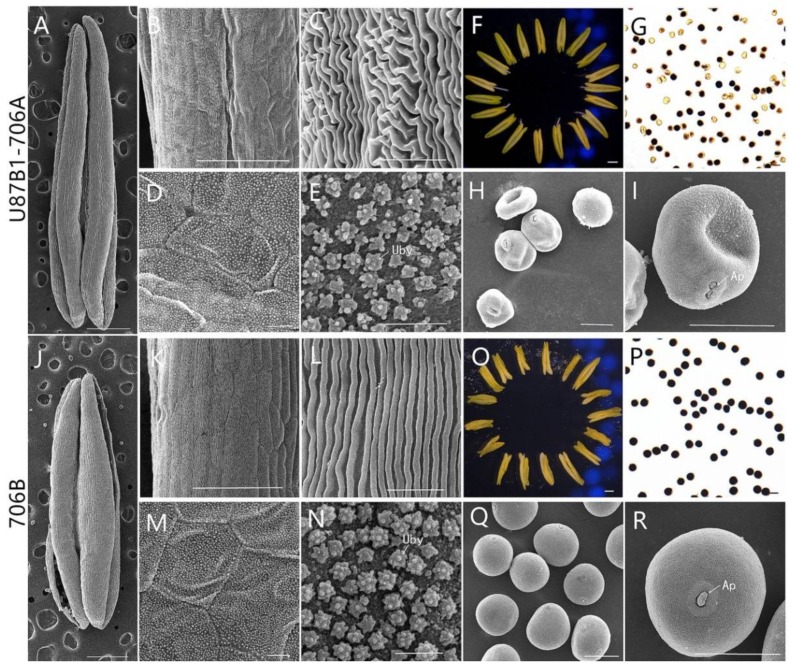
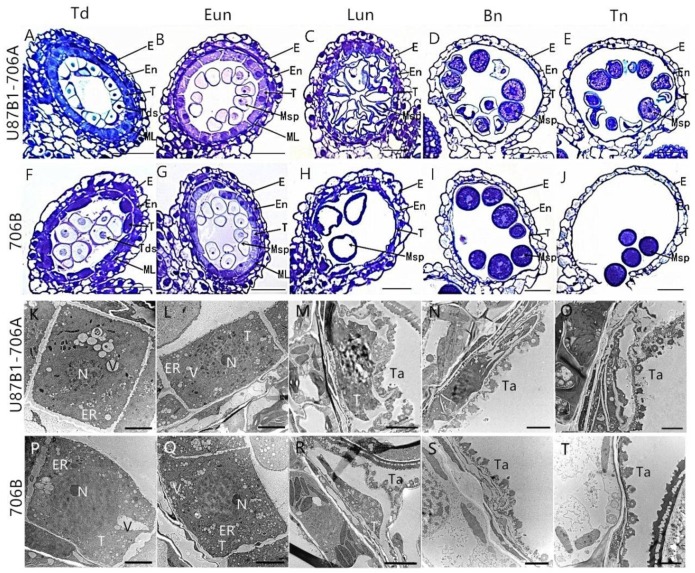
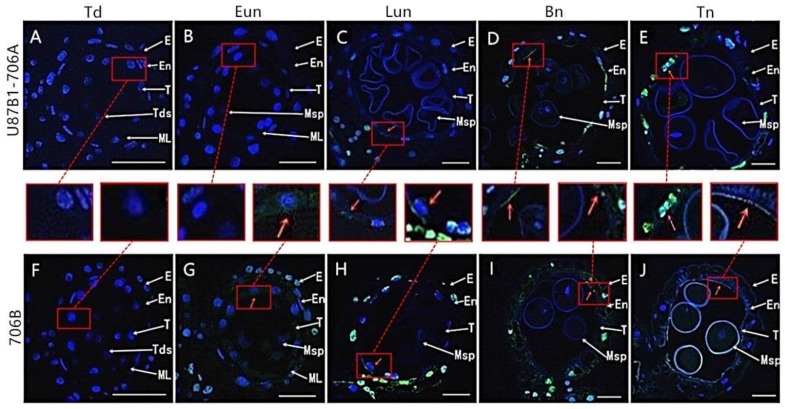
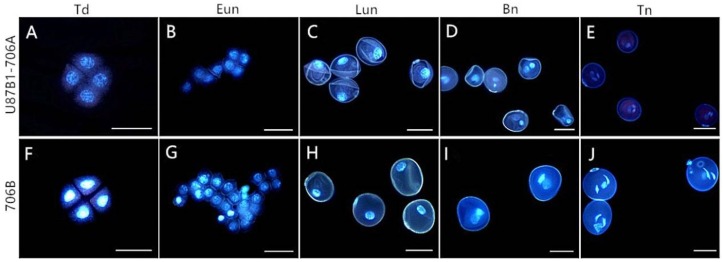
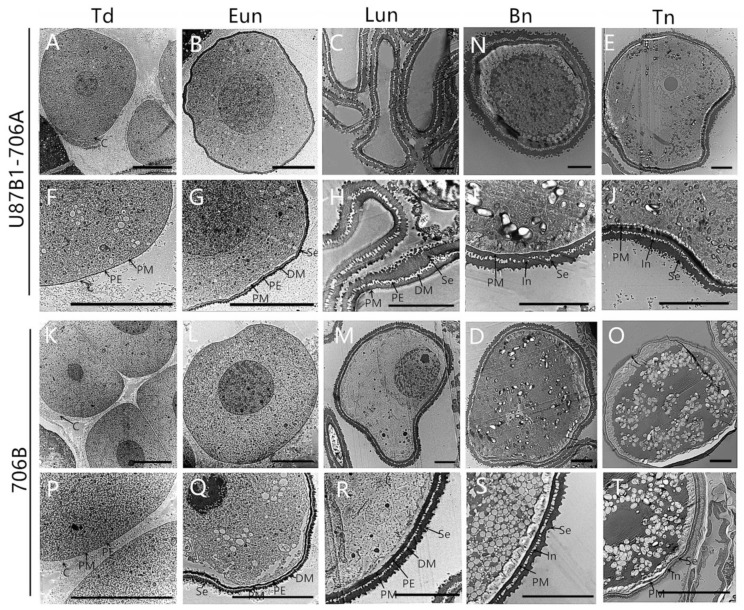
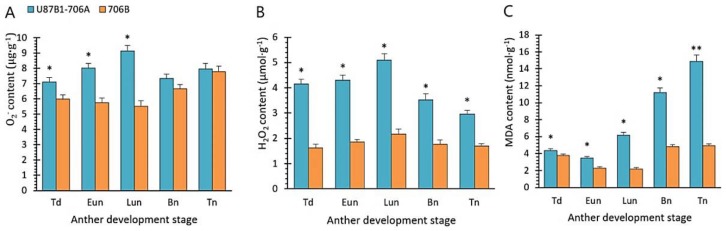
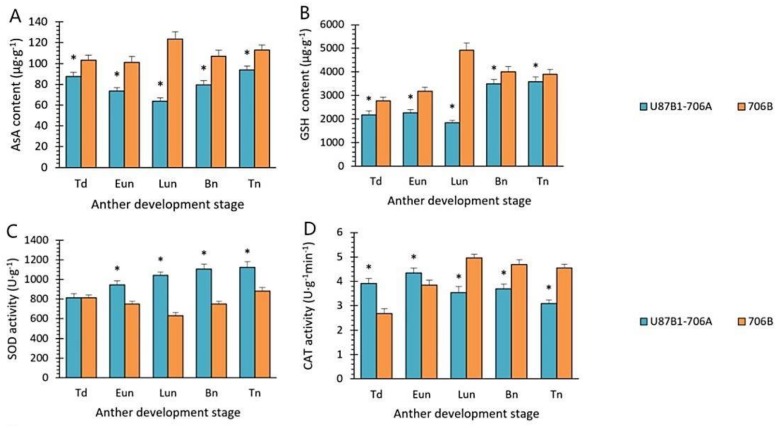
Cytoplasmic male sterility (CMS) plays a crucial role in the utilization of hybrid vigor. Pollen development is often accompanied by oxidative metabolism responses and tapetal programmed cell death (PCD), and deficiency in these processes could lead to male sterility. cytoplasmic male sterility (Mu-CMS) wheat is a novel male-sterile line in wheat, which possess important potential in hybrid wheat breeding. However, its CMS mechanisms remain poorly understood. In our study, U87B1-706A, with the cytoplasm, and the maintainer line 706B were used to explore the abortive reason. Compared with 706B, histological analysis and PCD detection of the anther demonstrated that U87B1-706A appeared as delayed tapetal PCD as well as a disorganized organelle phenotype in the early uninucleate stage. Subsequently, a shrunken microspore and disordered exine structure were exhibited in the late uninucleate stage. While the activities of antioxidase increased markedly, the nonenzymatic antioxidant contents declined obviously following overacummulation of reactive oxygen species (ROS) during pollen development in U87B1-706A. Real-time quantitative PCR testified that the transcript levels of the superoxide dismutase (), catalase (), and ascorbate peroxidase () genes, encoding pivotal antioxidant enzymes, were up-regulated in early pollen development. Therefore, we deduce excess ROS as a signal may be related to the increased expression levels of enzyme genes, thereby breaking the antioxidative system balance, resulting in delayed tapetal PCD initiation, which finally led to pollen abortion and male sterility in U87B1-706A. These results provide evidence to further explore the mechanisms of abortive pollen in CMS wheat.
细胞质雄性不育(CMS)在杂种优势利用中起着至关重要的作用。花粉发育通常伴随着氧化代谢反应和绒毡层程序性细胞死亡(PCD),这些过程的缺陷可能导致雄性不育。Mu-CMS 小麦是小麦中的一种新型雄性不育系,在杂交小麦育种中具有重要的应用潜力。然而,其 CMS 机制仍不清楚。在本研究中,我们使用具有细胞质的 U87B1-706A 和保持系 706B 来探索败育的原因。与 706B 相比,花药的组织学分析和 PCD 检测表明,U87B1-706A 表现出绒毡层 PCD 延迟以及早期单核期细胞器形态异常。随后,在晚期单核期表现出皱缩的小孢子和异常的外壁结构。虽然抗氧化酶的活性显著增加,但在 U87B1-706A 花粉发育过程中活性氧(ROS)过度积累后,非酶抗氧化剂含量明显下降。实时定量 PCR 证明,超氧化物歧化酶(SOD)、过氧化氢酶(CAT)和抗坏血酸过氧化物酶(APX)基因的转录水平在早期花粉发育中上调,这些基因编码关键的抗氧化酶。因此,我们推断过量的 ROS 作为一种信号可能与酶基因表达水平的增加有关,从而打破抗氧化系统的平衡,导致绒毡层 PCD 启动延迟,最终导致 U87B1-706A 花粉败育和雄性不育。这些结果为进一步探索 CMS 小麦败育花粉的机制提供了证据。