Wang Shuping, Zhang Gaisheng, Zhang Yingxin, Song Qilu, Chen Zheng, Wang Junsheng, Guo Jialin, Niu Na, Wang Junwei, Ma Shoucai
College of Agronomy, Northwest A&F University, National Yangling Agricultural Biotechnology & Breeding Center, Yangling Branch of State Wheat Improvement Centre, Wheat Breeding Engineering Research Center, Ministry of Education, Key Laboratory of Crop Heterosis of Shaanxi Province, Yangling, Shaanxi 712100, P. R. China.
College of Agronomy, Northwest A&F University, National Yangling Agricultural Biotechnology & Breeding Center, Yangling Branch of State Wheat Improvement Centre, Wheat Breeding Engineering Research Center, Ministry of Education, Key Laboratory of Crop Heterosis of Shaanxi Province, Yangling, Shaanxi 712100, P. R. China
J Exp Bot. 2015 Oct;66(20):6191-203. doi: 10.1093/jxb/erv322. Epub 2015 Jul 1.
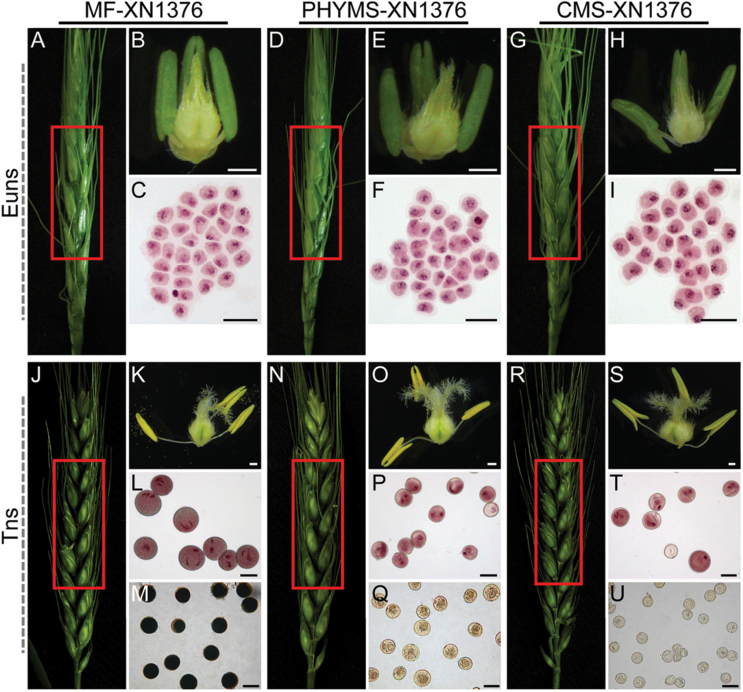
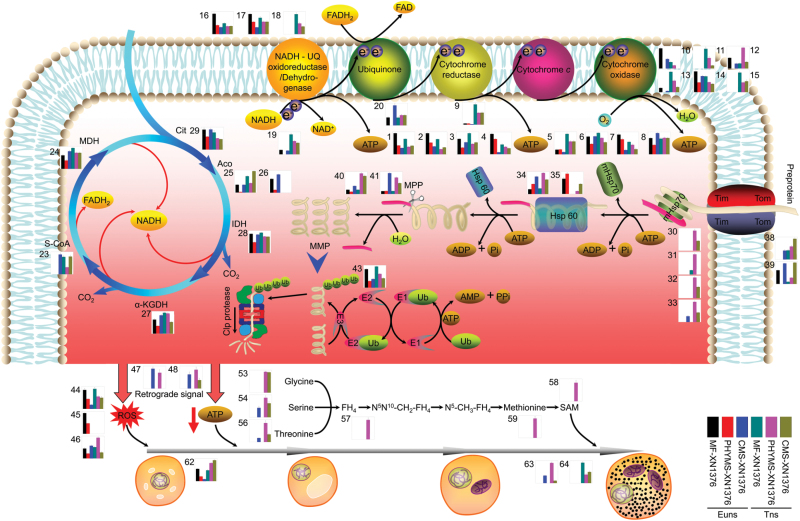
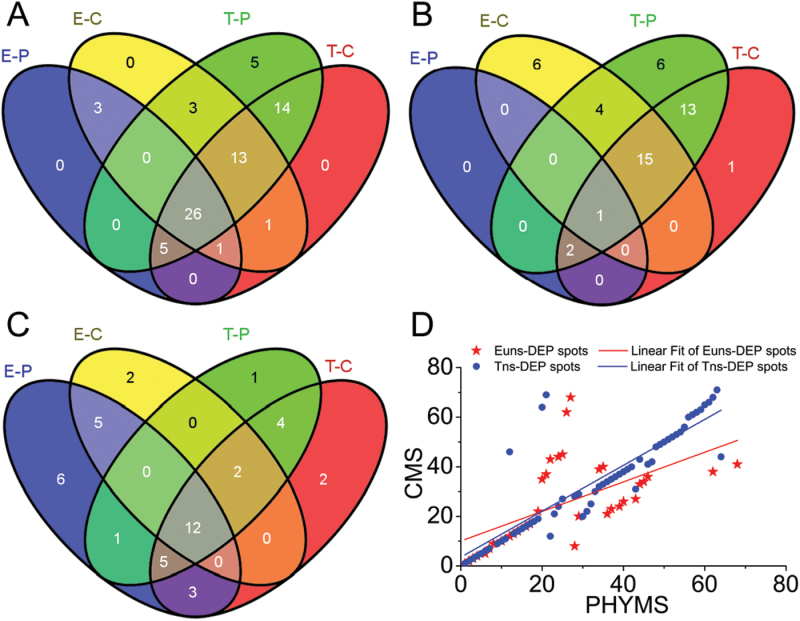
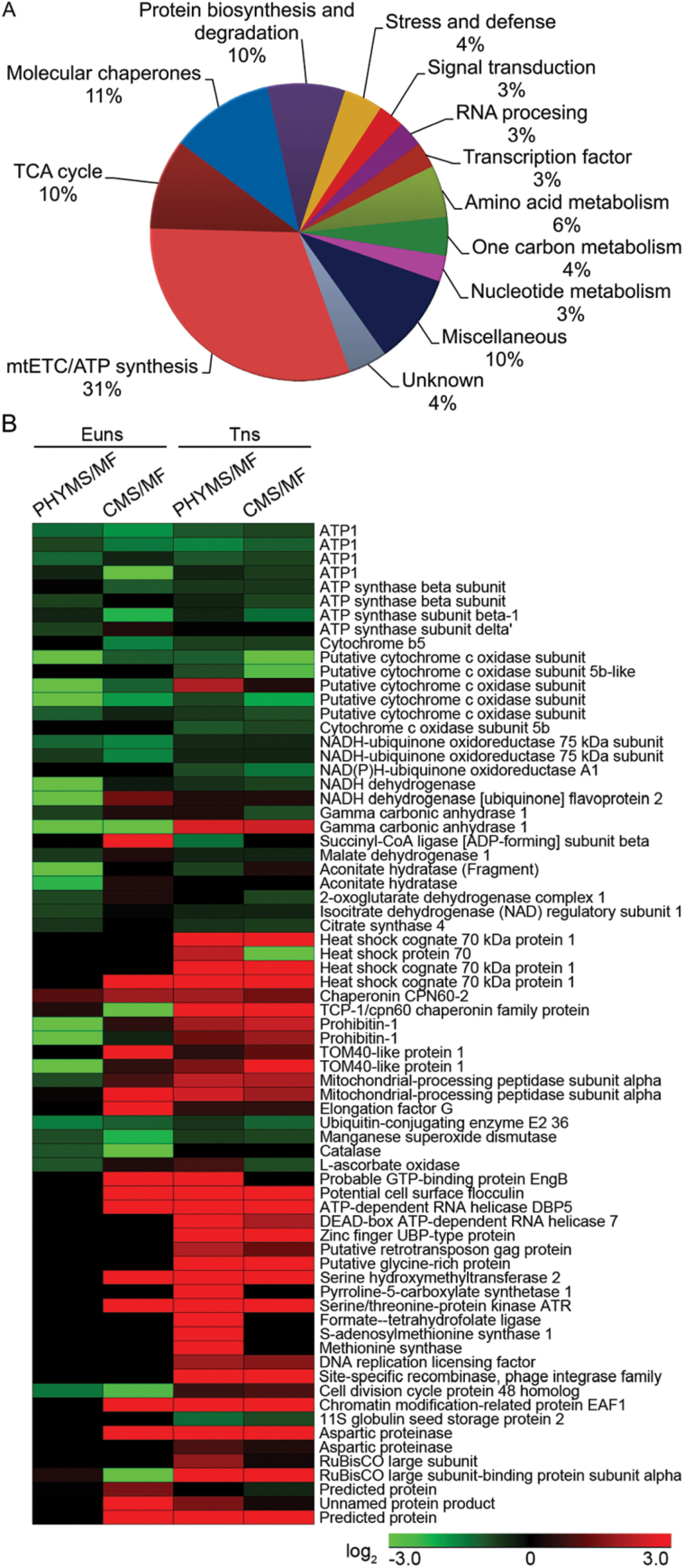
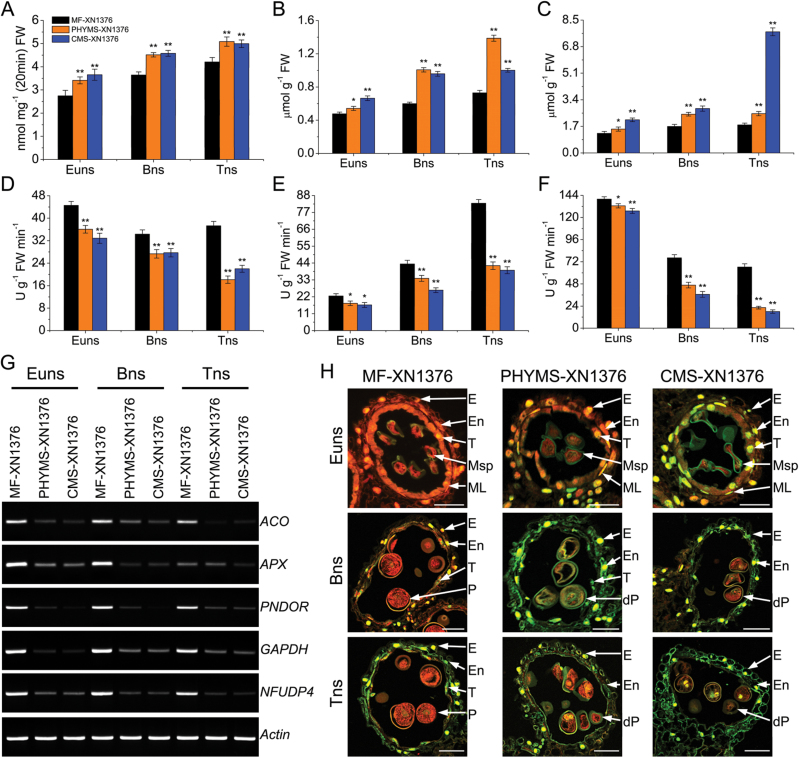
Plant male sterility has often been associated with mitochondrial dysfunction; however, the mechanism in wheat (Triticum aestivum L.) has not been elucidated. This study set out to probe the mechanism of physiological male sterility (PHYMS) induced by the chemical hybridizing agent (CHA)-SQ-1, and cytoplasmic male sterility (CMS) of wheat at the proteomic level. A total of 71 differentially expressed mitochondrial proteins were found to be involved in pollen abortion and further identified by MALDI-TOF/TOF MS (matrix-assisted laser desorption/ionization-time of fight/time of flight mass spectrometry). These proteins were implicated in different cellular responses and metabolic processes, with obvious functional tendencies toward the tricarboxylic acid cycle, the mitochondrial electron transport chain, protein synthesis and degradation, oxidation stress, the cell division cycle, and epigenetics. Interactions between identified proteins were demonstrated by bioinformatics analysis, enabling a more complete insight into biological pathways involved in anther abortion and pollen defects. Accordingly, a mitochondria-mediated male sterility protein network in wheat is proposed; this network was further confirmed by physiological data, RT-PCR (real-time PCR), and TUNEL (terminal deoxynucleotidyl transferase-mediated dUTP nick end labelling) assay. The results provide intriguing insights into the metabolic pathway of anther abortion induced by CHA-SQ-1 and also give useful clues to identify the crucial proteins of PHYMS and CMS in wheat.
植物雄性不育常与线粒体功能障碍有关;然而,小麦(Triticum aestivum L.)中的机制尚未阐明。本研究旨在从蛋白质组学水平探究化学杂交剂(CHA)-SQ-1诱导的小麦生理雄性不育(PHYMS)以及细胞质雄性不育(CMS)的机制。共发现71种差异表达的线粒体蛋白参与花粉败育,并通过基质辅助激光解吸/电离飞行时间/飞行时间质谱(MALDI-TOF/TOF MS)进一步鉴定。这些蛋白涉及不同的细胞反应和代谢过程,在三羧酸循环、线粒体电子传递链、蛋白质合成与降解、氧化应激、细胞分裂周期和表观遗传学方面具有明显的功能倾向。通过生物信息学分析证明了已鉴定蛋白之间的相互作用,从而能够更全面地了解花药败育和花粉缺陷所涉及的生物学途径。据此,提出了小麦线粒体介导的雄性不育蛋白网络;该网络通过生理数据、实时荧光定量PCR(RT-PCR)和末端脱氧核苷酸转移酶介导的dUTP缺口末端标记(TUNEL)分析进一步得到证实。这些结果为CHA-SQ-1诱导的花药败育代谢途径提供了有趣的见解,也为鉴定小麦PHYMS和CMS的关键蛋白提供了有用线索。