Atta-ur-Rahman School of Applied Biosciences (ASAB), National University of Sciences and Technology (NUST), Islamabad, Pakistan.
National Institute of Lasers and Optronics (NILOP), Islamabad, Pakistan.
Sci Rep. 2018 Jun 11;8(1):8874. doi: 10.1038/s41598-018-27163-0.
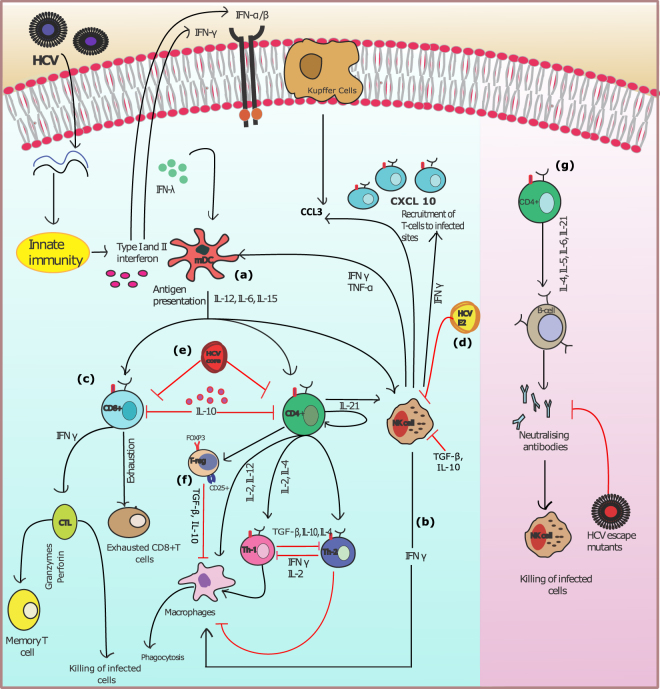
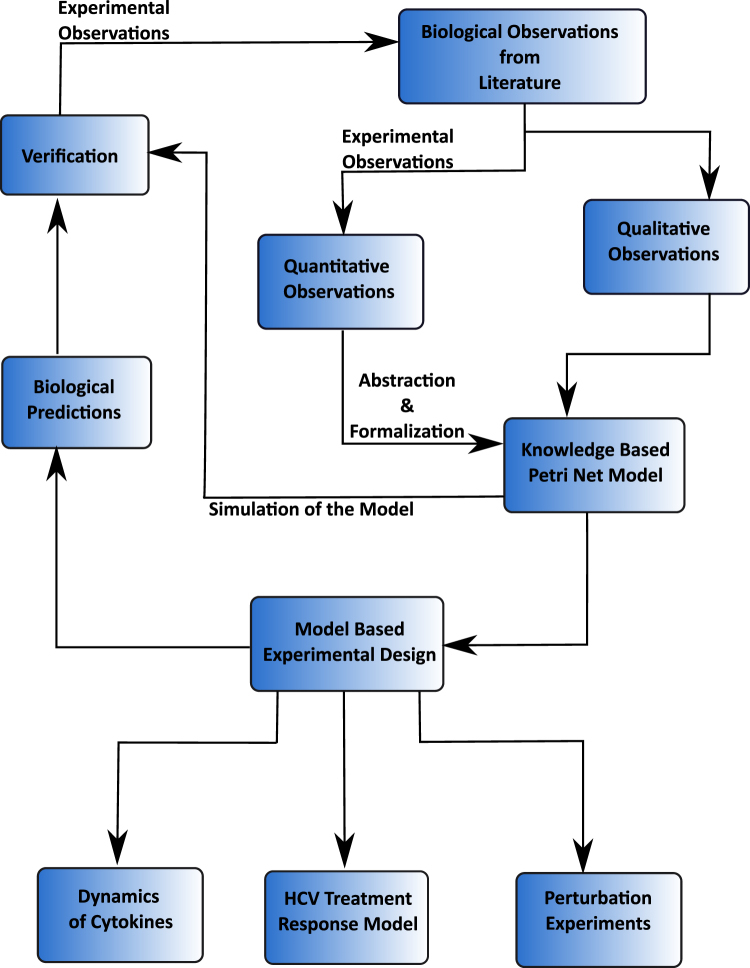
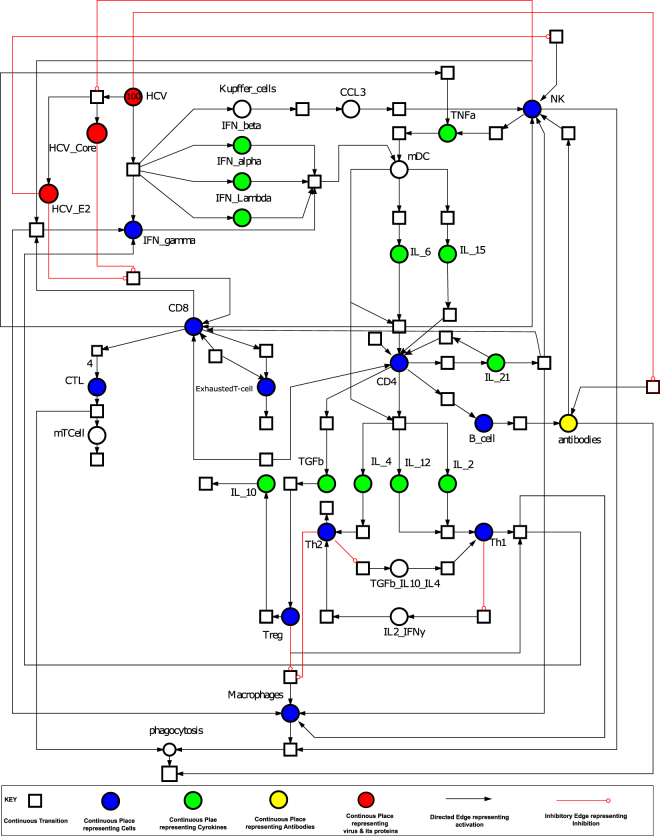
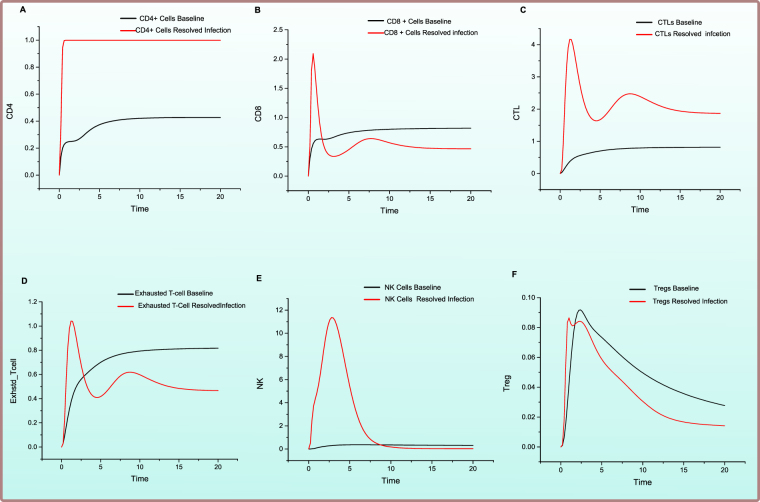
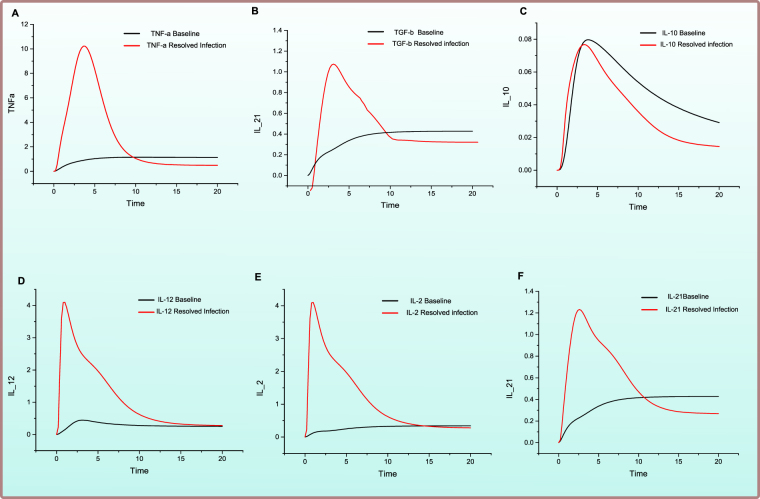
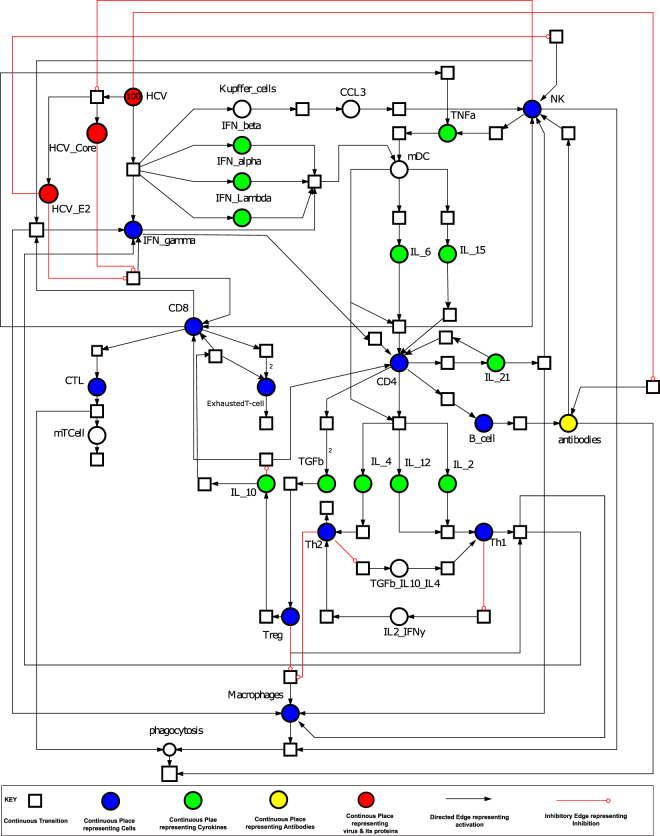
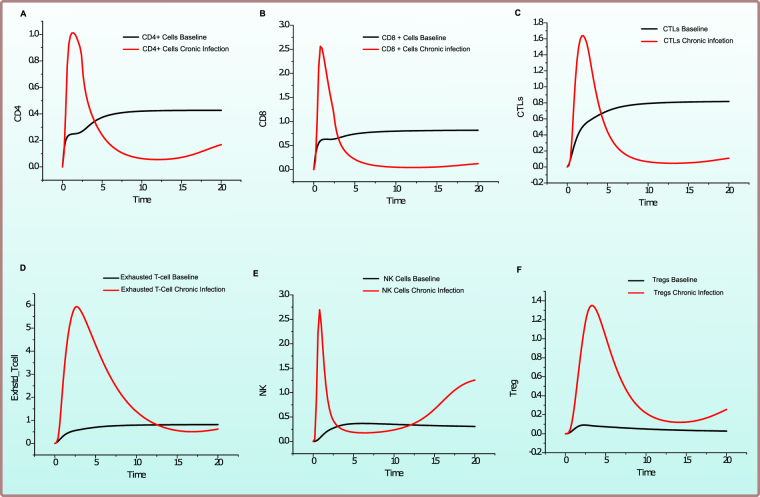
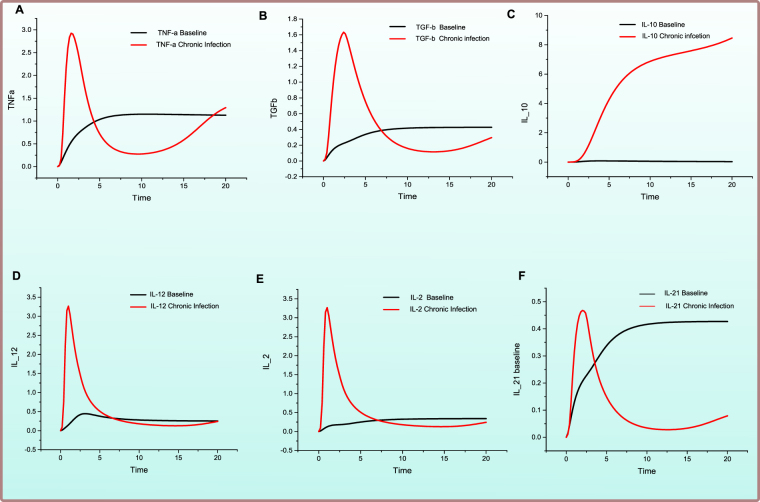
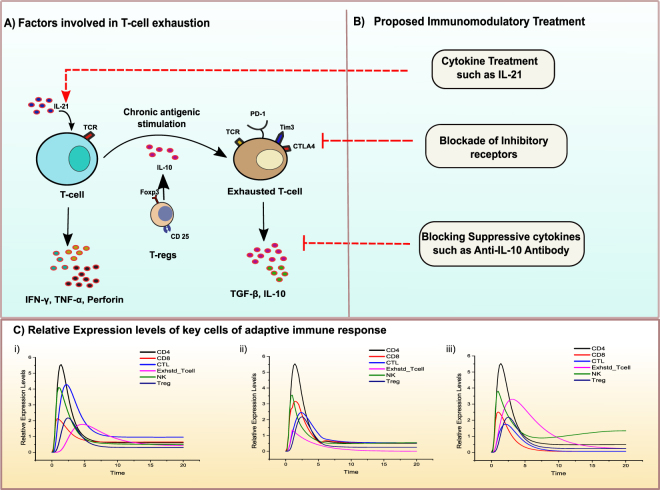
A regulated immune system employs multiple cell types, diverse variety of cytokines and interacting signalling networks against infections. Systems biology offers a promising solution to model and simulate such large populations of interacting components of immune systems holistically. This study focuses on the distinct components of the adaptive immune system and analysis, both individually and in association with HCV infection. The effective and failed adaptive immune response models have been developed followed by interventions/perturbations of various treatment strategies to get better assessment of the treatment responses under varying stimuli. Based on the model predictions, the NK cells, T regulatory cells, IL-10, IL-21, IL-12, IL-2 entities are found to be the most critical determinants of treatment response. The proposed potential immunomodulatory therapeutic interventions include IL-21 treatment, blocking of inhibitory receptors on T-cells and exogenous anti-IL-10 antibody treatment. The relative results showed that these interventions have differential effect on the expression levels of cellular and cytokines entities of the immune response. Notably, IL-21 enhances the expression of NK cells, Cytotoxic T lymphocytes and CD4+ T cells and hence restore the host immune potential. The models presented here provide a starting point for cost-effective analysis and more comprehensive modeling of biological phenomenon.
免疫系统通过多种细胞类型、各种细胞因子和相互作用的信号网络来抵抗感染。系统生物学为对免疫系统中这些相互作用的大量成分进行建模和模拟提供了一个有前途的解决方案。本研究重点研究适应性免疫系统的不同组成部分,并分别对其进行分析,以及与 HCV 感染相关的分析。已经开发了有效的和失败的适应性免疫反应模型,然后对各种治疗策略进行干预/干扰,以更好地评估在不同刺激下的治疗反应。基于模型预测,发现 NK 细胞、T 调节细胞、IL-10、IL-21、IL-12、IL-2 实体是治疗反应的最关键决定因素。提出的潜在免疫调节治疗干预措施包括 IL-21 治疗、阻断 T 细胞上的抑制性受体和外源性抗 IL-10 抗体治疗。相对结果表明,这些干预措施对免疫反应的细胞和细胞因子实体的表达水平有不同的影响。值得注意的是,IL-21 增强了 NK 细胞、细胞毒性 T 淋巴细胞和 CD4+T 细胞的表达,从而恢复了宿主的免疫潜力。这里提出的模型为具有成本效益的分析和更全面的生物学现象建模提供了一个起点。