Cognitive and Systems Neuroscience, Swammerdam Institute, Center for Neuroscience, Faculty of Science, University of Amsterdam, Science Park 904, 1098 XH, Amsterdam, The Netherlands.
Netherlands Institute for Neuroscience, Institute of the Royal Netherlands Academy of Arts and Sciences, Meibergdreef 47, 1105 BA, Amsterdam, The Netherlands.
Sci Rep. 2018 Jun 11;8(1):8889. doi: 10.1038/s41598-018-26853-z.
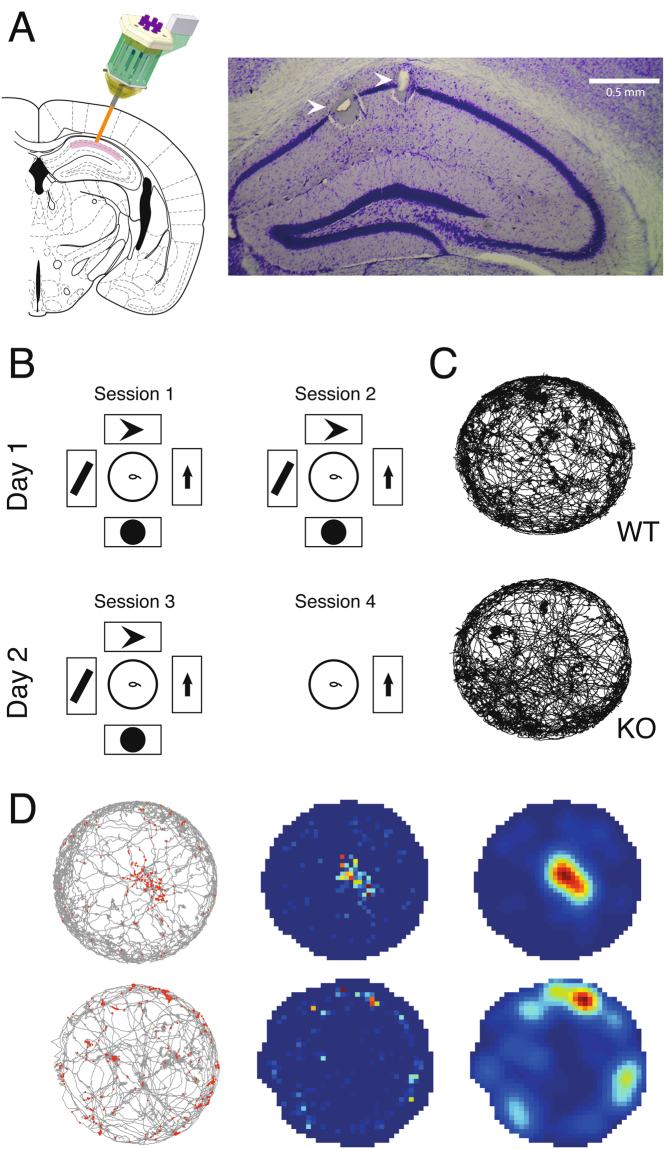
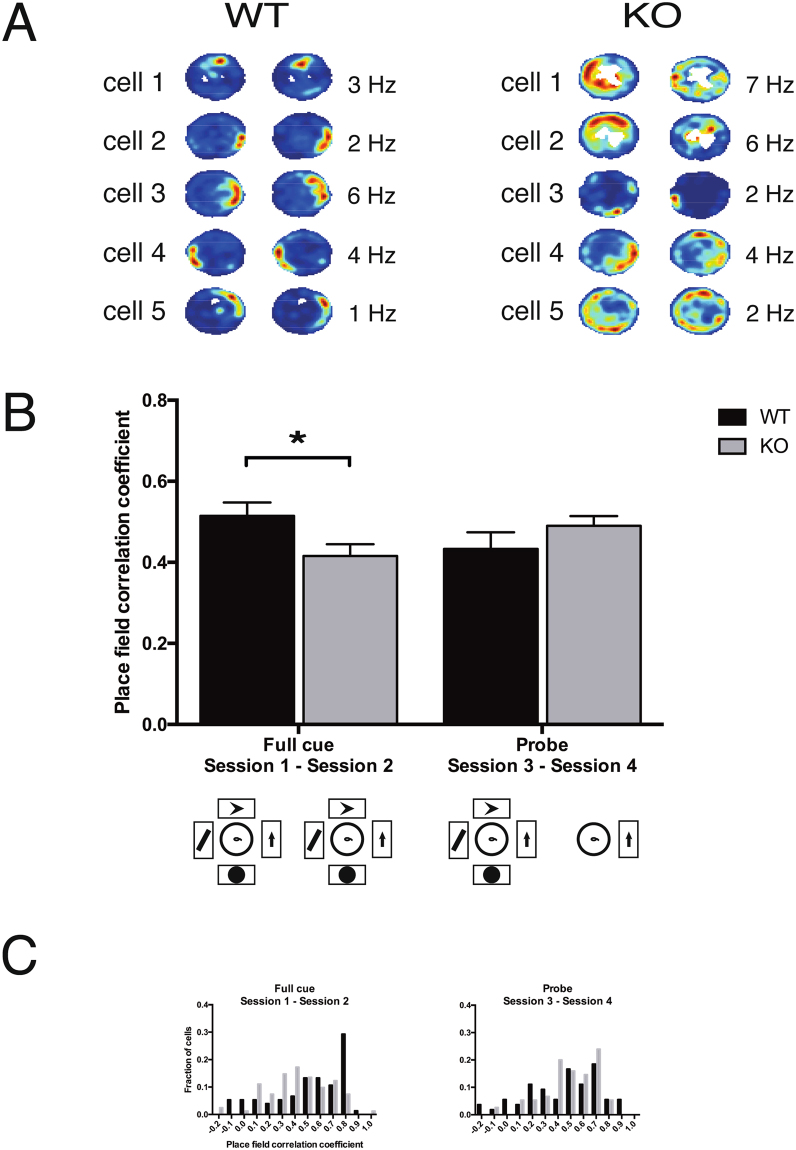
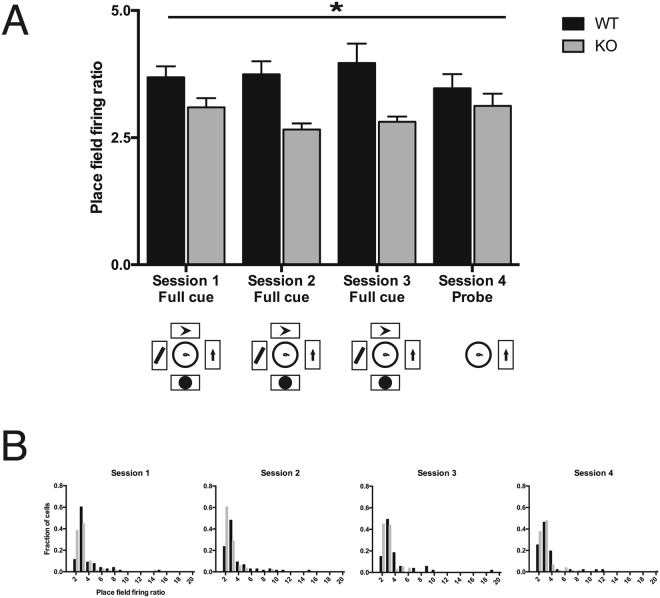
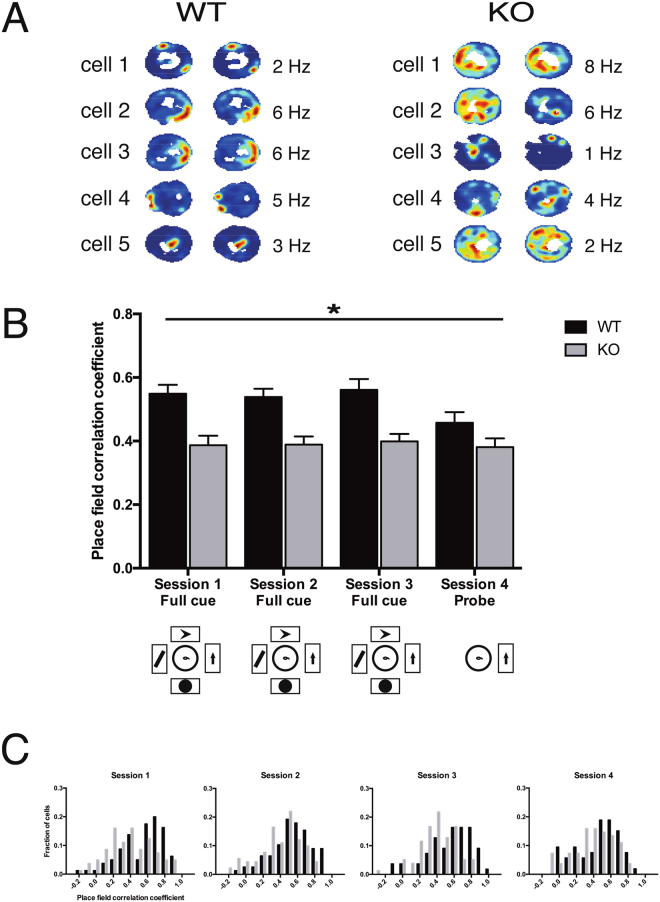
Fragile X syndrome (FXS) is an X-chromosome linked intellectual disability and the most common known inherited single gene cause of autism spectrum disorder (ASD). Building upon demonstrated deficits in neuronal plasticity and spatial memory in FXS, we investigated how spatial information processing is affected in vivo in an FXS mouse model (Fmr1-KO). Healthy hippocampal neurons (so-called place cells) exhibit place-related activity during spatial exploration, and their firing fields tend to remain stable over time. In contrast, we find impaired stability and reduced specificity of Fmr1-KO spatial representations. This is a potential biomarker for the cognitive dysfunction observed in FXS, informative on the ability to integrate sensory information into an abstract representation and successfully retain this conceptual memory. Our results provide key insight into the biological mechanisms underlying cognitive disabilities in FXS and ASD, paving the way for a targeted approach to remedy these.
脆性 X 综合征 (FXS) 是一种 X 染色体连锁的智力障碍,也是最常见的已知与自闭症谱系障碍 (ASD) 相关的遗传性单基因病因。基于 FXS 中神经元可塑性和空间记忆的已有缺陷,我们研究了 FXS 小鼠模型 (Fmr1-KO) 中体内的空间信息处理是如何受到影响的。健康的海马神经元(所谓的位置细胞)在空间探索过程中表现出与位置相关的活动,并且它们的发射场往往随时间保持稳定。相比之下,我们发现 Fmr1-KO 空间表示的稳定性受损和特异性降低。这是 FXS 中观察到的认知功能障碍的潜在生物标志物,可提供有关将感官信息整合到抽象表示中并成功保留这种概念记忆的能力的信息。我们的研究结果为 FXS 和 ASD 中的认知障碍的生物学机制提供了关键的见解,为有针对性地治疗这些障碍铺平了道路。