Teumer Alexander
Institute for Community Medicine, University Medicine Greifswald, Greifswald, Germany.
Partner Site Greifswald, Deutsches Zentrum für Herz-Kreislaufforschung (DZHK), Greifswald, Germany.
Front Cardiovasc Med. 2018 May 28;5:51. doi: 10.3389/fcvm.2018.00051. eCollection 2018.
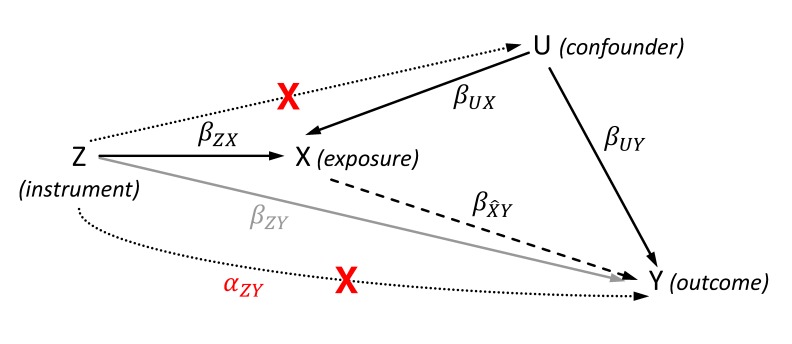
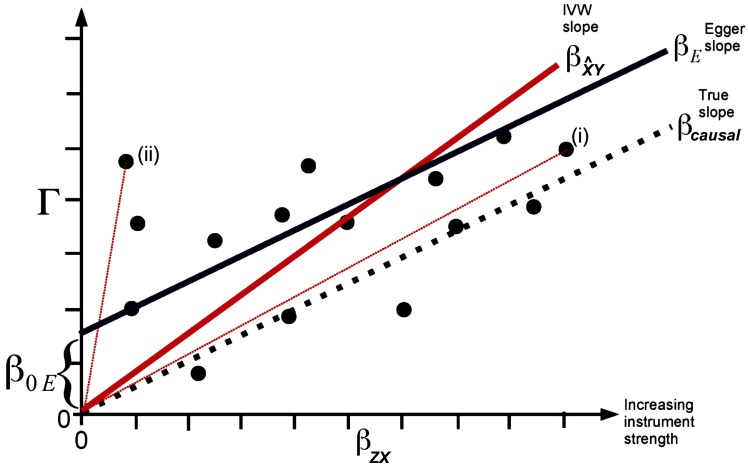
Mendelian randomization (MR) is a framework for assessing causal inference using cross-sectional data in combination with genetic information. This paper summarizes statistical methods commonly applied and strait forward to use for conducting MR analyses including those taking advantage of the rich dataset of SNP-trait associations that were revealed in the last decade through large-scale genome-wide association studies. Using these data, powerful MR studies are possible. However, the causal estimate may be biased in case the assumptions of MR are violated. The source and the type of this bias are described while providing a summary of the mathematical formulas that should help estimating the magnitude and direction of the potential bias depending on the specific research setting. Finally, methods for relaxing the assumptions and for conducting sensitivity analyses are discussed. Future researches in the field of MR include the assessment of non-linear causal effects, and automatic detection of invalid instruments.
孟德尔随机化(MR)是一个利用横断面数据结合遗传信息来评估因果推断的框架。本文总结了常用于进行MR分析的统计方法,这些方法简单易用,包括那些利用过去十年通过大规模全基因组关联研究揭示的丰富的单核苷酸多态性(SNP)与性状关联数据集的方法。利用这些数据,可以开展强有力的MR研究。然而,如果违反了MR的假设,因果估计可能会有偏差。本文在描述这种偏差的来源和类型的同时,还总结了一些数学公式,这些公式有助于根据具体研究情况估计潜在偏差的大小和方向。最后,讨论了放宽假设和进行敏感性分析的方法。MR领域未来的研究包括评估非线性因果效应以及自动检测无效工具变量。