University of Muenster, Institute for Physical Chemistry, Corrensstrasse 30, D-48149 Muenster, Germany.
Nucleic Acids Res. 2018 Jul 27;46(13):6773-6784. doi: 10.1093/nar/gky470.
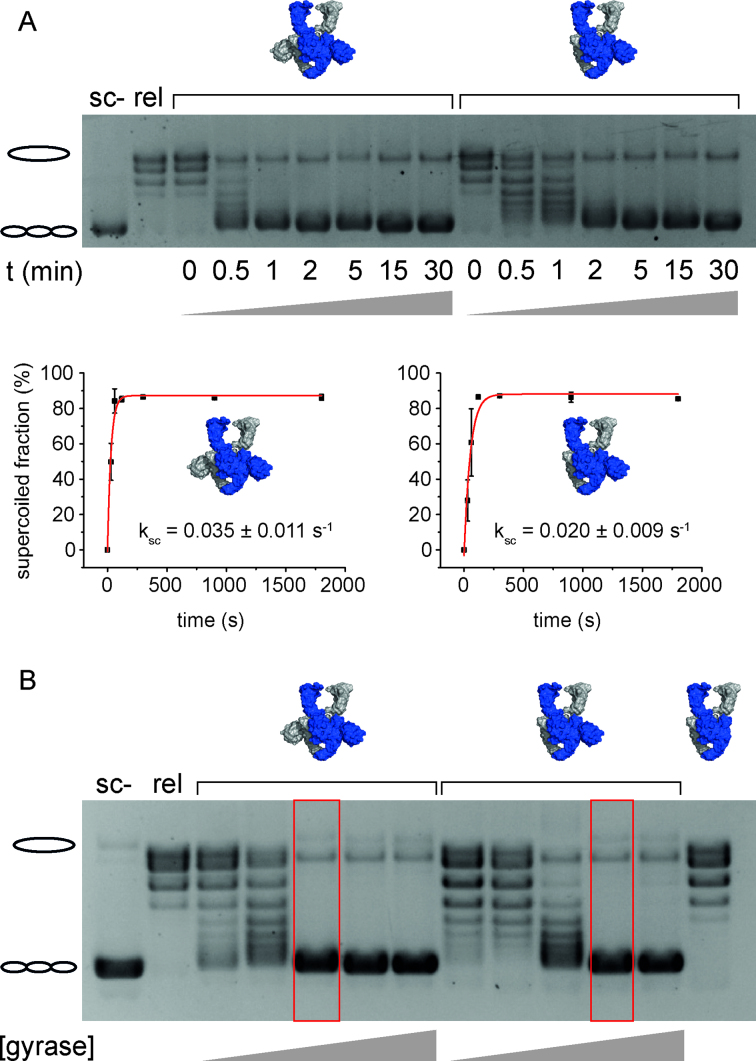
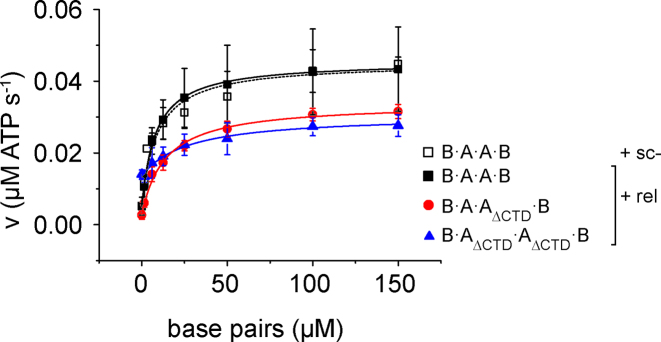
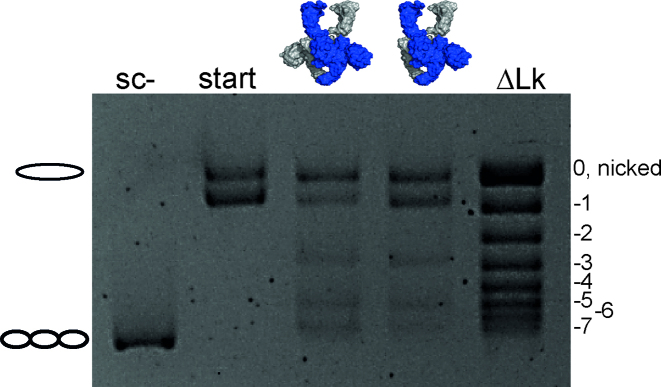
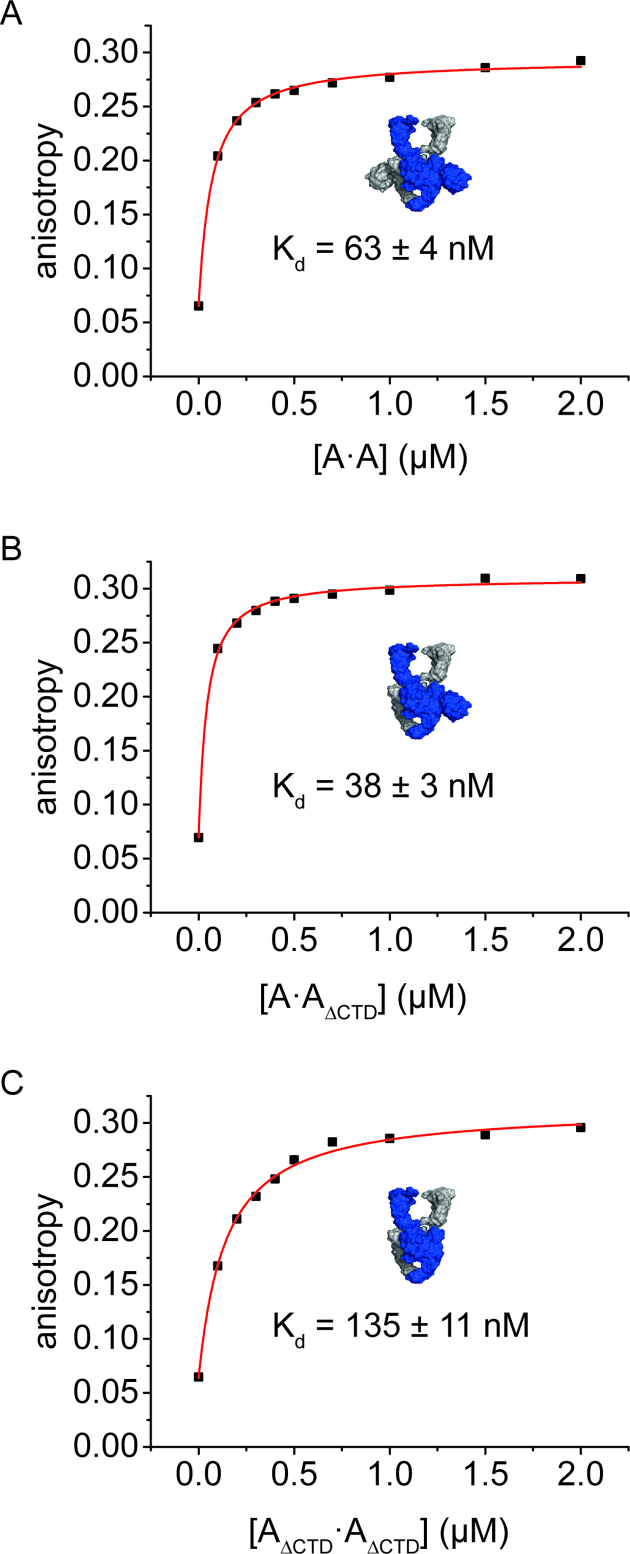
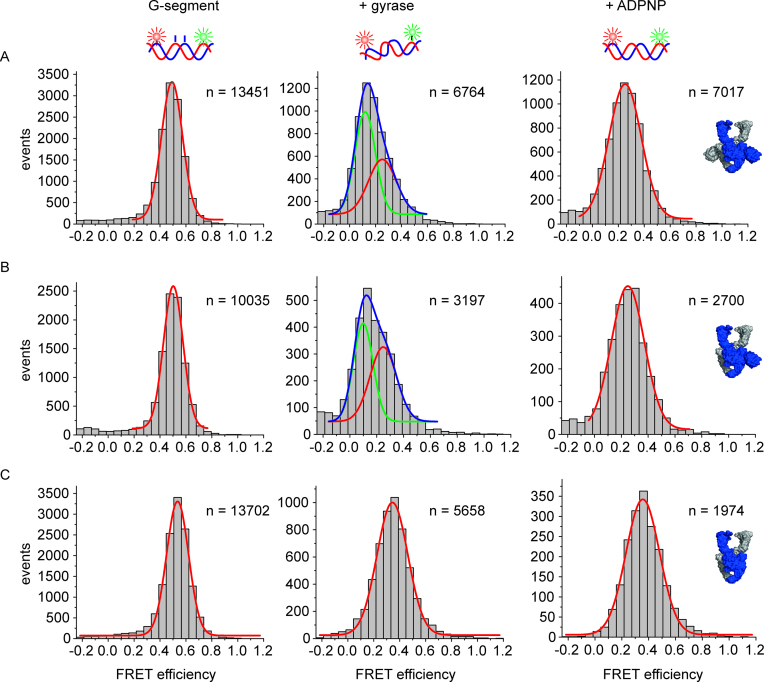
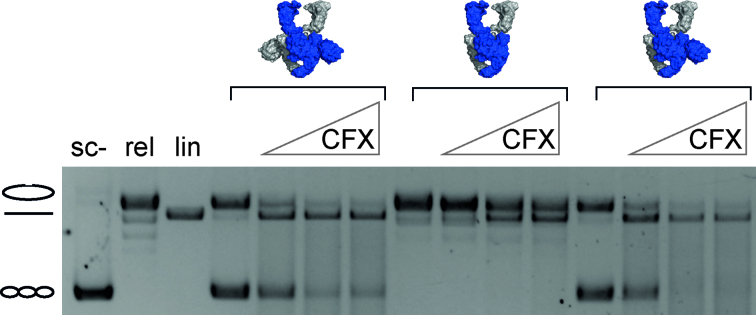
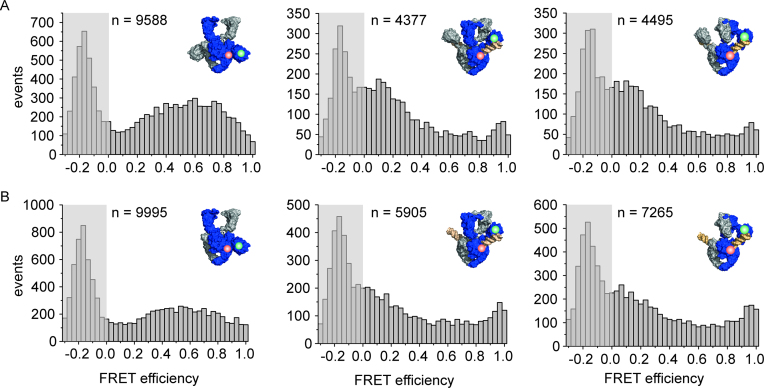
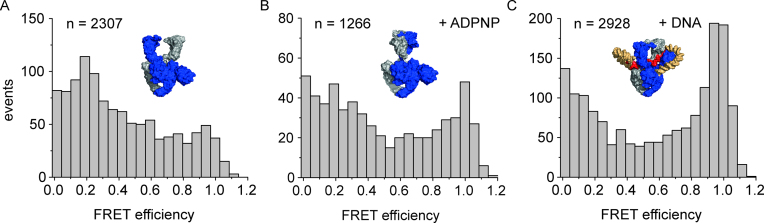
The topological state of DNA in vivo is regulated by topoisomerases. Gyrase is a bacterial topoisomerase that introduces negative supercoils into DNA at the expense of ATP hydrolysis. According to the strand-passage mechanism, a double-strand of the DNA substrate is cleaved, and a second double-stranded segment is passed through the gap, converting a positive DNA node into a negative node. The correct orientation of these DNA segments for strand passage is achieved by wrapping of the DNA around gyrase, which involves the C-terminal domains (CTDs) of both GyrA subunits in the A2B2 heterotetramer. Gyrase lacking both CTDs cannot introduce negative supercoils into DNA. Here, we analyze the requirements for the two CTDs in individual steps in the supercoiling reaction. Gyrase that contains a single CTD binds, distorts, and cleaves DNA similarly to wildtype gyrase. It also shows wildtype-like DNA-dependent ATPase activity, and undergoes DNA-induced movement of the CTD as well as N-gate narrowing. Most importantly, the enzyme still introduces negative supercoils into DNA in an ATP-dependent reaction, with a velocity similar to wildtype gyrase, and decreases the linking number of the DNA in steps of two. One CTD is thus sufficient to support DNA supercoiling.
拓扑状态的 DNA 在体内是由拓扑异构酶调节。回旋酶是一种细菌拓扑异构酶,它以 ATP 水解为代价将负超螺旋引入 DNA。根据链通过机制,DNA 底物的双链被切割,第二个双链片段穿过间隙,将正 DNA 节点转换为负节点。这些 DNA 片段的正确取向通过将 DNA 缠绕在回旋酶上实现,这涉及 A2B2 异四聚体中两个 GyrA 亚基的 C 末端结构域 (CTD)。缺少两个 CTD 的回旋酶不能将负超螺旋引入 DNA。在这里,我们分析了在超螺旋反应的各个步骤中两个 CTD 的要求。含有单个 CTD 的回旋酶与野生型回旋酶类似地结合、扭曲和切割 DNA。它还表现出类似野生型的 DNA 依赖性 ATP 酶活性,并经历 DNA 诱导的 CTD 运动以及 N 门变窄。最重要的是,该酶仍然以 ATP 依赖性反应将负超螺旋引入 DNA,其速度与野生型回旋酶相似,并且以两个步骤的方式降低 DNA 的连接数。因此,一个 CTD 足以支持 DNA 超螺旋化。