Ahmed Muhammad Rashid, Shaikh Masood Ahmed, Ul Haq Syed Hafiz Imran, Nazir Shakila
Department of Anatomy, Baqai Medical University, Karachi, Pakistan.
Department of Anatomy and Histology, College of Medicine, Qassim University, KSA.
Int J Health Sci (Qassim). 2018 May-Jun;12(3):35-43.
Selective degeneration of dopaminergic neurons is the pathological hallmark of Parkinson disease (PD). Enhanced oxidative stress, lipid peroxidation and susceptibility of dopaminergic neurons to apoptotic cellular death are the leading pathogenetic mechanisms. Chrysin is an active flavonoid. Its neuroprotective effects have been reported. This study examined the neuroprotective effects of chrysin in ameliorating the dopaminergic neuronal degeneration and motor behavioral changes in rotenone model of PD.
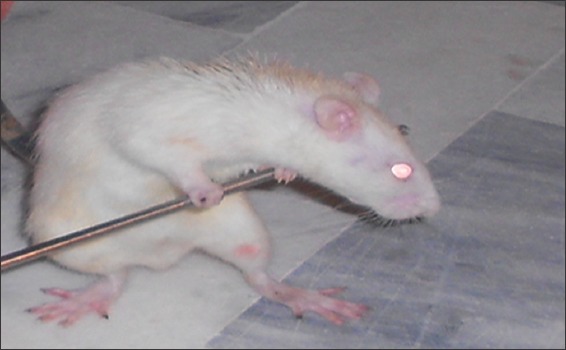
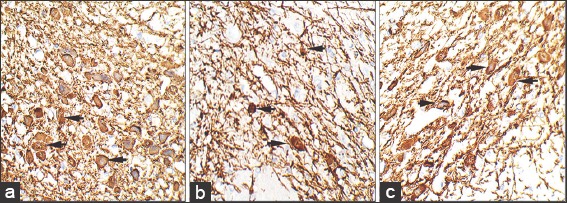
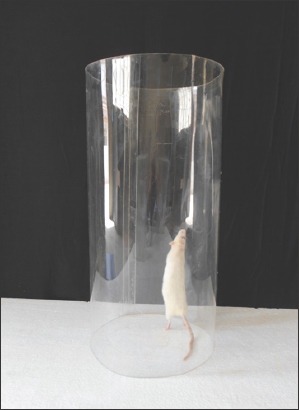
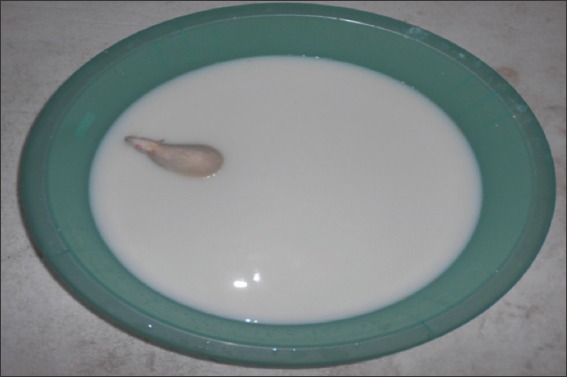
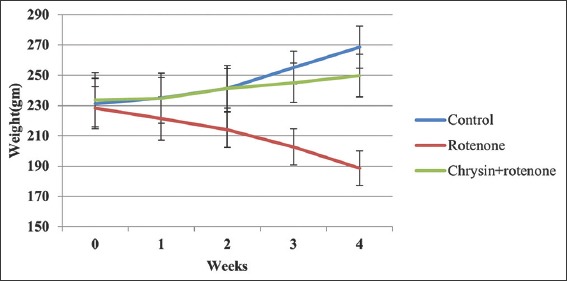
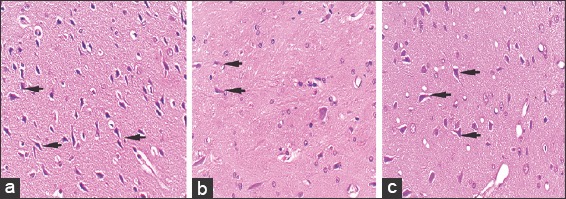
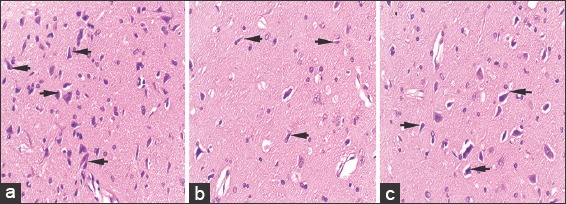
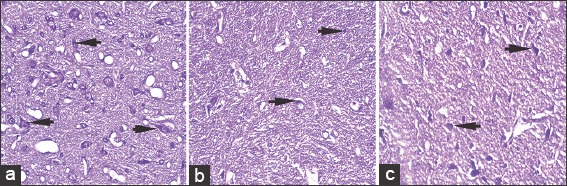
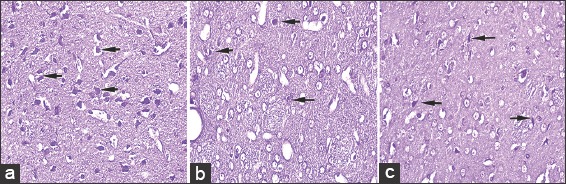
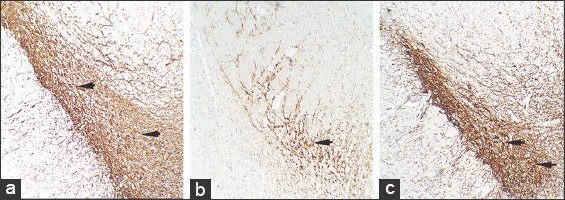
Thirty Sprague-Dawley rats were assigned into three groups: Control, rotenone-treated, and rotenone+chrysin treated groups. Rotenone was given at a dose of 3 mg/kg daily intraperitoneally, and chrysin was given at a dose of 50 mg/kg daily intraperitoneally for 4 weeks. Using five neurobehavioral assessment tests, evaluation was done weekly to record the motor behavioral changes. After 4 weeks, animals were sacrificed, brains were removed, and section from striatum and substantia nigra were stained using hematoxylin and eosin and cresyl violet stains. Immunohistochemical sections were also prepared using anti-tyrosine hydroxylase (TH) antibody.
Rotenone-induced Parkinson like changes were evident from deteriorating motor behavior. These animals showed extensive loss of dopaminergic neurons, decreased immunoreactivity against anti-TH antibodies and number of TH positive dopaminergic neurons in the nigrostriatal region. Chrysin treated animals showed a significant reduction in motor behavioral changes, degeneration and loss of nigrostriatal dopaminergic neurons and increased immunoreactivity to anti-TH antibody.
This study concludes that chrysin confers neuroprotection in rat model of PD. It attenuates the degeneration of the nigrostriatal dopaminergic neurons and motor behavioral abnormalities.
多巴胺能神经元的选择性变性是帕金森病(PD)的病理标志。氧化应激增强、脂质过氧化以及多巴胺能神经元对凋亡性细胞死亡的易感性是主要的发病机制。白杨素是一种活性黄酮类化合物。其神经保护作用已有报道。本研究检测了白杨素对改善PD鱼藤酮模型中多巴胺能神经元变性和运动行为变化的神经保护作用。
将30只Sprague-Dawley大鼠分为三组:对照组、鱼藤酮处理组和鱼藤酮+白杨素处理组。鱼藤酮以3mg/kg的剂量每日腹腔注射,白杨素以50mg/kg的剂量每日腹腔注射,持续4周。每周使用五项神经行为评估测试进行评估,以记录运动行为变化。4周后,处死动物,取出大脑,用苏木精-伊红和甲酚紫染色对纹状体和黑质切片进行染色。还使用抗酪氨酸羟化酶(TH)抗体制备免疫组织化学切片。
鱼藤酮诱导的帕金森样变化从运动行为恶化中明显可见。这些动物显示多巴胺能神经元广泛丧失,黑质纹状体区域抗TH抗体的免疫反应性降低以及TH阳性多巴胺能神经元数量减少。白杨素处理的动物运动行为变化、黑质纹状体多巴胺能神经元的变性和丧失显著减少,并且抗TH抗体的免疫反应性增加。
本研究得出结论,白杨素在PD大鼠模型中具有神经保护作用。它减轻了黑质纹状体多巴胺能神经元的变性和运动行为异常。