State Key Laboratory of Pharmaceutical Biotechnology, School of Life Sciences, Nanjing University, Nanjing, Jiangsu 210046, China.
Department of General Surgery, Jinling Hospital, School of Medicine, Nanjing University, Nanjing, Jiangsu 210002, China.
Theranostics. 2018 Apr 30;8(11):3022-3037. doi: 10.7150/thno.23046. eCollection 2018.
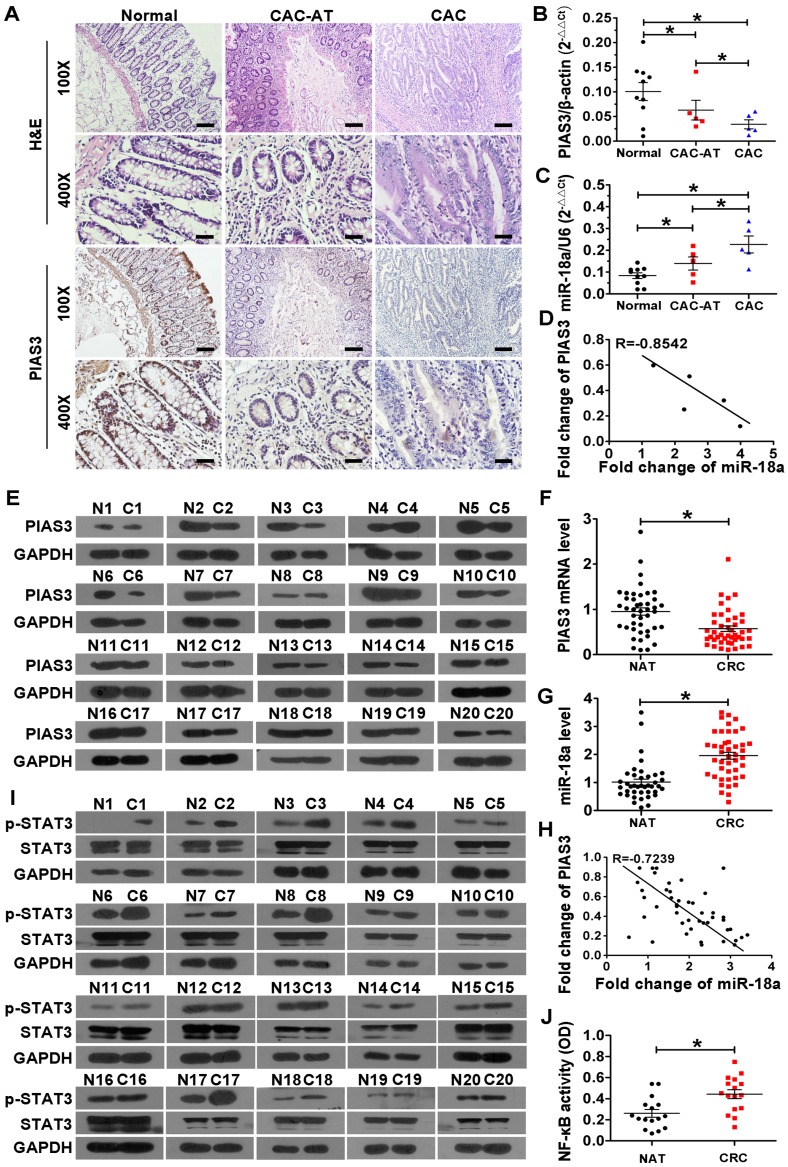
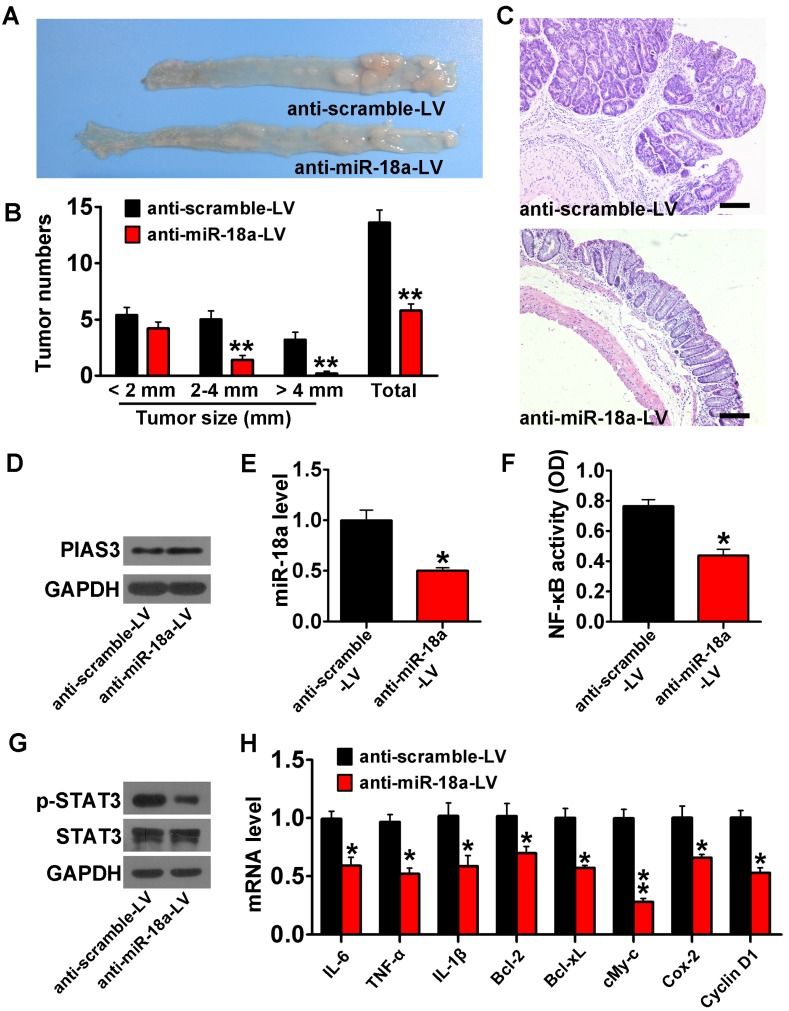
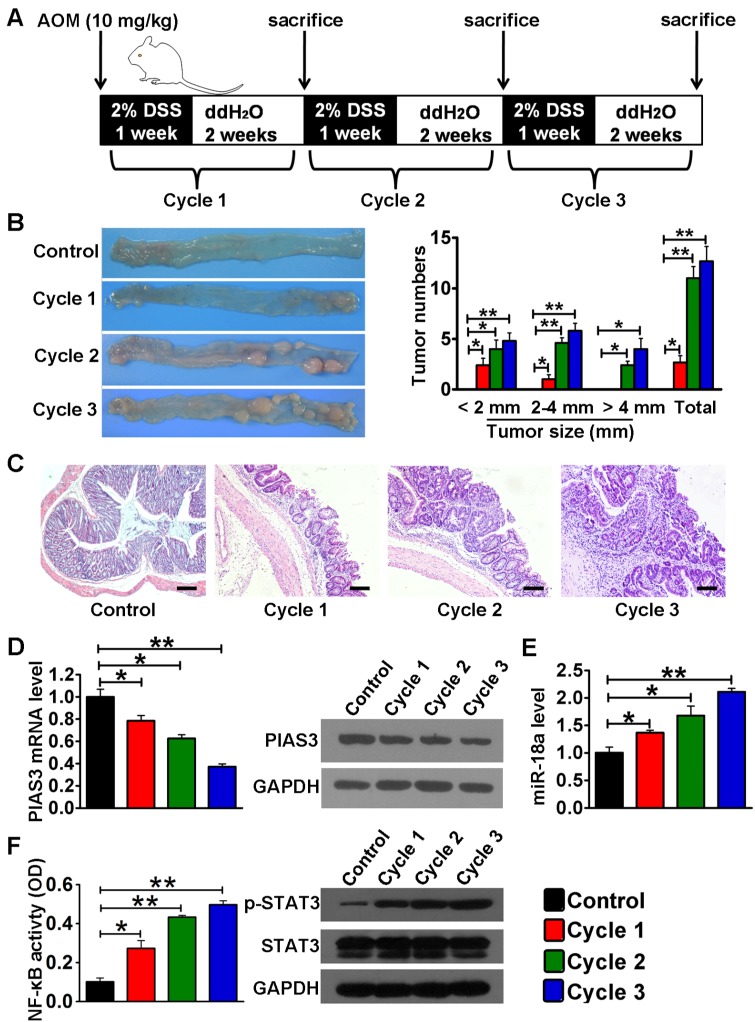
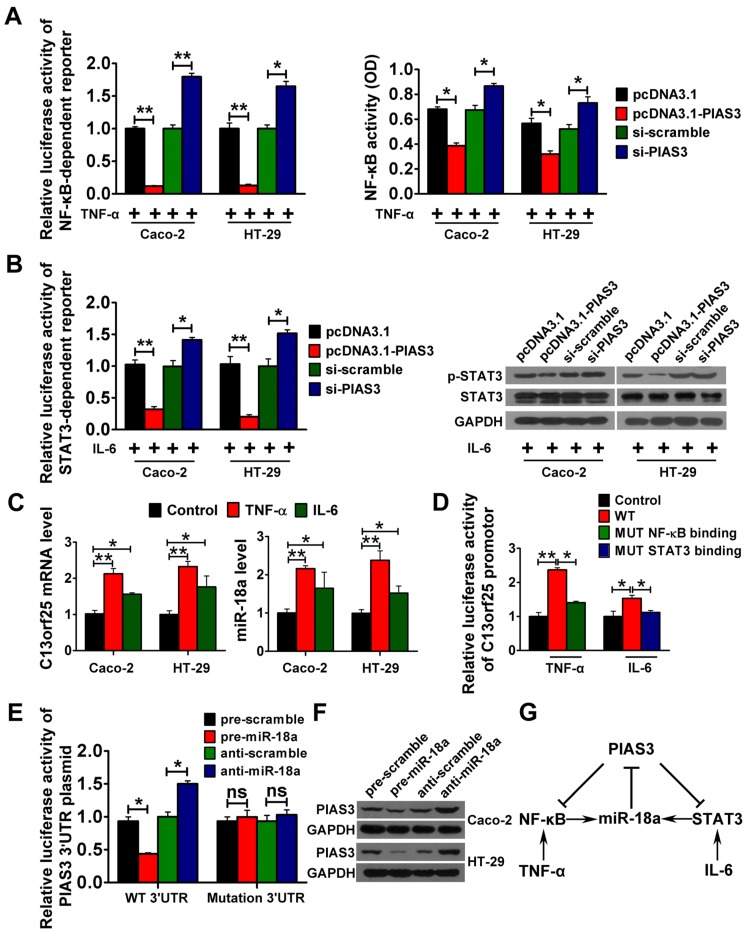
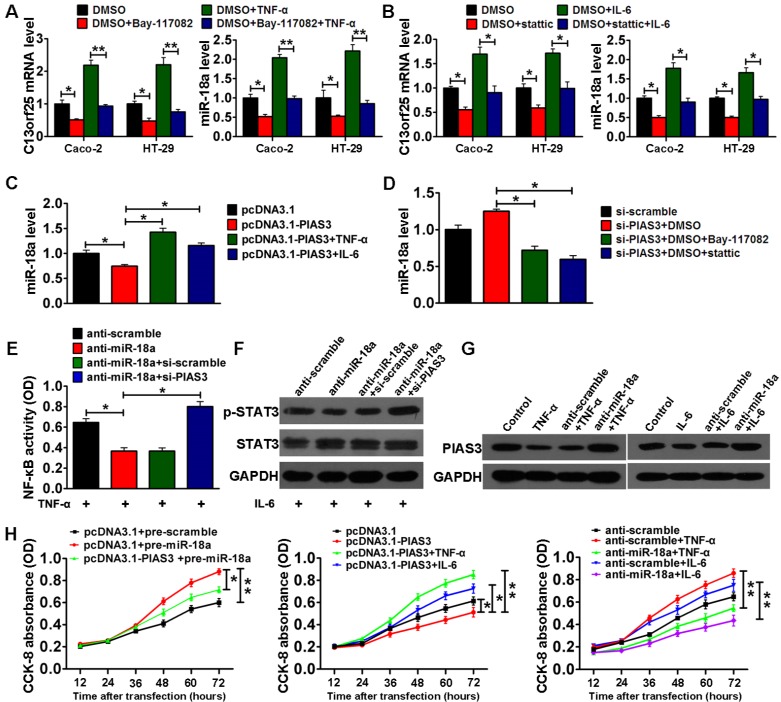
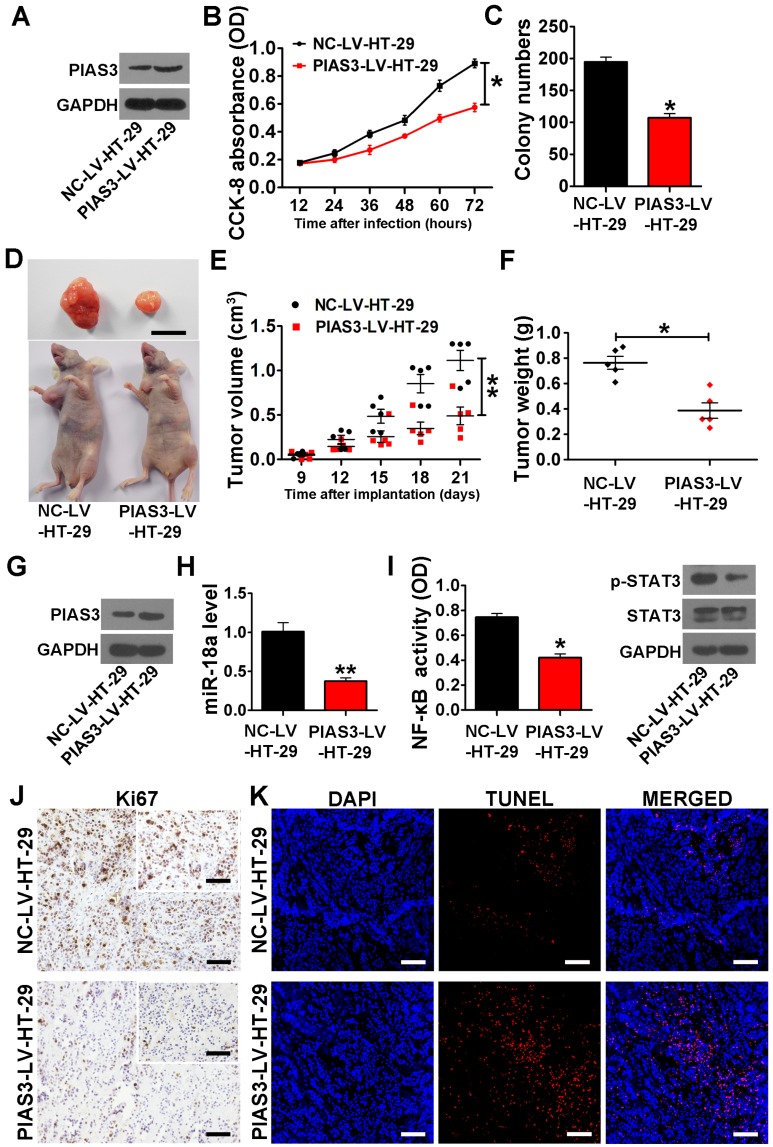
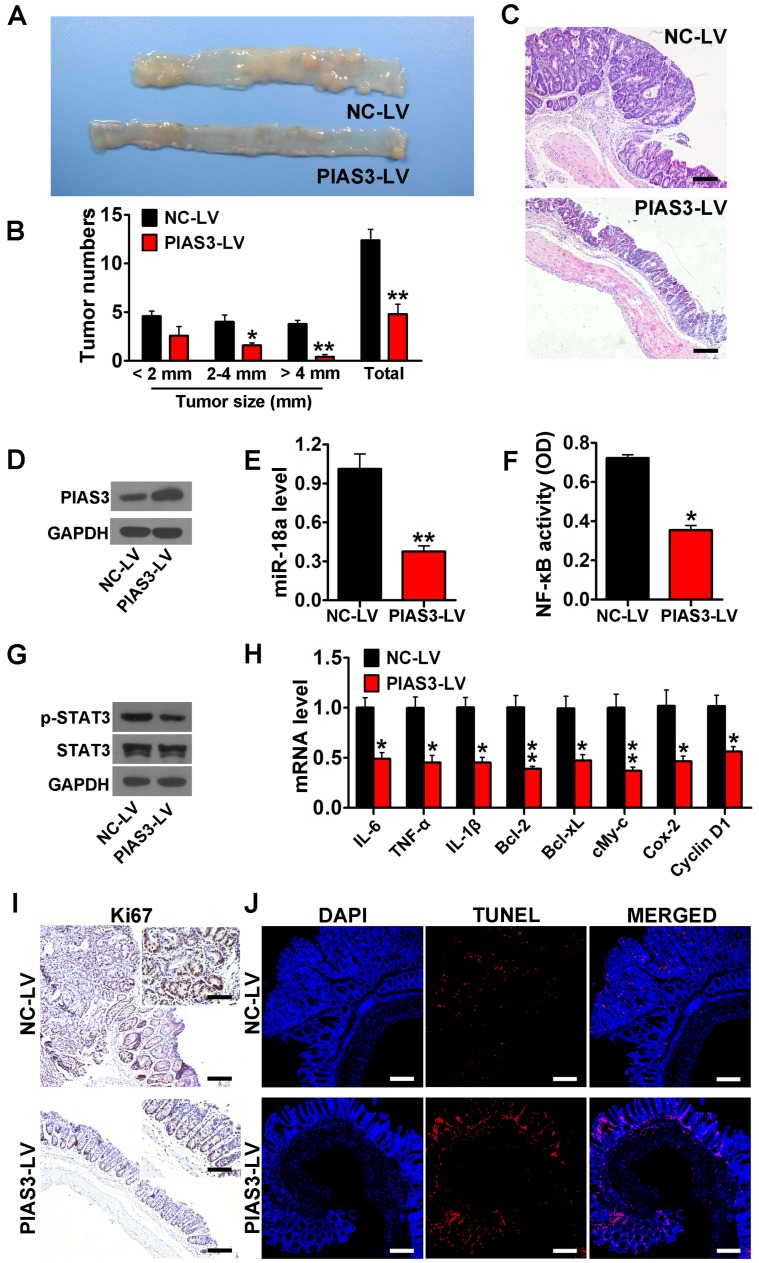
Colitis-associated colorectal cancer (CAC) usually exhibits an accelerated disease progression, an increased resistance to therapeutic drugs and a higher mortality rate than sporadic colorectal cancer (CRC). PIAS3 is a member of the protein inhibitor of activated STAT (PIAS) family; however, little is known about the expression and biological functions of PIAS3 in CAC. The aim of our study was to investigate the biological mechanisms of PIAS3 in CAC. PIAS3 expression was examined in colon tissues of CAC/CRC patients and azoxymethane-dextran sulfate sodium (AOM-DSS)-induced mice. The role of PIAS3 was studied using a series of , and clinical approaches. Downregulated PIAS3 expression, upregulated miR-18a expression and highly activated NF-κB and STAT3 were observed in colon tissues of CAC/CRC patients and AOM-DSS-induced mice. experiments revealed that PIAS3 significantly inhibited the activation of NF-κB and STAT3 and demonstrated that activated NF-κB and STAT3 transcriptionally regulated miR-18a level, and up-regulation of miR-18a expression led to defective PIAS3 expression. Moreover, PIAS3-mediated autoregulatory feedback loops (PIAS3/NF-κB/miR-18a and PIAS3/STAT3/miR-18a) were verified and were found to regulate cell proliferation. Additionally, modulation of the feedback loops via overexpression of PIAS3 or knockdown of miR-18a significantly inhibited cell proliferation in a mouse CRC xenograft model. Furthermore, upregulation of PIAS3 by intracolonic administration of PIAS3 lentivirus or anti-miR-18a lentivirus in AOM-DSS-induced mice led to dramatically reduced tumor sizes/numbers, whereas knockdown of PIAS3 in CAC mice significantly promoted tumor growth. Our data clearly show that PIAS3-mediated feedback loops control cell proliferation and function as robust driving forces for CAC progression. Targeting these highly activated feedback loops might offer promising therapeutic strategies for CAC.
结肠炎相关结直肠癌(CAC)通常表现为疾病进展加速、对治疗药物的耐药性增加以及死亡率高于散发性结直肠癌(CRC)。PIAS3 是蛋白抑制剂激活 STAT(PIAS)家族的成员;然而,PIAS3 在 CAC 中的表达和生物学功能知之甚少。本研究旨在探讨 PIAS3 在 CAC 中的生物学机制。我们检查了 CAC/CRC 患者的结肠组织和氧化偶氮甲烷-葡聚糖硫酸钠(AOM-DSS)诱导的小鼠中 PIAS3 的表达。使用一系列、和临床方法研究了 PIAS3 的作用。我们观察到 CAC/CRC 患者和 AOM-DSS 诱导的小鼠的结肠组织中 PIAS3 表达下调、miR-18a 表达上调以及 NF-κB 和 STAT3 高度激活。进一步的实验表明,PIAS3 显著抑制 NF-κB 和 STAT3 的激活,并证明激活的 NF-κB 和 STAT3 转录调控 miR-18a 水平,而上调 miR-18a 表达导致 PIAS3 表达缺陷。此外,PIAS3 介导的自反馈环(PIAS3/NF-κB/miR-18a 和 PIAS3/STAT3/miR-18a)得到验证,并发现它们调节细胞增殖。此外,通过过表达 PIAS3 或敲低 miR-18a 调节反馈环,在小鼠 CRC 异种移植模型中显著抑制细胞增殖。此外,通过结肠内给予 PIAS3 慢病毒或抗 miR-18a 慢病毒上调 AOM-DSS 诱导的小鼠中的 PIAS3 导致肿瘤体积/数量明显减少,而 CAC 小鼠中 PIAS3 的敲低显著促进肿瘤生长。我们的数据清楚地表明,PIAS3 介导的反馈环控制细胞增殖,是 CAC 进展的强大驱动力。针对这些高度激活的反馈环可能为 CAC 提供有前途的治疗策略。